
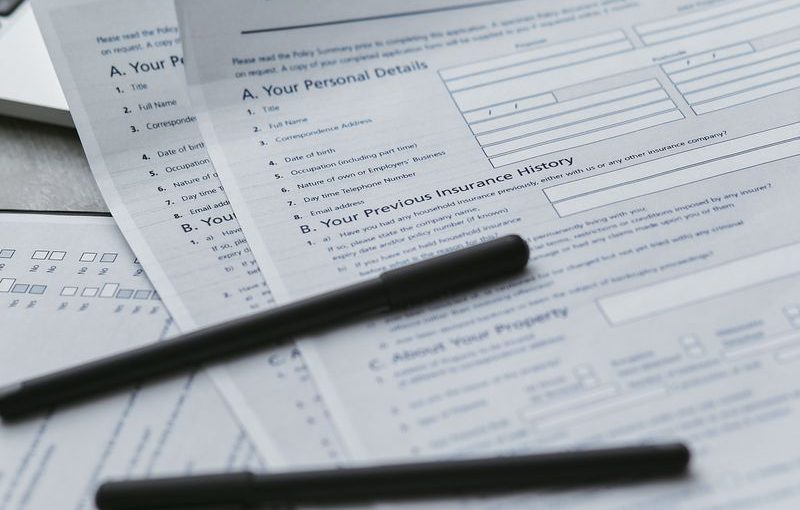
Your car insurance declarations page -- often called the "dec page" -- is the single most important document in your entire auto insurance policy. It is a one-to-three-page summary that tells you exactly who is covered, what is covered, how much coverage you have, and what you are paying for it. Yet according to a 2025 Zebra survey, only 21 percent of drivers can correctly identify basic policy terms on their own declarations page.
That lack of understanding is expensive. In 2025, the National Association of Insurance Commissioners recorded 35,063 auto insurance complaints, a 7.5 percent increase from the previous year. Coverage misunderstanding was a leading cause. For college students -- who are often buying insurance for the first time -- spending 10 minutes reading the dec page can prevent thousands of dollars in unexpected out-of-pocket costs after an accident.

What Is a Declarations Page?
The declarations page is the front page (or first few pages) of your auto insurance policy. Think of it as the table of contents for your insurance contract. While the full policy may be dozens of pages filled with legal language, the dec page condenses everything you need to know into a readable summary.
You receive a new declarations page every time you start a new policy, renew an existing one, or make changes to your coverage. Most insurers (Progressive, Allstate, GEICO) issue six-month policies, while others (State Farm, Erie) issue twelve-month policies. That means you should be reviewing your dec page at least once or twice a year.
Where to find it: Your insurer will mail or email the dec page when your policy starts or renews. You can also download it from your insurer's website or mobile app. Save a PDF copy on your phone -- if you are in an accident at 2 AM, you will need your policy number, coverage limits, and insurer's claims phone number quickly.
The 8 Key Fields on Your Declarations Page
While every insurer formats their dec page differently, these eight fields appear on virtually every auto insurance declarations page in the United States. Here is what each one means and what to check.

1. Policy Number and Policy Period
Your policy number is the unique identifier that links all your claims, payments, and correspondence. The policy period shows the exact start and end dates of your coverage. Even a one-day gap between the old policy ending and the new one starting can classify you as a high-risk driver in states like California and Texas, increasing your next premium by 10 to 25 percent.
What to check: Make sure the policy period is continuous with no gaps. If your policy ends on June 30 and the new one starts July 1, you are fine. If there is a gap of even one day, contact your insurer immediately.
2. Named Insured
The named insured is the person (or persons) who legally owns the policy and is responsible for paying the premium. Only the named insured can make changes to the policy, file claims, and receive claim payments. If you are a student on your parents' policy, your parents are likely the named insureds, and you are a listed driver.
What to check: If you are married, make sure your spouse is listed as a co-named insured. In community property states (Arizona, Louisiana, Wisconsin, and others), failing to list a spouse can create legal complications in a $100,000 liability claim.
3. Listed Drivers
This section lists every driver the insurer has rated on your policy. The insurer uses each driver's age, driving record, and other factors to calculate the premium. According to 2025 Zebra data, a household with a 16-year-old listed driver pays an average of $2,300 more per year than a household with only drivers over 25.
What to check: Make sure every licensed driver in your household who regularly drives your car is listed. Omitting a driver is considered "material misrepresentation" -- insurers like GEICO, Progressive, and State Farm have denied claims exceeding $20,000 for this reason. Also check if any drivers are listed as "excluded" -- an excluded driver has zero coverage if they drive your car.
4. Insured Vehicles (VIN, Year, Make, Model)
Every vehicle on your policy is listed with its 17-digit Vehicle Identification Number (VIN), year, make, and model. The VIN is critical -- even a single digit error can invalidate the comprehensive and collision coverage for that vehicle.
What to check: Verify each VIN digit carefully. If you recently bought a new car, you typically have a 14-to-30-day grace period to add it to your policy, but coverage is not official until you notify the insurer and receive an updated dec page.

5. Coverage Types and Limits
This is the most critical section of your dec page. Each line corresponds to a type of coverage, showing the per-person limit, per-accident limit, and property damage limit. You will often see coverage written in shorthand like 100/300/100, which means:
$100,000 bodily injury liability per person
$300,000 bodily injury liability per accident (total for all injured parties)
$100,000 property damage liability per accident
| Coverage Type | What It Covers | Common Limit Format | Example |
|---|---|---|---|
| Bodily Injury Liability (BI) | Injuries you cause to others | Per person / per accident | $100K / $300K |
| Property Damage Liability (PD) | Property damage you cause to others | Per accident | $100K |
| Collision | Damage to your car from a crash | ACV minus deductible | ACV - $500 |
| Comprehensive | Theft, hail, fire, animal strikes | ACV minus deductible | ACV - $250 |
| Uninsured Motorist (UM/UIM) | Injuries from uninsured/underinsured drivers | Per person / per accident | $100K / $300K |
| Medical Payments (MedPay) | Medical bills for you and passengers | Per person | $5,000 |
| Personal Injury Protection (PIP) | Medical + lost wages (no-fault states) | Per person | $10,000 |
The 2026 national average for full coverage is $1,771 per year (Bankrate data). If your premium is significantly higher, check whether your coverage limits are excessive or whether you are missing discounts.
6. Deductibles
Your deductible is the amount you pay out of pocket before the insurer covers the rest. Collision and comprehensive coverages each have their own deductible, typically ranging from $100 to $1,000. Choosing a $1,000 deductible instead of $500 can save $150 to $250 per year (Progressive and Allstate data), but only choose a higher deductible if you can afford to pay it at any time.
7. Premium Breakdown and Discounts
This section breaks down your total premium by vehicle and by coverage type. It also lists every discount applied to your policy. Common discounts include:
Multi-car discount (5-25%): Insuring multiple vehicles on one policy
Safe driver discount (10-15%): No accidents or violations in 3+ years
Bundling discount (up to 20%): Combining auto with homeowners or renters insurance
Good student discount (5-25%): Maintaining a B average or 3.0 GPA
Paid-in-full discount: Paying the entire premium upfront instead of monthly
What to check: Make sure every discount you qualified for at quote time is actually applied. Insurers sometimes drop discounts silently at renewal if they do not receive updated documentation (like a transcript for the good student discount).

8. Endorsements and Riders
Endorsements (also called riders) are modifications or additions to your base policy. They are listed with a unique code and title. Common endorsements include:
Rental car reimbursement ($30-60/year): Pays for a rental car while yours is being repaired
Roadside assistance ($12-36/year): Towing, jump-starts, lockout service, flat tire changes
Gap insurance: Covers the difference between your car's value and your loan balance if the car is totaled
Rideshare endorsement: Extends coverage during Uber/Lyft Period 1 (critical if you drive for a gig app)
What to check: If you drive for Uber, Lyft, or a delivery app, verify that a rideshare endorsement is listed here. Verbal promises from an agent are not legally binding -- it must appear on the dec page.
5 Coverage Gaps to Watch For on Your Dec Page
According to the Insurance Research Council, one in three American drivers is uninsured or underinsured. Your own policy may have gaps that leave you exposed. Here are the five most common problems to look for:
Liability limits below 100/300/100. A two-car accident with injuries can exceed $150,000 in medical costs. If you carry Georgia's state minimum of 25/50/25, you could face over $100,000 in personal liability. Industry experts recommend at least 100/300/100 for most drivers.
Missing UM/UIM coverage. Twenty-two states and Washington, DC require uninsured/underinsured motorist coverage. If you live in a state where it is optional (like California), skipping it saves about $100 per year -- but if you are hit by one of the 14 percent of uninsured drivers nationwide, you pay everything out of pocket.
No comprehensive or collision on a financed car. Your lender requires both. If you cancel them, the lender will purchase force-placed insurance at two to three times the market rate and bill you for it.
Outdated vehicle list. If you sold a car six months ago and it is still on your policy, you are paying for nothing. If you bought a new car and have not added it, you may have no coverage at all for that vehicle.
Missing PIP in a no-fault state. Twelve states (Florida, Michigan, New York, and others) require Personal Injury Protection. If your dec page does not show PIP and you live in one of these states, your policy may not be legally compliant.
Declarations Page vs. Insurance ID Card: What Is the Difference?
Many students confuse the declarations page with the insurance ID card kept in the glovebox. They serve completely different purposes:
| Feature | Declarations Page | Insurance ID Card |
|---|---|---|
| Purpose | Complete policy summary for the policyholder | Proof of insurance for police and DMV |
| Information included | All coverages, limits, deductibles, premiums | Policy number, effective dates, vehicle info |
| Shows premium amount? | Yes | No |
| Accepted as proof of insurance? | Generally no (varies by state) | Yes, in all 50 states |
| Where to keep it | Saved on phone or at home | In the car (physical or digital; New Mexico requires physical in 2026) |
Privacy tip: Never show your declarations page to a police officer during a traffic stop. It contains your premium amount and full financial details -- unnecessary information that compromises your privacy. Show only your insurance ID card.
When to Review Your Declarations Page
You should pull out your dec page and review it at four critical moments:
Every renewal (every 6 or 12 months): Auto insurance premiums rose an average of 22 percent between 2022 and 2025 (Bankrate). Your renewal dec page may show a significantly higher premium, and insurers sometimes silently change coverage or drop discounts. Compare the new dec page to the old one line by line.
After buying or selling a car: Confirm the new vehicle's VIN, year, make, and model are correct. If financed, verify that comprehensive and collision have transferred to the new car.
After life changes: Moving from a rural area to a city can increase your premium by $500 to $1,200 per year. Adding a 16-year-old driver to a Progressive policy costs an average of $2,300 more per year. Marriage, graduation, and job changes all affect your rate.
After filing a claim: Some insurers adjust your coverage or add surcharges after an at-fault accident. State Farm and Allstate typically raise premiums by 40 to 50 percent for at-fault accidents, and the surcharge lasts 3 to 5 years. Check your next dec page to verify the increase.
How to Fix Errors on Your Declarations Page
A J.D. Power 2024 study found that 31 percent of insurance customer complaints stem from billing and policy errors. If you spot an error on your dec page, follow these steps:
Compare against your original quote. Check that every coverage, limit, and deductible matches what you agreed to when you purchased the policy. If your quote said 50/100 liability but the dec page shows 25/50, that is an insurer error.
Contact your insurer immediately. Call their customer service line and request a written correction. Do not accept verbal confirmation only -- ask for an updated dec page.
Submit a written correction request. Use the insurer's online portal or send an email. Keep timestamped records of all communications.
File a state complaint if needed. If the insurer does not correct the error within 30 days, file a complaint with your state's insurance department. All states have consumer protection divisions, and complaints are free. Texas processed 25,000 consumer complaints in 2024 alone.
Request a mid-term endorsement. Changes made between renewal periods generate a new endorsement and updated dec page. Corrections caused by insurer errors are free; changes you request will be prorated for the remaining policy period.
Quick Glossary: 10 Terms You Need to Know
| Term | Plain English Meaning |
|---|---|
| Named Insured | The person who legally owns the policy and can make changes |
| Policy Period | The start and end dates of your coverage (6 or 12 months) |
| VIN | 17-digit Vehicle Identification Number, found on your dashboard and driver-side door frame |
| Premium | The total amount you pay for your insurance coverage |
| Deductible | The amount you pay out of pocket before insurance pays the rest |
| Coverage Limit | The maximum amount the insurer will pay per accident or claim |
| Endorsement | A written modification or addition to your base policy |
| Declarations | The summary page at the front of your policy |
| Garaging Address | Where your car is parked at night -- used to calculate your area risk rating |
| Loss Payee | The bank or lender with a financial interest in your vehicle; claim payments go to them |
The Bottom Line
Your declarations page is the blueprint of your auto insurance. It tells you exactly what you are paying for, how much protection you have, and where your gaps might be. Yet 79 percent of drivers cannot identify basic terms on their own dec page -- and that lack of knowledge costs real money when an accident happens.
For college students, the stakes are even higher. You are likely on a tight budget, driving a car that may not be worth much, and facing insurance rates that are already elevated due to your age. Taking 10 minutes to read your dec page -- checking your coverage limits, verifying your discounts, confirming your deductibles -- can mean the difference between a $500 out-of-pocket expense and a $50,000 financial disaster.
The next time your insurer emails or mails you a declarations page, do not file it away unread. Sit down, pull out this guide, and review every field. If something looks wrong, call your insurer the same day. Your future self -- the one standing beside a wrecked car at the side of the road -- will thank you for it.
About the Author
Written by Sarah Mitchell, founder of Student Car Insurance Guide. Sarah spent 8 years as a licensed insurance agent helping young drivers and their families find affordable coverage. Every guide on this site is fact-checked against current state regulations and real quote data from major insurers.
Have a question about this topic? Email our editorial team at 1404555604w@gmail.com.
