
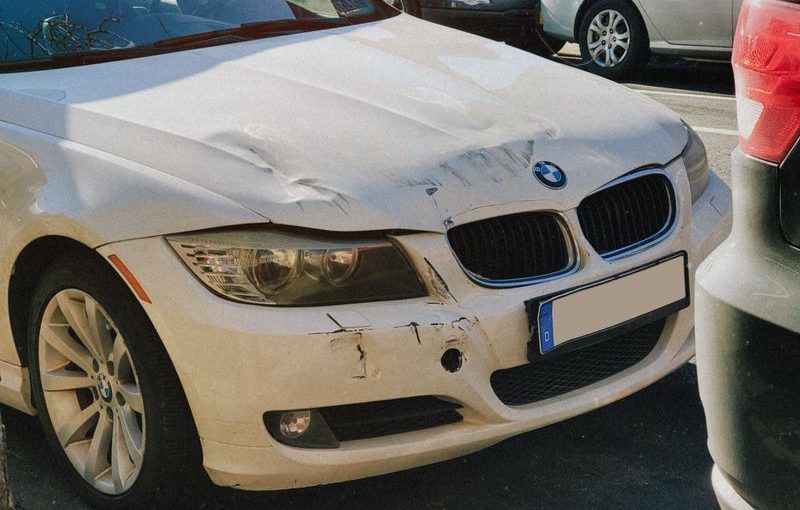
If you are a college student shopping for car insurance, you have probably seen the terms "comprehensive" and "collision" dozens of times. Your parents told you to get "full coverage." Your lender says you need both. Your insurance agent keeps adding them to your quote. But do you actually understand what these two coverages do, how much they cost, and whether you truly need them?
This guide breaks down everything a college student needs to know about comprehensive and collision coverage in 2026. We will cover what each one protects, how much they cost, when you should keep them, and the one simple rule that tells you when it is time to drop them and pocket the savings.
What Is Collision Coverage?
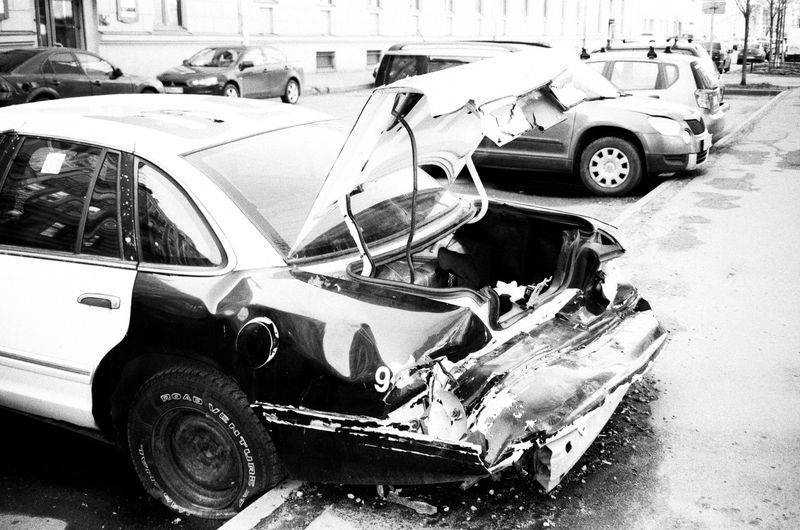
Collision coverage pays to repair or replace your car when it is damaged in a crash, regardless of who is at fault. Whether you rear-end someone at a stoplight, back into a lamppost in a parking garage, or slide into a guardrail on an icy road, collision coverage steps in.
Here is exactly what collision covers:
Collisions with other vehicles -- whether you are at fault or the other driver is uninsured
Collisions with objects -- guardrails, fences, mailboxes, trees, poles, and buildings
Single-car accidents -- rollovers, running off the road, hitting a ditch
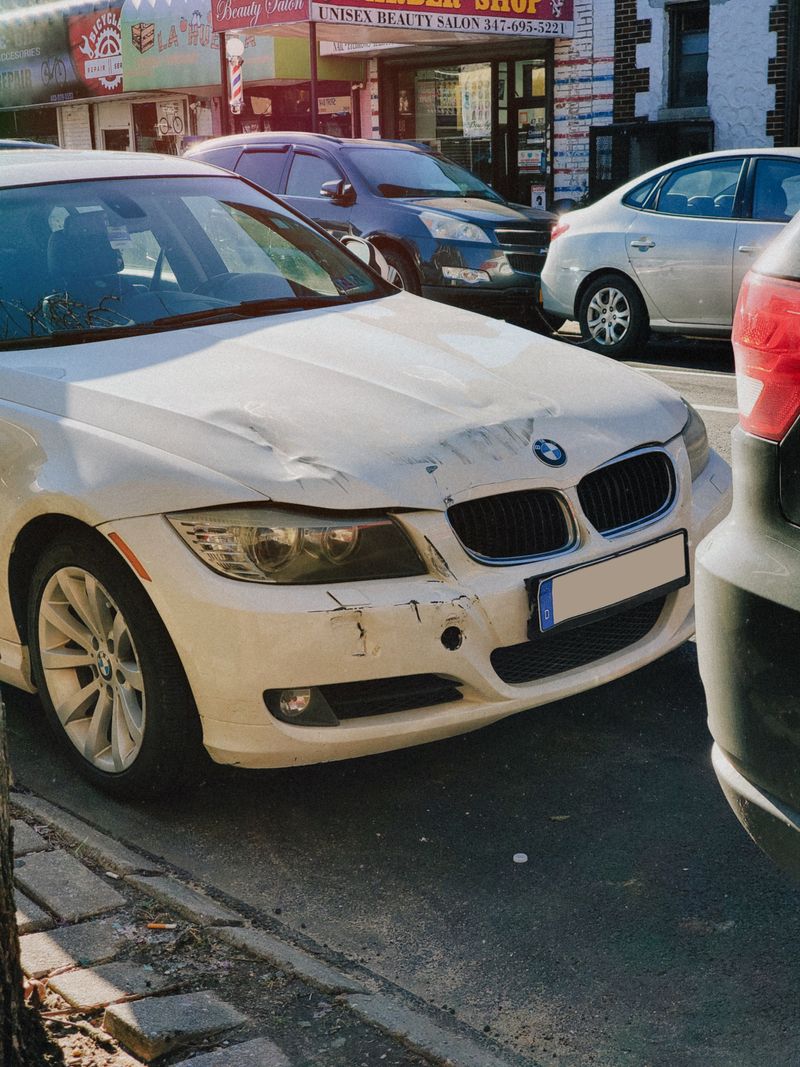
Parking lot damage -- someone hits your parked car and drives off
Pothole damage -- if a crater in the road destroys your suspension or rims
What collision does not cover: damage to the other driver's car (that is liability), medical bills (that is PIP or health insurance), or damage from weather, theft, or animals (that is comprehensive).
What Is Comprehensive Coverage?
Comprehensive coverage protects your car from everything else -- all the damage that happens when you are not driving or when the cause is beyond your control. If collision is "crash insurance," comprehensive is "everything-but-crash insurance."

Here is what comprehensive covers:
Theft -- your car is stolen and not recovered, or recovered with damage
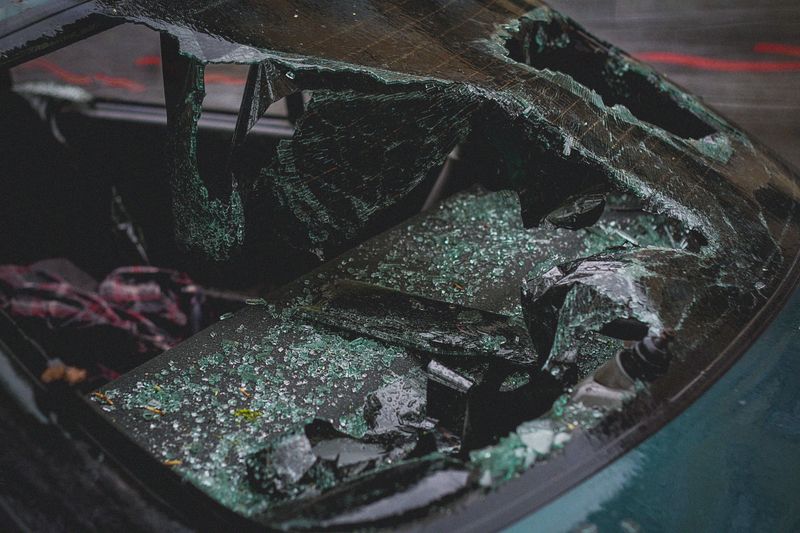
Vandalism -- keyed paint, broken windows, slashed tires
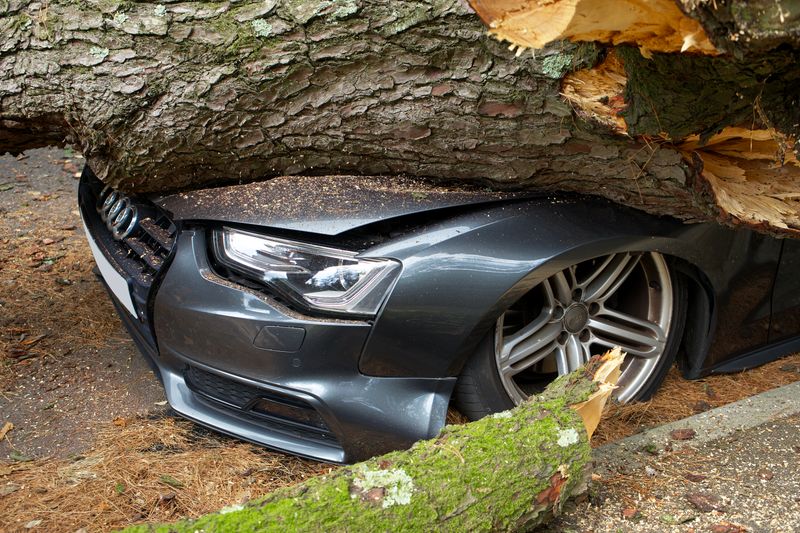
Weather damage -- hail dents, tornado damage, hurricane flooding, ice storms
Fire -- engine fires, wildfires, or electrical fires
Falling objects -- tree branches, rocks, debris on the highway
Animal collisions -- hitting a deer, moose, or other wildlife (yes, this is comprehensive, not collision)
Glass and windshield damage -- cracked windshields, shattered windows
Civil disturbances -- riots, protests that result in property damage
A critical note for college students in 2026: modern windshields are expensive. Today's windshields contain cameras, sensors, and lane-departure warning systems. Replacing one can cost $1,000 to $2,000. Comprehensive coverage typically includes glass repair, and in some states like Florida, Kentucky, and South Carolina, insurers must offer zero-deductible glass coverage.
Collision vs Comprehensive: The Key Differences
The simplest way to remember the difference: if your car was moving and you crashed it, that is collision. If something happened to your parked car or an act of nature damaged it, that is comprehensive.
| Feature | Collision Coverage | Comprehensive Coverage |
|---|---|---|
| What it covers | Damage from crashes with cars, objects, or rollovers | Theft, weather, fire, vandalism, animals, falling objects, glass |
| Avg annual cost (2026) | $1,009 | $426 |
| Typical deductible | $250 - $1,000 | $100 - $500 |
| Required by law? | No | No |
| Required by lender? | Yes, if financing or leasing | Yes, if financing or leasing |
| Affects rates after claim? | Yes -- at-fault claims raise rates significantly | Usually no -- comprehensive claims rarely raise rates |
| Who needs it most? | Anyone with a car worth more than $3,000 | Anyone in storm-prone, high-theft, or rural (deer) areas |
How Much Do They Cost in 2026?
According to 2026 data from Insurance.com, the national average costs are:
Collision coverage: $1,009 per year (about $84 per month)
Comprehensive coverage: $426 per year (about $36 per month)
Both together: approximately $1,435 per year (about $120 per month)
For college students, these costs can be significantly higher. Young drivers under 25 typically pay 50% to 100% more than the national average due to their risk profile. A 20-year-old student might pay $1,500 to $2,000 per year for collision alone and $600 to $850 for comprehensive.
Costs vary dramatically by state. NAIC data shows that California drivers pay the most for collision ($501 average), while South Dakota drivers pay the most for comprehensive ($353 average) due to hail and storm risks. Wisconsin drivers enjoy the lowest collision rates at $245 average.
Several factors drive your individual cost:
Vehicle value -- a $30,000 car costs more to insure than a $8,000 car because repairs and replacement cost more
Repair costs -- luxury brands and EVs with proprietary parts have higher repair costs
Your location -- urban areas with higher traffic and theft rates cost more; rural areas with deer collision risk can also be expensive
Your deductible -- a higher deductible means a lower premium, but more out-of-pocket risk
Driving record -- accidents and tickets push collision premiums up sharply
Age -- drivers under 25 pay the highest rates due to statistical risk
The 10% Rule: When to Drop Coverage
Money expert Clark Howard and insurance analysts at MoneyGeek both recommend the same simple formula: if your annual premium for comprehensive and collision combined exceeds 10% of your car's current market value, it is time to drop the coverage.
The formula looks like this:
Annual Cost of Comprehensive + Collision > Car's Value / 10
Here are some real-world examples for college students:
| Car Value | 10% Threshold | Your Annual Premium | Decision |
|---|---|---|---|
| $15,000 | $1,500 | $1,435 | Keep -- premium under threshold |
| $10,000 | $1,000 | $1,435 | Drop -- premium exceeds 10% |
| $7,500 | $750 | $1,435 | Drop -- well over 10% |
| $5,000 | $500 | $1,435 | Drop -- premium is 29% of car value |
| $3,000 | $300 | $1,435 | Drop immediately -- premium is 48% of value |
MoneyGeek updated the old $5,000 benchmark to $7,500 for 2026 because premiums have risen significantly. A car worth $7,500 or less often does not justify the cost of full coverage when you factor in deductibles and the vehicle's declining value.
Four Conditions That Must All Be True Before Dropping
Before you drop comprehensive and collision, all four of these conditions need to apply. If even one does not fit, keep the coverage:
The 10% rule is met -- your annual premium exceeds 10% of your car's value
Your car is worth less than $7,500 -- low enough that replacement is feasible
You have emergency savings -- enough to cover a major repair or replacement out of pocket
Your car is paid off -- lenders require both coverages until the loan is fully repaid
If you drop coverage and your car is financed, your lender will purchase force-placed insurance on your behalf -- and charge you for it. Force-placed insurance typically costs two to three times more than a policy you buy yourself, and it only protects the lender's interest, not yours.
Student-Specific Scenarios
Scenario 1: You Drive a $4,000 Used Car to Campus
Your car is paid off, and it is worth about $4,000. You live in a dorm and drive 3 miles to class. At a 10% threshold of $400 per year, your $1,435 annual premium is 36% of your car's value. Drop both coverages and put $120 per month into savings instead. If the car gets totaled, you can buy a replacement with your savings within a year.
Scenario 2: You Have a $20,000 Car on a Parent's Loan
Your car is financed and worth $20,000. Your 10% threshold is $2,000. Even as a young driver paying higher rates, your premium of $1,800 is below the threshold. Plus, your lender requires both coverages. Keep both, but shop around for the best rate and raise your deductible to $1,000 to save $100 to $200 per year.
Scenario 3: You Live in a Hail-Prone State Like Texas or Colorado
Even if your car is only worth $5,000, a single hailstorm can cause $3,000 to $5,000 in damage. Comprehensive coverage at $426 per year with a $250 deductible is a bargain compared to paying $4,500 out of pocket. Keep comprehensive, drop collision if your driving risk is low. This is the smart middle ground.
Scenario 4: Your Campus Has High Theft Rates
If you park on the street in an urban campus area with high vehicle theft rates, comprehensive is essential regardless of your car's value. The $426 average annual cost is trivial compared to losing your entire vehicle. Check the National Insurance Crime Bureau's theft map for your campus ZIP code.
Deductible Strategy: The Smart Middle Ground
Before dropping coverage entirely, consider raising your deductible. This is the single best middle-ground strategy for students who want to save money without going bare.
According to the Insurance Information Institute, raising your collision deductible from $200 to $500 cuts collision premium by 15% to 30%. Raising it from $500 to $1,000 saves an additional $100 to $200 per year. You still have coverage for catastrophic losses, but you self-insure for smaller claims.
| Deductible | Collision Annual Cost | Savings vs $250 | Out-of-Pocket Risk |
|---|---|---|---|
| $250 | $1,200 | Baseline | $250 per claim |
| $500 | $960 | Save $240/yr (20%) | $500 per claim |
| $1,000 | $780 | Save $420/yr (35%) | $1,000 per claim |
| $2,000 | $660 | Save $540/yr (45%) | $2,000 per claim |
Important: you can set different deductibles for collision and comprehensive. Many students keep a low $100 comprehensive deductible (since it is already cheap at $426/year) while raising their collision deductible to $1,000 (since collision is expensive and they are less likely to file a collision claim if they drive carefully).
What Happens When You File a Claim?
One critical difference between collision and comprehensive is how claims affect your future rates:
Collision claims almost always raise your premium if you are at fault. An at-fault accident can increase rates by 28% to 50% for three to five years. For a student paying $2,000/year, that is $560 to $1,000 extra per year -- sometimes more than the claim payout itself.
Comprehensive claims generally do not raise your rates. Insurance companies view comprehensive events as "not your fault" since you cannot control hail, theft, or deer. Some states like Texas allow rate increases after three comprehensive claims in 36 months, but a single claim rarely affects rates.
This means: file comprehensive claims freely when you need to, but think carefully before filing a small collision claim. If the repair costs $1,200 and your deductible is $1,000, you only get $200 from the insurer -- but your rates could go up by $500+ per year for years. In that case, paying out of pocket is smarter.
Step-by-Step Decision Guide for Students
Follow this five-step process to decide whether to keep or drop each coverage:
Check your loan status. If your car is financed or leased, you must keep both coverages. Period. No exceptions. Your lender requires it, and dropping it triggers expensive force-placed insurance.
Determine your car's current value. Use Kelley Blue Book (kbb.com) or Edmunds to get the actual cash value. Be honest about mileage and condition. A car you bought for $12,000 two years ago may only be worth $8,000 today.
Calculate your 10% threshold. Take your car's value and divide by 10. If your annual premium for comprehensive plus collision exceeds this number, you are a candidate for dropping.
Assess your emergency savings. Can you afford to replace your car tomorrow if it is totaled or stolen? If the answer is no, keep at least comprehensive coverage. It costs only $426 per year on average but covers catastrophic losses.
Consider your risk factors. Do you live in a hail-prone area? Is your campus in a high-theft ZIP code? Do you commute on highways with deer? If yes to any of these, keep comprehensive even if the math says drop. You can always drop collision first and keep comprehensive as a safety net.
The Smart Combo Strategy for Students
You do not have to choose all-or-nothing. The smartest approach for many college students is a tiered strategy:
| Your Situation | Collision | Comprehensive | Estimated Savings |
|---|---|---|---|
| New car, financed, $20K value | Keep ($1,000 ded) | Keep ($250 ded) | $200-300/yr from higher ded |
| Used car, paid off, $10K value | Keep ($1,000 ded) | Keep ($100 ded) | $300-500/yr from higher ded |
| Older car, paid off, $5K value | Drop | Keep ($100 ded) | $1,000+/yr |
| Old car, paid off, $3K value | Drop | Keep only if high-risk area | $1,400/yr |
| Very old car, $1K value | Drop | Drop | $1,435/yr |
The key insight: drop collision first, keep comprehensive longer. Collision costs 2.4 times more than comprehensive ($1,009 vs $426), so dropping collision saves the most money. Comprehensive is cheap insurance against catastrophic events you cannot control. Even on a $3,000 car, a single hailstorm or theft can wipe out the entire vehicle value -- and comprehensive at $426/year with a $100 deductible would pay $2,650 toward a replacement.
Common Mistakes Students Make
Dropping both at once -- the most common mistake. Drop collision first, keep comprehensive for at least another year or two. Comprehensive is cheap and covers events you cannot prevent.
Forgetting about glass coverage -- modern windshields with ADAS sensors cost $1,000 to $2,000. Dropping comprehensive means you pay 100% of that.
Not checking the 10% rule annually -- your car loses value every year, but your premium may not drop as fast. Re-check the math every renewal period.
Dropping coverage without emergency savings -- if you cannot afford to replace your car, you should not drop coverage. Self-insuring only works if you actually have the funds.
Ignoring UM/UIM coverage -- even if you drop comprehensive and collision, always keep uninsured/underinsured motorist coverage. If an uninsured driver totals your car, UM/UIM can pay for your vehicle damage in many states.
Filing small collision claims -- a $1,200 repair with a $1,000 deductible gets you $200 from the insurer but may raise your rates by $500+ per year for three years. Pay small claims out of pocket.
Can You Add Coverage Back Later?
Yes. You can add collision or comprehensive back to your policy at any time. There is no penalty for dropping and re-adding. However, your new rates will be based on your car's current value and your current risk profile. If your car has depreciated further or you have had accidents since dropping, the new rate may be different.
Some insurers may require a vehicle inspection before re-adding physical damage coverage, especially if coverage has been dropped for more than 30 days. This prevents fraud where someone drops coverage, damages their car, and then re-adds coverage to file a claim.
The Bottom Line
Comprehensive and collision coverage together cost the average driver about $1,435 per year. For a college student on a tight budget, that is real money. The 10% rule gives you a clear formula: if your annual premium exceeds 10% of your car's value, it is time to consider dropping. But coverage decisions are not just about math -- they are about risk tolerance.
The smartest approach for most students: keep comprehensive (it is cheap and covers catastrophes you cannot control), raise your collision deductible to $1,000 (saves 35%), and re-evaluate every year as your car depreciates. If you live in a hail-prone, flood-prone, or high-theft area, comprehensive is worth keeping even on a cheap car. And always, always keep liability and uninsured motorist coverage -- those are non-negotiable.
Remember the words of money expert Clark Howard: when you drop coverage, "you are the insurance company." Make sure you can afford to be.
About the Author
Written by Sarah Mitchell, founder of Student Car Insurance Guide. Sarah spent 8 years as a licensed insurance agent helping young drivers and their families find affordable coverage. Every guide on this site is fact-checked against current state regulations and real quote data from major insurers.
Have a question about this topic? Email our editorial team at 1404555604w@gmail.com.
