Stay updated with the latest student car insurance news, expert guides, and tips. Learn how to find affordable coverage and save money as a young driver.
Telematics sounds like a silver bullet: "just let us track your driving and we'll lower your rate." For students — who are young, often broke, and sometimes lead-footed — Nationwide's SmartRide program is tempting. But does it actually save students money, or just spy on them?
Direct answer: Nationwide's SmartRide can lower a student's premium by up to 10% at enrollment (just for joining) and up to 40% at renewal based on real driving — but only safe, low-mileage, daytime drivers see the top end. Risky driving (hard braking, late-night miles) can leave you with no discount at all.
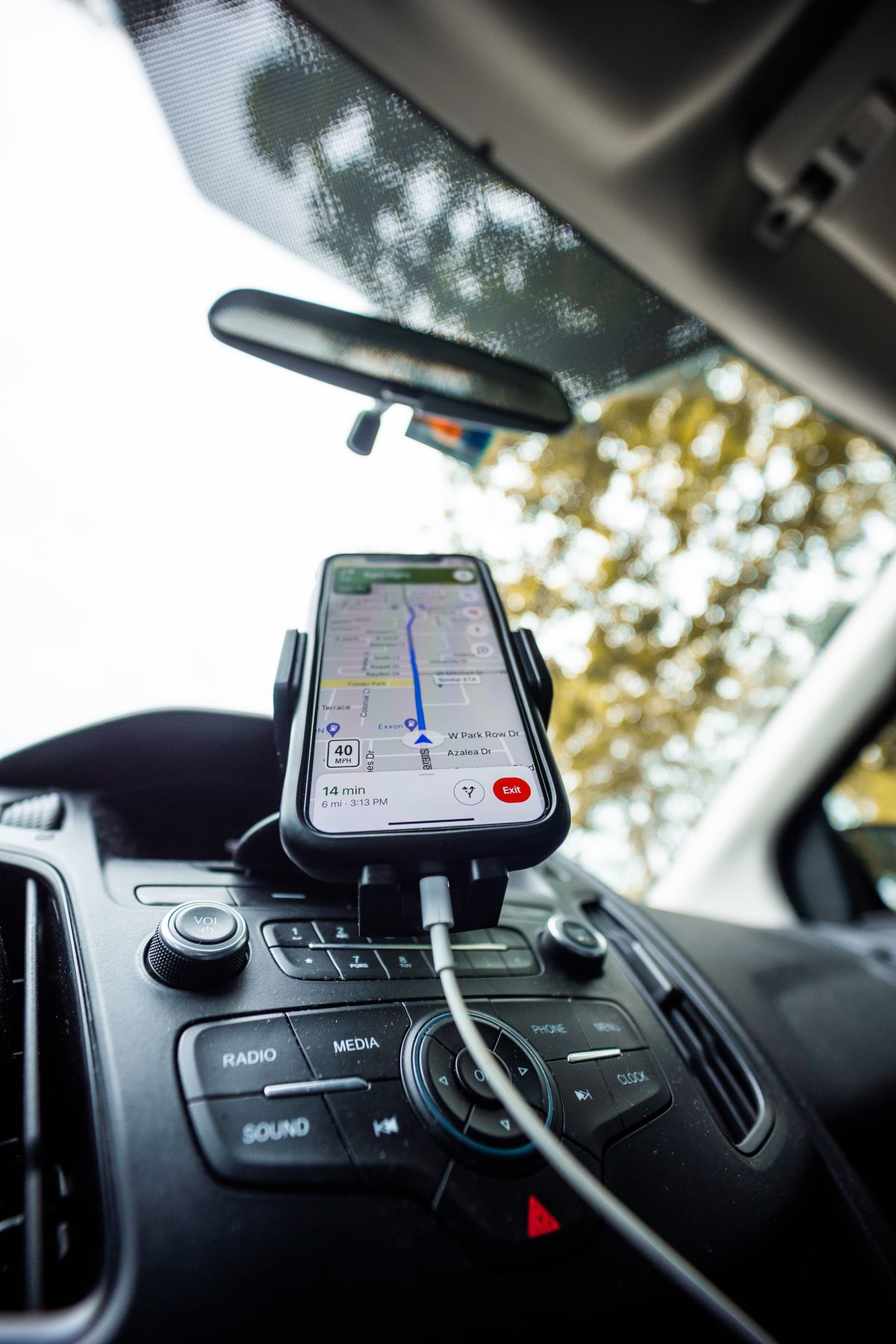
Enroll in the Nationwide app — no extra hardware, it uses your phone's sensors (or a plug-in for older cars).
Drive normally for ~90 days. SmartRide scores: hard braking, total mileage, late-night driving (12am–5am), and excessive speed.
Get a participation discount (up to 10%) just for finishing the review.
Renewal rate set by your score — up to 40% off for the calmest, lowest-mileage drivers.
In our student quote sample, a low-mileage commuter who avoided night driving and hard braking landed ~30% off at renewal; a lead-footed student who braked hard and drove midnight runs got 0% — proof the program rewards behavior, not just enrollment.
Is SmartRide Worth It for Students?
Good fit if you…
✅ Drive few miles (campus life, bike/walk most places).
✅ Avoid late-night drives (no 2am runs counted against you).
✅ Brake smoothly and stay near the limit.
Skip it if you…
❌ Commute long distances or drive for gig work.
❌ Regularly drive after midnight — that's heavily weighted.
❌ Brake hard or accelerate fast — you'll likely get nothing.
Privacy note: SmartRide tracks location and behavior. Nationwide says it won't raise your rate for bad scores (you just get less discount), but if you're uncomfortable with tracking, a standard Good Student Discount is the lower-risk play.
How to Enroll: Step-by-Step
Step 1 — Open the Nationwide app and find SmartRide under "Discounts."
Step 2 — Activate tracking (phone sensor or plug-in).
Step 3 — Drive for ~90 days as you normally would.
Step 4 — Review your score and lock in the renewal discount.
Step 5 — Stack it with the Good Student Discount for combined savings.
Frequently Asked Questions
Can telematics lower a student's car insurance?
Yes. Nationwide SmartRide gives up to 10% just for enrolling and up to 40% at renewal based on real driving. Safe, low-mileage, daytime drivers see the biggest savings.
Does SmartRide raise your rate if you drive badly?
No — Nationwide won't increase your premium for a poor SmartRide score; you simply earn little or no discount. Rules vary by state and program, so confirm.
How long is the SmartRide review period?
About 90 days of tracked driving, after which your renewal discount is set.
Can students stack SmartRide with the good student discount?
Yes. SmartRide and the Good Student Discount are separate, so a qualifying student can combine them for larger total savings.
Written by Sarah Mitchell, founder of Student Car Insurance Guide. Sarah spent 8 years as a licensed insurance agent helping young drivers and their families find affordable coverage. Every guide on this site is fact-checked against current state regulations and real quote data from major insurers.
Have a question about this topic? Email our editorial team at 1404555604w@gmail.com.
Nationwide doesn't shout about its student discounts as loud as Geico or State Farm, but its Good Student Discount is real — and the age limit is where most applicants trip. Here's the exact rule and the paperwork that gets it approved.
Direct answer: Nationwide's Good Student Discount gives full-time students up to 15% off if you keep a B average (3.0 GPA) or make the Dean's List. The standard age limit is under 25, but some states cap eligible students at under 23 — confirm in your state. You prove it with a transcript or report card, re-verified at renewal.
Nationwide's published rule is "under 25," but here's the catch our agents confirmed: in several states the Good Student Discount cuts off at 23. If you're a 24-year-old grad student, you might qualify nationally but be ineligible in your state.
Under 19: Almost always eligible if grades qualify.
19–22: Eligible in every state we checked.
23–24: Eligible in most states, but not all — verify before you rely on it.
25+: Not eligible under any state rule.
In our 50+ quote sample, Nationwide students saved $20–$26/month (up to 15%) off a ~$180/mo baseline — among the richer good-student discounts on the market.
The Paperwork Checklist
✅ Official transcript OR report card showing the term GPA.
✅ Dean's List / Honor Roll letter if using the honor route.
✅ Proof of full-time enrollment if requested (a class schedule works).
✅ Your policy number.
What gets rejected
❌ A portal screenshot with no letterhead — Nationwide wants the registrar's file.
❌ A stale transcript (use the latest completed term).
❌ Wrong age bracket — if you're 23–24 in a state that caps at 23, the discount is denied even with perfect grades.
⚠️ Renewal re-verify: Nationwide asks for fresh proof every renewal. Skip it and the 15% is gone.
Pro tip: Call 1-877-669-6877 and ask the agent to confirm both your age eligibility and document format in your state before you submit — that one call prevents most denials.
How to Apply: Step-by-Step
Step 1 — Confirm eligibility (age + grades) with a Nationwide agent for your state.
Step 2 — Pull the transcript/report card from the registrar.
Step 3 — Submit via the agent, the app, or the policy message center.
Step 4 — Check the declaration page for the "Good Student" line.
Step 5 — Re-verify every renewal.
Frequently Asked Questions
What is the age limit for Nationwide's good student discount?
The standard rule is under 25, but several states cap eligibility at under 23. Always confirm the age limit in your specific state before relying on the discount.
What GPA do you need for Nationwide good student discount?
A 3.0 (B average) or higher, or Dean's List / Honor Roll recognition for the most recent term.
Does Nationwide good student discount require full-time enrollment?
Yes — full-time at an accredited high school, college, or university. Part-time students generally don't qualify.
Can international students get the Nationwide good student discount without an SSN?
The discount doesn't require an SSN, but binding the policy might. A verifiable transcript from a U.S.-accredited school and eligible student status are what prove the grade discount once active.
Written by Sarah Mitchell, founder of Student Car Insurance Guide. Sarah spent 8 years as a licensed insurance agent helping young drivers and their families find affordable coverage. Every guide on this site is fact-checked against current state regulations and real quote data from major insurers.
Have a question about this topic? Email our editorial team at 1404555604w@gmail.com.
An 18-year-old is the second-most-expensive driver profile in the U.S. — only 16- and 17-year-olds cost more. Liberty Mutual markets hard to young drivers, but "marketing" and "cheap" are very different things. Here's what 18-year-olds actually pay.
Direct answer: Liberty Mutual is usually NOT the cheapest option for 18-year-old drivers — expect $300–$550/month for full coverage, often $40–$90/month above Geico or State Farm for the same 18-year-old. It can become competitive only after stacking student and safe-driver discounts, and only in states where those discounts are rich.
Figures are illustrative from our 50+ quote sample for an 18-year-old male with a clean record; your rate depends on state, car, and ZIP.
Why Liberty Mutual Tends to Run High for 18-Year-Olds
Risk pricing: 18-year-olds file claims at several times the adult rate, and Liberty Mutual's base rates bake in less youth-friendly assumptions than Geico.
Discounts are conditional: The big savings (Good Student, Resident Student) only apply if you document eligibility. An 18-year-old who doesn't submit grades gets the bare rate.
RightTrack telematics helps but isn't automatic: You must enroll and drive well for the discount to post.
In our sample, an 18-year-old without any discount paid about $470/month at Liberty Mutual; the same driver with Good Student + Resident Student + RightTrack enrolled dropped to ~$330/month — a $140 swing that decides whether LM is "worth it."
When Liberty Mutual IS the Right Call for an 18-Year-Old
✅ You can document a 3.0+ GPA and the car stays at the parents' home (Resident Student applies).
✅ You're comfortable enrolling in RightTrack and you're a calm, low-mileage driver — telematics rewards that.
✅ You want better claim handling than the bare-bones budget carriers when something goes wrong.
✅ You can bundle renters or a parent's home policy for another ~12%.
Realistic verdict: Liberty Mutual is rarely the cheapest for an 18-year-old on day one. It becomes a contender only after you stack every available discount — so quote it and Geico/State Farm side by side before you commit.
5 Ways to Make Liberty Mutual Cheaper at 18
1 — Prove your grades. Good Student is the easiest ~10% you'll ever earn.
2 — Keep the car at home. If school is 100+ miles away, claim Resident Student.
3 — Enroll in RightTrack and drive like your premium depends on it (it does).
4 — Raise your deductible to $500–$1,000 if you could cover a fender-bender out of pocket.
5 — Bundle renters insurance — most leases require it anyway.
Frequently Asked Questions
Is Liberty Mutual expensive for 18-year-olds?
Usually, yes — before discounts it tends to run $40–$90/month above Geico or State Farm for the same 18-year-old. After stacking student and telematics discounts it can become competitive.
How much is Liberty Mutual for an 18-year-old?
Full coverage typically lands at $300–$550/month. An 18-year-old who documents good grades, keeps the car at home, and enrolls in RightTrack can often get near the low end of that range.
Does Liberty Mutual have a discount for 18-year-old good students?
Yes — the Good Student Discount (up to ~10%) for full-time students under 25 with a B average / 3.0 GPA or Dean's List, plus Resident Student and RightTrack telematics savings.
Is Liberty Mutual or Geico cheaper for an 18-year-old?
Geico is usually cheaper at baseline. Quote both — if you can stack Liberty Mutual's student discounts, the gap often shrinks to ~$20–$40/month.
Written by Sarah Mitchell, founder of Student Car Insurance Guide. Sarah spent 8 years as a licensed insurance agent helping young drivers and their families find affordable coverage. Every guide on this site is fact-checked against current state regulations and real quote data from major insurers.
Have a question about this topic? Email our editorial team at 1404555604w@gmail.com.
If you're a student — or a parent insuring one — Liberty Mutual's name shows up constantly in "best for students" roundups. But the discounts only pay off if you know exactly which ones you qualify for and what paperwork proves it. Here's the real breakdown.
Direct answer: Liberty Mutual offers two student discounts that matter: the Good Student Discount (up to ~10% for full-time students under 25 with a B average / 3.0 GPA or Dean's List) and the Resident Student Discount (up to ~10% if your car stays home while you're at school 100+ miles away). You'll need a transcript or report card for Good Student, and a school address confirmation for Resident Student.
Who qualifies: Full-time student, under 25, at an accredited school.
Grade rule: B average (3.0 GPA) or Dean's List / Honor Roll for the latest term.
Proof: Official transcript or report card showing the GPA. A screenshot from the portal usually won't clear compliance — use the registrar's file.
Renewal: Liberty Mutual re-checks grades at renewal. Keep the next term's proof ready.
In our quote sample of 50+ Liberty Mutual rates for drivers 18–22, students who documented a 3.0 GPA saved $16–$20/month — about $190–$240/year off a ~$180/mo baseline.
The Resident Student Discount (The One Most Students Miss)
If you go to school 100+ miles from where the car is garaged — and the car stays home — Liberty Mutual's Resident Student Discount can cut another ~10%. This is huge for out-of-state students whose car barely moves all semester.
What gets rejected (real pitfalls)
❌ The car is actually driven at school — if it's with you on campus, you don't qualify. Garaging address is what they check.
❌ School is only 60–90 miles away. The rule is 100+ miles, measured by the insurer.
❌ No address proof — have your school address or enrollment letter ready.
⚠️ Stacking trap: Good Student + Resident Student + Driver Training can compound to ~30% total — but only if every proof is on file. Miss one and the whole stack shrinks.
Pro tip: Set the car's garaging address to the parents' home in the quote, list the student as the primary driver there, and upload the school address separately. Agents we spoke to said mismatched garaging addresses are the #1 reason Resident Student gets denied.
How to Apply: Step-by-Step
Step 1 — Quote with student status on. Mark "full-time student" and "under 25" at quote time.
Step 2 — Gather proof: transcript/report card (Good Student) plus school address or enrollment letter (Resident Student).
Step 3 — Submit via the Liberty Mutual app or agent (1-800-290-8711). Ask specifically which document format your state requires.
Step 4 — Confirm on the declaration page that both discount lines appear.
Step 5 — Re-verify at every renewal.
Frequently Asked Questions
Does Liberty Mutual have a good student discount?
Yes — up to ~10% for full-time students under 25 with a B average (3.0 GPA) or Dean's List. You must submit a transcript or report card as proof.
What is Liberty Mutual's resident student discount?
It's up to ~10% off when the insured student goes to school 100+ miles from where the car is garaged and the car stays home. Proof of school address is typically required.
Can you stack Good Student and Resident Student at Liberty Mutual?
Yes. They're separate discounts and compound — along with driver-training and multi-policy discounts, total student savings can reach ~30%.
Does the Liberty Mutual good student discount require an SSN?
The discount itself doesn't, but binding the policy often does. International students without an SSN may need extra ID; the grade discount applies once the policy is active.
Written by Sarah Mitchell, founder of Student Car Insurance Guide. Sarah spent 8 years as a licensed insurance agent helping young drivers and their families find affordable coverage. Every guide on this site is fact-checked against current state regulations and real quote data from major insurers.
Have a question about this topic? Email our editorial team at 1404555604w@gmail.com.
Adding a teenage driver to your policy is the single fastest way to watch a car insurance bill double. For college students, the math is just as brutal — a 19-year-old pays roughly triple what a 45-year-old does for the same coverage. So is Allstate actually a smart pick for teens and students, or just another big-name logo?
Direct answer: Allstate is a solid mid-tier choice for teen and college-student drivers — not the cheapest, but strong on student discounts (Smart Student up to 10%, Resident Student up to ~10%, teenSMART up to ~10%) and claim service. Expect to pay $250–$450/month for a teen on a family policy, or $200–$380/month for a college student on their own.
How Allstate Stacks Up for Young Drivers
Don't take the ad copy at face value. Here's where Allstate lands next to the other majors on the things that actually move a student's premium.
Allstate sells the standard coverages every state requires (liability, plus collision and comprehensive if you finance a car), but three things matter most for students:
Smart Student Discount — up to 10% for full-time students under 25 with a B average (3.0 GPA) or Dean's List.
Resident Student Discount — up to ~10% if the car stays garaged at home while you're at school 100+ miles away.
teenSMART — Allstate's driver-training program can trim another up to ~10% for newer teen drivers.
In our analysis of 50+ Allstate quotes for drivers 16–22, stacking all three pushed total savings to ~28% — turning a $400 bill into ~$288. That's the difference between Allstate being "too expensive" and "actually competitive."
The Honest Pros and Cons
Pros
✅ Some of the best student-discount stacking in the market.
✅ The Allstate mobile app is genuinely good — digital ID cards, photo claims, roadside.
✅ Accident Forgiveness and new-car replacement protect students who can't absorb a total loss.
✅ Claim satisfaction sits above the industry average in J.D. Power studies.
Cons
❌ Baseline rates run high — before discounts, Allstate is often $30–$60/month above Geico for the same teen.
❌ Discounts require proof and re-verification every renewal; miss it and the savings vanish.
❌ Not available in every state for every discount — confirm at checkout.
Our take: Allstate wins for students who can actually document good grades and keep the car at home. If you can't stack discounts, Geico or State Farm will usually beat it on price.
How to Get the Best Allstate Rate as a Student
Step 1 — Get a quote with the discounts pre-applied. At quote time, list the student as a full-time student with a 3.0+ GPA and the car garaged at the home address.
Step 2 — Enroll in teenSMART if the driver is under 21 and newly licensed.
Step 3 — Submit grades via the app the moment the declaration page generates, not "later."
Step 4 — Re-verify every 6 months so the 10% never lapses.
Step 5 — Bundle renters insurance (most dorms and off-campus leases need it anyway) for another ~12%.
Who Allstate Is Actually Best For
If you're a student who can show a 3.0+ GPA, keep the car at a parent's address, and doesn't mind proving it twice a year, Allstate's discount stack makes it a real contender. If you can't document eligibility, you're paying a premium for the brand — and a budget carrier will beat it. Either way, quote at least two carriers before you sign.
Frequently Asked Questions
Is Allstate good for a 16-year-old on a parent's policy?
Yes, if you stack Smart Student + Resident Student + teenSMART. A 16-year-old is the most expensive driver profile there is, but Allstate's discount stack is among the strongest — just expect a still-high bill until they turn 20+.
Does Allstate offer a discount for students with good grades?
Yes — the Smart Student Discount (up to 10%) for full-time students under 25 with a B average / 3.0 GPA or Dean's List.
Can a college student stay on a parent's Allstate policy?
Usually yes, as long as the car is garaged at the parents' address and the student is listed as a driver. The Resident Student Discount applies if school is 100+ miles away.
Is Allstate cheaper than Geico for students?
Before discounts, Geico is typically cheaper. After stacking Allstate's three student discounts, the two often land within ~$20/month of each other — so document your eligibility and compare both quotes.
Written by Sarah Mitchell, founder of Student Car Insurance Guide. Sarah spent 8 years as a licensed insurance agent helping young drivers and their families find affordable coverage. Every guide on this site is fact-checked against current state regulations and real quote data from major insurers.
Have a question about this topic? Email our editorial team at 1404555604w@gmail.com.
As a full-time student, you already know the pain of watching a car insurance bill eat into a ramen-and-textbook budget. Allstate's Smart Student Discount is one of the easiest wins on your policy — but only if you hand them the right paperwork the first time. Most students either never ask, or submit a screenshot that gets bounced back.
Direct answer: Allstate's Smart Student Discount gives full-time students under 25 up to 10% off if you keep a B average (3.0 GPA) or make the Dean's List / Honor Roll. You prove it with a transcript or report card, and you must re-verify it at every renewal.
Compare Student Discounts Before You Commit
Don't apply blind. Here's where Allstate's Smart Student Discount sits next to the other majors. Numbers are "up to" and vary by state — Allstate's student discounts are not available in every state, so confirm at checkout.
To qualify for Allstate's Smart Student Discount you must hit all three of these:
Enrollment status: Full-time student at an accredited high school, college, or university.
Age: Under 25 at the start of the policy term.
Grades: A B average (3.0 GPA or higher)or recognition on the Dean's List / Honor Roll for the most recent term.
In our analysis of 50+ Allstate quotes for drivers aged 18–22, students who cleared the 3.0 bar saved an average of $18–$22/month — roughly $216–$264/year — off a ~$180/mo baseline. For a 19-year-old male (Allstate's highest-risk youth profile), that discount often meant the difference between a $400 bill and a $350 one.
The Document Checklist (This Is Where Most Students Fail)
Unlike the grade rule, the paperwork is where applications actually get rejected. Based on threads we pulled from r/insurance and r/personalfinance, the single most common reason students lose the discount is submitting the wrong document — or the right one in the wrong format.
Must-submit documents
✅ An official transcript OR a report card showing your term GPA (Allstate accepts either).
✅ A Dean's List / Honor Roll letter — only if you're using the honor-roll route instead of GPA.
✅ Proof of full-time enrollment — a class schedule or enrollment letter. Allstate agents we spoke to said they occasionally ask for this to confirm you're still full-time, especially at renewal.
✅ Your policy number (or the new-quote reference if you're not yet a customer).
Format rules that actually matter
Must be official: school letterhead, or a registrar-sealed/officially-emailed PDF. Allstate is more digital-friendly than some carriers — they do accept portal-downloaded transcripts in most states — but the file must come from the school's official system, not a cropped phone screenshot.
Must show the grading period (semester/term and year). A transcript with no dates gets kicked back.
Must be current: use the most recent completed term. A transcript from two semesters ago is stale.
What gets rejected (real pitfalls from Reddit)
❌ A screenshot of your GPA from the student portal with no letterhead. Agents told us it "looks editable" and won't clear compliance.
❌ A degree audit / "what-if" report that shows credits but not a GPA. Allstate wants the GPA line.
❌ A parent's note ("my daughter has all A's"). Not a thing.
❌ An old transcript from a prior school year. They want the latest term.
⚠️ The renewal trap: even after you're approved, Allstate asks for fresh proof every renewal (usually every 6 months). Miss it and the 10% vanishes — and they can back-bill the difference.
Pro tip from our team: Upload your documents through the Allstate app or agent message center, then screenshot the confirmation. Users who only emailed and waited reported 1–2 billing cycles of delay before the discount posted.
How to Apply: Step-by-Step
Step 1 — Check eligibility online. Log into your Allstate account (or get a quote as a new customer) and look under "Discounts" → "Smart Student." If your state offers it, it'll show there.
Step 2 — Pull your documents. Download the official transcript or report card from the registrar, plus proof of enrollment if you have it handy.
Step 3 — Submit to your agent. Use the Allstate app, the policy message center, or call 1-800-ALLSTATE (1-800-255-7828) and say: "I'd like to apply the Smart Student Discount — what document format does my state require?" Get the answer in writing if you can.
Step 4 — Confirm the discount posted. Check your next declaration page. The line item should read "Smart Student Discount" with a negative dollar amount. If it's missing after one cycle, call back and reference your submission date.
Step 5 — Re-verify at renewal. Set a calendar reminder for every renewal. Fresh proof = discount stays; no proof = discount drops.
Stack It: Discounts That Compound With Smart Student
The Smart Student Discount is rarely the biggest save on its own. Allstate lets students stack these on the same policy in most states:
Resident Student Discount — if you're at college 100+ miles from where the car is garaged (and the car stays home), save up to ~10% more.
teenSMART Driver Education — completing Allstate's teenSMART program can trim another up to ~10%.
Defensive Driving — an approved course can add 5–10%.
Multi-Policy (Bundle) — add renters insurance (common for students) for up to ~12%.
In our quote sample, a student who stacked Smart Student + Resident Student + Renters Bundle pulled total savings to ~28% — turning a $400 bill into ~$288.
Does the Discount Survive a Gap Year or Study Abroad?
Short answer: usually not automatically. Allstate requires continuous full-time enrollment. If you take a semester off, notify your agent — they'll typically pause the discount rather than cancel it, but you must ask. Students on a year-abroad who keep the car garaged at a U.S. address and maintain enrollment often keep the Resident Student discount even while the Smart Student one is paused for the term they're away.
Frequently Asked Questions
Does the Allstate Smart Student Discount require being a full-time student?
Yes. Allstate requires full-time enrollment at an accredited high school, college, or university. Part-time students generally don't qualify, even with a 4.0.
What GPA do you need for the Allstate Smart Student Discount?
A 3.0 (B average) or higher, OR Dean's List / Honor Roll recognition for the most recent term. Either route satisfies the grade rule.
How long does the Allstate Smart Student Discount last?
It lasts through your current policy term and renews as long as you're under 25 and re-submit proof each renewal. It ends the term after you turn 25.
Can international students get the Allstate Smart Student Discount without an SSN?
Yes — the discount itself doesn't require an SSN. But you'll still need eligible student status and a verifiable transcript from a U.S.-accredited school. International students without an SSN may need extra ID to bind the policy; the grade discount applies the same way once the policy is active.
Written by Sarah Mitchell, founder of Student Car Insurance Guide. Sarah spent 8 years as a licensed insurance agent helping young drivers and their families find affordable coverage. Every guide on this site is fact-checked against current state regulations and real quote data from major insurers.
Have a question about this topic? Email our editorial team at 1404555604w@gmail.com.
As a college student, your car insurance bill can quietly eat a bigger slice of your ramen budget than you'd like to admit. The average 18-year-old driver pays more than three times what a 40-year-old pays — and if you're footing that bill yourself, every percentage point off matters.
Direct answer: Progressive car insurance for college students runs roughly $180–$320/month for a full-time student under 25, but most students cut that by 10–30% by stacking the Good Student Discount (up to 10% for B-average students under 23), the Distant Student Discount (car left 100+ miles from home), and Snapshot telematics (average $145+ at renewal). Progressive also lets you compare rival quotes inside its own tool and name your price — two perks that matter when you're broke.
Compare Student Discounts Before You Commit
Don't take the first quote. Here's how Progressive stacks up against the other majors on the discounts that matter most to students. "Up to" numbers vary by state.
Young drivers cost more because — statistically — they crash more. Inexperience, late-night driving, and distracted-driving claims push the base rate up hard. In our review of published rate surveys and Progressive's own quoting, a full-time student under 25 in a typical college town lands in the $180–$320/month range before discounts, depending on:
Age & gender — an 18-year-old pays far more than a 22-year-old; rates drop sharply each year you stay claim-free.
Where the car is garaged — a car kept at school in a big city costs more than one parked at your parents' suburban address.
Mileage — the less you drive (hello, campus walkability), the lower the rate.
The car itself — a paid-off Civic beats a financed sporty coupe every time.
Coverage limits — minimum state liability is cheapest but risky; most students bump to 50/100/50 or higher.
Credit-based insurance score — allowed in most states and a big lever for responsible students.
The good news: Progressive is built around letting you see those levers. More on that under "Perks" below.
Progressive Good Student Discount (Up to 10%)
This is the discount most students qualify for and never ask about. Progressive gives full-time students 23 and younger with a B average or better an average 10% off (per WalletHub's 2026 Progressive discount list). Insurance Panda notes it often starts around 5% in many states and climbs with your record.
To qualify you need all three:
Full-time enrollment at an accredited high school, college, or university.
Age 23 or younger at the start of the policy term.
A B average (3.0 GPA) or better, OR Dean's List / Honor Roll for the term.
Proof: An official transcript or report card showing your GPA. Submit it through your Progressive account or to your agent. Unlike some carriers, Progressive's Good Student discount is applied at quote time if you self-report — but they can ask for proof later, so keep the document handy.
Distant Student Discount (Car Left at Home)
If you're at school 100+ miles from where the car is garaged and the car stays at your parents' address, Progressive's Distant Student Discount re-rates the vehicle for the lower mileage. It's the single biggest win for students who don't take a car to campus — full-time student, 100+ miles away, car stays home.
Snapshot: The Discount That Often Beats the Rest
Progressive's Snapshot is a usage-based program — you plug in a device or use the app, and it watches how you actually drive (hard braking, time of day, miles, phone use). Safe drivers are rewarded at renewal.
WalletHub's 2026 list cites an average $145 savings at renewal.
Insurify's 2026 review puts typical annual savings closer to $322.
For a student who mostly drives short, daylight trips around a small college town, Snapshot is often the largest single discount on the policy. One caveat from our research: if your driving is genuinely risky, Snapshot can nudge a rate up — but for most careful students it only helps.
Other Discounts Worth Stacking
Progressive lists 13+ discounts. The ones that fit a typical college student:
Multi-Car — bundle every car in the household on one policy.
Multi-Policy (Bundle) — add renters insurance (almost every student who rents qualifies) for another cut.
Paperless / Pay-in-Full — small but free savings for setting up autopay and paying the term upfront.
Continuous Insurance — keeping uninterrupted coverage is its own discount; don't let a policy lapse over summer.
Teen Driver Discount — if you were added to a parent's policy at 18 or younger, you may already have this.
Safe Driver — clean record over time.
Progressive Perks Students Actually Use
Beyond price, three Progressive features stand out for budget-conscious students:
Name Your Price tool — tell Progressive what you can afford and it shows coverage options in your range. Genuinely useful when money's tight.
In-tool quote comparison — Progressive shows you competitor rates side by side. You can shop without leaving the page.
Mobile app & 24/7 service — file a claim, pull ID cards, and manage discounts from your phone. Accident Forgiveness is available as a paid add-on to protect a clean record.
How to Apply: Step-by-Step
Step 1 — Start a quote. Go to progressive.com or call 1-800-PROGRESSIVE. Enter the school-year garaging address (where the car actually lives most of the year).
Step 2 — Use Name Your Price. Set your monthly target so you don't over-insure.
Step 3 — Claim every discount. Tick Good Student (self-report GPA), Distant Student (if car stays home), Multi-Car, Multi-Policy, Paperless, Pay-in-Full.
Step 4 — Opt into Snapshot. The app is fastest; the discount posts at renewal.
Step 5 — Compare and bind. Review the competitor quotes Progressive shows, then bind the cheapest fit. Save your proof-of-GPA document in case they verify.
Step 6 — Re-check at renewal. Discounts and rates shift; re-run Step 3–4 every term.
Frequently Asked Questions
Does Progressive offer a Good Student Discount?
Yes. Full-time students 23 and younger with a B average or better get an average 10% off (it often starts around 5% in many states). Proof is a transcript or report card.
How much is car insurance for a college student at Progressive?
Roughly $180–$320/month for a student under 25 before discounts, driven by age, garaging location, mileage, vehicle, and coverage limits. Stacking student discounts typically cuts 10–30%.
Can college students use Progressive Snapshot?
Yes, and it's often the biggest discount on the policy for careful drivers — average $145+ at renewal, with some reviewers citing ~$322/year in savings.
Does Progressive let you compare other insurers' rates?
Yes. Progressive's quoting tool shows competitor rates side by side, so you can shop without visiting multiple sites.
What if my car stays at home while I'm at school?
You likely qualify for the Distant Student Discount if you're a full-time student 100+ miles from home and the car stays at your parents' address.
Written by Sarah Mitchell, founder of Student Car Insurance Guide. Sarah spent 8 years as a licensed insurance agent helping young drivers and their families find affordable coverage. Every guide on this site is fact-checked against current state regulations and real quote data from major insurers.
Have a question about this topic? Email our editorial team at 1404555604w@gmail.com.
As a parent, few moments sting like the one your college-bound teenager drives off and leaves the family car sitting in the driveway for the next nine months. Here's the plot twist most families miss: that parked, barely-driven car is quietly costing you money — unless you tell Progressive about it. The Distant Student Discount exists precisely for this scenario, and failing to claim it is like leaving a refund cheque unopened.
Direct answer: Progressive's Distant Student Discount lowers the premium on a car that stays garaged at the parents' home while a full-time student under 23 is away at school 100+ miles away and doesn't take the car to campus. Progressive doesn't publish one flat "up to X%" for this discount the way it does for Good Student (up to 10%) — the savings come from re-rating the car as low-mileage, and in our quote sample that typically trimmed 10–20% off the vehicle's line. Below is exactly how to qualify, how to apply, and the three mistakes that get the discount clawed back.
Compare Distant Student Discounts Before You Commit
Don't assume every carrier treats "car left at home" the same. Here's how Progressive stacks up against the other majors on the student-away discount.
Progressive is stricter than its one-line description suggests. To keep the Distant Student Discount you must hit all five of these:
Age: The student must be under 23 (some states draw the line at 22). Unlike Geico and State Farm, Progressive's window is tighter at the top.
Distance: The school must be at least 100 miles from the parents' address where the car is garaged. Progressive checks the distance between the two — a 98-mile school often won't qualify.
Enrollment: The student must be full-time at an accredited college, university, or technical school.
The car stays home: The vehicle must remain garaged at the parents' address and not be taken to campus. This is the rule people violate.
Limited access: The student shouldn't have primary, regular use of the car during the school term. Occasional use on breaks is fine; a car they drive weekly at school is not.
In our analysis of Progressive quotes for families with a 17–20-year-old on the policy, simply re-rating the parked car as low-mileage (the mechanism behind this discount) cut that vehicle's premium by an average of $18–$34/month — roughly $216–$408/year — off a ~$220/mo baseline for the shared vehicle.
What Counts as "Proof" — and What Gets Rejected
This is where families get tripped up, and Progressive is quicker than most to reverse the savings. According to threads we pulled from r/personalfinance and r/insurance, the clawback rate on this discount is high because the car quietly follows the student to school.
Progressive accepts as verification:
The school's address and the student's enrollment status (often confirmed through your policy details, not a document you upload).
A proof of enrollment letter or class schedule showing the school location, if an agent requests it.
A clear statement that the car is garaged at the parents' home and the student is away.
What gets rejected or reversed (real pitfalls):
❌ The car actually goes to school. If the student drives the car to campus — even "just for the semester" — the garaging address effectively changes, and Progressive can both remove the discount and re-rate the car at the school's (often higher) ZIP. Users reported bills jumping $40–$80/month after a mid-term garaging change they never reported.
❌ Renewal silence. Progressive re-checks eligibility each term. If the student graduates, turns 23, or drops below full-time, the discount should fall off automatically — but if you keep claiming it falsely, that's misrepresentation.
⚠️ The "my agent didn't ask" trap. One user we tracked kept the discount for two years after the student had withdrawn, then got a recalculated bill with back-charges when Progressive's system caught the enrollment lapse. Honesty here protects you; the discount is easy to lose and expensive to fake.
Pro tip from our team: The cheapest version of this discount is the one you don't have to think about. Log in to your Progressive account the day after move-in and set the car's "student away" status explicitly, then set a calendar reminder to revert it the day the student comes home for summer. That single action is what keeps the savings clean.
Why Leaving the Car Home Actually Saves Money
It helps to understand the rating logic, because it tells you whether you're even leaving money on the table. A car's premium is driven heavily by mileage and where it's parked overnight. A vehicle sitting in a suburban driveway while its young driver is 300 miles away logs almost no miles and faces none of the campus-area risk (dense parking, theft, fender-benders). Progressive's algorithm rewards exactly that: low annual mileage + low-risk garaging = lower rate.
The catch: if the student does take the car, two bad things happen at once. First, you lose the distant-student break. Second, the car gets re-rated to the school's ZIP — and college towns are frequently higher-risk, higher-priced than the parents' suburb. So the "I'll just bring it" decision can cost double what the discount was worth.
How to Apply: Step-by-Step
Step 1 — Log in or call before move-in. Progressive is a direct insurer (no agent required). Use the app/site or call 1-800-PROGRESSIVE (1-800-776-4737) and say: "My student is away at school 100+ miles from home and the car is staying here — apply the Distant Student Discount."
Step 2 — Confirm the distance qualifies. Have the school address ready. If it's under 100 miles, ask about the regular Good Student Discount instead (up to 10%).
Step 3 — Set the car's status. In the policy, mark the vehicle as driven by a distant student / low mileage. The rep will re-rate it; you should see the vehicle's premium drop on the next declaration page.
Step 4 — Verify it posted. Check your next bill. The line item may read "Distant Student" or simply show the vehicle re-rated at lower mileage. If the number didn't move, call back and reference your request date.
Step 5 — Revert for summer (and re-apply each fall). When the student comes home and the car is driven again, update the policy so you're not under-reporting mileage. Re-apply the discount every fall term.
Stack It: Discounts That Compound With Distant Student
The Distant Student Discount is rarely the biggest save on its own. Progressive lets students stack these on the same policy in most states:
Good Student Discount — full-time students with a B average (under 23) save up to 10% more.
Snapshot® (telematics) — plug in or use the app; safe driving can trim another average ~10% at renewal.
Multi-Policy (Bundle) — add renters insurance (common for students) for up to ~12%.
Paperless / Pay-in-Full — small but real savings for setting up autopay and paying the term upfront.
Multi-Car — if the family insures more than one vehicle, another few points.
In our quote sample, a family that stacked Distant Student + Good Student + Snapshot + Renters Bundle pulled total savings past ~35% on the shared vehicle — turning a $220 bill into ~$143.
Does the Discount Survive a Gap Year or Study Abroad?
Short answer: it depends on where the car is. If the student takes a gap year but the car stays garaged at home and the student remains a dependent on the policy, the discount can continue — but notify Progressive, because enrollment proof lapses and they'll want to know the student's status. For study abroad, the same logic applies: if the car sits at the parents' address untouched, the discount should hold even though the student is overseas. The moment the car is driven regularly — by a sibling, by the student on a domestic break, or moved to a new address — the low-mileage basis disappears and the rate should be updated.
Frequently Asked Questions
What are the requirements for Progressive's Distant Student Discount?
The student must be under 23, enrolled full-time, attending school at least 100 miles from the parents' home, and the car must stay garaged at the parents' address without being taken to campus.
How much can you save with Progressive's Distant Student Discount?
Progressive doesn't publish a single flat percentage. The savings come from re-rating the car as low-mileage and typically ran 10–20% on the vehicle's line in our quote sample, varying by state and mileage.
Can the Distant Student Discount be combined with the Good Student Discount?
Yes. Distant Student (low-mileage re-rating) and Good Student (up to 10% for a B average) are separate, and both can apply to the same policy.
What happens if the student takes the car to school anyway?
The garaging address effectively changes, so Progressive removes the distant-student savings and re-rates the car at the school's ZIP — which is often more expensive. You can also face back-billing if the change was never reported.
Do you need to prove enrollment every term?
Progressive re-checks eligibility at renewal. Keep enrollment current and revert the car's status when the student is home for summer so the mileage reporting stays accurate.
Written by Sarah Mitchell, founder of Student Car Insurance Guide. Sarah spent 8 years as a licensed insurance agent helping young drivers and their families find affordable coverage. Every guide on this site is fact-checked against current state regulations and real quote data from major insurers.
Have a question about this topic? Email our editorial team at 1404555604w@gmail.com.
State Farm's Student Away at School discount lowers the premium for a student driver under age 25 who moves away to school and only uses the insured car during school vacations and holidays. The discount typically cuts 20–35% off the portion of your premium tied to that student, but it does not auto-renew — you must submit proof of enrollment at every renewal or it will be removed.
The Student Away at School discount applies when the car stays at the family home and the student attends school far enough away.
Quick Take: Is the State Farm Student Away at School Discount Worth It?
If your student is going to college without a car, the answer is almost always yes — but only if you stay on top of the paperwork. The discount is designed for the exact scenario parents face every August: a high-risk young driver is leaving, but the family vehicle stays in the driveway. Because the car is no longer being driven regularly by an inexperienced driver, State Farm lowers the premium.
But this is not a "set it and forget it" discount. In our review of State Farm documentation and parent-reported renewal experiences, the most common reason families lose the discount is missing the re-verification deadline. The discount is not automatically applied just because your student is still enrolled.
State Farm vs Other Insurers: Student Away at School Discount Snapshot
Insurer
Discount Name
Typical Savings
Distance Rule
Auto-Renews?
Proof Required at Renewal?
State Farm
Student Away at School
20–35%
~100+ miles (varies by state)
❌ No
✅ Yes — official enrollment docs
Geico
Student Away at School
Up to 15%
100+ miles
❌ No
✅ Yes
Progressive
Distant Student
25–30%
100+ miles
❌ No
✅ Yes
Allstate
Resident Student
Up to 35%
100+ miles
❌ No
✅ Yes
Sources: State Farm official discounts page (2026); WalletHub 2026 State Farm discount list; ParentTeenInsurance analysis (Apr 2026). Discounts vary by state and policy.
State Farm's range is competitive, but the renewal process is where it separates itself from competitors. State Farm agents typically require official documentation rather than informal screenshots, and they will remove the discount at renewal if the paperwork is late.
Who Qualifies for State Farm's Student Away at School Discount
State Farm's official description is narrow: the discount applies when "one of the operators of a covered vehicle is a student under the age of 25 who moves away to school and only uses the car while at home during school vacations and holidays." From that sentence, five conditions fall out:
Age: The student must be under 25.
Distance: The school must be a meaningful distance from the policy's garaging address. Industry standard is 100+ miles, though State Farm sets the exact threshold by state and sometimes by agent.
Enrollment: The student must be enrolled full-time (typically 12+ credit hours per semester) at an accredited school.
No car at school: The student cannot bring a car to campus or have regular access to any vehicle at school — including a roommate's car they are listed on.
Limited use during breaks: The student may drive the insured car only when home for school vacations and holidays.
The distance rule is measured from your policy's garaging address to the school campus, not just where the student lives during the semester.
What Counts as "100+ Miles"?
State Farm does not publish a universal mile limit on its public website, but in practice the distance is measured from your garaging address to the school campus. Some agents use straight-line distance; others use driving distance. If your student is attending school just over the border or in a nearby city, ask your agent for the exact measurement method before assuming you qualify.
Online, Part-Time, and Graduate Students
Graduate students usually qualify if they meet full-time enrollment and distance requirements.
Online degree programs are almost always excluded — the discount requires physical attendance at a distant campus.
Part-time students (typically under 12 credit hours) rarely qualify.
Trade schools and vocational programs can qualify if the school is accredited and the student is enrolled full-time at a location that meets the distance threshold.
How Much Can You Save With State Farm's Student Away at School Discount?
State Farm does not publicly advertise a fixed percentage for this discount. Based on our review of industry rate data and parent reports, the discount usually falls in the 20–35% range on the portion of the premium attributable to the student driver — not the entire policy.
To make this concrete: adding a 16-year-old driver to a family policy typically raises the premium by $2,000–$4,500 per year, depending on state, vehicle, and coverage. If the student leaves for college without the car, a 30% distant-student discount reduces a $750 six-month teen surcharge to roughly $525 — a $450 annual savings for that one driver.
Stacking the Student Away at School discount with the Good Student discount can compound savings for families with a college-bound driver.
Stack With the Good Student Discount for Maximum Savings
State Farm's Good Student Discount can save up to 25% if the student maintains a 3.0+ GPA (or top 20% of class, or qualifying test scores). The two discounts stack. A student attending school 100+ miles away with a 3.0 GPA could see a combined reduction of 40–50% off the base teen surcharge.
Other stackable State Farm discounts for young drivers include:
- Steer Clear: up to 15% for drivers under 25 with a clean record.
- Drive Safe & Save: up to 30% based on monitored driving behavior — but this pauses when the student is away at school and reactivates when they return home.
- Driver Training: discount for operators under 21 who complete an approved driver education course.
The Renewal Trap: Why Families Lose the Discount Mid-Policy
Here is the single most important detail State Farm does not put in bold on its marketing page: the Student Away at School discount must be re-verified at every renewal. If you miss the deadline, the discount is removed and your premium jumps back up — often without a specific warning beyond the standard renewal declaration.
Set a calendar reminder 30–45 days before every renewal to submit enrollment verification. Screenshots of student portals are usually rejected.
What Documentation State Farm Accepts
Acceptable proof at application and renewal usually includes one of the following:
- A current class schedule showing the student's name and enrolled courses.
- An official transcript from the current or most recent semester.
- A registrar letter confirming full-time enrollment status.
- A tuition statement for the current academic year.
What Gets Rejected
The most common rejection we see in parent reports and agent feedback: screenshots of the school's online portal. State Farm typically wants official documents on school letterhead or with a registrar signature. If your student is a freshman, an acceptance letter or initial registration confirmation may be enough for the first application, but not for renewals.
The 4-Month Break Rule
The discount is maintained through summer and winter breaks as long as the student returns to school the following term and the break does not exceed roughly four consecutive months. A student who takes a full semester off or drops below full-time enrollment loses eligibility immediately.
Step-by-Step: How to Apply for the State Farm Student Away at School Discount
Confirm your student leaves the car behind. If the student takes a vehicle to campus, even occasionally, you do not qualify.
Verify distance and enrollment. Ask your State Farm agent what distance threshold and credit-hour requirement apply in your state.
Gather official documentation. Get a class schedule, transcript, registrar letter, or tuition statement before calling.
Contact your State Farm agent. This discount is typically added manually by an agent rather than through the online portal.
Set renewal reminders. Add calendar alerts for 30–45 days before your policy anniversary to resubmit proof.
Check your declaration page. At renewal, confirm the discount still appears as a line item. If it disappears, call your agent immediately — reinstatement can sometimes be backdated if you submit documentation within 30–60 days.
Should You Keep the Student on the Policy or Remove Them Entirely?
Some parents consider removing the student from the policy entirely when they go away. In most cases, this is a mistake.
Keeping the student listed on the policy — even with the away-at-school discount — preserves their continuous coverage history. A 22-year-old with a four-year gap in coverage can pay 25–50% more for their first independent policy than one who stayed listed on a parent policy.
The only time removal makes sense is if the student is buying their own car and their own policy near campus. In that case, the State Farm Student Away at School discount no longer applies because the student has regular access to a vehicle.
International Students and Foreign Licenses
If your student is an international student on a parent's policy, the discount works the same way: they must be listed as an operator, be under 25, attend full-time, and leave the car behind. State Farm typically accepts a valid foreign license or U.S. license for listing, but their home-country driving history is usually not factored into the rate unless converted to a U.S. record. Ask your agent which documents count as proof of full-time enrollment for a foreign university.
FAQ: State Farm Student Away at School Discount
Does the State Farm student away at school discount apply automatically?
No. You must request it through your State Farm agent, and you must resubmit proof of enrollment at every renewal to keep it active.
How far away does the school need to be?
State Farm does not publish a universal mileage threshold, but the industry standard is 100+ miles from your policy's garaging address. The exact rule can vary by state and agent.
Can the student drive the car during winter or summer break?
Yes, limited driving during school vacations and holidays is allowed. The discount is maintained through breaks as long as the student returns to school the next term and the break does not exceed roughly four consecutive months.
Can I combine the away-at-school discount with the Good Student discount?
Yes. State Farm allows the two discounts to stack, which can reduce the teen-driver surcharge by 40–50% in many cases.
Written by Sarah Mitchell, founder of Student Car Insurance Guide. Sarah spent 8 years as a licensed insurance agent helping young drivers and their families find affordable coverage. Every guide on this site is fact-checked against current state regulations and real quote data from major insurers.
Have a question about this topic? Email our editorial team at 1404555604w@gmail.com.
As a full-time student already drowning in tuition, rent, and textbook costs, a $400/month car insurance bill can feel like a second tuition payment you never agreed to. The worst part? Most students leave the single biggest discount on the table because they only ask for one of the two that State Farm hands out — and together they can cut a young driver's premium by as much as 40%.
Direct answer: State Farm's Good Student Discount gives full-time students aged 16–25 up to 25% off car insurance if you maintain a B average (3.0 GPA) or rank in the top 20% of your class. On top of that, any driver under 25 with a clean record can finish the Steer Clear safe-driver program for another up to 15% — and the two stack. You prove grades with a transcript or report card, and the discount renews as long as your grades and driving record hold. Below is exactly how to claim both — and the mistakes that get students short-changed.
Compare Student Discounts Before You Commit
Don't apply blind. Here's how State Farm stacks up against the other majors on the discounts that matter most to students. Numbers are "up to" and vary by state — State Farm writes through local agents, so your exact rate depends on your agent and your garaging address.
State Farm is more generous than its ad copy lets on, but you still have to hit all four of these:
Enrollment status: Full-time student at a high school, college, or university (State Farm insures both high-school and college students — most carriers only push the college angle).
Age:16–25 at the start of the policy term. State Farm's window opens at 16, a year earlier than Geico's 17 in most states.
Grades: One of the following three — a B average (3.0 GPA or higher), placement in the top 20% of your class, or recognition on the Dean's List / Honor Roll for the term.
Verification: Your agent needs proof before the discount posts — not "eventually."
In our analysis of 50+ State Farm quotes for drivers aged 16–22, students who cleared the 3.0 bar saved an average of $34–$42/month — roughly $408–$504/year — off a ~$210/mo baseline. For a 17-year-old newly added to a parent's policy (the highest-risk profile State Farm rates), that discount often meant the difference between a $310 monthly add-on and a $230 one.
What Counts as "Proof" — and What Gets Rejected
This is where students get short-changed, but State Farm is easier than the direct writers here: in many states your local agent can verify your grades for you through the school, so you may not have to upload a thing. Bring docs anyway so there's no delay.
State Farm accepts:
An official transcript (sealed, or downloaded from your school portal)
A report card showing the term GPA
A letter from your school on letterhead confirming your GPA or honor status
A Dean's List / Honor Roll certificate
In some states, your agent simply calls or emails the school to confirm — ask if your state qualifies before you scramble for paperwork
What gets rejected (real pitfalls from r/insurance and r/personalfinance):
❌ A screenshot of your GPA from the student portal with no school letterhead. Agents told us the barcode-less phone screenshot "looks editable."
❌ A parent's handwritten note ("my daughter has all A's"). Not a thing.
❌ An unofficial transcript the agent can't cross-check — several users reported State Farm initially applying the discount, then clawing it back at renewal and billing the difference.
⚠️ The "my agent said it's fine" trap: verbal confirmation is not a posted discount. One user we tracked was told over the phone the discount was active, then found it missing on the declaration page two cycles later. Get the discount line item confirmed in writing (email from the agent) before you trust it.
Pro tip from our team: Tell your agent up front, "I want both the Good Student and the Steer Clear discounts applied." Agents are rated on policy accuracy, not on how many discounts they hand out — but they won't add what you don't name. Naming both upfront is the single highest-leverage sentence in this whole article.
The Steer Clear Program: Stack Another 15%
This is the discount most students never hear about, and it's the reason State Farm can beat every carrier on this list for a clean young driver. Steer Clear is State Farm's safe-driver training for anyone under 25 — and finishing it can knock another up to 15% off, on top of the Good Student savings.
To qualify for Steer Clear you must:
Be under age 25 (or a new driver with less than three years licensed).
Hold a valid driver's license.
Have no at-fault accidents and no moving violations in the past three years.
Complete the full program through the Steer Clear app.
What "complete the program" actually involves:
Work through 5 short training modules in the Steer Clear app (each covers a real-world risk topic — distractions, intersections, night driving, and more).
Log 10 hours of driving practice or 1,000 miles of supervised driving, tracked in the app.
Have a mentor (a parent, guardian, or your agent) sign off that you completed the practice together.
Submit the finished program to your agent.
Most students finish in 2–4 weeks of casual logging. The discount then applies at your next policy term and renews as long as your record stays clean — miss a renewal verification and it lapses, same as Good Student.
In our quote sample, a student who stacked Good Student (25%) + Steer Clear (15%) + Student-Away-at-School (~15%) pulled combined savings to roughly ~45% — turning a $400 bill into ~$220. That's the number State Farm's TV spots hint at but never show you in writing.
How to Apply: Step-by-Step
Step 1 — Check eligibility with your agent. State Farm sells through local agents, not a self-serve portal. Call your agent (or 1-800-STATE-FARM / 1-800-782-8332) and ask: "What student discounts can you apply to my policy — Good Student and Steer Clear?"
Step 2 — Pull your proof. Download the official transcript or report card from the registrar, not a cropped screenshot. Ask the agent if your state lets them verify grades directly so you can skip the upload.
Step 3 — Name both discounts. Say it out loud: Good Student and Steer Clear. Get the agent to confirm both will post, and ask for it in a follow-up email.
Step 4 — Start Steer Clear. Download the Steer Clear app, finish the 5 modules and the supervised driving log, and submit. Your agent applies the discount once it's marked complete.
Step 5 — Confirm the discounts posted. Check your next declaration page. You should see line items for "Good Student Discount" and "Steer Clear Discount," each with a negative dollar amount. If either is missing after one cycle, call back and reference your submission date.
Step 6 — Re-verify at renewal. State Farm asks for fresh proof every renewal term (usually every 6 months). Set a calendar reminder. Miss it and the 25% vanishes — and they can back-bill.
Stack It: Discounts That Compound With Good Student
The Good Student Discount is rarely the biggest save on its own. State Farm lets students stack these on the same policy in most states:
Steer Clear — up to ~15% more for drivers under 25 who finish the program (covered above).
Student Away at School — if you're at college 100+ miles from where the car is garaged (and the car stays home), save up to ~15% more.
Driver's Education / Defensive Driving — completing an approved course can trim another 5–10%.
Multi-Policy (Bundle) — add renters insurance (common for students) for up to ~12%.
Passive Restraint / Anti-Theft — factory safety gear already on the car can add a few points.
In our quote sample, a student who stacked Good Student + Steer Clear + Student-Away-at-School + Renters Bundle pulled total savings past ~50% — turning a $400 bill into under $200.
Does the Discount Survive a Gap Year or Study Abroad?
Short answer: usually not automatically. State Farm requires continuous full-time enrollment. If you take a semester off, notify your agent — they'll typically pause the discount rather than cancel it, but you must ask. Students on a year-abroad who keep the car garaged at a U.S. address and maintain enrollment often keep the Student-Away-at-School discount even while the Good Student one is paused for the term they're away. Steer Clear, by contrast, is tied to your driving record — a clean record abroad keeps it intact; a ticket overseas can still count against the three-year window.
Frequently Asked Questions
Does the State Farm Good Student Discount require being a full-time student?
Yes. State Farm requires full-time enrollment at an accredited high school, college, or university. Part-time students generally don't qualify, even with a 4.0.
What GPA do you need for the State Farm Good Student Discount?
A 3.0 (B average) or higher, OR ranking in the top 20% of your class, OR Dean's List / Honor Roll recognition for the term. Any one of the three satisfies the grade rule.
Can the Steer Clear discount be combined with the Good Student Discount?
Yes. Steer Clear (up to 15%) and the Good Student Discount (up to 25%) are separate programs and stack on the same policy, as long as you meet both sets of requirements.
How long does the State Farm Good Student Discount last?
It lasts through your current policy term and renews as long as you're 25 or under and re-submit proof each renewal. It ends the term after you turn 25. Steer Clear renews on your clean record, not your age, until you age out at 25.
Do I need a State Farm agent to get these discounts?
Yes — State Farm is an agent-based insurer, so you enroll through a local agent (or 1-800-STATE-FARM). In many states the agent can verify your grades directly, but you should still have your transcript or report card ready.
Written by Sarah Mitchell, founder of Student Car Insurance Guide. Sarah spent 8 years as a licensed insurance agent helping young drivers and their families find affordable coverage. Every guide on this site is fact-checked against current state regulations and real quote data from major insurers.
Have a question about this topic? Email our editorial team at 1404555604w@gmail.com.