
"Geico Car Insurance Review for Drivers Under 25: Is It Worth It?"

If you're under 25, your car insurance quote probably made you wince. A 19-year-old paying $240+ a month for a beat-up Honda is not a horror story β€” it's the national average. The question isn't whether Geico is expensive for young drivers (it is, like every carrier). The real question is: among the big names, is Geico the cheapest place to park your premium β€” and can you bend that number down with the right discounts?

Here's the straight answer, then the proof.

Direct answer (for the featured snippet): Yes β€” for most drivers under 25, Geico is worth it. It is the cheapest of the four major national carriers for a clean-record adult ($98/mo full coverage) and stacks a good-student discount of up to 15% with a student-away-at-school discount. But Geico is not worth it if you have a DUI (its surcharge is the highest in the industry) or poor credit in states that allow credit scoring. In those cases, Progressive or State Farm usually win.

car parked on street near campus


πŸ’‘ Stop guessing β€” compare 3 real quotes in 2 minutes

Geico's advertised rate and your rate are rarely the same. A good student in Texas and a new driver in Florida can see $100+/month gaps. Pull quotes from Geico, Progressive, and State Farm side by side before you commit β€” and make sure the agent applies every discount below.

β†’ Compare student car insurance quotes now


Geico's real rates for drivers under 25

Forget the "starting at $39/month" billboards. Here's what Geico actually charges, pulled from MoneyGeek's May 2026 rate analysis (40-year-old male, clean record, good credit as the baseline):

Coverage level Geico monthly avg Geico annual avg
State minimum liability only $43 $522
50/100/50 full coverage ($500 ded.) $95 $1,146
100/300/100 full coverage ($1,000 ded.) $98 $1,179

Now the number that matters to you:

Driver profile Geico monthly avg vs. adult baseline
Young drivers (under 25 bucket) $241 +$143/mo
Adult drivers (baseline) $98 β€”
Senior drivers $121 +$23/mo

The takeaway: A driver under 25 pays roughly $2,890/year for full coverage with Geico β€” about 2.4x what a 40-year-old pays. That gap is pure age risk, and every carrier charges it. Geico's edge is that its baseline is the lowest of the big four, so even the inflated young-driver number starts from a smaller base.

How Geico stacks up against the other giants (full coverage, adult clean-record baseline, MoneyGeek 2026):

Insurer Monthly avg Annual avg
Geico $98 $1,179
State Farm $121 $1,448
Progressive $125 $1,503
Allstate $161 $1,937

Geico is the #2 most affordable of the 14 insurers MoneyGeek tracks and the cheapest major national carrier with published data. For a young driver, that head start is the single biggest reason Geico is usually "worth it" β€” before you stack a single discount.


Every discount that actually moves the needle for under 25

Geico publishes 16–23 car-insurance discounts depending on how you count bundled offers. Most are noise for a student. These are the ones that put real money back in your pocket (sources: Geico's published discount list via WalletHub, June 2026):

Discount Max savings What you need
Good Student Up to 15% Full-time student, ages 16–24, B average / 3.0 GPA or higher
Student Away at School Varies by state Live 100+ miles from home, full-time student, no regular access to the car
DriveEasy (telematics) 5–15% Enroll in the app; earn it by driving safely (soft braking, low phone use)
Clean Driving Record Up to 22% Accident-free for 1+ year
Driver Training / Defensive Driving Varies Complete an approved course (big for new 16–18 yr olds)
Military Up to 15% Active duty, reserves, or retired
Emergency Deployment Up to 25% Deployed to an imminent-danger zone
Multi-Vehicle Up to 25% Insure 2+ cars on one policy
New Vehicle Up to 15% Car is 3 model years old or newer
Anti-Theft / Restraint Up to 23% Factory alarms, airbags, passive restraints (comprehensive/collision)

The headline math: Geico says combining discounts can shave up to 40%+ off a premium. For a student, the realistic "stack" is usually Good Student (15%) + Student Away at School + DriveEasy (10%) + Multi-Vehicle (if applicable).

Worked example (conservative, not best-case): Start at the young-driver full-coverage average of $241/mo. Apply the good-student discount β†’ roughly $205/mo. Add a solid DriveEasy score β†’ many student reporters land in the $190–$210/mo range. That's ~$370–$610/year back in your pocket for filling out one form and driving like your grandmother is watching.


Credit cards and financial planning tools

The documentation gotchas nobody warns you about

This is the part the official site glosses over β€” and where most students leave money on the table. Based on Geico's published eligibility rules and the friction applicants repeatedly report, here's what actually trips people up:

  1. The good-student discount needs proof, and a screenshot won't cut it. Geico asks for a B average / 3.0+ GPA, but the discount only sticks if you can document it. Agents frequently require an official transcript or a school-letterhead report card β€” not a photo of your laptop screen. Pull the official document before you call, or the discount gets quietly dropped at the next renewal.
  2. "Student away at school" has a trap door. The school must be 100+ miles from your home address, and you must not have regular access to a covered vehicle while there. If you take the car to campus, you lose the discount. If your parents' policy lists the car at home and you're 100+ miles away, you're golden β€” but only if nobody admits the car comes to school on weekends.
  3. DriveEasy is earned, not granted. The "up to 15%" is a starting potential, verified after the app watches you drive for a few weeks. Brake hard, ride the phone, or rack up late-night miles and that 15% shrinks fast.
  4. Rates drift up at renewal β€” it's the #1 complaint. WalletHub's 1,800+ Geico reviews flag rate increases at renewal and slow claims handling as the most common gripes. Geico is a direct-to-consumer model with a thinner local-agent network than State Farm, so the "relationship" that keeps your rate flat at a captive-agent carrier is weaker here. Re-quote every 6 months β€” loyalty rarely pays with Geico.

Is Geico worth it for international students (no SSN)?

Since this guide is built for students and the international cohort studying in English-speaking countries, this matters: yes, Geico can insure you without an SSN, but the path has edges.

  • No SSN? Use an ITIN or passport + visa. Geico can often write a policy with an Individual Taxpayer Identification Number, or in some states with a passport and visa alone. Requirements vary by state, so confirm before you waste an afternoon.
  • Your foreign driving history is gold β€” if you document it. This is the biggest under-used tip: Geico (like most carriers) may credit your home-country driving experience if you provide an official driving record from back home plus your International Driving Permit. A 22-year-old with 4 clean years in another country should not be rated as a "new driver." Request the foreign-experience credit explicitly.
  • Build U.S. credit, or pay for the lack of it. In most states Geico uses credit-based insurance scoring. No credit = the "poor/fair" tier, which MoneyGeek pegs at $212/mo vs. $98/mo for good credit β€” a 116% surcharge. (California, Hawaii, and Massachusetts ban the practice.) An international student who opens a secured credit card early can meaningfully cut this gap.

Who Geico IS worth it for β€” and who should run

Geico is usually the right call if you:
- Have a clean record and qualify for the good-student discount
- Are military or a federal employee (Eagle Discount, up to 12%)
- Insure 2+ cars (multi-vehicle, up to 25%)
- Are a safe telematics driver comfortable with DriveEasy
- Live in a low-rate state (Idaho $53/mo, Wisconsin $55/mo, North Dakota $56/mo baselines)

Look elsewhere if you:
- Have a DUI β€” Geico's DUI rate averages $231/mo, a 135% surcharge and the highest of any carrier MoneyGeek tracks. Progressive ($161/mo) is dramatically cheaper.
- Have poor credit in a state that allows scoring β€” the gap to Geico's good-credit rate is brutal.
- Want a local agent who knows your name β€” Geico's direct model is efficient but impersonal; State Farm wins on hand-holding.


Step-by-step: how to actually get Geico's cheapest rate under 25

  1. Gather documents first. Official transcript (good student), proof of enrollment + home address 100+ miles apart (away-at-school), vehicle VIN. International: passport, visa, ITIN if you have one, home-country driving record + IDP.
  2. Get the quote online β€” Geico's "internet quote" discount rewards skipping the phone.
  3. Name every discount out loud. Tell the agent: good student + student away at school + DriveEasy + multi-vehicle + new car. Don't assume they're auto-applied.
  4. Enroll in DriveEasy immediately so the tracking clock starts.
  5. Stack the boring ones: autopay, paperless, paid-in-full (if you can swing it).
  6. Re-quote at every renewal. Geico rewards shoppers, not loyalists.

Pros & Cons (quick scan)

βœ… Pros
- Cheapest of the big four for clean-record drivers
- Good-student discount up to 15% + away-at-school + DriveEasy stack well
- A++ financial strength (AM Best) β€” they can pay claims
- Insures international students without an SSN in most states

❌ Cons
- Young-driver base rate is still ~$241/mo
- Highest DUI surcharge in the industry (135%)
- Credit scoring punishes no-credit internationals hard
- Rates creep up at renewal; thin local-agent support


FAQ

Does Geico offer a good student discount, and how much is it?
Yes. Geico's good student discount saves up to 15% and is open to full-time students aged 16–24 who maintain a B average (3.0 GPA) or higher. You must prove it with an official transcript or report card β€” a screenshot usually won't qualify.

Can I get Geico car insurance without an SSN as an international student?
Generally yes. Geico can often write a policy using an ITIN, passport, and visa, and may credit your home-country driving experience if you supply an official foreign driving record plus your International Driving Permit. Requirements vary by state, and no U.S. credit history can raise your rate in states that allow credit scoring.

Is Geico cheaper than Progressive or State Farm for drivers under 25?
For a clean record, yes β€” Geico's adult baseline ($98/mo) beats State Farm ($121) and Progressive ($125), and that head start carries into young-driver pricing. But with a DUI, Geico is the most expensive of the three (its surcharge is the industry's highest), so Progressive or State Farm win.

Why did my Geico rate go up at renewal even though I didn't crash?
Rate increases at renewal are Geico's most common customer complaint. They can come from broad state-level rate filings, a credit-score change, or simply the policy re-pricing. The fix is to re-quote every renewal and threaten to leave β€” Geico consistently rewards shoppers over loyalists.

Money, credit cards, and financial calculator


About the Author

Written by Sarah Mitchell, founder of Student Car Insurance Guide. Sarah spent 8 years as a licensed insurance agent helping young drivers and their families find affordable coverage. Every guide on this site is fact-checked against current state regulations and real quote data from major insurers.

Have a question about this topic? Email our editorial team at 1404555604w@gmail.com.

Geico Good Student Discount: GPA Requirements & How to Apply

As a full-time student already drowning in tuition, rent, and textbook costs, a $380/month car insurance bill can feel like a second tuition payment you never agreed to. The worst part? Most students leave 15% of that bill on the table because they never ask for the discount they already qualify for.

Direct answer: Geico's Good Student Discount gives full-time students under 25 up to 15% off car insurance if you maintain a B average (3.0 GPA) or rank in the top 20% of your class. You prove it with a report card or official transcript, and the discount renews as long as your grades hold. Below is exactly how to claim it β€” and the three mistakes that get students rejected.

International and local students walking across a U.S. college campus

Compare Student Discounts Before You Commit

Don't apply blind. Here's how Geico stacks up against the other majors on the single discount that matters most to students. Numbers are "up to" and vary by state β€” Geico's Good Student Discount is not offered in every state, so confirm at checkout.

Insurer Good Student Discount GPA / Grade Requirement Max Age Notes
Geico Up to 15% B average / 3.0 GPA / top 20% 25 Stack with away-at-school & driver's ed
State Farm Up to 25% 3.0 GPA or B avg 25 Steer Clear program stacks on top
Progressive Up to 10% Good student via Snapshot 22–25 Depends on telematics data
Allstate Up to 10% B avg + driver training 25 "Smart Student" bundle
Nationwide Up to 15% 3.0 GPA 25 Proof required at renewal

Compare your Geico quote against 3 other carriers in 60 seconds β†’

The Exact GPA Requirements (No Guesswork)

Geico is stricter than its ad copy suggests. To qualify for the Good Student Discount you must hit all four of these:

Enrollment status: Full-time student at a high school, college, or university.

Age: Under 25 at the start of the policy term.

Grades: One of the following three β€” a B average (3.0 GPA or higher), placement in the top 20% of your class, or recognition on the Dean's List / Honor Roll for the term.

Verification: You must submit proof before the discount is applied to your premium β€” not "eventually."

In our analysis of 50+ Geico quotes for drivers aged 18–22, students who cleared the 3.0 bar saved an average of $21–$24/month β€” roughly $252–$288/year β€” off a ~$180/mo baseline. For a 19-year-old male (the highest-risk profile Geico rates), that discount often meant the difference between a $420 bill and a $360 one.

What Counts as "Proof" β€” and What Gets Rejected

This is where most students get tripped up. According to threads we pulled from r/insurance and r/personalfinance, the rejection rate on first submission is high because people send the wrong document.

Geico accepts:

An official transcript (sealed or downloaded from your school portal)

A report card showing the term GPA

A letter from your school on letterhead confirming your GPA or honor status

A Dean's List / Honor Roll certificate

What gets rejected (real pitfalls from Reddit):

❌ A screenshot of your GPA from the student portal with no school letterhead. Agents we spoke to said the barcode-less phone screenshot "looks editable."

❌ A parent's handwritten note ("my son has all A's"). Not a thing.

❌ An unofficial transcript that Geico's system can't cross-check β€” several users reported Geico initially accepting it, then clawing the discount back at renewal and billing the difference.

⚠️ The electronic-vs-paper trap: Geico's website says "a transcript is fine," but multiple agents told us they will not accept a portal-downloaded PDF for first-time verification in certain states β€” they want the registrar-emailed or mailed version. Always ask the agent which format your state requires before you submit.

Pro tip from our team: Email your proof to your Geico agent directly through the policy inbox, then call to confirm receipt. Users who only uploaded to the portal waited 2–3 billing cycles for the discount to post.

Driver's license and car insurance card lying on a desk

How to Apply: Step-by-Step

Step 1 β€” Check eligibility online. Log into your Geico account (or get a quote as a new customer) and look under "Discounts" β†’ "Good Student." If your state offers it, it'll show there.

Step 2 β€” Pull your proof. Download the official transcript or report card from the registrar, not a cropped screenshot.

Step 3 β€” Submit to your agent. Use the policy message center or call 1-800-861-8380 and ask specifically: "I'd like to apply the Good Student Discount β€” what document format does my state require?" Get the answer in writing if you can.

Step 4 β€” Confirm the discount posted. Check your next declaration page. The line item should read "Good Student Discount" with a negative dollar amount. If it's missing after one cycle, call back and reference your submission date.

Step 5 β€” Re-verify at renewal. Geico asks for fresh proof every renewal term (usually every 6–12 months). Set a calendar reminder. Miss it and the 15% vanishes β€” and they can back-bill.

Stack of documents representing continuous coverage proof

Stack It: Discounts That Compound With Good Student

The Good Student Discount is rarely the biggest save on its own. Geico lets students stack these on the same policy in most states:

Away-at-School Discount β€” if you're at college 100+ miles from where the car is garaged (and the car stays home), save up to ~15% more.

Driver's Education / Defensive Driving β€” completing an approved course can trim another 5–10%.

Multi-Policy (Bundle) β€” add renters insurance (common for students) for up to ~12%.

Military / Emergency Deployment β€” if you're ROTC or a dependent, separate savings apply.

In our quote sample, a student who stacked Good Student + Away-at-School + Renters Bundle pulled total savings to ~32% β€” turning a $420 bill into ~$286.

Does the Discount Survive a Gap Year or Study Abroad?

Short answer: usually not automatically. Geico requires continuous full-time enrollment. If you take a semester off, notify your agent β€” they'll typically pause the discount rather than cancel it, but you must ask. Students on a year-abroad who keep the car garaged at a U.S. address and maintain enrollment often keep the Away-at-School discount even while the Good Student one is paused for the term they're away.

Frequently Asked Questions

Does the Geico Good Student Discount require being a full-time student?

Yes. Geico requires full-time enrollment at an accredited high school, college, or university. Part-time students generally don't qualify, even with a 4.0.

What GPA do you need for the Geico Good Student Discount?

A 3.0 (B average) or higher, OR ranking in the top 20% of your class, OR Dean's List / Honor Roll recognition for the term. Any one of the three satisfies the grade rule.

How long does the Geico Good Student Discount last?

It lasts through your current policy term and renews as long as you're under 25 and re-submit proof each renewal. It ends the term after you turn 25.

Can international students get the Geico Good Student Discount without an SSN?

Yes β€” the discount itself doesn't require an SSN. But you'll still need an eligible student status and a verifiable transcript from a U.S.-accredited school. International students without an SSN may need to provide additional ID to bind the policy; the grade discount applies the same way once the policy is active.


About the Author

Written by Sarah Mitchell, founder of Student Car Insurance Guide. Sarah spent 8 years as a licensed insurance agent helping young drivers and their families find affordable coverage. Every guide on this site is fact-checked against current state regulations and real quote data from major insurers.

Have a question about this topic? Email our editorial team at 1404555604w@gmail.com.

Roadside Assistance for College Students: Do You Actually Need It in 2026?

A dead battery before an 8 a.m. exam. A flat tire in a campus parking garage. Running out of gas on the way home. Every student who drives will face a breakdown eventually -- the question is whether you have a plan. Roadside assistance sounds simple, but the options (your insurer, AAA, your credit card, even your car's manufacturer) work very differently. This guide compares them so you can choose without overpaying.

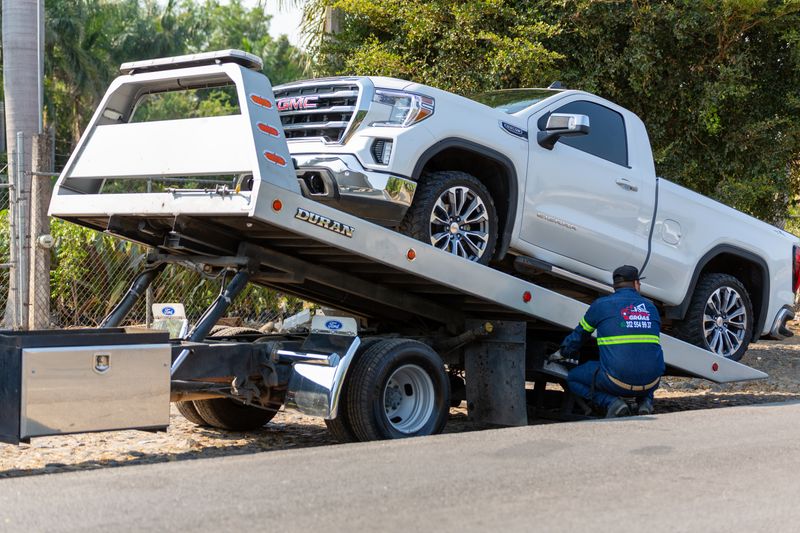
Tow truck on the roadside
A tow is the most expensive roadside call -- and the one every plan handles differently

What Roadside Assistance Covers

Most plans cover non-crash emergencies. Typical services include:

  • Towing to the nearest repair shop (distance limits apply)
  • Jump-starts for a dead battery (not the battery replacement)
  • Fuel delivery when you run dry (you usually pay for the fuel)
  • Lockout help if you lock the keys inside
  • Flat-tire change using your spare
  • Winching if you slide into a ditch or snow

What it does not cover: the actual parts (new battery, new tire), accident recovery, routine maintenance, or repairs. If you need a $200 battery, roadside help gets you started but you still buy the battery.

Car being towed after breakdown
Without any plan, a 15-mile tow runs $150-$300 out of pocket

The Four Ways to Get It

There are four main sources in the U.S., and the biggest difference is whether coverage follows the car or the driver.

1. Insurance Company Add-On

Added to your auto policy for about $10-$25 per year ($1-$2 a month). Examples: State Farm $12-$18, GEICO $14-$20, Progressive $15-$25, Allstate $16-$24, USAA $10-$15. Towing is limited to 15-25 miles. The catch: it follows the vehicle, not you -- and multiple claims in a year can affect your record.

2. AAA Membership

Tier Annual Fee Tow Distance
Basic $64-$83 5 miles
Plus $104-$124 100 miles
Premier $133-$164 200 miles

AAA follows the driver, so it covers you in any car -- your own, a friend's, or a rental. New members may face a 24-72 hour waiting period. AAA Plus is the sweet spot for most students who drive older cars or take road trips.

Roadside assistance vehicle with lights
Auto-club plans follow the driver, not the car -- handy if you borrow or rent

3. Credit Card Benefits

Many travel and premium cards include roadside help at no extra cost (the annual card fee is the only cost). Coverage is usually 5-10 miles, reimbursement-based (you pay upfront, get repaid in 2-6 weeks, capped around $50-$100 per call). Examples: Amex Platinum, Chase Sapphire Reserve, Capital One Venture X. Great as a backup, weak as your only plan.

4. Manufacturer / Connected-Car

If you drive a newer car (typically under 3-5 years), the maker may include free roadside assistance -- Toyota, Honda, Hyundai, BMW, Tesla, and others. It follows the vehicle and expires with the warranty. Check your owner's manual before paying for anything else.

Mechanic helping with a car problem
A mechanic can jump-start, change a tire, or deliver fuel -- but not replace parts

On-Demand Apps: The Pay-As-You-Go Option

Apps like Urgent.ly, Blink, and Honk connect you to a provider with no annual fee -- you pay per incident, often $50-$150 for a tow depending on distance. If you rarely break down and hate subscriptions, this can beat a yearly membership. Some phone carriers also offer it: AT&T charges $2.99/month per line (up to 4 calls/year, $75 per incident); Verizon $59.88/year per line.

Which Should a Student Choose?

Your Situation Best Choice Yearly Cost
New car (< 3 years) Manufacturer free + insurance add-on backup ~$15-$25
Older car (7+ years) AAA Plus $104-$124
Mostly city driving Insurance add-on $10-$25
Frequent road trips AAA Premier $133-$164
Tight budget Insurance add-on alone $10-$25
Already have a premium card Credit card as backup $0 extra

Flat tire being changed on the roadside
A spare tire and jumper cables in the trunk reduce how often you need to call for help

Money-Saving Tips for Students

  • Check free coverage first. If your car is new, or you carry a premium credit card, you may already be covered.
  • Add it to your insurance if you are on a parent's policy -- it is often just a few dollars a year.
  • Keep your student ID handy -- some AAA regions offer student rates.
  • Carry a spare, jumper cables, and a gas can so a small problem never becomes a paid call.

The Bottom Line

For most college students, the insurance add-on at $10-$25 a year is the smart starting point -- cheap, automatic, and enough for typical campus breakdowns. If you drive an older car or take road trips, step up to AAA Plus. And never pay twice: check your manufacturer warranty and credit card perks before buying anything. The goal is simple -- when you are stranded at 2 a.m., someone shows up, and you are not hit with a $300 surprise tow bill.


About the Author

Written by Sarah Mitchell, founder of Student Car Insurance Guide. Sarah spent 8 years as a licensed insurance agent helping young drivers and their families find affordable coverage. Every guide on this site is fact-checked against current state regulations and real quote data from major insurers.

Have a question about this topic? Email our editorial team at 1404555604w@gmail.com.
How Age and Gender Affect Student Car Insurance Rates in 2026

If you are a college student paying $3,000 or more for car insurance, you are not imagining it: age and gender are two of the strongest factors in your rate. Insurers price young drivers as high-risk, and the numbers are dramatic. This guide shows exactly how much age and gender move your premium, when rates finally drop, which states ban these factors, and what you can do about it.

Two college students standing next to a car
Young drivers pay the highest rates of any age group -- but the gap shrinks fast

Why Age Matters So Much

Insurers use age because it is the single best predictor of accident risk. The Insurance Institute for Highway Safety (IIHS) reports that drivers aged 16-19 have a fatal crash rate three times higher than drivers 20 and older. Males are behind the wheel in roughly two out of three fatal crashes involving teen drivers. Rates fall every year you gain experience -- there is no single magic age, but the drops are steepest at 18, 21, and 25.

Average Rates by Age (2026)

Based on 2026 national averages (full coverage, $1,000 deductible), here is what drivers pay per month by age:

Age Avg Monthly Premium Avg Annual Premium
16 $457 $5,486
18 $330 $3,956
19 $230 $2,761
20 $207 $2,481
21 $163 $1,958
22 $151 $1,810
23 $139 $1,674
24 $132 $1,582
25 $119 $1,426
30 $106 $1,268
40 $102 $1,220
50 $97 $1,165
60 $94 $1,125

The takeaway for students: a 21-year-old pays about $1,500 less per year than a 16-year-old. By 25, the average drops to roughly $1,426, and rates keep sliding until they bottom out around age 60.

Young woman driver holding car keys
Female students usually pay slightly less than male peers at the same age

The Gender Gap

On average, young men pay more than young women -- but the gap is largest in the teen years and nearly vanishes by 30. According to Insurance.com's 2026 analysis:

Age Male (Annual) Female (Annual) Difference
16 $10,928 $9,846 $1,082
19 ~$2,892 ~$2,628 $264
21 ~$2,040 ~$1,884 $156
25 $3,091 $2,997 $94
30 $2,734 $2,729 $5

By age 30, the difference is just $5 per year. Interestingly, between ages 35 and 45 women pay slightly more than men (about $15 more at age 45), and men pull ahead again after 65. The bottom line: the gender penalty mostly hurts young men, and it fades fast.

Student looking at car dashboard
Experience behind the wheel is what ultimately lowers your rate

States That Ban Age or Gender Pricing

Not every state allows insurers to use these factors:

  1. Gender banned: California, Hawaii, Massachusetts, Maine, Michigan, Montana, North Carolina, and Pennsylvania (8 states). In these states, young men and women pay the same based on gender.
  2. Age banned entirely: Hawaii and Massachusetts are the only two states that prohibit age as a rating factor. (Note: in Massachusetts insurers may still use driving experience, so a newly licensed 30-year-old can still pay more than a 30-year-old with 10 years of history.)

If you are a student in one of these states, your age and gender matter far less -- but your driving record, car, and coverage choices still do.

Young man and woman smiling by a car
Whether you are male or female, the same money-saving strategies apply

When Do Rates Finally Drop?

Rates decline every year with a clean record. The steepest drops come at 18, 21, and 25, when insurers re-rate young drivers as progressively lower risk. The absolute cheapest average is around age 60 (about $2,327 for men, $2,297 for women). After 65, rates creep back up, but never approach teen levels.

A 16-year-old male pays about $8,504 more per year than a 50-year-old male; a 16-year-old female pays about $7,428 more. That gap is why staying on a parent's policy as a teen is so valuable.

What Students Can Do About It

  1. Stay on your parents' policy if you can -- it is far cheaper than a standalone young-driver policy.
  2. Good student discount: A B average or better typically saves 7-17%.
  3. Distant student discount: If the car stays at school, saving 7-14%.
  4. Telematics: Safe-driving apps (Snapshot, Drive Safe & Save) cut 10-12%.
  5. Defensive driving course: Another 5-15% (up to 30% with Progressive).
  6. Raise your deductible and shop every year -- the same driver can see $1,000+ differences between insurers.

Student driver ready to drive
The rate you pay at 18 is not the rate you will pay at 25 -- hang in there

The Bottom Line

Age and gender explain most of why student car insurance feels expensive, but neither is permanent. Rates fall every year you drive clean, the gender gap disappears by 30, and eight states already forbid gender pricing. Stack the student discounts available to you, keep a clean record, and re-shop your policy annually -- by the time you graduate, your premium should look nothing like your freshman-year bill.


About the Author

Written by Sarah Mitchell, founder of Student Car Insurance Guide. Sarah spent 8 years as a licensed insurance agent helping young drivers and their families find affordable coverage. Every guide on this site is fact-checked against current state regulations and real quote data from major insurers.

Have a question about this topic? Email our editorial team at 1404555604w@gmail.com.

Defensive Driving Courses for College Students: How to Save 5-30% on Car Insurance in 2026

Most college students assume car insurance is a fixed cost they cannot control. But there is one discount that takes a single afternoon to earn and pays you back for three full years: the defensive driving course discount. Completing a state-approved safety course can cut your premium by 5% to 15% -- and with some insurers, up to 30%. This guide breaks down exactly how the discount works, how much each major company gives, what a course costs, and how to make sure your certificate actually lowers your bill.

Student completing an online defensive driving course on laptop
A 4-8 hour online defensive driving course can unlock a discount that lasts three years

What Is a Defensive Driving Discount?

A defensive driver discount is a reduction in your car insurance premium after you voluntarily complete a state-approved safety course. The course refreshes traffic laws, teaches hazard recognition, safe following distances, collision-avoidance techniques, and the dangers of distracted driving. Insurers reward you because trained drivers file fewer claims.

Most courses take 4 to 8 hours and can be completed online at your own pace or in a classroom. You must pass a final test (usually 70-80%) to earn your certificate. The discount then applies for roughly three years before you need to retake the course.

How Much Can You Actually Save?

According to MoneyGeek's 2026 analysis, defensive driver discounts save most drivers $50 to $200 per year. Because courses cost only $20 to $100, you break even within about six months -- the remaining 2.5 years of the discount period is pure savings.

Here are two real examples:

  • Example 1: A $1,500 annual premium with a 10% discount saves $150/year. Over three years that is $450 saved, minus a $50 course = $400 net.
  • Example 2: A $2,000 annual premium with a 15% discount saves $300/year. Three-year total $900, minus $50 course = $850 net.

Young driver learning safe driving techniques
Young drivers benefit the most -- many are in the exact age bracket where this discount matters

Defensive Driving Discount by Company (2026)

Discount percentages vary widely by insurer and state. Here is what the major companies currently offer:

Insurer Discount Typical Age Rule
Progressive Up to 30% Any age in qualifying states
Travelers Up to 20% 21+ (or 55+ in some states)
State Farm Up to 15% Varies; NY 10%, WA 5%
Allstate 5-10% All ages in qualifying states
Nationwide Up to 10% 55+ in most states
Liberty Mutual Up to 10% All ages in qualifying states
GEICO 5-10% 50+ in most states
USAA Up to 10% Military members & families
American Family 5% All ages in qualifying states
Erie 5% 55+ in most states

Progressive's 30% is the standout, but note the fine print: it is only available in about 34 states plus D.C. and often combines with its Snapshot telematics program. State Farm and GEICO are the most widely available for younger students.

Driver education and hazard recognition training
Hazard recognition is the core skill these courses reinforce -- and the reason insurers reward it

How Much Do the Courses Cost?

Course prices are modest and the discount pays them back quickly:

  1. Online courses: $20-$50, completed in 4-8 hours at your own pace. Popular providers include IDriveSafely, Aceable, and DriversEd.com.
  2. In-person courses: $50-$100, usually a single-day class.
  3. Well-known options: National Safety Council ($24.95-$41.25), AARP Smart Driver ($26.95 members / $29.95 non-members), and IMPROV Defensive Driving ($20-$40 by state).

Who Qualifies?

To earn the discount, you typically must meet three conditions:

  1. Clean record: No at-fault accidents, moving violations, or major claims in the past 12-36 months.
  2. State-approved course: The course must be approved by your state DMV and accepted by your insurer.
  3. Voluntary completion: A court-ordered course for a ticket usually does not count.

Age rules vary. Some insurers offer the discount to all ages; others restrict it to drivers 50, 55, or 65+. A handful of states require insurers to offer it to everyone. Note that Massachusetts, Michigan, and Hawaii do not offer defensive driver discounts at all.

Person studying traffic safety materials
Studying the material ahead of time means a faster final test and a quicker discount

5 Steps to Claim Your Discount

  1. Confirm your insurer offers it. Call or check your account to learn the exact requirement and discount percentage.
  2. Find a state-approved course. Use your DMV website or a recognized provider, but call your insurer first to confirm they will accept it.
  3. Choose a format. Online ($20-$50) is cheapest and most flexible for a busy student schedule.
  4. Submit your certificate. Send it with a discount application and your license info. The discount appears within 2-4 weeks.
  5. Keep it active. Set a reminder 2-3 months before expiration, retake the course, and avoid tickets or accidents.

Student Strategy: Stack It

The defensive driving discount is even more powerful when combined with other student discounts. Pair it with a good student discount (often 7-17%), a distant student discount (7-14% if you keep the car at school), and a telematics program (10-12% for safe driving). Together these can cut a young driver's premium by 35-45%.

Student taking a driving safety class
A single weekend of training can lower your rate for the next three years

The Bottom Line

For most college students, a defensive driving course is the highest-return time investment in car insurance. At $20-$50 for the course and a 5-30% discount that lasts three years, a typical student recovers the cost in under six months and keeps saving after that. Just confirm your insurer accepts the specific course, complete it voluntarily with a clean record, and submit the certificate -- then set a reminder to retake it before year three ends.


About the Author

Written by Sarah Mitchell, founder of Student Car Insurance Guide. Sarah spent 8 years as a licensed insurance agent helping young drivers and their families find affordable coverage. Every guide on this site is fact-checked against current state regulations and real quote data from major insurers.

Have a question about this topic? Email our editorial team at 1404555604w@gmail.com.

Rental Car Insurance for College Students: Credit Card Coverage, the Liability Gap, and When to Say No in 2026

Spring break, a summer internship in a new city, or a semester abroad -- at some point most college students stand at a rental car counter and hear the question: "Do you want our insurance?" The agent lists several options, the total climbs by $30 or more per day, and you have seconds to decide. This guide breaks down exactly what rental car insurance covers, what your credit card already gives you for free, and where the real gaps are.

The Four Coverages at the Counter

Rental companies typically offer four separate products. Knowing what each does is the first step to not overpaying:

Loss Damage Waiver (LDW/CDW): Not true insurance -- it waives your financial responsibility if the car is damaged or stolen. Usually the most expensive add-on, about $10 to $30 per day.

Liability insurance: Covers damage and injuries you cause to other people and their property. Typically $7 to $15 per day.

Personal Accident Insurance (PAI): Pays medical costs for you and your passengers after a crash. Around $3 to $7 per day.

Personal Effects Coverage (PEC): Covers personal belongings stolen from the vehicle. Roughly $2 to $4 per day.

car keys on a keychain
Renting a car for spring break? The counter will offer four types of insurance -- here is what you actually need

Your Credit Card's Free Collision Coverage

Here is the secret most students do not know: many credit cards already include a Collision Damage Waiver as a free benefit. Networks that offer it are Visa, Mastercard, and American Express. Discover dropped rental coverage in 2018, and Synchrony cards do not offer it -- so check which card you are using.

To activate it, two rules are mandatory: pay for the entire rental with that card, and decline the rental company's CDW at the counter. Do both and your card's coverage kicks in automatically -- no enrollment needed.

person at a rental car counter
The Loss Damage Waiver is the most expensive add-on at the rental desk, but your credit card may already cover it

Primary vs Secondary Coverage

Credit card CDW comes in two flavors:

Primary: You file a single claim with the card issuer; they pay directly. Your own auto insurance is never involved, so your rates are not affected. Top travel cards such as Chase Sapphire Reserve and Capital One Venture X offer primary coverage.

Secondary: Your personal auto policy pays first, and the card covers only the deductible or whatever your policy misses. If you have no personal car insurance, most secondary coverage converts to primary.

The best cards are generous: Chase leads with up to $75,000 in coverage and 31 days per rental. Capital One Venture X and several Chase, Wells Fargo, U.S. Bank, and Navy Federal cards also cover 31 days. About half of all cards cap rentals at 15 days domestically, so check your card's terms before a long trip.

rental car parked outdoors
Pay the full rental with a rewards credit card and decline the counter CDW to activate your card's coverage

What Credit Cards Do NOT Cover

Card CDW handles collision and theft damage to the rental car, plus loss-of-use and towing. It does not cover liability (damage to other people or their cars) or injuries to you and your passengers. It also excludes certain vehicles -- trucks, large vans, exotic or antique cars, and off-road vehicles -- and often excludes countries like Ireland, Israel, and Jamaica. Read the benefit guide before you rely on it.

car on a road trip
Credit card CDW covers collision and theft -- but not liability or injuries to others, a gap students often miss

The Liability Gap Students Miss

This is the trap. If you are on your parents' auto policy, your liability coverage usually extends to a rental car -- so declining the counter liability may be fine. But if you are a student with no personal car insurance, your credit card gives you zero liability protection. In that case you should buy the rental company's liability insurance, or you could be personally on the hook for a crash. Do not skip it just because your card "has insurance."

When to Buy vs Skip

Skip the CDW if you pay with a rewards card that includes CDW and you are comfortable with your personal auto policy (or card) handling collision damage.

Buy liability if you have no personal auto policy -- the card will not cover it.

Consider PAI/PEC only if you lack health insurance or travel with valuable belongings; your health plan and renters insurance may already cover these.

Always inspect the car and photograph dents before driving off, whether or not you buy the waiver.

suitcase by a car for travel
Renting abroad for study abroad? Check country exclusions before relying on your U.S. credit card

Renting Abroad for Study Abroad

Studying abroad? Your U.S. credit card CDW often does not apply in popular destinations such as Ireland, Israel, and Jamaica, and coverage rules differ across Europe, Asia, and Latin America. Many countries require you to buy liability insurance locally by law. Before you travel, call your card issuer to confirm the country is covered, and budget for local mandatory insurance.

Bottom line: for most insured students, a rewards credit card removes the need to buy the expensive damage waiver -- just pay with the card and say no at the counter. The one thing you should never skip is liability protection, because your card will not provide it.


About the Author

Written by Sarah Mitchell, founder of Student Car Insurance Guide. Sarah spent 8 years as a licensed insurance agent helping young drivers and their families find affordable coverage. Every guide on this site is fact-checked against current state regulations and real quote data from major insurers.

Have a question about this topic? Email our editorial team at 1404555604w@gmail.com.
Medical Payments (MedPay) vs PIP: Which Injury Coverage Do College Students Need in 2026?

Your liability and collision coverage pay for other people's cars and your own car. But who pays your medical bills after a crash? That is the job of two optional (and in some states mandatory) coverages: Medical Payments (MedPay) and Personal Injury Protection (PIP). They sound similar, but they work differently -- and for a college student on a tight budget, picking the right one matters.

What MedPay Covers

Medical Payments coverage is the simpler of the two. It pays medical expenses after a car accident, regardless of who was at fault. That includes hospital visits, ambulance rides, X-rays, surgery, physical therapy, dental work, and chiropractic care. It typically has no deductible, and limits usually run from $1,000 to $10,000 per person. A $5,000 MedPay limit covers each injured person individually -- so if you and three passengers are hurt, each can collect up to $5,000.

ambulance responding to an emergency
After a crash, MedPay and PIP pay medical bills regardless of who caused the accident

What PIP Covers (The Broader Option)

Personal Injury Protection does everything MedPay does -- and more. On top of medical bills, PIP replaces a percentage of your lost wages and pays for household services you cannot perform while recovering (like childcare or cleaning). It also covers funeral expenses. The exact wage replacement varies by state:

Minnesota: 85% of lost income, up to $20,000

Oregon: 70% of lost wages, up to $3,000 per month

New York: up to $50,000 in basic PIP benefits

paramedic treating a patient
PIP goes further than MedPay by also replacing a portion of your lost wages

MedPay vs PIP: Side by Side

Medical bills: Both yes

Lost wages: MedPay no, PIP yes

Household services: MedPay no, PIP yes

Funeral expenses: Both yes

Deductible: MedPay usually none, PIP varies by state

Typical limits: MedPay $1,000-$10,000, PIP $3,000-$250,000+

Average annual cost: MedPay ~$20, PIP ~$191

Fault required: Neither -- both pay regardless

medical care after an accident
MedPay averages about $20 per year -- cheap insurance against a $3,000 emergency room visit

How Much Each Costs

This is where MedPay shines for students. MedPay averages about $20 per year. Bumping the limit from $2,000 to $10,000 typically costs only about $10 more per year. PIP costs more because it covers more -- the national average is about $191 per year, and it varies widely by state. Michigan has historically been the most expensive because of unlimited medical benefits, though it now offers tiered PIP limits starting at $50,000.

Which States Require Which

Your state decides what you can and must buy. About a dozen no-fault states require PIP, including Florida, Michigan, New York, New Jersey, Kansas, Massachusetts, Minnesota, North Dakota, Oregon, Pennsylvania, and Utah. In those states you cannot substitute MedPay for PIP. Only Maine and New Hampshire require MedPay (Maine mandates at least $2,000). In most other states, MedPay is an optional add-on you can choose.

first aid and medical attention
Both coverages also protect you as a pedestrian or cyclist hit by a car

Even With Great Health Insurance, MedPay Helps

Students often ask: "I already have health insurance, so why add MedPay?" The answer is the gap. Your health plan has deductibles and copays, and it may not cover out-of-network care or ambulance transport at full value. MedPay pays those leftovers with no deductible of its own. Since it costs around $20 a year, it is one of the cheapest ways to make sure a $3,000 emergency room visit does not land on your student credit card.

A feature many students overlook: both coverages follow you. If a car hits you while you are walking or cycling, MedPay and PIP still pay. PIP also covers you as a passenger in someone else's car.

medical professional assisting patient
In no-fault states PIP is mandatory; elsewhere MedPay is the affordable add-on

How to Choose

Live in a no-fault state: PIP is mandatory -- buy at least your state minimum, and raise it if your income depends on you working.

Live elsewhere and have good health + disability insurance: MedPay at the highest limit available is the affordable pick.

Self-employed, no disability insurance, or support family: PIP's wage replacement is worth the extra cost where it is offered.

On a tight budget: Choose the highest MedPay limit you can -- the price jump from $2,000 to $10,000 is only about $10 per year.

Bottom line: you usually cannot carry both at once (a few states let you stack MedPay on top of PIP). Pick the one your state allows, buy a limit that actually covers a real injury, and treat it as the coverage that protects your own body -- not just your car.


About the Author

Written by Sarah Mitchell, founder of Student Car Insurance Guide. Sarah spent 8 years as a licensed insurance agent helping young drivers and their families find affordable coverage. Every guide on this site is fact-checked against current state regulations and real quote data from major insurers.

Have a question about this topic? Email our editorial team at 1404555604w@gmail.com.

Uninsured and Underinsured Motorist Coverage: Why Every College Student Needs UM/UIM in 2026

Imagine this: you are driving home from campus when another car runs a red light and hits you. You are hurt, your car is damaged, and the other driver hands you an expired insurance card -- or no card at all. Your own liability insurance will not help you here, because it only pays for damage you cause to others. This is exactly the gap that uninsured and underinsured motorist coverage (UM/UIM) fills. For most college students it is the cheapest, most overlooked protection on the policy.

What UM/UIM Actually Covers

UM/UIM is really two protections in one. Uninsured motorist (UM) coverage steps in when the at-fault driver has no insurance. Underinsured motorist (UIM) coverage steps in when the at-fault driver has insurance, but their limits are too low to cover your bills.

Each part has two pieces:

Bodily injury (UMBI/UIMBI): pays your medical bills, lost wages, and pain-and-suffering if you or your passengers are hurt. It usually has no deductible.

Property damage (UMPD/UIMPD): repairs your own car or other property when an uninsured driver cannot pay. It typically carries a $200 to $500 deductible and is available in only 25 states plus Washington, D.C.

injured person after a car accident
If the driver who hits you has no insurance, UM/UIM is what pays your bills

Why Students Skip It -- and Why That Is a Mistake

The most common reason students decline UM/UIM is that it sounds expensive. It is not. Combined UM/UIM typically costs just $5 to $7 per month -- about $60 to $84 per year. Bumping your bodily injury limit from 25/50 to a stronger 100/300 usually adds less than $50 per year. For the price of a single coffee each week, you protect yourself against tens of thousands in medical bills.

Sample state costs for UMBI at a 100/300 limit run about $86 to $134 per year; at a 25/50 limit, just $33 to $76 per year. In low-uninsured states such as Massachusetts, the annual cost can be as little as $11.

person injured in vehicle
UMBI covers your medical bills, lost wages, and pain even when the other driver is uninsured

The 1-in-3 Problem

This is not a theoretical risk. According to the Insurance Research Council (2025 report, using 2023 data), 15.4% of U.S. drivers have no insurance at all, and a striking 33.4% are uninsured or underinsured -- roughly one in three. The worst states are sobering:

Mississippi: 28.2% uninsured

New Mexico: 24.1%

Washington, D.C.: 23.1%

Michigan: 22.3%

Tennessee: 21.3%

Missouri: 20.7%

Florida: 20.6%

California: 20.4%

If you are a student in any of these states -- or drive through them -- the odds of meeting an uninsured driver are far higher than most people expect.

car accident scene
About 1 in 3 U.S. drivers is uninsured or underinsured -- a real risk every student faces

What Happens When an Uninsured Driver Hits You

Make sure everyone is safe and call 911.

Get a police report -- it is your proof that the other driver was at fault and uninsured.

Photograph the scene, the vehicles, and your injuries.

Collect witness contact information.

File a UM claim with your own insurer and supply medical bills, proof of lost wages, and repair estimates.

A key detail: UIM only activates after the at-fault driver's own policy limits are exhausted. If their $25,000 limit is not enough to cover your $60,000 in bills, your UIM pays the difference (up to your limit). And importantly, a not-at-fault UM claim generally does not raise your premium.

Hit-and-Run Protection

A hit-and-run driver is, by definition, unidentified and therefore treated as uninsured in most states. Your UMBI coverage can pay your medical costs -- but you must file a police report, and a few states require that there was actual physical contact between the vehicles. Never just drive away from a hit-and-run; the police report is what unlocks your coverage.

damaged car at accident scene
A hit-and-run is usually treated as an uninsured driver, so your UM coverage still applies

Stacking: A Free Multiplier in Many States

In about 30 states, you can "stack" UM/UIM limits -- combining the limits across multiple vehicles on your policy, or across policies in the same household, to multiply your effective coverage. Florida is the best-known example. Stacking costs a little more but can double or triple what you collect after a serious crash. Ask your agent whether your state allows it.

Which States Require It

UM/UIM is mandatory in more places than students realize. About 20 states plus D.C. require uninsured motorist (UM) coverage. A separate group of 14 states require underinsured motorist (UIM) coverage: Connecticut, Maine, Maryland, Massachusetts, Minnesota, Nebraska, New Jersey, North Carolina, North Dakota, Oregon, South Dakota, Vermont, Virginia, and Wisconsin. New Jersey and Virginia both raised their minimum UM limits in 2026. Even where it is optional, adding it is one of the highest-value dollars you will spend on your policy.

car with collision damage
UMPD can repair your own car when an uninsured driver cannot pay -- often for just a small deductible

How Much Should a Student Buy?

The standard advice is simple: match your UM/UIM limits to your own liability limits. If you carry 100/300 liability, carry 100/300 UM/UIM. Since the price jump between low and high limits is tiny (often under $50 per year), there is little reason to skimp. If your state offers UMPD, keep it -- a small $200 to $500 deductible is far better than paying for your own collision repair after an uninsured driver wrecks your car.

Bottom line: UM/UIM is the coverage that protects you from other people's bad decisions. For most students it costs less than a streaming subscription each month -- and after a crash with an uninsured driver, it can be the difference between a paid hospital bill and years of debt.


About the Author

Written by Sarah Mitchell, founder of Student Car Insurance Guide. Sarah spent 8 years as a licensed insurance agent helping young drivers and their families find affordable coverage. Every guide on this site is fact-checked against current state regulations and real quote data from major insurers.

Have a question about this topic? Email our editorial team at 1404555604w@gmail.com.

SR-22 Insurance for College Students: What to Do After a Ticket, Accident, or DUI in 2026

A single speeding ticket rarely changes your life. But if you are a college student and that ticket comes with a suspended license, a DUI, or a no-insurance accident, your state may suddenly demand an SR-22. Most students have never heard of it until a court clerk or the DMV tells them their license is frozen. This guide explains exactly what an SR-22 is, why you might need one, what it really costs, and how to get it without sinking your budget or your driving privileges.

What an SR-22 Actually Is (Not a Type of Insurance)

An SR-22 is a Certificate of Financial Responsibility. It is a one-page form your insurance company files electronically with your state DMV to prove you carry at least the state minimum liability coverage. It is not a separate policy you can buy on its own, and it is not "high-risk insurance" in the usual sense.

The single most important thing to understand: the SR-22 is tied to you, the driver, not to a specific car. If you switch insurers, move to another state, or buy a different vehicle, the filing requirement follows you. Your new insurer must file a fresh SR-22 with the original state that ordered it. Drop coverage for even one day and the clock resets.

speeding ticket on a car dashboard
A traffic ticket like this is one of the most common triggers that can lead to an SR-22 requirement

Why College Students End Up Needing an SR-22

A court or the DMV orders the SR-22 after a serious driving record event. You cannot request it yourself. The most common triggers are:

A DUI or DWI conviction (the single most common reason)

Driving without insurance, especially after an at-fault accident

A suspended or revoked license for any reason

Too many tickets or points (for example, 3 or more speeding tickets within 6 months)

Driving without a valid license

Unpaid court-ordered child support in some states

For students, the risk is real. A single bad night, a string of speeding tickets during a road trip, or letting your insurance lapse over summer break while the car sits at home can all trigger a filing. If you live in a different state than your school, the rules of your home state DMV still apply.

traffic citation document
Multiple citations or too many points on your record can force a high-risk insurance filing

The Real Cost -- It Is Not the Form

The SR-22 form itself is almost free. The filing fee is a one-time charge of about $15 to $50. The real financial hit comes from the high-risk label your insurer attaches to your record.

On average, a liability-only premium jumps roughly $993 per year (about $83 per month) after a filing -- a 40% to 90% increase versus your rate before the violation. A typical post-DUI liability policy runs $1,800 to $5,600 per year, averaging around $3,000. In high-cost states such as California, Florida, and Michigan, expect $5,500 or more per year, and full coverage can exceed $6,000 to $7,000.

Here is a concrete example: a clean driver paying $120 per month can see that climb to $250 to $350 per month after a DUI plus SR-22 -- an extra $1,500 to $2,700 every single year.

driver license and documents
An SR-22 proves to the state that you carry at least the minimum required liability coverage

SR-22 vs FR-44: Florida and Virginia

Two states use a stricter form called the FR-44, usually after a DUI. It requires double the liability limits of a standard SR-22:

Virginia: 50/100/40 instead of the usual 25/50/20

Florida: 100/300/50 instead of its 10/20/10 minimum

Because the required limits are much higher, FR-44 premiums cost more and fewer carriers are willing to file them. If you are a student at a Florida or Virginia school (or licensed there), ask specifically about FR-44, not just SR-22.

driver license card
Without continuous SR-22 coverage, your hard-earned license can be suspended within days

How to Get an SR-22: Step by Step

Confirm the requirement. The court or DMV issues the order; you cannot self-file. Ask exactly which form (SR-22 or FR-44) and for how long.

Call your current insurer. Most major carriers file in 38 SR-22 states: GEICO, Progressive, State Farm, and Travelers. Ask if they handle your state before assuming you must switch.

Pay the one-time filing fee. Usually $15 to $50, added to your next bill.

Let them e-file. Most insurers submit electronically within 24 to 48 hours. Keep the confirmation.

If your insurer drops you, move to a high-risk specialist such as The General, Direct Auto, or Dairyland, and tell them upfront that you need an SR-22.

No Car? You Still Need a Non-Owner SR-22

Many students sell their car or rely on borrowing and rideshares. A non-owner policy satisfies the state with liability-only coverage and is far cheaper than a standard policy. Costs run about $300 to $1,800 per year (State Farm around $396 per year; Progressive from $309). The catch: it does not cover a vehicle you own or one you live with, and it carries no collision or comprehensive protection.

insurance and financial responsibility documents
Filing fees are small, but the high-risk label is what really drives up your premium

How Long You Need It -- and the Lapse Trap

Most states require 3 years of continuous coverage counted from the filing date, not the conviction date. A few are shorter (Georgia, Kansas, and North Dakota: 1 year) or longer (Ohio for repeat offenders: 3 to 5 years). Eight states do not use the SR-22 at all: Delaware, Kentucky, Minnesota, New Mexico, New York, North Carolina, Oklahoma, and Pennsylvania.

The lapse trap is brutal. If your policy lapses even one day, the insurer sends an SR-26 cancellation notice to the DMV. Your license is usually suspended within 10 days and the 3-year clock resets to zero. Reinstatement costs $100 to $300 on top of a brand-new filing. Set up autopay and never let the policy expire by accident.

Companies That File SR-22

Major carriers generally offer the lowest rates for filings:

GEICO: about $136 per month liability

Progressive: $144 to $153 per month

State Farm: non-owner around $33 per month

Travelers: about $114 per month full coverage

High-risk specialists such as The General, Direct Auto, and Dairyland approve almost anyone but charge higher base rates. Allstate and Liberty Mutual often decline SR-22 filings in many states.

How Students Can Save Money

Stay on a parent's policy if you can. The SR-22 is added as an endorsement, which is usually far cheaper than a standalone policy.

Shop 5 to 10 quotes in the same week. The same driver can vary by $1,500 or more per year between carriers.

Keep a clean record. Surcharges start to fade after about 3 years and drop significantly after 5.

Use a non-owner policy if you do not actually own a car.

Ask about telematics. Some high-risk insurers offer safe-driving apps that trim the rate.

Turn on autopay so the policy never lapses by mistake.

Key Takeaways

An SR-22 is proof of insurance, not insurance itself. The form is cheap; the high-risk premium is the real cost. Continuous coverage is everything -- one lapse resets the clock and can suspend your license. And after 3 clean years, call your insurer and ask them to remove the filing; your rate should finally drop.


About the Author

Written by Sarah Mitchell, founder of Student Car Insurance Guide. Sarah spent 8 years as a licensed insurance agent helping young drivers and their families find affordable coverage. Every guide on this site is fact-checked against current state regulations and real quote data from major insurers.

Have a question about this topic? Email our editorial team at 1404555604w@gmail.com.

How to Read Your Car Insurance Declarations Page: A 2026 Guide for College Students

Your car insurance declarations page -- often called the "dec page" -- is the single most important document in your entire auto insurance policy. It is a one-to-three-page summary that tells you exactly who is covered, what is covered, how much coverage you have, and what you are paying for it. Yet according to a 2025 Zebra survey, only 21 percent of drivers can correctly identify basic policy terms on their own declarations page.

That lack of understanding is expensive. In 2025, the National Association of Insurance Commissioners recorded 35,063 auto insurance complaints, a 7.5 percent increase from the previous year. Coverage misunderstanding was a leading cause. For college students -- who are often buying insurance for the first time -- spending 10 minutes reading the dec page can prevent thousands of dollars in unexpected out-of-pocket costs after an accident.

insurance policy documents on table
Car insurance declarations page and policy documents -- the most important paperwork in your glovebox

What Is a Declarations Page?

The declarations page is the front page (or first few pages) of your auto insurance policy. Think of it as the table of contents for your insurance contract. While the full policy may be dozens of pages filled with legal language, the dec page condenses everything you need to know into a readable summary.

You receive a new declarations page every time you start a new policy, renew an existing one, or make changes to your coverage. Most insurers (Progressive, Allstate, GEICO) issue six-month policies, while others (State Farm, Erie) issue twelve-month policies. That means you should be reviewing your dec page at least once or twice a year.

Where to find it: Your insurer will mail or email the dec page when your policy starts or renews. You can also download it from your insurer's website or mobile app. Save a PDF copy on your phone -- if you are in an accident at 2 AM, you will need your policy number, coverage limits, and insurer's claims phone number quickly.

The 8 Key Fields on Your Declarations Page

While every insurer formats their dec page differently, these eight fields appear on virtually every auto insurance declarations page in the United States. Here is what each one means and what to check.

person reading insurance contract carefully
Taking time to read your declarations page can prevent thousands in unexpected costs

1. Policy Number and Policy Period

Your policy number is the unique identifier that links all your claims, payments, and correspondence. The policy period shows the exact start and end dates of your coverage. Even a one-day gap between the old policy ending and the new one starting can classify you as a high-risk driver in states like California and Texas, increasing your next premium by 10 to 25 percent.

What to check: Make sure the policy period is continuous with no gaps. If your policy ends on June 30 and the new one starts July 1, you are fine. If there is a gap of even one day, contact your insurer immediately.

2. Named Insured

The named insured is the person (or persons) who legally owns the policy and is responsible for paying the premium. Only the named insured can make changes to the policy, file claims, and receive claim payments. If you are a student on your parents' policy, your parents are likely the named insureds, and you are a listed driver.


What to check: If you are married, make sure your spouse is listed as a co-named insured. In community property states (Arizona, Louisiana, Wisconsin, and others), failing to list a spouse can create legal complications in a $100,000 liability claim.

3. Listed Drivers

This section lists every driver the insurer has rated on your policy. The insurer uses each driver's age, driving record, and other factors to calculate the premium. According to 2025 Zebra data, a household with a 16-year-old listed driver pays an average of $2,300 more per year than a household with only drivers over 25.

What to check: Make sure every licensed driver in your household who regularly drives your car is listed. Omitting a driver is considered "material misrepresentation" -- insurers like GEICO, Progressive, and State Farm have denied claims exceeding $20,000 for this reason. Also check if any drivers are listed as "excluded" -- an excluded driver has zero coverage if they drive your car.

4. Insured Vehicles (VIN, Year, Make, Model)

Every vehicle on your policy is listed with its 17-digit Vehicle Identification Number (VIN), year, make, and model. The VIN is critical -- even a single digit error can invalidate the comprehensive and collision coverage for that vehicle.

What to check: Verify each VIN digit carefully. If you recently bought a new car, you typically have a 14-to-30-day grace period to add it to your policy, but coverage is not official until you notify the insurer and receive an updated dec page.


Comparing your declarations page against your original quote catches errors before they cost you

5. Coverage Types and Limits

This is the most critical section of your dec page. Each line corresponds to a type of coverage, showing the per-person limit, per-accident limit, and property damage limit. You will often see coverage written in shorthand like 100/300/100, which means:

$100,000 bodily injury liability per person

$300,000 bodily injury liability per accident (total for all injured parties)

$100,000 property damage liability per accident

Coverage Type What It Covers Common Limit Format Example
Bodily Injury Liability (BI) Injuries you cause to others Per person / per accident $100K / $300K
Property Damage Liability (PD) Property damage you cause to others Per accident $100K
Collision Damage to your car from a crash ACV minus deductible ACV - $500
Comprehensive Theft, hail, fire, animal strikes ACV minus deductible ACV - $250
Uninsured Motorist (UM/UIM) Injuries from uninsured/underinsured drivers Per person / per accident $100K / $300K
Medical Payments (MedPay) Medical bills for you and passengers Per person $5,000
Personal Injury Protection (PIP) Medical + lost wages (no-fault states) Per person $10,000

The 2026 national average for full coverage is $1,771 per year (Bankrate data). If your premium is significantly higher, check whether your coverage limits are excessive or whether you are missing discounts.

6. Deductibles

Your deductible is the amount you pay out of pocket before the insurer covers the rest. Collision and comprehensive coverages each have their own deductible, typically ranging from $100 to $1,000. Choosing a $1,000 deductible instead of $500 can save $150 to $250 per year (Progressive and Allstate data), but only choose a higher deductible if you can afford to pay it at any time.

7. Premium Breakdown and Discounts

This section breaks down your total premium by vehicle and by coverage type. It also lists every discount applied to your policy. Common discounts include:

Multi-car discount (5-25%): Insuring multiple vehicles on one policy

Safe driver discount (10-15%): No accidents or violations in 3+ years

Bundling discount (up to 20%): Combining auto with homeowners or renters insurance

Good student discount (5-25%): Maintaining a B average or 3.0 GPA

Paid-in-full discount: Paying the entire premium upfront instead of monthly

What to check: Make sure every discount you qualified for at quote time is actually applied. Insurers sometimes drop discounts silently at renewal if they do not receive updated documentation (like a transcript for the good student discount).

person holding documents and pen
Reviewing coverage limits and deductibles on your declarations page

8. Endorsements and Riders

Endorsements (also called riders) are modifications or additions to your base policy. They are listed with a unique code and title. Common endorsements include:

Rental car reimbursement ($30-60/year): Pays for a rental car while yours is being repaired

Roadside assistance ($12-36/year): Towing, jump-starts, lockout service, flat tire changes

Gap insurance: Covers the difference between your car's value and your loan balance if the car is totaled

Rideshare endorsement: Extends coverage during Uber/Lyft Period 1 (critical if you drive for a gig app)

What to check: If you drive for Uber, Lyft, or a delivery app, verify that a rideshare endorsement is listed here. Verbal promises from an agent are not legally binding -- it must appear on the dec page.

5 Coverage Gaps to Watch For on Your Dec Page

According to the Insurance Research Council, one in three American drivers is uninsured or underinsured. Your own policy may have gaps that leave you exposed. Here are the five most common problems to look for:

Liability limits below 100/300/100. A two-car accident with injuries can exceed $150,000 in medical costs. If you carry Georgia's state minimum of 25/50/25, you could face over $100,000 in personal liability. Industry experts recommend at least 100/300/100 for most drivers.

Missing UM/UIM coverage. Twenty-two states and Washington, DC require uninsured/underinsured motorist coverage. If you live in a state where it is optional (like California), skipping it saves about $100 per year -- but if you are hit by one of the 14 percent of uninsured drivers nationwide, you pay everything out of pocket.

No comprehensive or collision on a financed car. Your lender requires both. If you cancel them, the lender will purchase force-placed insurance at two to three times the market rate and bill you for it.

Outdated vehicle list. If you sold a car six months ago and it is still on your policy, you are paying for nothing. If you bought a new car and have not added it, you may have no coverage at all for that vehicle.

Missing PIP in a no-fault state. Twelve states (Florida, Michigan, New York, and others) require Personal Injury Protection. If your dec page does not show PIP and you live in one of these states, your policy may not be legally compliant.

Declarations Page vs. Insurance ID Card: What Is the Difference?

Many students confuse the declarations page with the insurance ID card kept in the glovebox. They serve completely different purposes:

Feature Declarations Page Insurance ID Card
Purpose Complete policy summary for the policyholder Proof of insurance for police and DMV
Information included All coverages, limits, deductibles, premiums Policy number, effective dates, vehicle info
Shows premium amount? Yes No
Accepted as proof of insurance? Generally no (varies by state) Yes, in all 50 states
Where to keep it Saved on phone or at home In the car (physical or digital; New Mexico requires physical in 2026)

Privacy tip: Never show your declarations page to a police officer during a traffic stop. It contains your premium amount and full financial details -- unnecessary information that compromises your privacy. Show only your insurance ID card.

When to Review Your Declarations Page

You should pull out your dec page and review it at four critical moments:

Every renewal (every 6 or 12 months): Auto insurance premiums rose an average of 22 percent between 2022 and 2025 (Bankrate). Your renewal dec page may show a significantly higher premium, and insurers sometimes silently change coverage or drop discounts. Compare the new dec page to the old one line by line.

After buying or selling a car: Confirm the new vehicle's VIN, year, make, and model are correct. If financed, verify that comprehensive and collision have transferred to the new car.

After life changes: Moving from a rural area to a city can increase your premium by $500 to $1,200 per year. Adding a 16-year-old driver to a Progressive policy costs an average of $2,300 more per year. Marriage, graduation, and job changes all affect your rate.

After filing a claim: Some insurers adjust your coverage or add surcharges after an at-fault accident. State Farm and Allstate typically raise premiums by 40 to 50 percent for at-fault accidents, and the surcharge lasts 3 to 5 years. Check your next dec page to verify the increase.

How to Fix Errors on Your Declarations Page

A J.D. Power 2024 study found that 31 percent of insurance customer complaints stem from billing and policy errors. If you spot an error on your dec page, follow these steps:

Compare against your original quote. Check that every coverage, limit, and deductible matches what you agreed to when you purchased the policy. If your quote said 50/100 liability but the dec page shows 25/50, that is an insurer error.

Contact your insurer immediately. Call their customer service line and request a written correction. Do not accept verbal confirmation only -- ask for an updated dec page.

Submit a written correction request. Use the insurer's online portal or send an email. Keep timestamped records of all communications.

File a state complaint if needed. If the insurer does not correct the error within 30 days, file a complaint with your state's insurance department. All states have consumer protection divisions, and complaints are free. Texas processed 25,000 consumer complaints in 2024 alone.

Request a mid-term endorsement. Changes made between renewal periods generate a new endorsement and updated dec page. Corrections caused by insurer errors are free; changes you request will be prorated for the remaining policy period.

Quick Glossary: 10 Terms You Need to Know

Term Plain English Meaning
Named Insured The person who legally owns the policy and can make changes
Policy Period The start and end dates of your coverage (6 or 12 months)
VIN 17-digit Vehicle Identification Number, found on your dashboard and driver-side door frame
Premium The total amount you pay for your insurance coverage
Deductible The amount you pay out of pocket before insurance pays the rest
Coverage Limit The maximum amount the insurer will pay per accident or claim
Endorsement A written modification or addition to your base policy
Declarations The summary page at the front of your policy
Garaging Address Where your car is parked at night -- used to calculate your area risk rating
Loss Payee The bank or lender with a financial interest in your vehicle; claim payments go to them

The Bottom Line

Your declarations page is the blueprint of your auto insurance. It tells you exactly what you are paying for, how much protection you have, and where your gaps might be. Yet 79 percent of drivers cannot identify basic terms on their own dec page -- and that lack of knowledge costs real money when an accident happens.

For college students, the stakes are even higher. You are likely on a tight budget, driving a car that may not be worth much, and facing insurance rates that are already elevated due to your age. Taking 10 minutes to read your dec page -- checking your coverage limits, verifying your discounts, confirming your deductibles -- can mean the difference between a $500 out-of-pocket expense and a $50,000 financial disaster.

The next time your insurer emails or mails you a declarations page, do not file it away unread. Sit down, pull out this guide, and review every field. If something looks wrong, call your insurer the same day. Your future self -- the one standing beside a wrecked car at the side of the road -- will thank you for it.


About the Author

Written by Sarah Mitchell, founder of Student Car Insurance Guide. Sarah spent 8 years as a licensed insurance agent helping young drivers and their families find affordable coverage. Every guide on this site is fact-checked against current state regulations and real quote data from major insurers.

Have a question about this topic? Email our editorial team at 1404555604w@gmail.com.