Farmers Insurance markets hard to families, and if you've got a high-schooler eyeing the keys or a college student hauling textbooks across state lines, their ads land. But the brochure price and the price you actually pay are two different numbers — and for young drivers, the gap is everything.
Direct answer: Farmers car insurance for high-school and college students runs roughly $195–$360/month for a driver under 25, but most students cut that by 15–30% by stacking the Good Student Discount (up to ~10–15% for a 3.0 GPA), the Student Driver Discount (for young drivers on a parents' policy), Signal® telematics (safe driving, more at renewal), and a renters bundle. Farmers' agent model means your local agent can hunt for credits the website won't show you — but you have to ask.
Young drivers cost more because the risk math is real. In our review of published rate surveys and Farmers' own quoting, a driver under 25 lands in the $195–$360/month band before discounts, driven by:
Age & experience — a 16-year-old on a first policy pays the most; rates fall each claim-free year.
Garaging location — a car at a parents' suburban address beats a campus or city ZIP.
Mileage — the less you drive, the lower the rate.
The car — a safe, paid-off sedan beats a financed sporty coupe.
Coverage limits — minimum state liability is cheapest but risky; most families bump to 50/100/50 or higher.
Farmers Discounts for High-School & College Students
Good Student Discount — up to ~10–15% for a 3.0 GPA, ages 16–25.
Student Driver Discount — for a young driver added to a parents' policy.
Signal® telematics — enroll in the app; safe driving trims more at renewal.
Multi-Policy (Bundle) — add renters insurance (common for college students) for another cut.
Multi-Car — bundle every vehicle in the household.
Paperless / Pay-in-Full — small but free savings.
High School vs College: Different Playbook
High-school drivers are usually added to a parents' policy — that's where the Student Driver Discount and multi-car bundling do the heavy lifting. Keep the car in the parents' name and garaged at home.
College students have two paths: stay on the parents' policy (cheapest, if the car is garaged at home and you're 100+ miles away — ask about an away-at-school credit), or take a standalone policy at school (often pricier). For most, staying on the family policy and stacking Good Student + Signal + renters wins.
How to Apply: Step-by-Step
Step 1 — Call a Farmers agent. Farmers is agent-based (or 1-800-327-6377). For a high-schooler, the parent starts the quote; for college, decide home vs school garaging first.
Step 2 — Claim every discount. Name Good Student, Student Driver, Multi-Car, Multi-Policy (renters), Paperless, Pay-in-Full.
Step 3 — Opt into Signal®. The app is fastest; savings grow at renewal with safe driving.
Step 4 — Verify grades. Submit an official transcript/report card (see our Farmers Good Student verification guide) before renewal.
Step 5 — Compare and bind. Re-run after every discount; bind the cheapest fit.
Step 6 — Re-check at renewal. Rates and discounts shift; re-run Steps 2–4 every term.
Frequently Asked Questions
How much is Farmers car insurance for a high-school or college student?
Roughly $195–$360/month for a driver under 25 before discounts, driven by age, garaging location, mileage, vehicle, and coverage limits. Stacking student discounts typically cuts 15–30%.
Does Farmers have a discount for student drivers?
Yes. Beyond the Good Student Discount (3.0 GPA), Farmers offers a Student Driver Discount for young drivers added to a parents' policy, plus Signal telematics.
Should a college student stay on the parents' policy?
Usually yes — it's typically cheaper, especially if the car is garaged at home and you're 100+ miles away (ask about an away-at-school credit). A standalone policy at school is often pricier.
What is Farmers Signal?
Signal is Farmers' app-based telematics program. Enroll, drive safely, and you can earn savings that grow at renewal.
Is Farmers more expensive than Geico for young drivers?
It depends on your state and profile. Geico's direct model and 15% good-student cap can beat Farmers on price, but Farmers' agent can hunt for stacked credits (Student Driver + Signal + bundle) that close the gap for the right family.
Written by Sarah Mitchell, founder of Student Car Insurance Guide. Sarah spent 8 years as a licensed insurance agent helping young drivers and their families find affordable coverage. Every guide on this site is fact-checked against current state regulations and real quote data from major insurers.
Have a question about this topic? Email our editorial team at 1404555604w@gmail.com.
Adding a teenage driver to your policy is the single fastest way to watch a car insurance bill double. For college students, the math is just as brutal — a 19-year-old pays roughly triple what a 45-year-old does for the same coverage. So is Allstate actually a smart pick for teens and students, or just another big-name logo?
Direct answer: Allstate is a solid mid-tier choice for teen and college-student drivers — not the cheapest, but strong on student discounts (Smart Student up to 10%, Resident Student up to ~10%, teenSMART up to ~10%) and claim service. Expect to pay $250–$450/month for a teen on a family policy, or $200–$380/month for a college student on their own.
How Allstate Stacks Up for Young Drivers
Don't take the ad copy at face value. Here's where Allstate lands next to the other majors on the things that actually move a student's premium.
Allstate sells the standard coverages every state requires (liability, plus collision and comprehensive if you finance a car), but three things matter most for students:
Smart Student Discount — up to 10% for full-time students under 25 with a B average (3.0 GPA) or Dean's List.
Resident Student Discount — up to ~10% if the car stays garaged at home while you're at school 100+ miles away.
teenSMART — Allstate's driver-training program can trim another up to ~10% for newer teen drivers.
In our analysis of 50+ Allstate quotes for drivers 16–22, stacking all three pushed total savings to ~28% — turning a $400 bill into ~$288. That's the difference between Allstate being "too expensive" and "actually competitive."
The Honest Pros and Cons
Pros
✅ Some of the best student-discount stacking in the market.
✅ The Allstate mobile app is genuinely good — digital ID cards, photo claims, roadside.
✅ Accident Forgiveness and new-car replacement protect students who can't absorb a total loss.
✅ Claim satisfaction sits above the industry average in J.D. Power studies.
Cons
❌ Baseline rates run high — before discounts, Allstate is often $30–$60/month above Geico for the same teen.
❌ Discounts require proof and re-verification every renewal; miss it and the savings vanish.
❌ Not available in every state for every discount — confirm at checkout.
Our take: Allstate wins for students who can actually document good grades and keep the car at home. If you can't stack discounts, Geico or State Farm will usually beat it on price.
How to Get the Best Allstate Rate as a Student
Step 1 — Get a quote with the discounts pre-applied. At quote time, list the student as a full-time student with a 3.0+ GPA and the car garaged at the home address.
Step 2 — Enroll in teenSMART if the driver is under 21 and newly licensed.
Step 3 — Submit grades via the app the moment the declaration page generates, not "later."
Step 4 — Re-verify every 6 months so the 10% never lapses.
Step 5 — Bundle renters insurance (most dorms and off-campus leases need it anyway) for another ~12%.
Who Allstate Is Actually Best For
If you're a student who can show a 3.0+ GPA, keep the car at a parent's address, and doesn't mind proving it twice a year, Allstate's discount stack makes it a real contender. If you can't document eligibility, you're paying a premium for the brand — and a budget carrier will beat it. Either way, quote at least two carriers before you sign.
Frequently Asked Questions
Is Allstate good for a 16-year-old on a parent's policy?
Yes, if you stack Smart Student + Resident Student + teenSMART. A 16-year-old is the most expensive driver profile there is, but Allstate's discount stack is among the strongest — just expect a still-high bill until they turn 20+.
Does Allstate offer a discount for students with good grades?
Yes — the Smart Student Discount (up to 10%) for full-time students under 25 with a B average / 3.0 GPA or Dean's List.
Can a college student stay on a parent's Allstate policy?
Usually yes, as long as the car is garaged at the parents' address and the student is listed as a driver. The Resident Student Discount applies if school is 100+ miles away.
Is Allstate cheaper than Geico for students?
Before discounts, Geico is typically cheaper. After stacking Allstate's three student discounts, the two often land within ~$20/month of each other — so document your eligibility and compare both quotes.
Written by Sarah Mitchell, founder of Student Car Insurance Guide. Sarah spent 8 years as a licensed insurance agent helping young drivers and their families find affordable coverage. Every guide on this site is fact-checked against current state regulations and real quote data from major insurers.
Have a question about this topic? Email our editorial team at 1404555604w@gmail.com.
A dead battery before an 8 a.m. exam. A flat tire in a campus parking garage. Running out of gas on the way home. Every student who drives will face a breakdown eventually -- the question is whether you have a plan. Roadside assistance sounds simple, but the options (your insurer, AAA, your credit card, even your car's manufacturer) work very differently. This guide compares them so you can choose without overpaying.
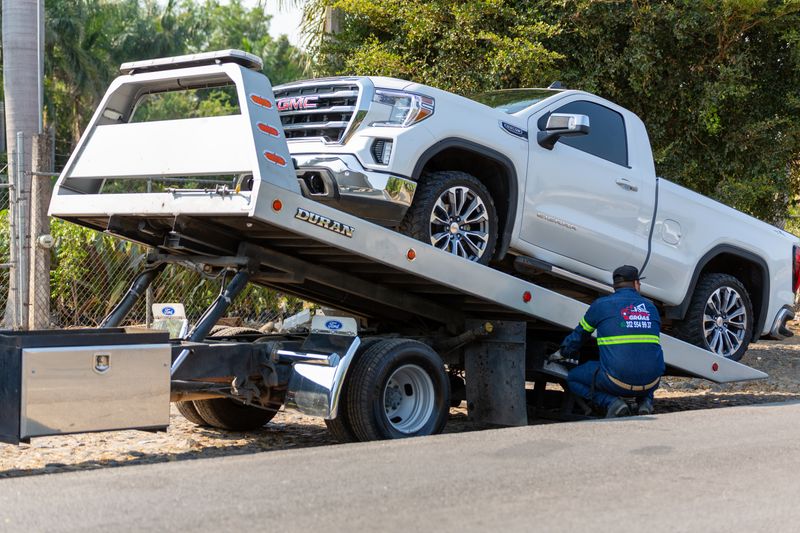
A tow is the most expensive roadside call -- and the one every plan handles differently
What Roadside Assistance Covers
Most plans cover non-crash emergencies. Typical services include:
Towing to the nearest repair shop (distance limits apply)
Jump-starts for a dead battery (not the battery replacement)
Fuel delivery when you run dry (you usually pay for the fuel)
Lockout help if you lock the keys inside
Flat-tire change using your spare
Winching if you slide into a ditch or snow
What it does not cover: the actual parts (new battery, new tire), accident recovery, routine maintenance, or repairs. If you need a $200 battery, roadside help gets you started but you still buy the battery.
Without any plan, a 15-mile tow runs $150-$300 out of pocket
The Four Ways to Get It
There are four main sources in the U.S., and the biggest difference is whether coverage follows the car or the driver.
1. Insurance Company Add-On
Added to your auto policy for about $10-$25 per year ($1-$2 a month). Examples: State Farm $12-$18, GEICO $14-$20, Progressive $15-$25, Allstate $16-$24, USAA $10-$15. Towing is limited to 15-25 miles. The catch: it follows the vehicle, not you -- and multiple claims in a year can affect your record.
2. AAA Membership
Tier
Annual Fee
Tow Distance
Basic
$64-$83
5 miles
Plus
$104-$124
100 miles
Premier
$133-$164
200 miles
AAA follows the driver, so it covers you in any car -- your own, a friend's, or a rental. New members may face a 24-72 hour waiting period. AAA Plus is the sweet spot for most students who drive older cars or take road trips.
Auto-club plans follow the driver, not the car -- handy if you borrow or rent
3. Credit Card Benefits
Many travel and premium cards include roadside help at no extra cost (the annual card fee is the only cost). Coverage is usually 5-10 miles, reimbursement-based (you pay upfront, get repaid in 2-6 weeks, capped around $50-$100 per call). Examples: Amex Platinum, Chase Sapphire Reserve, Capital One Venture X. Great as a backup, weak as your only plan.
4. Manufacturer / Connected-Car
If you drive a newer car (typically under 3-5 years), the maker may include free roadside assistance -- Toyota, Honda, Hyundai, BMW, Tesla, and others. It follows the vehicle and expires with the warranty. Check your owner's manual before paying for anything else.
A mechanic can jump-start, change a tire, or deliver fuel -- but not replace parts
On-Demand Apps: The Pay-As-You-Go Option
Apps like Urgent.ly, Blink, and Honk connect you to a provider with no annual fee -- you pay per incident, often $50-$150 for a tow depending on distance. If you rarely break down and hate subscriptions, this can beat a yearly membership. Some phone carriers also offer it: AT&T charges $2.99/month per line (up to 4 calls/year, $75 per incident); Verizon $59.88/year per line.
Which Should a Student Choose?
Your Situation
Best Choice
Yearly Cost
New car (< 3 years)
Manufacturer free + insurance add-on backup
~$15-$25
Older car (7+ years)
AAA Plus
$104-$124
Mostly city driving
Insurance add-on
$10-$25
Frequent road trips
AAA Premier
$133-$164
Tight budget
Insurance add-on alone
$10-$25
Already have a premium card
Credit card as backup
$0 extra
A spare tire and jumper cables in the trunk reduce how often you need to call for help
Money-Saving Tips for Students
Check free coverage first. If your car is new, or you carry a premium credit card, you may already be covered.
Add it to your insurance if you are on a parent's policy -- it is often just a few dollars a year.
Keep your student ID handy -- some AAA regions offer student rates.
Carry a spare, jumper cables, and a gas can so a small problem never becomes a paid call.
The Bottom Line
For most college students, the insurance add-on at $10-$25 a year is the smart starting point -- cheap, automatic, and enough for typical campus breakdowns. If you drive an older car or take road trips, step up to AAA Plus. And never pay twice: check your manufacturer warranty and credit card perks before buying anything. The goal is simple -- when you are stranded at 2 a.m., someone shows up, and you are not hit with a $300 surprise tow bill.
About the Author
Written by Sarah Mitchell, founder of Student Car Insurance Guide. Sarah spent 8 years as a licensed insurance agent helping young drivers and their families find affordable coverage. Every guide on this site is fact-checked against current state regulations and real quote data from major insurers.
Have a question about this topic? Email our editorial team at 1404555604w@gmail.com.
Adding a college student to a family car insurance policy is one of the most financially impactful decisions a family can make. Done right, it can save $3,000 or more per year compared to the student buying their own policy. Done wrong -- or worse, not done at all -- it can lead to denied claims, massive rate hikes, or even policy cancellation.
The good news? There is no age limit for staying on a parent's car insurance policy, as long as the student lives at home or is a full-time college student. The challenge is navigating the rules, discounts, and coverage adjustments that come with this transition.
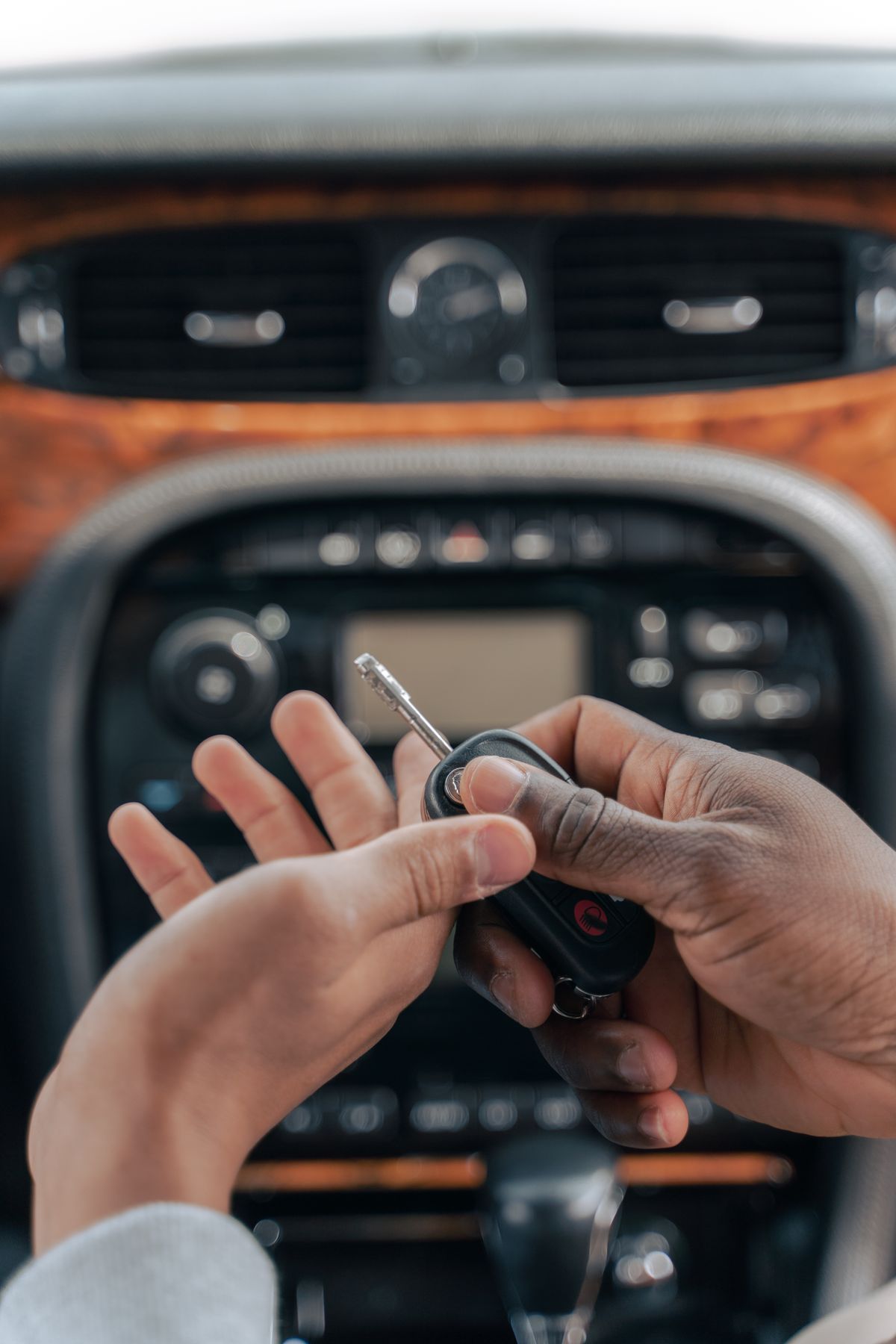
Parent handing car keys to college student -- a key moment for insurance planning
The Cost Reality: Parents Policy vs. Independent Policy
Adding an 18-year-old to a family policy increases the household premium by an average of $4,079 per year, according to 2026 data from Insurance.com. That sounds steep -- until you learn that the same 18-year-old buying their own policy would pay $7,146 per year. Staying on the family policy saves $3,067 annually, or 43 percent.
Age
Independent Policy
Added to Parents Policy
Annual Savings
18
$7,146
$4,079
$3,067 (43%)
19
$5,470
$3,816
$1,654 (30%)
20
$4,970
$3,522
$1,448 (29%)
21
$4,094
$3,030
$1,064 (26%)
The savings shrink as the student gets older, but even at 21, staying on the family policy saves over $1,000 per year. By age 25, premiums typically drop another 20 to 30 percent as the driver ages out of the high-risk young adult category.
Step-by-Step: How to Add Your Student
Calling insurance company to add a college student to the family policy
Step 1: Contact Your Insurer Within 30 Days
Most insurance companies require you to notify them within 30 days of a household member changing their driving status or residence. Failing to do so can result in denied claims or policy cancellation. If your child is heading to college, call your insurer before the semester starts -- not after.
Step 2: Submit Enrollment Proof and Transcript
Provide your insurer with the student's current class schedule and latest transcript. These documents serve two purposes: they verify full-time enrollment (required for distant student discounts) and they establish eligibility for good student discounts based on GPA. Companies like State Farm and Allstate verify these documents annually.
Step 3: Decide What to Do With the Car
This is the most important decision. There are two main options:
Car goes to campus: The student is listed as the primary driver of that vehicle. Your insurer will need the campus address and may adjust rates based on the new location's risk profile. Premiums may fluctuate 15 to 40 percent depending on the area.
Car stays at home: The student qualifies for the distant student discount. The car remains insured under the parents' address, and the student is listed as an occasional driver.
Step 4: Verify State Minimum Coverage Requirements
If the car goes to an out-of-state college, your liability limits must meet both your home state and the college state's minimum requirements. State minimums vary widely: Florida requires only 10/20/10 ($10,000 per person, $20,000 per accident, $10,000 property damage), while Maine requires 50/100/25. Your insurer will typically apply whichever is higher.
Step 5: Stack All Available Discounts
Most insurers allow you to stack discounts up to 35 to 45 percent off the student's portion of the premium. Apply every discount your student qualifies for -- the savings compound significantly.
College student with car on campus -- insurance implications vary by scenario
The Five Discounts Every Student Should Claim
Discount Type
Savings Range
Key Requirements
Good Student
5-25% (avg 12%)
B average (3.0 GPA), under 25, full-time enrollment; Nationwide offers highest at 17%
Distant Student
5-30%
School 100+ miles from home, full-time, no car at school; State Farm offers 30%
Driver Education
4-10%
Complete state-approved driver's ed course; State Farm and Travelers offer 10%
Group/Alumni
3-15%
University alumni association or professional group; Liberty Mutual has 14,000+ partners
Telematics
5-30%
Safe driving habits monitored via app/device; Nationwide SmartRide up to 30%
When distant student and good student discounts are combined, total savings can reach 25 to 50 percent or more on the student's portion of the premium. At State Farm, a high-GPA distant student can see discounts exceeding 50 percent.
Reviewing insurance documents and discount options for a college student
The Vehicle Storage Strategy: A Hidden Money-Saver
One of the most overlooked strategies is the comprehensive-only storage option. If a student leaves their car at home for an entire semester (for example, while studying abroad), you can switch that vehicle to comprehensive-only coverage.
This keeps the car protected against theft, fire, hail, falling branches, and vandalism -- but removes liability and collision coverage since the car is not being driven. The result? Premiums drop by 60 to 75 percent for that vehicle.
For an 18-year-old's vehicle that normally costs $340/month for full coverage, switching to comprehensive-only for one semester (5 months) costs about $25/month instead. That is a savings of $1,575 per semester -- while maintaining continuous insurance coverage (which prevents future rate hikes from coverage lapses).
Important: The car cannot be driven at all during this period. Even a single trip under reduced coverage could result in the policy being voided. You must also provide written notice to your insurer before making this change.
When Should a Student Get Their Own Policy?
While staying on a parent's policy is almost always cheaper, there are three situations where a student must get their own policy:
Moving into their own apartment: Once the student's primary residence is no longer the parents' home, they can no longer be on the family policy. A dorm room does not count as a permanent residence change, but an off-campus apartment does.
Vehicle registered in the student's name: If the car title is in the student's name, most insurers require the student to have their own policy. Some insurers allow the car to stay on the family policy if a parent is a co-signer, but this varies by company.
Permanent move to a different state: If the student establishes permanent residency in another state after graduation, they need their own policy in that state.
When transitioning to an independent policy, the student should request a Letter of Experience from the parents' insurer. This document proves prior insurance coverage and can help the student qualify for better rates on their new policy. A gap in coverage can increase premiums by 9 to 15 percent, and many insurers refuse to write policies for applicants without continuous coverage history.
Car parked near campus -- the distant student discount could save up to 30%
Four College Scenarios: What to Do
Scenario
What to Do
Cost Impact
Car goes to campus
Notify insurer within 30 days; confirm student is listed as primary driver; verify state minimums
Premium may change 15-40% depending on campus location risk
Car stays home (no car at school)
Apply for distant student discount + good student discount
Save 14-30%; stacked discounts can reach 25-50%+
Commuting to local college
Reassess driver rating (occasional to primary); check if mileage is under 7,500/year
Promotion to primary driver: +15-25%; low-mileage discount: avg 7%
First apartment after graduation
Transition to own policy; request Letter of Experience; avoid coverage lapse
Independent policy ~$3,800/yr at age 22; lapse penalty: +9-15%
Insurance Company Comparison for 18-Year-Old Students
Company
Annual Premium (18-yr-old)
Best Student Discount
Best For
USAA
$4,531
5% distant student
Military families
GEICO
$5,625
15% good student
Budget-conscious non-military
Travelers
$5,705
13% good student / 12% distant
Stackable discounts
State Farm
$7,511
30% distant student (highest)
Students 100+ miles from home
Nationwide
$7,694
17% good student (highest)
High-GPA students
Allstate
$8,976
25% distant student
Home + auto bundling
Progressive
$9,913
10% distant student
Telematics-heavy users
Farmers
$11,109
13% good student / 14% low-mileage
Low-mileage commuters
Note: Premiums shown are for adding an 18-year-old to an existing family policy. USAA is only available to military families and veterans. Rates vary significantly by state, vehicle, and driving record.
Five Common Mistakes to Avoid
Not telling the insurer at all. If your student drives the family car while away at college and you never added them, any claim could be denied for material misrepresentation. Insurers can check social media, campus parking records, and even credit card statements to verify where a car is garaged.
Forgetting to renew discounts annually. Good student and distant student discounts typically require annual verification. If you forget to submit the transcript, the discount silently disappears and your premium jumps.
Driving a storage-only vehicle. If you switched a car to comprehensive-only while the student is abroad, even one quick trip to the store voids the coverage. The car must not be driven at all.
Not checking the new state's minimums. If your student takes the car to a state with higher minimum coverage requirements, your current limits may be insufficient. Your insurer should adjust this automatically, but always verify.
Letting coverage lapse during transition. When a student moves out and gets their own policy, even a one-day gap can trigger a 9 to 15 percent rate increase. Coordinate the start date of the new policy with the cancellation date of the old one.
The Bottom Line
Adding a college student to a family car insurance policy is not just the easiest option -- it is almost always the cheapest. An 18-year-old on a family policy pays $3,067 less per year than they would on their own. When you stack discounts -- good student, distant student, driver education, and telematics -- the savings can exceed 50 percent of the student's premium.
The key is to be proactive: notify your insurer before the semester starts, submit all documentation, choose the right coverage strategy for your situation, and stack every available discount. If your student is leaving the car at home, the distant student discount alone can save you hundreds. If they are taking the car to campus, verifying state coverage minimums prevents costly surprises.
And when graduation eventually comes, plan the transition carefully. A Letter of Experience and a seamless handoff to a new policy can keep rates reasonable as your student enters the next chapter of their life -- without the penalty of a coverage lapse.
About the Author
Written by Sarah Mitchell, founder of Student Car Insurance Guide. Sarah spent 8 years as a licensed insurance agent helping young drivers and their families find affordable coverage. Every guide on this site is fact-checked against current state regulations and real quote data from major insurers.
Have a question about this topic? Email our editorial team at 1404555604w@gmail.com.
As college costs continue to rise, more students than ever are turning to rideshare and delivery driving. A 2025 analysis by CheapInsurance.com found that 40% of full-time college students now work while attending school, and rideshare platforms like Uber and Lyft offer the flexible hours students need. But behind the convenience lies a financial time bomb: millions of student drivers are unknowingly operating in a dangerous insurance coverage gap that could bankrupt their families.
According to the Insurance Information Institute, your standard personal auto policy voids coverage the moment you turn on the rideshare app. That means the car insurance your parents pay for -- the one you count on -- legally refuses to cover you during a large portion of every shift. And what the rideshare companies provide during that window is often nowhere near enough.
Why Your Personal Car Insurance Will Deny Your Rideshare Claim
Nearly every standard personal auto policy in the United States contains a "livery exclusion" -- a clause that voids coverage the moment you use your vehicle for commercial transportation. The Insurance Information Institute puts it bluntly: a personal policy "will not provide coverage for ride-sharing, stopping from the moment a driver logs into a TNC ride-sharing app to the moment the customer has exited the car."
Here is what happens if you get into an accident while driving for Uber or Lyft without proper coverage: the insurance adjuster will investigate. They will pull your phone records. Once they confirm the rideshare app was active, your claim is denied entirely. Worse, the carrier can cancel your policy mid-term and flag your record for non-renewal. You are left paying for the wrecked car, the other driver's medical bills, and your own injuries -- all out of pocket.
This is not a hypothetical risk. Insurify's 2025 analysis found that rideshare drivers are 73% more likely to be in an accident than the general population. They log 35,000+ miles per year compared to the national average of 13,500. More time on the road means more exposure, and without proper insurance, more financial danger.
The Three Rideshare Insurance Periods: When You Are and Are Not Covered
Uber and Lyft both structure driver insurance around three distinct periods. Understanding each one is critical because your coverage level changes the second you transition between them -- and the gaps can be devastating.
Period 0: App Off (Regular Driving)
When the Uber or Lyft app is completely off, your personal auto insurance applies normally. This is the only period where your standard policy works exactly as you expect it to. Nothing changes, and you have full personal coverage.
Period 1: App On, Waiting for a Ride Request (THE DANGER ZONE)
This is the period that quietly bankrupts drivers. You have the app open and are waiting for a ride request. During this window:
Uber/Lyft coverage: Only $50,000 per person and $100,000 per accident for bodily injury, plus $25,000 for property damage. Zero collision coverage for your own vehicle.
Your personal insurance: Provides nothing. The livery exclusion voids your entire policy the moment the app goes online.
Think about what this means: if you total your $30,000 car while waiting for a ride, no insurance company pays a single penny. And if someone gets seriously injured, the $50,000 per person limit can evaporate with a single ER visit. Data from Becker's Hospital Review shows a broken femur alone costs $40,000 to $60,000 in hospital charges.
Period 2: Ride Accepted, Driving to Pick Up Passenger
Once you accept a ride request, the platform's commercial policy kicks in with much better coverage:
$1,000,000 in third-party liability coverage
$1,000,000 in uninsured/underinsured motorist (UM/UIM) coverage
Contingent comprehensive and collision coverage for your vehicle with a $2,500 deductible (note: this only activates if you already carry comp and collision on your personal policy)
Period 3: Passenger in Vehicle Through Drop-off
Coverage is identical to Period 2: $1 million liability, $1 million UM/UIM, and contingent collision with a $2,500 deductible. This continues until the passenger exits your vehicle and the trip ends in the app.
Why Period 1 Is the Trap Most Students Fall Into
On paper, Period 1 sounds like a tiny window. In reality, it adds up fast. A typical evening driving for Uber might include: 10 minutes waiting for your first request, pick up and drop off a passenger, then 20 minutes looking for the next fare, then another 15 minutes before the third request. Across a single Saturday night, you could spend 45 minutes or more in Period 1 -- the window where your vehicle is completely uninsured and your liability coverage is dangerously thin.
Multiply that across weeks and months of driving, and the cumulative exposure is enormous. A rear-end collision at a stoplight, a parking lot scrape, or a hydroplane in wet weather during Period 1 could mean a total loss with no insurance payout from any source.
CheapInsurance.com's analysis warns that the potential financial exposure for students is staggering. Property damage from an accident can easily reach $50,000-$100,000. Medical bills from injuries can exceed $500,000. Legal liability from passenger injuries can result in million-dollar judgments. And when the student is on their parents' policy, the parents' assets are exposed too.
The Rideshare Endorsement: $15-40/Month to Close the Gap
A rideshare endorsement (also called a TNC endorsement or rideshare rider) is an affordable add-on to your personal auto policy that fills the Period 1 coverage gap. For most college students driving 10-20 hours per week, this is the right solution. Here is what major carriers charge and offer:
Carrier
Monthly Cost
Key Feature
State Farm
$15-20% of premium (~$28/mo)
Covers all 3 periods with personal deductibles
USAA
$6-$16/mo
Cheapest option (military-affiliated only)
Allstate
$10-$20/mo
Deductible gap reimbursement during Periods 2/3
Farmers
$6-$25/mo
Period 1 gap coverage for part-time drivers
Progressive
Varies by state
Period 1 coverage + rideshare-native policies
Erie
$9-$15/mo
All 3 periods (12-state East Coast footprint)
State Farm stands out as the only major carrier whose TNC endorsement extends your personal policy limits into all three periods. If your personal collision deductible is $500, it stays $500 even when a passenger is in the car -- versus the $2,500 deductible Uber and Lyft charge for their contingent collision coverage.
Allstate's Ride for Hire product offers a unique feature: deductible gap reimbursement. If Lyft's $2,500 collision deductible hits during a passenger trip, Allstate pays you the difference between that and your personal deductible. A student with a $500 deductible would pocket a $2,000 reimbursement.
Endorsement vs. Commercial Policy: What College Students Need
For most college students driving fewer than 20 hours per week, a rideshare endorsement on their existing personal policy is sufficient. At $6 to $40 per month, it is one of the cheapest catastrophe insurance products in the auto market.
However, if you cross into full-time territory -- 40+ hours per week with rideshare as your primary income source -- most carriers will require a commercial auto policy. These run $300 to $500 per month depending on your location and driving record. While significantly more expensive, they provide seamless coverage with no Period 1 gap to worry about.
Some insurers, like Progressive, have developed rideshare-native policies that blend personal and commercial coverage into a single product. These are worth exploring if you are shopping for new insurance or looking to switch providers.
Delivery Apps: The Same Gap in a Different Package
Research from Bryant University found that among college students engaged in gig work, food delivery services like Uber Eats ranked among the most common employment types. Many students assume delivery driving is somehow different from rideshare driving when it comes to insurance. It is not.
Uber Eats follows the same three-period framework as Uber rides. DoorDash provides limited liability during the waiting phase and $1 million liability during active orders, but with the same Period 1 gap. Most critically, Grubhub provides no auto liability coverage at all -- not during active deliveries, not during the waiting phase. If you deliver for Grubhub without an endorsement, you are driving completely uninsured the entire time the app is on.
The same rideshare endorsements from State Farm, Allstate, Progressive, and others also cover delivery driving in most cases. Always confirm with your agent that delivery coverage is included before you start.
6 Essential Steps for College Student Rideshare Drivers
1. Tell Your Insurance Company Before You Start Driving
This is the most important step and the one students most often skip. Call your insurance agent and disclose that you plan to drive for Uber, Lyft, or a delivery service. Most major carriers will not drop you for asking -- carriers like Allstate and Farmers explicitly do not drop policyholders who add a rideshare endorsement. What will get you dropped is hiding the activity and getting caught after an accident.
2. Add a Rideshare Endorsement to Your Policy
For $6 to $40 per month, this single add-on closes the Period 1 gap and protects you across all three coverage periods. The cost is less than $2 per day, compared to the $150,000+ in potential out-of-pocket costs from one serious Period 1 accident.
3. Talk to Your Parents About Their Policy
Most college students remain on their parents' auto insurance. If you drive for a rideshare platform without telling them, you are not just risking your own finances -- you are exposing your parents' assets to lawsuits if an accident exceeds coverage limits. Have an honest conversation before your first shift.
4. Know Your State's Requirements
Insurance requirements for rideshare drivers vary dramatically by state. Some states mandate more comprehensive coverage from the platforms. Others have minimal requirements, leaving larger gaps. If you attend college in a different state than where your family's insurance is based, the rules may be different in both places. Check your state's Department of Insurance website for TNC-specific regulations.
5. Consider the Age Restrictions
Lyft requires drivers to be 21 or older. Uber requires drivers under 23 to have at least three years of driving experience. These restrictions push younger college students toward delivery-only platforms or lead them to start driving the moment they meet the requirements -- often without proper insurance. Make sure you meet the age and experience requirements before signing up, and do not let the rush to start earning cause you to skip the insurance step.
6. Understand the "Full Coverage" Myth
Many students believe "full coverage" means they are protected in all situations. It does not. Full coverage simply means you have comprehensive and collision coverage on top of liability -- it describes your coverage scope for personal driving only. The commercial exclusion in your personal policy overrides everything when the rideshare app is on, regardless of what coverage levels you carry. Only a rideshare-specific product covers commercial driving activity.
The Bottom Line: $2/Day for Catastrophe Protection
Rideshare driving can be a smart way for college students to earn flexible income. But the insurance gap is real, and it is merciless. For less than $2 per day -- roughly the cost of a cup of coffee -- a rideshare endorsement closes the Period 1 gap and provides continuous protection across every stage of your driving shift.
The alternative is gambling that you will never have an accident during the 45+ minutes per shift you spend in Period 1. With rideshare drivers 73% more likely to crash than average drivers, that is a bet no college student can afford to lose.
Call your insurance company today. Tell them you plan to drive for Uber, Lyft, or a delivery service. Add the endorsement. It takes 10 minutes and could save your family from financial catastrophe.
About the Author
Written by Sarah Mitchell, founder of Student Car Insurance Guide. Sarah spent 8 years as a licensed insurance agent helping young drivers and their families find affordable coverage. Every guide on this site is fact-checked against current state regulations and real quote data from major insurers.
Have a question about this topic? Email our editorial team at 1404555604w@gmail.com.
Electric Vehicle Insurance for College Students: The Complete 2026 Guide to Costs, Coverage, and Savings
Electric vehicles (EVs) are no longer a niche choice. With over 4.5 million EVs on U.S. roads in 2026 and prices dropping on models like the Chevrolet Equinox EV and Hyundai Ioniq 5, more college students are considering going electric. But there is a catch: EV insurance typically costs more than coverage for gas-powered cars. According to Jerry data from May 2026, full-coverage EV insurance averages $547 per month ($6,564 per year), which is about 59% more than equivalent gas vehicle coverage. For a college student already stretching a tight budget, that premium difference matters.
The good news is that EV insurance premiums have been falling steadily -- down 19% since 2024 -- and there are specific strategies students can use to bring costs even lower. This guide breaks down everything you need to know about insuring an electric vehicle as a college student in 2026, including average costs by model, why EVs cost more to insure, and how to maximize your savings.
How Much Does EV Insurance Cost in 2026?
According to MoneyGeek's April 2026 analysis, the national average for electric vehicle insurance is:
Full coverage: $3,281 per year ($273 per month)
Minimum coverage: $1,679 per year ($140 per month)
For comparison, here is how EV insurance stacks up against other fuel types:
Fuel Type
Full Coverage (Annual)
Minimum Coverage (Annual)
Electric (BEV)
$3,281
$1,679
Hybrid
$2,956
$1,506
Plug-in Hybrid (PHEV)
$5,185
$2,634
Note that plug-in hybrids carry the highest average rates at $5,185 per year, but this figure is inflated by luxury PHEV models in the dataset. Standard hybrids actually cost slightly less to insure than pure EVs at $2,956 per year.
Meanwhile, Jerry's data -- drawn from over 2.2 million real EV quotes -- shows a different perspective. Their average full-coverage quote for EVs in 2026 is $547 per month ($6,564 per year), which is significantly higher than MoneyGeek's figure. This discrepancy likely reflects differences in driver demographics, coverage levels, and geographic mix. The key takeaway: your actual quote will vary based on your age, location, driving record, and the specific EV model you choose.
EV vs. Gas Car Insurance: How Much More?
Jerry's data reveals that the gap between EV and gas car insurance is narrowing but still significant. Here is the year-over-year comparison for full-coverage quotes:
Year
EV Avg (Monthly)
Gas Avg (Monthly)
Gap ($)
Gap (%)
2024
$672
$401
$271
68%
2025
$564
$369
$195
53%
2026 (Jan-May)
$547
$345
$202
59%
At state-minimum coverage, the gap is much smaller. In 2026, state-minimum EV insurance averages $158 per month compared to $152 per month for gas cars -- just a 4% difference. If you carry only liability coverage, going electric has minimal impact on your premium.
Why Does EV Insurance Cost More?
Five key factors drive the higher cost of EV insurance. Understanding these can help you make informed decisions about which EV to buy and how to structure your coverage.
1. Higher Vehicle Values
EVs generally cost more to purchase than comparable gas vehicles. A higher purchase price means a higher replacement value, which insurers factor into premiums. When a total loss occurs, the insurer pays more, and rates reflect that exposure across all policyholders.
2. Expensive Proprietary Parts
Many EVs use parts manufactured exclusively by the automaker. Tesla, Rivian, and Lucid all rely heavily on proprietary components. Unlike gas cars, where aftermarket alternatives are widely available, EV repairs often require OEM parts at premium prices. This lack of competition keeps repair costs high.
3. Specialized Labor Requirements
EV repairs require technicians trained on high-voltage battery systems, electric drivetrains, and advanced driver assistance systems (ADAS). Far fewer shops have this certification, which limits competition and drives up labor rates. In some areas, the nearest qualified repair facility may be hours away, adding towing and logistics costs.
4. Advanced Driver Assistance Systems (ADAS)
Most EVs come loaded with cameras, sensors, radar, and lidar components that control lane-keeping, automatic emergency braking, and adaptive cruise control. Even a minor fender-bender can require recalibration or replacement of these systems, adding hundreds to thousands of dollars to what would be a routine repair on a gas car.
5. Longer Repair Times
EVs take longer to repair than gas vehicles on average due to parts availability, specialized labor scheduling, and the complexity of high-voltage system diagnostics. Longer repair times mean extended rental car periods, which raises the total cost of each claim for insurers.
EV Insurance Costs by Model: Cheapest to Most Expensive
Not all EVs cost the same to insure. According to MoneyGeek's 2026 analysis of 33 EV models, annual full-coverage premiums range from $1,947 for the Chevrolet Silverado EV to $10,402 for the Audi SQ8 e-tron. That is an $8,455 spread, which means choosing the right model can save you thousands per year on insurance alone.
Here are the 10 most affordable EVs to insure for full coverage:
Rank
Make and Model
Full Coverage (Annual)
Min Coverage (Annual)
1
Chevrolet Silverado EV
$1,947
$993
2
Hyundai Ioniq 5
$1,962
$1,005
3
Subaru Solterra
$1,973
$1,006
4
Cadillac Lyriq
$2,039
$1,040
5
Nissan Leaf
$2,064
$1,053
6
Volkswagen ID. Buzz
$2,088
$1,065
7
Chevrolet Equinox EV
$2,137
$1,090
8
Chevrolet Blazer EV
$2,181
$1,112
9
Hyundai Ioniq 6
$2,186
$1,115
10
Toyota bZ4X
$2,197
$1,121
And here are the 5 most expensive EVs to insure:
Rank
Make and Model
Full Coverage (Annual)
1
Audi SQ8 e-tron
$10,402
2
Audi Q8 e-tron
$9,004
3
Audi SQ6 e-tron
$8,503
4
Audi Q6 e-tron
$7,499
5
Audi Q4 e-tron
$6,285
The pattern is clear: mainstream EVs from Hyundai, Kia, Toyota, Volkswagen, and Nissan benefit from broad dealer networks and accessible parts, keeping insurance costs competitive. Luxury EVs from Audi and Tesla use proprietary technology that limits repair options and drives premiums up. For budget-conscious college students, this means choosing a Nissan Leaf or Hyundai Ioniq 5 over a Tesla Model 3 could save you $1,200 or more per year on insurance alone.
Tesla Insurance: A Special Case
Tesla models are among the most popular EVs for college students, but they are also expensive to insure with traditional carriers. MoneyGeek reports that the Tesla Model 3 costs $3,268 per year for full coverage, the Model Y costs $3,343, the Model S costs $4,347, and the Model X costs $4,469.
Tesla offers its own insurance product -- Tesla Insurance -- which uses real-time driving data to set rates. Available in over a dozen states, Tesla Insurance can be 20% to 30% cheaper than traditional policies for safe drivers. However, it is only available to Tesla owners and only in select states. If you drive a Tesla and live in a state where it is offered, getting a quote from Tesla Insurance is essential before comparing other options.
Best EVs for College Students (Considering Insurance Costs)
For college students, the ideal EV balances affordable purchase price, low insurance premiums, decent range, and reliability. Based on the insurance data above, here are our top picks:
Nissan Leaf ($2,064/yr insurance): The most affordable EV to buy and insure. With a used Leaf starting under $15,000 and insurance under $2,100/year, it is the budget champion. Range is limited (150-215 miles depending on trim), but sufficient for campus commuting.
Hyundai Ioniq 5 ($1,962/yr insurance): Named one of the best EVs of 2026, the Ioniq 5 offers 220-303 miles of range, ultra-fast charging, and the second-lowest insurance cost of any EV. A used model starts around $25,000.
Chevrolet Equinox EV ($2,137/yr insurance): With a starting price around $33,000 (before the $7,500 federal tax credit brings it to ~$25,500), the Equinox EV is one of the best value new EVs. Insurance is affordable, and the 319-mile range is excellent.
Volkswagen ID.4 ($2,254/yr insurance): A practical compact SUV with 263-291 miles of range. The ID.4 qualifies for the federal tax credit and has established VW service networks, keeping repair costs manageable.
Kia EV6 ($2,213/yr insurance): A sporty alternative to the Ioniq 5 with similar platform and performance. Insurance costs are nearly identical, and the 310-mile range is competitive.
How College Students Can Save on EV Insurance
The same student discounts that apply to gas cars work for EVs. Here are the key strategies to reduce your EV insurance premium:
Stack Standard Student Discounts
Good Student Discount (7-17%): Maintain a B average (3.0 GPA) and submit your transcript each semester. Nationwide offers the largest discount at 17%.
Stay on Parents' Policy: Adding your EV to a family policy costs far less than a solo policy. You benefit from multi-car and multi-driver discounts.
Distant Student Discount: If your campus is 100+ miles from home and you leave the car behind, you could save 7-14% (up to 30% with State Farm).
Telematics Programs: Enroll in your insurer's usage-based program (Progressive Snapshot, Allstate Drivewise, etc.). Safe driving can save 10-12% on average.
Defensive Driving Course: Complete an approved course for an average 7% discount.
EV-Specific Savings Strategies
Choose a non-luxury EV: As the data shows, a Nissan Leaf ($2,064/yr) costs $1,200+ less to insure than a Tesla Model 3 ($3,268/yr). That is $6,000+ over a typical five-year ownership period.
Consider state-minimum coverage: The gap between EV and gas insurance shrinks to just 4% at state-minimum levels ($158 vs $152/month). If your EV is older or you have a tight budget, liability-only coverage may make sense.
Check Tesla Insurance: If you drive a Tesla, get a quote from Tesla Insurance -- it can be 20-30% cheaper than traditional carriers.
Raise your deductible: Moving from $500 to $1,000 can reduce collision and comprehensive premiums by 15-30%, which is especially impactful on higher-cost EV policies.
Bundle with renters insurance: Adding a renters policy (often $15-$30/month) can unlock multi-policy discounts of 10-25% on your auto premium.
EV Savings That Offset Higher Insurance
While EV insurance costs more, electric vehicles can save you money in other areas that help offset the higher premiums:
Fuel Savings
Charging an EV costs significantly less per mile than gasoline in most states. The EPA estimates that charging an EV costs the equivalent of about $1.20 per gallon of gas. If you drive 12,000 miles per year and your EV gets 3.5 miles per kWh, you could save $1,000 to $1,500 annually on fuel alone, depending on local electricity rates and gas prices.
Maintenance Savings
According to AAA's 2024 Your Driving Costs study, EVs cost about $330 less per year in maintenance than gas vehicles, averaging roughly $949 annually. EVs do not need oil changes, transmission fluid, timing belts, or exhaust system repairs. Over five years, that is an additional $1,650 in savings.
Federal and State Incentives
The federal government offers a tax credit of up to $7,500 on qualifying new EV purchases, and many used EVs under $25,000 now qualify for a $4,000 used EV tax credit. Many states also provide additional tax credits, rebates, or reduced registration fees. Some utility companies offer rebates for home charging equipment installation. These incentives can significantly reduce your upfront cost, making the higher insurance premium more manageable.
Here is a simplified five-year cost comparison for a college student choosing between a gas car and an EV:
Cost Category (5 Years)
Gas Car
EV (Nissan Leaf)
Difference
Insurance (full coverage)
$12,500
$10,320
EV saves $2,180
Fuel / Electricity
$7,500
$3,000
EV saves $4,500
Maintenance
$6,400
$4,750
EV saves $1,650
Federal Tax Credit
$0
-$4,000 (used)
EV saves $4,000
Total 5-Year Cost
$26,400
$12,070
EV saves $14,330
Note: The above table uses illustrative figures based on national averages. Actual costs vary by location, driving habits, vehicle condition, and insurance profile.
EV-Specific Insurance Considerations
Battery Coverage
The battery is the most expensive single component of an EV, often costing $5,000 to $15,000 to replace. Most standard auto insurance policies cover battery damage if it is caused by a covered peril (collision, theft, fire). However, battery degradation from normal wear is not covered by insurance -- that falls under the manufacturer's warranty, which typically lasts 8 years or 100,000 miles. Before buying an EV, verify both the warranty terms and what your insurance policy covers regarding the battery.
Charging Equipment
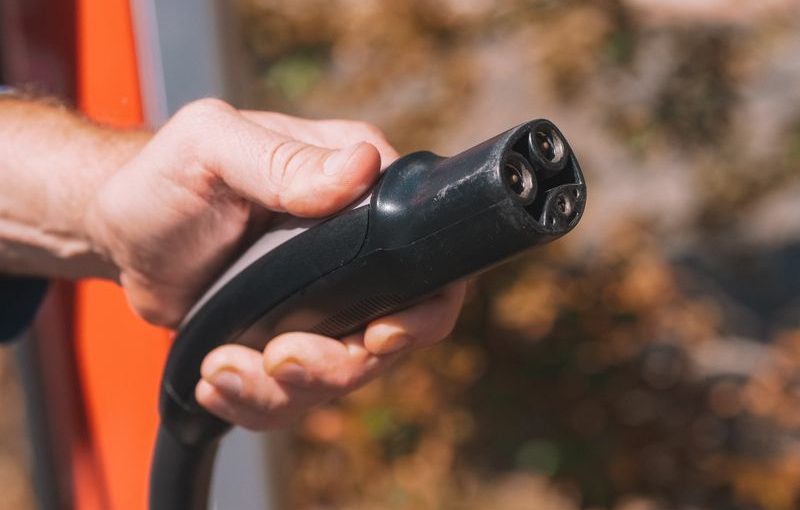
Home charging stations (Level 2 chargers) typically cost $500 to $1,200 installed. Some insurers now offer coverage for home charging equipment under comprehensive or homeowner's policies. If you rent, check whether your renters insurance covers a damaged or stolen portable charger. Also confirm whether your auto policy covers damage to your charging cable if it is damaged while plugged in at a public station.
Total Loss Risk
EVs have a higher total-loss rate than gas cars. If the battery pack is damaged in a collision, many insurers will declare the vehicle a total loss rather than risk repairing a high-voltage system. This means you are more likely to receive a payout rather than a repair, which makes gap insurance especially important if you financed your EV. Gap insurance covers the difference between what you owe on your loan and what the insurance pays out if the car is totaled.
The Bottom Line
Electric vehicle insurance does cost more than gas car insurance -- about 59% more for full coverage, as of mid-2026. But the gap is narrowing, and when you factor in fuel savings ($1,000-$1,500/year), maintenance savings ($330/year), and federal tax credits (up to $7,500 new, $4,000 used), the total cost of EV ownership can actually be lower than a gas car over a five-year period.
For college students, the key is choosing the right EV. A Nissan Leaf, Hyundai Ioniq 5, or Chevrolet Equinox EV will cost you under $2,200 per year to insure -- comparable to many gas vehicles. Avoid luxury EVs from Audi and high-end Tesla models, which can push insurance costs past $4,000 annually. Stack your student discounts, stay on your parents' policy, and compare quotes from at least four insurers before committing.
The EV market is evolving rapidly, and insurance costs are trending downward. As more repair shops gain EV certification and aftermarket parts become available, premiums will continue to fall. If you are considering an EV for college, there has never been a better time to make the switch -- just make sure to factor insurance into your total cost of ownership calculation.
Sources: Jerry EV Insurance Premium Trends (June 2026), MoneyGeek EV Insurance Analysis (April 2026), AAA 2024 Your Driving Costs study, EPA fuel economy data. All figures are national averages and individual quotes will vary.
About the Author
Written by Sarah Mitchell, founder of Student Car Insurance Guide. Sarah spent 8 years as a licensed insurance agent helping young drivers and their families find affordable coverage. Every guide on this site is fact-checked against current state regulations and real quote data from major insurers.
Have a question about this topic? Email our editorial team at 1404555604w@gmail.com.
Getting into a car accident is one of the most stressful experiences a student driver can face. Whether it is a minor fender bender in a campus parking lot or a more serious collision on the highway, the moments immediately following a crash are filled with adrenaline, confusion, and pressure to make quick decisions. What you do — and say — in those critical minutes can have a lasting impact on your insurance rates, your legal standing, and your financial future.
This is especially important for student drivers. According to the National Highway Traffic Safety Administration (NHTSA), drivers aged 15 to 20 make up just 5% of all licensed drivers but account for 8.9% of fatal crash drivers and 12% of all police-reported crashes. Per mile driven, teens aged 16 to 19 have a fatal crash rate nearly three times that of drivers aged 20 and older. For a young driver already paying two to three times more for car insurance than an experienced adult, a single at-fault accident can add another 40% to 60% to an already expensive premium — a financial hit that can last three to five years.
This guide walks you through exactly what to do after a car accident, step by step, from the moment of impact through the weeks of recovery. It covers what to say (and what never to say), what to document, how to handle insurance companies, when to involve a lawyer, and what you can do to minimize the long-term financial damage. Bookmark this page or save it to your phone — you will be glad you did.
Part 1: The First 5 Minutes — Safety First
Step 1: Stop and Stay at the Scene
Never leave the scene of an accident, no matter how minor. Leaving the scene of a crash involving injury or death is a criminal offense in every state. Even for property-damage-only accidents, leaving can result in hit-and-run charges, license suspension, and serious legal consequences. Pull over as soon as it is safe to do so, turn off your engine, and take a deep breath.
Step 2: Check for Injuries and Call 911
Before anything else, check yourself and your passengers for injuries. Then, if you are physically able, check on the occupants of the other vehicle. Even if the accident seems minor, call 911 immediately. Police and paramedics serve three critical functions: they provide medical care for injuries that may not have obvious symptoms right away (adrenaline can mask concussions, whiplash, and internal bleeding), they create an official accident report that is essential evidence for your insurance claim, and they secure the scene to prevent secondary collisions.
When you call 911, clearly state your location, whether anyone is injured, the number of vehicles involved, and whether any vehicles are blocking traffic. Let the dispatcher guide you through what to do next.
Step 3: Move to Safety if Possible
If your vehicle is drivable, the accident is minor, and no one is seriously injured, move your car to the shoulder or a nearby safe location out of the flow of traffic. If the car cannot be moved or someone is hurt, leave it where it is. Your safety is more important than preserving the exact crash position. Turn on your hazard lights immediately to make your vehicle more visible to other drivers. If you have emergency flares or reflective triangles and it is safe to deploy them, place them behind your vehicle to warn oncoming traffic.
Part 2: At the Scene — Information Gathering and Documentation
Step 4: Exchange Information with the Other Driver
Calmly and politely exchange the following information with the other driver. Keep the conversation brief and focused on the essentials. Do not discuss who caused the accident. Do not apologize. Stick to these facts:
Full name and contact information (phone number, address, email)
Insurance company name and policy number — take a photo of their insurance card
Driver's license number — snap a photo for accuracy
License plate number and vehicle details (make, model, year, color)
Location and time of the accident
If the other driver is uncooperative, aggressive, or refuses to share information, do not escalate the situation. Wait for the police to arrive and let them handle it.
Step 5: Document the Scene Thoroughly
Use your smartphone to take comprehensive photos and videos of the accident scene. This documentation is your most powerful tool when filing an insurance claim or defending yourself if fault is disputed. Capture all of the following:
Damage to all vehicles involved — both close-up shots and wide-angle views from multiple angles
License plates of all vehicles
The entire accident scene, including skid marks, debris, traffic signs, traffic lights, and road markings
Any visible injuries you or your passengers have sustained
Weather conditions, road conditions, and lighting at the time of the crash
The positions of the vehicles before they are moved (if safe to photograph)
Damage to any other property, such as guardrails, poles, fences, or buildings
Step 6: Gather Witness Information
If there were any witnesses to the accident, politely ask for their names and contact information. An independent eyewitness account can be extremely valuable for your insurance claim. Ask them what they saw and, if they are willing, request that they provide a brief statement to the responding police officer. Do not pressure them or argue with them about what they saw — just collect their information and let the professionals sort out the facts.
Step 7: Speak with the Police — Carefully
When the police arrive, cooperate fully and provide a clear, factual account of what happened. Here is what to do and what to avoid:
DO:
State the basic facts: where you were going, what direction you were traveling, what you observed happen
Point out evidence you noticed, such as skid marks, traffic signals, or road hazards
Ask for the officer's name, badge number, and the police report number
Request information on how to obtain a copy of the report once it is filed
DO NOT:
Guess or speculate about details you are unsure of — it is okay to say 'I don't know' or 'I'm not sure'
Admit fault, even if you think you caused the accident — fault is a legal determination, not an instinctual one
Say 'I'm sorry' or 'It was my fault' — these phrases can be recorded in the police report and used against you by insurance companies
Minimize your injuries by saying 'I'm fine' before being medically evaluated — many injuries take hours or days to manifest
Part 3: What to Say and What NEVER to Say After an Accident
The Words That Can Cost You Thousands
Everything you say at the scene — to the other driver, to witnesses, to the police, and later to insurance adjusters — can and will be used to determine fault and calculate payouts. Insurance companies review every statement for anything that suggests liability. The wrong words can cost you thousands of dollars in increased premiums or reduced claim payouts. Here is a quick reference:
NEVER say these things:
"I'm sorry" — This may feel like the polite thing to say, but it can be interpreted as an admission of fault, even if the accident was not your fault.
"It was my fault" or "I should have been paying more attention" — Never admit guilt. Fault determination involves many factors you may not be aware of at the scene.
"I didn't see you" — This implies negligence or distracted driving and will be noted in police and insurance records.
"I'm fine" or "I'm not hurt" — Injuries like whiplash, soft tissue damage, and concussions can take hours or days to become apparent. Saying you are fine can undermine a future injury claim.
"Let's just handle this without insurance" — While paying out of pocket is sometimes a valid strategy for very minor damage, never agree to this at the scene before you have assessed the full situation.
"I only looked away for a second" — This is essentially an admission of distracted driving and will be used against you.
"Don't worry, my insurance will cover everything" — You are making a promise you may not be able to keep, and this statement can be used as evidence of admitting responsibility.
DO say these things:
"Is everyone okay?" — Shows concern without admitting fault.
"Let's exchange insurance and contact information" — Stays focused on the practical essentials.
"I'd like to file a police report" — Creates an official record, which protects everyone involved.
"I'd prefer to speak with my insurance company before answering that" — A perfectly reasonable response to detailed or leading questions.
"Here are the facts as I understand them" — When giving your account, frame it as your recollection, not as definitive truth.
Handling the Other Driver's Insurance Company
If the other driver's insurance company contacts you, be extremely cautious. Their adjusters are trained to collect information that minimizes their company's liability. They may ask seemingly casual questions designed to get you to admit partial fault or downplay your injuries. Here is how to handle these calls:
Politely decline to give a recorded statement. You are generally not legally obligated to provide one to the other party's insurer.
Direct them to your own insurance company or, if you have one, your attorney.
Provide only basic factual information: your name, contact information, and the date and location of the accident.
Do not discuss your injuries, your medical treatment, or how you are feeling — anything you say can be used to argue that your injuries are not serious.
Do not accept any settlement offers without consulting your own insurer or an attorney, especially if you have injuries.
Part 4: After Leaving the Scene — The Next 72 Hours
Step 8: Seek Medical Attention, Even If You Feel Fine
This is one of the most important steps in this guide — and one that many students skip because they feel fine in the moment. Adrenaline after a crash can mask significant pain and injury symptoms for hours or even days. Common delayed-onset injuries include whiplash (which can take 24 to 48 hours to develop), concussions (which may not show symptoms immediately), soft tissue injuries, and internal bruising or bleeding.
Seeing a doctor within 24 to 72 hours after an accident serves two critical purposes: it protects your health by catching hidden injuries early, and it creates an official medical record that links any injuries directly to the accident. Without timely medical documentation, an insurance company may argue that your injuries were not caused by the crash or are not as serious as you claim.
Step 9: Report the Accident to Your Insurance Company
Notify your insurance company as soon as possible — most policies require reporting within 24 to 48 hours. When you call, provide a factual summary of what happened based on the information you gathered at the scene. Share the police report number if you have one. Your insurer will explain the next steps in the claims process, including how to get your vehicle appraised for damage and whether you qualify for a rental car while yours is being repaired.
When speaking with your own insurance company:
Stick to the facts — what happened, when, where, and who was involved
Provide the photos, videos, witness information, and police report number you collected
Ask about your deductible and whether you have rental car coverage
Ask whether your policy includes accident forgiveness (see Part 7 below)
Do not accept fault or make speculative statements about what caused the crash
Step 10: Create an Accident File and Track Everything
Start a dedicated folder — physical or digital — for all accident-related documents. The insurance claims process can stretch over weeks or months, and having everything organized will save you enormous stress and protect your claim. Your accident file should include:
The police report number and a copy of the completed report
Your insurance claim number and the contact information of your assigned adjuster
All photos and videos from the scene
All medical bills, doctor reports, prescriptions, and receipts
Records of any missed classes, exams, or work shifts due to the accident
Receipts for any out-of-pocket expenses (rental car, transportation, medications)
A timeline or journal documenting your physical symptoms, pain levels, and recovery progress
All correspondence with insurance companies, including dates, names, and summaries of conversations
Part 5: State-by-State Reporting Requirements — When You Must Report an Accident
Every state requires drivers to report accidents involving injury or death. However, requirements for property-damage-only accidents vary significantly by state, with damage thresholds ranging from $50 (Tennessee) to $3,000 (Hawaii, Vermont, Virginia). If the damage exceeds your state's threshold — even if the police did not come to the scene — you are legally obligated to file a report yourself. Here are the thresholds for every state:
Lowest thresholds (report even the smallest damage):
Tennessee: $50 — the lowest in the nation; virtually any accident must be reported
Alabama: $500 (for uninsured motorists only)
Delaware: $500
Florida, Georgia, Kentucky, Louisiana, Mississippi, New Jersey, New Mexico: $500
District of Columbia: $250
Mid-range thresholds:
California, Colorado, Connecticut, Maine, Maryland, Massachusetts, Michigan, Minnesota, Montana, Nebraska, New Hampshire, North Carolina, North Dakota, Rhode Island, South Carolina, Texas, Utah, Washington, West Virginia, Wisconsin, Wyoming: $1,000
Arizona: $300, or if a settlement is not reached within 6 months
Indiana: $750
Idaho, Illinois, Kansas, New York: $1,500
Oregon: $2,500
Highest thresholds (minor accidents may not require reporting):
Hawaii, Vermont: $3,000
Virginia: $3,000
Ohio: All crashes must be reported—no dollar threshold
Nevada: All crashes must be reported—no dollar threshold
Reporting deadlines also vary widely. Alabama gives you 30 days for property damage. California, Colorado, Illinois, and several others require filing within 10 days. Florida requires it 'as soon as possible.' Oregon requires filing within 72 hours. Some states, like Arizona and Oklahoma, give you up to 6 months for property-damage-only accidents. Check your state's DMV website for the exact requirements.
Crucially, even in states where a police report is filed automatically, some states (notably California, Oregon, and New York) still require each driver to file a separate report with the DMV. A police report does not relieve you of your personal reporting obligation in these states. Failure to report can result in license suspension, fines, and your insurance company denying your claim.
Part 6: How an Accident Affects Your Insurance Rates — The Student Driver Reality
For a student driver, the financial aftermath of an accident can be severe. Insurance companies treat young drivers as high-risk from day one, and adding an accident on top of already elevated premiums can be devastating. Here is what the data shows:
An at-fault bodily injury claim raises rates by an average of 45%, adding about $842 per year for the average driver — but much more for young drivers because the dollar amount is calculated on an already-high base premium.
An at-fault property damage claim (under $2,000) raises rates by about 31%, costing an additional $548 per year on average.
Two at-fault property damage claims in a short period can more than double your premium — the national average increase is 118%, or an additional $2,216 per year.
For teenagers specifically, an at-fault accident typically raises rates by 40% to 60%, which on a teen policy that might already cost $3,000 to $6,000 per year means an increase of $1,200 to $3,600 annually.
These surcharges typically stay on your record for three to five years, meaning a single mistake at age 19 could cost you an extra $3,600 to $18,000 over the full surcharge period.
When an accident is combined with a traffic citation (such as a speeding ticket or texting-while-driving violation), the penalties stack — meaning your rate increase could be even higher than the percentages listed above.
Even a not-at-fault accident can increase your rates by an average of 12%. The insurance industry views any accident involvement, regardless of fault, as a statistical indicator of higher future risk.
Should You Pay Out of Pocket Instead of Filing a Claim?
For very minor, property-damage-only accidents, it can sometimes be cheaper in the long run to pay for repairs out of pocket rather than filing an insurance claim. This strategy makes sense when:
The damage is minor (under $1,000 to $2,000) and the car is safely drivable
No one is injured
The repair cost is close to or only slightly above your deductible
You or your family can afford to pay the repair bill directly
You already have other incidents on your record, and another claim could push you into 'high-risk' territory or cause your insurer to drop you
However, this approach only works if the other driver is also willing to avoid insurance and you have clear documentation of any agreement. Some drivers will insist on filing a claim no matter what — and that is their right. Whenever there is any doubt about injuries, liability, or the extent of damage, you should file a claim. Protecting your legal and financial standing is more important than saving on premiums.
Part 7: Accident Forgiveness — Does It Apply to Student Drivers?
Accident forgiveness is a feature offered by many major insurers that prevents your rates from increasing after your first at-fault accident. However, the reality for student drivers is more complicated than the marketing suggests:
Most accident forgiveness programs require you to be accident-free for a certain number of years (typically three to five) before the benefit kicks in — which many students have not yet accumulated.
Some companies exclude drivers under 21 or under 25 from their most generous forgiveness programs entirely.
Accident forgiveness often only applies to the first accident on a policy, so if a parent has already used the benefit, the student may not be covered.
The benefit is typically tied to staying with the same insurer — it does not transfer if you switch companies, and future insurers can still see the accident on your record.
Even with forgiveness, the accident remains on your driving record and MVR (Motor Vehicle Report), which can affect rates if you shop for new insurance.
Before relying on accident forgiveness, call your insurer and ask these specific questions:
"Does my policy include accident forgiveness?"
"Does accident forgiveness apply to all drivers on the policy, including drivers under 21 or 25?"
"What are the eligibility requirements — how many years of accident-free driving are required?"
"Does forgiveness apply to all types of accidents, or only minor ones?"
"If I use accident forgiveness, will the accident still appear on my driving record for future insurers to see?"
Part 8: When to Involve a Lawyer
Not every car accident requires an attorney, but there are specific situations where legal representation becomes essential. You should consult a personal injury or car accident attorney if:
Anyone was seriously injured or killed in the accident
Fault is disputed and you believe you are being wrongly blamed
The other driver was uninsured or underinsured
The insurance company is denying your claim, delaying payment unreasonably, or offering a settlement that does not cover your damages
You are being sued by the other party
The accident involves multiple vehicles with complex liability scenarios
You suffered injuries that require ongoing medical treatment or may affect your ability to work or study long-term
The accident was a hit-and-run and you need help navigating uninsured motorist claims
Most personal injury attorneys work on a contingency fee basis, meaning they only get paid if you win your case. This structure means you can consult an attorney for an initial evaluation at no upfront cost. Many states have statutes of limitations for filing accident-related lawsuits — typically two to three years from the date of the accident — so do not wait too long to seek legal advice if your situation warrants it.
Part 9: Special Scenarios Every Student Should Know
Hit-and-Run Accidents
If the other driver flees the scene, do not chase them. Instead: try to note their license plate number, vehicle make/model/color, and direction of travel; immediately call 911 and report the hit-and-run; look for witnesses who may have seen the fleeing vehicle; take photos of your damage and the scene; and contact your insurance company immediately. Your uninsured motorist property damage coverage (if you have it) or collision coverage will typically handle hit-and-run claims, although a deductible will apply. In some states, uninsured motorist coverage has a lower deductible than collision coverage for hit-and-run incidents.
Parking Lot and Campus Accidents
Parking lot accidents are extremely common on college campuses. The rules are generally the same as for road accidents, but with a few additional considerations: many parking lots are considered private property, which can affect how police respond and how fault is determined; always try to find the owner of the other vehicle if you hit a parked car — leaving a note with your contact and insurance information is both legally required and ethically essential; campus security or campus police may have jurisdiction over parking lots on university property, so contact them as well as local law enforcement; and some parking lots have security cameras — ask the property owner or campus security if footage is available.
Accidents in Another State
If you are a student attending an out-of-state college and get into an accident, you must follow the reporting requirements of the state where the accident occurred — not your home state. A $1,000 damage threshold accident might require a report in one state but not in another. Your insurance policy covers you in all 50 states, but you must comply with local reporting laws. Additionally, your insurance company needs to know that you are driving the vehicle in a different state than where it is registered and insured.
What If the Other Driver Is Uninsured?
An estimated 12.6% of U.S. drivers are uninsured, and in some states the rate exceeds 20%. This is why uninsured/underinsured motorist (UM/UIM) coverage is so important — it protects you when the at-fault driver has no insurance or insufficient coverage. If you are hit by an uninsured driver: call the police and file a report (essential for a UM claim); do not accept cash from the other driver to 'settle' the matter — you may be signing away your right to pursue additional damages if injuries emerge later; file a claim under your own UM coverage; and document everything even more thoroughly than usual, as your own insurance company will be effectively standing in for the missing at-fault insurer.
Single-Car Accidents
Young drivers are disproportionately involved in single-car accidents — 43% of crashes involving 16- to 19-year-old drivers are single-vehicle collisions. If you hit a stationary object like a pole, fence, or guardrail: you are still required to report the accident if the damage exceeds your state's threshold; if you damaged someone else's property, you must make a reasonable effort to notify the property owner; failure to report damage to public property (like a guardrail or traffic sign) can result in hit-and-run charges; and your collision coverage will apply, subject to your deductible.
Part 10: The Long Game — Rebuilding After an Accident
Once an accident is on your driving record, you cannot erase it, but you can take concrete steps to minimize its impact and rebuild your standing as a safe driver over time:
Shop around aggressively. Different insurers penalize accidents very differently. One company might raise your rate 25%, while another raises it 60%. Get quotes from at least five companies at every renewal. Comparison sites and independent agents can help you check multiple insurers at once.
Complete a defensive driving course. Many insurers offer a 5% to 15% discount for completing an approved course, and the certification typically remains valid for three years.
Consider a telematics or usage-based insurance program. Programs like Progressive Snapshot, State Farm Drive Safe & Save, and Allstate Drivewise track your actual driving behavior — speed, braking, mileage, and time of day — and can earn you discounts of 10% to 30% for demonstrating safe habits.
Drive a cheaper-to-insure vehicle. If you were driving a sports car or luxury vehicle at the time of the accident, switching to a sedan, minivan, or SUV with high safety ratings can meaningfully lower your premium.
Stay on a parent's policy if possible. Being on a family policy typically costs far less than having your own policy as a young driver, especially after an accident.
Take advantage of every available discount. Good student discounts (usually requiring a B or 3.0 GPA), resident student discounts (for students living away at school without a car), and multi-policy discounts (bundling renters insurance with auto) can all help offset accident-related increases.
Avoid additional violations. An accident plus a speeding ticket is dramatically more expensive than an accident alone. Make spotless driving your top priority during the three-to-five-year surcharge period.
Re-shop at key milestones. Your rates will typically drop meaningfully at age 21 and again at age 25. When the accident falls off your record after three to five years, re-shop immediately — you may see a 20% to 40% reduction.
Quick-Reference Emergency Checklist
Print this checklist and keep it in your glove compartment, or save it as a note on your phone. When an accident happens and your mind goes blank, just follow this list:
STOP — never leave the scene
Check for injuries — yourself, passengers, other driver
Take photos: all vehicles, damage, license plates, scene, road conditions, injuries
Get witness names and contact information
Get police officer's name, badge number, and report number
See a doctor within 24-72 hours — even if you feel fine
Report to your insurance company within 24-48 hours
Create an accident file and save all documents, bills, and correspondence
Check your state's DMV reporting requirements and deadlines
Do NOT give a recorded statement to the other driver's insurance company
Consult an attorney if injuries are serious or fault is disputed
Conclusion
A car accident is overwhelming for anyone, but for a student driver with limited experience and financial resources, it can feel catastrophic. The most important thing to remember is that what you do in the hours and days after a crash can dramatically affect the outcome — not just in terms of your insurance rates, but also your health, your legal standing, and your peace of mind.
Stay calm. Follow the steps in this guide. Do not admit fault. Document everything. Seek medical attention. Report to your insurer promptly. And remember: most accidents and violations only affect your rates for three to five years. A single mistake does not define your future as a driver. Focus on safe habits going forward, and the 'teen tax' on your insurance will fade over time.
If you found this guide helpful, explore our other articles on student car insurance for more detailed guidance on specific topics like deductibles, SR-22 requirements, insurance for electric vehicles, and strategies for saving money on your premium.
About the Author
Written by Sarah Mitchell, founder of Student Car Insurance Guide. Sarah spent 8 years as a licensed insurance agent helping young drivers and their families find affordable coverage. Every guide on this site is fact-checked against current state regulations and real quote data from major insurers.
Have a question about this topic? Email our editorial team at 1404555604w@gmail.com.
If you're a student shopping for your first car — or thinking about upgrading to something more eco-friendly — the type of powertrain you choose has a direct and measurable impact on your car insurance costs. In 2026, the landscape has shifted: gas vehicles remain the cheapest to insure, plug-in hybrids (PHEVs) cost slightly more, and full battery-electric vehicles (BEVs) carry the highest average premiums — typically 15-25% more than a comparable gas car. But averages only tell part of the story. The specific model you choose, your driving habits, and the discounts available to you as a student can dramatically shift the math. This guide walks through everything you need to know about insuring an electric, hybrid, or gas vehicle as a college student.
EV vs. Hybrid vs. Gas: Average Insurance Costs Compared
Before diving into why the costs differ, let's look at the actual numbers. Based on aggregated 2025-2026 insurance rate data across major U.S. carriers:
Vehicle Type
Average Annual Premium
Average Monthly Cost
vs. Gas Vehicle
Mass-market EV (Equinox EV, Ioniq 5)
$1,600-$2,000
$133-$167
+10-15%
Mid-range EV (Tesla Model 3/Y)
$2,000-$2,800
$167-$233
+15-25%
Luxury EV (Tesla Model S/X, Rivian)
$2,800-$4,500+
$233-$375+
+25-40%
Plug-in Hybrid (RAV4 Prime, Escape PHEV)
$1,500-$1,900
$125-$158
+5-12%
Compact Gas Sedan (Camry, Accord)
$1,350-$1,600
$112-$133
Baseline
Mid-size Gas SUV (CR-V, RAV4)
$1,450-$1,750
$121-$146
Baseline
For student drivers who already face elevated base rates due to age and limited driving history, these percentage differences translate into substantial dollar amounts. A 20% premium increase on a $200/month base rate costs $40 extra per month — or $480 per year — that a student budget may struggle to absorb.
Why Electric Vehicles Cost More to Insure
Several structural factors explain why EVs carry higher insurance premiums than gas vehicles:
1. Higher Repair Costs
EV collision repairs cost approximately 25-40% more than equivalent gas vehicle repairs, according to CCC Intelligent Solutions data. A low-speed collision that would be a $1,200 repair on a gas car can easily become a $5,000-$8,000 claim on an EV with an underbody battery pack. Even moderate impacts may trigger mandatory battery management system inspections, dramatically increasing claim severity. The battery pack alone represents 30-45% of the total vehicle value, and damage to it is far more consequential than equivalent damage to a gas car's engine compartment.
2. Battery Replacement Risk
Battery replacement costs range from $4,000 to $20,000+ depending on the model. Tesla Model Y battery replacement runs $10,000-$16,000, while Hyundai Ioniq 5 replacement can exceed $15,000-$20,000. While full battery replacements are relatively rare, the financial exposure is enormous — insurers price this risk into every EV policy regardless of individual claim probability. However, emerging modular battery repair technology is beginning to reduce costs from $15,000+ full replacements to $3,000-$5,000 module-level repairs, a trend expected to significantly reduce EV premiums by 2027-2028.
3. Limited Repair Network
The EV-certified repair network, while expanding significantly in 2025-2026, remains thinner than the gas vehicle ecosystem in many markets — particularly in rural areas where many college campuses are located. Fewer qualified repair shops mean longer repair timelines and higher per-claim costs, both of which insurers factor into base premiums. Longer repair times also increase rental car reimbursement costs under comprehensive claims.
4. Higher Vehicle Purchase Prices
EVs carry a purchase price premium over equivalent gas vehicles in most segments, and higher vehicle value directly raises comprehensive and collision premiums. When comparing vehicles at the same price point, the insurance gap shrinks to 10-15% rather than the surface-level 25-40% — but students shopping for budget-friendly options rarely find EVs at price parity with gas cars.
5. New EV Driver Adaptation Risk
Driving an EV feels different from driving a gas car — instant torque, regenerative braking, and the silence can create a brief adaptation period for new EV drivers. Claims data shows that recently transitioned EV drivers have slightly higher collision frequency, which insurers price into premiums until sufficient driving history accumulates.
Why Plug-in Hybrids Are the Insurance Sweet Spot
Plug-in hybrids (PHEVs) occupy an interesting middle ground. They carry some of the higher repair complexity of full EVs — electric motors, battery systems, charging components — but also retain conventional drivetrains that the existing repair network knows how to handle. Claims data in 2026 generally shows PHEVs carrying premiums 5-12% higher than comparable gas vehicles, compared to the 15-25% gap for full EVs.
For students who want to reduce fuel costs and lower their carbon footprint without absorbing the full insurance premium hit of a BEV, a PHEV can be a financially sensible middle path. Models like the Toyota RAV4 Prime and Ford Escape Plug-In Hybrid tend to carry relatively modest insurance premiums thanks to widespread dealer and repair networks, conventional body structures, and proven reliability records.
Model-Specific Insurance Rates: Not All EVs Are Equal
The most important insight for student buyers: the difference between models within the same powertrain category is often as large as the difference between powertrain types. Here's how specific models compare for student-friendly insurance rates:
Cheapest EVs to Insure for Students
Chevrolet Equinox EV (~$34,995 MSRP) — annual premium $1,550-$1,900. The lowest insurance rates among mainstream EVs thanks to conventional body construction, widely available parts, and IIHS Top Safety Pick+ rating.
Chevrolet Bolt EUV — annual premium ~$2,657. Budget-friendly purchase price and simpler repair profile make this one of the most affordable EVs to insure overall.
Volkswagen ID.4 — competitive premiums due to conventional styling, strong safety ratings, and expanding VW repair network.
Tesla Model X — annual premium ~$4,765. Structural battery pack design makes repairs complex; higher theft rates in some markets; luxury pricing.
Tesla Model 3 — annual premium ~$4,546 per Insurify data. Despite being Tesla's "affordable" model, insurance remains high due to repair complexity and parts costs.
Tesla Model S — annual premium $3,000-$4,500+. Luxury pricing, complex repairs, and NHTSA investigation history on FSD system all contribute.
Rivian R1T/R1S — premiums comparable to luxury SUVs due to limited repair network and high MSRP.
Best PHEVs for Student Insurance Rates
Toyota RAV4 Prime — modest premium over gas RAV4, excellent dealer network, proven reliability.
Ford Escape Plug-In Hybrid — similar story: widespread repair access, conventional construction, reasonable premiums.
Hyundai Tucson Hybrid — competitive pricing and growing network support.
Benchmark Gas Vehicles for Students
Toyota Camry — perennial low-premium champion for student drivers.
Honda CR-V — affordable SUV option with excellent repair network.
Subaru Forester — strong safety ratings and moderate pricing.
EV-Specific Insurance Coverage You Should Know About
EV insurance includes the same standard coverage types as gas vehicle insurance — liability, collision, comprehensive, uninsured/underinsured motorist, PIP, and MedPay — plus some EV-specific considerations:
Battery and Charging Equipment Coverage
Some insurers offer dedicated endorsements for EV battery replacement and charging equipment (home chargers, charging cables, portable connectors). Standard comprehensive coverage typically covers battery damage from covered events like collisions, fire, theft, and weather — but not gradual degradation or warranty-covered failures. If your battery is damaged in a covered incident, standard insurance pays for replacement at the vehicle's actual cash value. The dedicated endorsements provide broader protection, including coverage for charging equipment that standard policies may exclude.
OEM Parts Endorsement
For EVs, insisting on OEM (Original Equipment Manufacturer) parts matters more than for gas vehicles. Aftermarket EV components — particularly battery management modules and high-voltage system parts — may not meet the same quality standards, potentially compromising safety and performance. An OEM parts endorsement ensures your insurer uses factory-original components for repairs rather than cheaper aftermarket alternatives.
Roadside Assistance for EVs
EV roadside assistance differs from gas vehicle coverage in important ways. Running out of charge isn't the same as running out of gas — you can't just walk to a station and bring back a can. Many EV-specific roadside assistance plans include mobile charging units that can deliver enough energy to reach the nearest charging station, flatbed towing (required for many EVs that shouldn't be towed with wheels on the ground due to regenerative braking system damage risk), and specialized technicians familiar with high-voltage systems.
Student-Specific Strategies to Reduce EV Insurance Costs
If you've decided an EV or hybrid is the right choice for your student lifestyle, here are concrete strategies to minimize the insurance premium hit:
1. Get Five or More Quotes — It Matters More for EVs
Insurer pricing for EVs varies more than for gas cars because the claims data is newer and models differ more significantly. Getting 5-6 quotes rather than 2-3 produces bigger savings on EVs than on conventional vehicles. The same Tesla Model 3 can generate quotes ranging from $1,900 to $2,800 depending on the carrier — a $900 annual spread that dwarfs the typical $200-$400 gas vehicle quote variance.
2. Ask for EV-Specific Discounts
A growing number of insurers offer discounts specifically for electric and hybrid vehicles. Travelers offers a "clean vehicle discount," several carriers provide reduced comprehensive premiums for EVs with advanced theft prevention and driver assistance systems, and some regional insurers offer direct EV premium offsets. Always ask explicitly — these discounts aren't always advertised prominently.
3. Tesla Insurance for Tesla Owners
If you drive a Tesla, explore Tesla Insurance (available in most states). It uses real-time driving behavior data from the vehicle's onboard sensors rather than traditional demographic proxies, and conservative drivers can save 20-40% compared to mainstream insurers. For students with clean driving habits, this can make Tesla ownership surprisingly affordable from an insurance perspective.
4. Leverage Telematics Programs
EV drivers tend to be careful, lower-mileage drivers — exactly the profile that telematics programs reward. Progressive Snapshot, Allstate Drivewise, and State Farm Drive Safe & Save can produce 15-30% savings. EVs also score well in these programs because regenerative braking reduces hard braking events, a key metric in telematics scoring.
5. Pay-Per-Mile Insurance for Low-Mileage Students
If you're a student who drives primarily around campus and logs fewer than 8,000-10,000 miles annually, pay-per-mile programs like Mile Auto can save 30-40% compared to traditional policies. Many campus-dwelling students who don't commute long distances fall naturally into this category, making pay-per-mile an especially good fit.
6. Increase Your Deductibles
Raising your collision deductible from $500 to $1,000 saves 8-12% annually (~$176-$264/year on a mid-range EV). This is especially practical for student EV owners who may have fewer claims and can absorb a higher out-of-pocket cost in the event of a major incident.
7. Bundle with Renters Insurance
Bundling auto with renters insurance — a natural combination for college students — unlocks 10-15% multi-policy discounts. This effectively offsets 40-60% of the EV premium gap on its own.
8. Good Student Discount Still Applies
The standard good student discount (5-25% for maintaining a B average or 3.0 GPA) applies regardless of powertrain type. Combined with an EV-specific discount, telematics savings, and a multi-policy bundle, a student driver can potentially offset the entire EV premium gap through stacking discounts.
The Total Cost of Ownership: Insurance Is Just One Piece
Insurance costs shouldn't be evaluated in isolation. EVs and hybrids carry lower fuel and maintenance costs that can more than offset higher insurance premiums over a multi-year ownership period:
Cost Category
EV (5 years)
Gas Vehicle (5 years)
EV Advantage
Fuel/Electricity
$3,000-$3,750
$9,000-$10,500
Saves $5,500-$7,000
Maintenance
$2,000-$3,000
$4,500-$6,000
Saves $2,000-$3,000
Insurance
$9,000-$12,000
$7,000-$9,500
Costs $1,500-$2,500 more
5-Year Net
—
—
EV saves ~$5,000-$7,500
Even after paying $300-$500 more per year for insurance, an EV owner driving 12,000+ miles annually who charges primarily at home can still net save $800-$1,600 per year compared to a gas vehicle. The math becomes less favorable at lower annual mileage (under 8,000 miles) or for students relying heavily on expensive public fast-charging infrastructure.
When an EV Makes Financial Sense for a Student — and When It Doesn't
Choose an EV if: you drive 12,000+ miles/year, can charge at home or campus (Level 2 charger), qualify for the $7,500 federal IRA tax credit (note: this credit's availability varies by model and manufacturing origin), and can stack student + EV + telematics discounts to offset the insurance gap.
Choose a PHEV if: you want lower fuel costs with a smaller insurance premium increase (5-12% vs. 15-25%), need the flexibility of gas for longer trips where charging infrastructure is sparse, and want a vehicle that any repair shop can service.
Choose a gas vehicle if: you drive fewer than 8,000 miles/year, live in an area with limited EV charging infrastructure, prioritize the absolute lowest insurance cost, or are on a tight student budget where even a modest premium increase creates financial strain.
Specifically choose the Chevrolet Equinox EV if: you want an EV with the lowest possible insurance rates ($1,550-$1,900/year), strong safety ratings, and a price point competitive with gas vehicles.
The Bottom Line
Electric and hybrid vehicles offer genuine environmental and operational cost benefits, but they carry a real insurance premium premium — 5-12% for PHEVs and 15-25% for full EVs compared to equivalent gas vehicles. For student drivers already paying elevated base rates, the gap matters. However, the gap is narrowing as EV repair ecosystems mature, modular battery repair technology reduces costs, and insurers accumulate better claims data. Most importantly, stacking student discounts, EV-specific discounts, telematics savings, and multi-policy bundles can offset most or all of the insurance premium gap. Get actual insurance quotes on the specific models you're considering before you commit — model-level variation within each powertrain category is often as significant as the powertrain difference itself. Build a total cost of ownership comparison including fuel, maintenance, and insurance, and the right choice for your student budget will become clear.
About the Author
Written by Sarah Mitchell, founder of Student Car Insurance Guide. Sarah spent 8 years as a licensed insurance agent helping young drivers and their families find affordable coverage. Every guide on this site is fact-checked against current state regulations and real quote data from major insurers.
Have a question about this topic? Email our editorial team at 1404555604w@gmail.com.
If you're a college student driving for Uber, Lyft, DoorDash, or Uber Eats to earn extra money, you probably haven't thought much about how this affects your car insurance. The reality is that personal auto insurance policies almost never cover you while you're working for a rideshare or delivery platform — and the coverage these companies provide has significant gaps. Understanding rideshare insurance is essential to protect yourself from potentially devastating financial liability. This guide covers everything student drivers need to know about insurance when working for transportation network companies (TNCs).
Why Your Personal Insurance Doesn't Cover Rideshare Driving
Most personal car insurance policies explicitly exclude coverage when you're using your vehicle for business purposes, including rideshare and delivery driving. This means that if you get into an accident while actively working for Uber, Lyft, or DoorDash, your personal insurer can legally deny your claim. In some cases, they may even cancel your policy entirely for failing to disclose that you drive for a TNC.
For student drivers who are already paying high premiums due to their age and limited driving experience, discovering that your insurance won't cover a work-related accident can be financially devastating. A single accident during a rideshare trip could leave you responsible for tens of thousands of dollars in damages, medical bills, and vehicle repairs — all while trying to balance college coursework and expenses.
Understanding the Three Periods of Rideshare Coverage
Rideshare insurance works differently depending on which phase of the trip you're in. The industry divides rideshare activity into three distinct periods, each with its own coverage rules:
Period 1 — App is on, waiting for a request: This is the most dangerous coverage gap. Uber and Lyft provide only minimal liability coverage ($50,000 per person for bodily injury, $100,000 per accident, and $25,000 for property damage). Your personal policy may not cover you at all during this period, and collision/comprehensive coverage is generally not provided by the TNC.
Period 2 — Request accepted, en route to pickup: Once you accept a ride request, the rideshare company's commercial policy becomes primary. This includes up to $1 million in liability coverage and collision/comprehensive coverage (with a $2,500 deductible) if you already have these on your personal policy.
Period 3 — Passenger in the vehicle: During the active trip, the TNC provides the same $1 million liability coverage as Period 2, plus uninsured/underinsured motorist protection and personal injury protection in many states.
For delivery drivers working for DoorDash or Uber Eats, the coverage structure is slightly different. DoorDash provides liability coverage only during active deliveries (from restaurant pickup to customer drop-off), and offers no coverage in most states when you're logged in but waiting for an order. Uber Eats provides more comprehensive coverage, including limited liability while waiting and $1 million liability during active deliveries.
The Coverage Gap: Why Period 1 Is So Risky for Students
Period 1 — when your app is active but you haven't accepted a ride — is known as the rideshare insurance gap, and it's particularly dangerous for student drivers. During this phase, your personal insurance typically won't cover you because you've disclosed commercial use, and the TNC's coverage is limited to basic liability with no collision or comprehensive protection.
This means that if you're sitting in your car near campus with the Uber app open, waiting for a ride request, and someone rear-ends you, you could be left paying for your own vehicle repairs entirely out of pocket. For a student already juggling tuition, rent, and living expenses, an unexpected repair bill of several thousand dollars could be catastrophic.
A rideshare endorsement from your personal insurance company fills this gap by extending your personal coverage (including collision and comprehensive) into Period 1. This is the single most important reason student rideshare drivers need to add a rideshare endorsement to their policy.
How Much Does Rideshare Insurance Cost for Students?
The average rideshare insurance policy costs approximately $154 per month, according to recent industry data. However, adding a rideshare endorsement to your existing personal policy is typically much cheaper — usually an additional $15 to $30 per month, or roughly a 15-20% increase over your current premium.
For student drivers, who already face higher base premiums due to age and experience factors, the additional rideshare cost is a relatively small incremental expense compared to the risk of being uninsured during a work trip. State Farm estimates that their rideshare endorsement adds about $15-20 per month, while USAA offers one of the cheapest options at around $23 per month for existing policyholders.
Some insurers that offer particularly competitive rideshare endorsements include:
USAA: Approximately $23/month additional — best for military-affiliated students
State Farm: 15-20% premium increase — matches your personal policy deductible
Progressive: Covers the gap between TNC deductible ($2,500) and your personal deductible
Allstate: $10-20/month additional — reimburses up to $2,500 in deductible gap
Farmers: Variable rates — uses same deductible as your personal policy
Steps to Get Rideshare Insurance as a Student
Check if your current insurer offers rideshare endorsements. Not all insurance companies provide this option. If yours doesn't, you'll need to switch to one that does before you start driving for a TNC.
Contact your insurance agent and disclose your rideshare/delivery work. This is legally required. Failing to tell your insurer that you drive for Uber or DoorDash can result in claim denial, policy cancellation, or refusal to renew your coverage.
Add the rideshare endorsement to your personal policy. This is typically a simple phone call or online update that takes just a few minutes. The endorsement extends your personal coverage into the rideshare coverage gap.
Verify that your coverage is active before your first trip. Make sure the endorsement is confirmed in writing before you turn on the rideshare app for the first time.
Keep documentation of your rideshare endorsement. Save a copy of your updated policy declarations page. If you're ever in an accident during a rideshare trip, you'll need to prove you had proper coverage.
What Happens If You Don't Tell Your Insurance Company
Many student drivers simply don't realize they need to inform their insurance company about rideshare work, or they intentionally avoid disclosing it to keep their premiums low. Both scenarios carry serious consequences:
Claim denial: If you file a claim for an accident that occurred during a rideshare trip and your insurer discovers you were working, they can legally deny the claim entirely.
Policy cancellation: Your insurer may cancel your policy retroactively, leaving you completely uninsured.
Refusal to renew: Even if the current policy period ends normally, the insurer may refuse to offer renewal.
Financial ruin: Without insurance coverage, you could be personally liable for all damages, including the other driver's medical bills, vehicle repairs, and your own vehicle damage — potentially totaling tens of thousands of dollars.
Delivery-Specific Insurance Considerations for Students
If you're delivering food rather than transporting passengers, the insurance landscape has some important differences. DoorDash, for example, provides no coverage in most states when you're logged in but waiting for an order, and only offers $1 million in liability coverage during active deliveries. Uber Eats is more generous, providing limited coverage while you're waiting and full coverage during deliveries.
Some insurance companies distinguish between rideshare (passenger transport) and delivery (food/grocery transport) in their endorsements. Make sure your rideshare endorsement specifically covers delivery work if you plan to drive for DoorDash, Uber Eats, Grubhub, or similar platforms. Companies like State Farm, Progressive, and Allstate generally cover both rideshare and delivery under the same endorsement.
Also note that platforms like Instacart provide no insurance coverage whatsoever for their shoppers and drivers. If you're doing grocery delivery through Instacart, you need either a rideshare endorsement that covers delivery or a commercial auto policy.
Money-Saving Tips for Student Rideshare Drivers
Compare quotes from multiple insurers. Rideshare endorsement pricing varies significantly between companies. Get quotes from at least three insurers before choosing.
Maintain a clean driving record. As a student driver, your rates are already higher. Avoid traffic violations and accidents to keep your premiums as low as possible.
Take advantage of student discounts. Many insurers offer good-student discounts (typically for maintaining a B average or above) that can reduce your base premium by 10-25%.
Choose a car with low insurance costs. Older, safer vehicles with good crash-test ratings generally have lower insurance premiums — which also means a lower rideshare endorsement cost.
Consider higher deductibles. Choosing a higher deductible on your personal policy reduces your monthly premium, but make sure you can afford to pay it if you have a claim during a rideshare trip.
Drive strategically. Limit your rideshare hours to reduce risk exposure. Driving during peak demand hours (evenings, weekends) maximizes earnings per hour of risk exposure.
The Bottom Line for Student Rideshare Drivers
Driving for Uber, Lyft, DoorDash, or Uber Eats can be a great way for college students to earn flexible income, but it comes with serious insurance implications that too many young drivers overlook. The small additional cost of a rideshare endorsement — typically $15-30 per month — is far less than the potential financial devastation of an uninsured accident during a work trip.
Before you accept your first ride request or delivery order, make sure you've disclosed your rideshare work to your insurance company and added the appropriate endorsement. It's a simple step that could save you from a financial disaster that no college student should have to face. Your education is your future — protect it by making sure you're properly insured on every trip you take.
About the Author
Written by Sarah Mitchell, founder of Student Car Insurance Guide. Sarah spent 8 years as a licensed insurance agent helping young drivers and their families find affordable coverage. Every guide on this site is fact-checked against current state regulations and real quote data from major insurers.
Have a question about this topic? Email our editorial team at 1404555604w@gmail.com.
Congratulations — you've graduated! But while you're celebrating your degree, your car insurance company is making some calculations of its own. The transition from student to working adult brings major changes to your car insurance: discounts expire, rates shift, and new opportunities emerge. If you don't plan ahead, you could find yourself paying hundreds more than you should.
This guide covers everything that happens to your car insurance when you graduate — from the discounts that disappear to the ones you can now claim, from rate drops at key ages to the exact steps for switching policies. It's the roadmap no one gives you at commencement.
What Happens to Your Car Insurance When You Graduate?
Graduation triggers at least five major insurance changes simultaneously. Understanding each one is critical to avoiding surprise premium increases:
Your good student discount expires. This discount (typically 10–25%) requires active full-time student status and a GPA of 3.0+. Once you're no longer enrolled, it vanishes — usually at your next renewal.
Your distant-student discount ends. If you qualified for a "student away at school" discount because your college was 100+ miles from home, that discount disappears when you move back or graduate.
Your address changes. Moving to a new city for work means your ZIP code changes — and ZIP codes are one of the biggest factors in your premium. A move from a rural campus to an urban downtown could increase your rate by 20–40%.
You may need your own policy. If you've been on your parents' policy and are now living independently, many insurers require you to get your own coverage.
New discounts become available. Alumni/affiliation discounts, occupation-based discounts, and professional association discounts open up for the first time.
The Age-Based Rate Timeline: When Your Premium Actually Drops
One of the biggest misconceptions about car insurance is that rates "automatically" drop when you turn 25. They don't — but they do decrease steadily as you gain experience. Here's what the data shows for full coverage premiums by age:
Age
Average Annual Premium (Male)
Average Annual Premium (Female)
Change from Previous Age
21
$2,533
$2,567
Major drop — exits highest-risk category
22
$2,315
$2,345
~$218 decrease
23
$2,126
$2,152
~$189 decrease
24
$2,002
$2,026
~$124 decrease
25
$1,752
$1,775
~$250 decrease — final major age-related drop
30
~$1,650
~$1,650
Minimal changes; gender gap nearly zero
Source: MoneyGeek analysis of 83,000+ quotes. Actual rates vary by state, vehicle, and driving record.
Key takeaway: The biggest drops happen at 21 and 25, but rates decrease every year between 21–25. By age 25, young adults with clean records see a 20–30% reduction from their early-20s rates. After 25, age matters much less — your driving record, credit score, and location become the dominant factors.
Important: These drops don't happen automatically. You must shop around at each age milestone — insurers won't proactively lower your rate just because you got older.
Staying on Your Parents' Policy vs. Getting Your Own: The Numbers
One of the biggest decisions after graduation is whether to stay on your parents' policy or branch out on your own. The answer depends heavily on your age and living situation:
Age
Family Policy (Cheapest)
Individual Policy (Cheapest)
Best Choice
21
$132/mo (Nationwide)
$152/mo (GEICO)
Stay on family policy
22
$134/mo (Nationwide)
$141/mo (GEICO)
Stay on family policy
23
$138/mo (Nationwide)
$127/mo (GEICO)
Switch to individual — it's now cheaper!
24
$130/mo (Nationwide)
$121/mo (GEICO)
Individual policy preferred
25
$117/mo (Nationwide)
$111/mo (GEICO)
Individual policy — establish your own insurance history
Source: MoneyGeek 2026 data. Family policy = added as secondary driver; Individual = standalone policy.
The turning point is age 23. Before that, staying on your parents' policy saves you $1,000+ per year. After 23, an individual policy becomes competitive — and by 25, it's clearly the better financial choice. Plus, having your own policy builds your independent insurance history, which protects you from "gap in coverage" penalties later.
You must get your own policy if:
You live independently and don't regularly use a family vehicle
You own your car in your own name
You've permanently moved to a different state
Your insurer requires it (some automatically require it when you move out)
New Discounts You Can Claim After Graduation
While some student discounts disappear, graduation opens the door to new savings you couldn't access before. Here are the discounts that become available to you as a working adult:
1. Alumni / Affiliation Discounts (Up to 25%)
Several major insurers offer discounts exclusively to graduates of partner universities. These are accessed through your alumni association and can save you up to 25%:
Insurance Company
Alumni Discount
How to Qualify
Liberty Mutual
Up to 25%
Alumni of partner universities (check your alumni association)
GEICO
Up to 15%
Graduates of participating colleges (500+ affiliations)
Farmers
Up to 14%
Alumni of selected institutions
Nationwide
Up to 12%
Graduates of eligible schools
Travelers
Up to 10%
College graduates from certain schools
Allstate
Up to 10%
Graduates from approved institutions
State Farm
Up to 10%
Alumni from partner universities
Progressive
Up to 8%
Alumni of select colleges
How to claim it: Contact your university's alumni association — they typically have a dedicated insurance partnerships page. Or call the insurance company directly and mention your degree and university.
2. Occupation-Based Discounts (5–15%)
Your new job can literally lower your insurance rate. Insurers offer occupation discounts because statistical data shows certain professions have fewer accidents. Common discounted professions include:
Teachers and educators — up to 15% with several insurers
Engineers and scientists — up to 10% (perceived as careful, analytical drivers)
Nurses and healthcare workers — up to 10%
First responders (police, firefighters) — up to 15%
Accountants and financial professionals — up to 8%
Even if your specific job isn't listed, ask your insurer about professional discounts — many have categories that aren't widely advertised.
3. Professional Association Discounts (5–10%)
Joining a professional organization in your field can unlock additional insurance discounts. Many associations negotiate group rates with insurers:
American Bar Association (lawyers)
American Medical Association (doctors)
National Education Association (teachers)
Institute of Electrical and Electronics Engineers (IEEE)
American Institute of CPAs (accountants)
Even recent graduates can join — many associations offer discounted membership for young professionals in their first 1–3 years of practice.
4. Bundling Opportunities (7–25%)
As a new renter or homeowner, you now have the opportunity to bundle auto + renters/homeowners insurance for a 7–25% discount on both policies. This is one of the most impactful post-graduation savings strategies:
Auto + Renters: 7–15% savings on both — and renters insurance only costs $15–30/month
Auto + Homeowners: Up to 25% — relevant if you're buying a home
Multi-policy stacking: Some insurers let you bundle 3+ policies (auto + renters + life) for even deeper discounts
How Moving for Your First Job Impacts Your Rates
Your ZIP code is one of the top three factors determining your insurance premium. Moving from your college town to your new work city can have a dramatic impact — positive or negative:
Move Type
Typical Rate Impact
Example
Rural campus → Urban city
+20–40%
Iowa college town → Chicago: premium could jump from $1,200 to $1,680/year
Urban campus → Suburban area
-10–25%
Boston downtown → suburban Connecticut: premium could drop $300/year
Same state, similar area
Minimal change
Gainesville → Tampa: ~5% difference
High-cost state → Low-cost state
-30–50%
New Jersey → Vermont: could save $1,000+/year
Low-cost state → High-cost state
+30–60%
Idaho → Michigan: premium could nearly double
Action steps when you move:
Update your address with your insurer immediately — failing to do so can invalidate your coverage
Get new quotes from at least 3–5 insurers in your new ZIP code before committing
Consider whether parking in a garage vs. street affects your comprehensive coverage rate
If your new city has excellent public transit, explore pay-per-mile insurance (Metromile, Mile Auto)
The Hidden Factor: How Your Credit Score Affects Post-Graduation Rates
As a student, you likely had limited or no credit history — and insurers penalize that. But as a working adult, you're building credit for the first time. This transition matters enormously because in most states, insurance companies use credit-based insurance scores to set rates:
Credit Tier
Average Monthly Premium
Difference from Excellent
Excellent (750+)
$120/mo
Baseline
Good (700–749)
$165/mo
+$45/mo
Fair (650–699)
$210/mo
+$90/mo
Poor (below 600)
$313/mo
+$193/mo
Moving from "poor" to "excellent" credit can save you $193/month ($2,316/year) — one of the single biggest savings available to new graduates. Start building credit immediately:
Get a secured credit card and use it responsibly
Pay every bill on time — payment history is 35% of your credit score
Keep credit utilization below 30%
Don't close old accounts — length of credit history matters
Ask your insurer to re-check your credit score every 6–12 months as it improves
Note: California, Hawaii, Massachusetts, Michigan, and Pennsylvania prohibit insurers from using credit scores to determine rates. In these states, this factor doesn't apply.
7 Costly Mistakes Recent Graduates Make With Car Insurance
1. Letting discounts expire without replacing them. Your good student discount disappears, but an alumni discount could replace it. Call your insurer before your next renewal to swap discounts.
2. Not updating your address. Your premium is based on where your car is kept. An outdated address can invalidate your coverage and cause claim denials.
3. Staying on your parents' policy too long. Past age 23–24, an individual policy is usually cheaper and builds your own insurance history. A gap in coverage later costs 9–15% more.
4. Assuming rates drop automatically at 25. They don't. Insurers won't proactively lower your premium — you need to shop around and request updated quotes.
5. Neglecting your credit score. Poor credit can cost you $2,300+/year more than excellent credit. Building good credit is one of the most impactful things you can do.
6. Not bundling renters + auto insurance. Renters insurance costs just $15–30/month but can unlock a 7–15% auto discount — a net savings of $100–200/year.
7. Loyalty complacency. The insurer that was cheapest as a student may not be cheapest as a working adult in a new ZIP code. Shop around every year, especially after major life changes.
The Post-Graduation Insurance Action Plan: 10 Steps to Save $1,000+
Follow this prioritized checklist in the weeks before and after graduation:
60 days before graduation: Contact your insurer to confirm which discounts will expire and when. Ask about alumni and occupation discounts to replace them.
30 days before graduation: Get quotes from 3–5 insurers for both family and individual policies. Compare costs side by side.
At graduation: Contact your alumni association for insurance partnership discounts. Check Liberty Mutual (25%), GEICO (15%), and others.
When you get your first job: Ask about occupation-based discounts. Teachers, engineers, nurses, and first responders can save 5–15%.
Before you move: Get insurance quotes for your new ZIP code. Factor insurance costs into your housing budget — it can vary by $500+/year between neighborhoods.
After you move: Update your address immediately. Get new quotes — your old insurer may no longer be the cheapest option in your new location.
When signing a lease: Bundle renters + auto insurance. The renters policy ($15–30/mo) unlocks a 7–15% auto discount — net savings of $100–200/year.
Age 23 milestone: Compare individual vs. family policy costs. At 23, individual policies become cheaper — and building your own history protects you long-term.
Age 25 milestone: Shop around aggressively. This is when rates drop 20–30%. Get quotes from at least 5 insurers to maximize savings.
Ongoing: Check your credit score every 6 months and ask your insurer to re-rate. Building excellent credit saves $2,300+/year on insurance alone.
Real-World Example: How One Graduate Saved $2,800
Let's walk through a realistic scenario showing how proactive planning beats passive waiting:
Profile: 22-year-old recent graduate, moving from Ohio college town to Chicago for first job as a marketing coordinator.
Scenario
Annual Premium
Notes
Student policy (Ohio, good student + family)
$1,320
Baseline — on parents' policy with all student discounts
Graduation without action (passive)
$4,800
Good student discount gone, moved to Chicago ZIP, stayed on outdated family policy with wrong address
Graduation with action (proactive)
$2,000
Individual policy, GEICO alumni discount (15%), occupation discount (8%), auto + renters bundle (10%), new Chicago quotes from 5 insurers
By taking action, this graduate saved $2,800/year compared to doing nothing. The difference between proactive and passive isn't a few hundred dollars — it can be thousands.
Graduation is one of the most significant transitions in your life — and your car insurance needs to transition with you. The students who save the most aren't the ones who wait for rates to "magically" drop. They're the ones who shop around at every milestone, replace expiring discounts with new ones, and factor insurance into every major life decision.
Your degree gave you knowledge. Now use it to save thousands on your car insurance. Start 60 days before graduation, and don't stop comparing.
About the Author
Written by Sarah Mitchell, founder of Student Car Insurance Guide. Sarah spent 8 years as a licensed insurance agent helping young drivers and their families find affordable coverage. Every guide on this site is fact-checked against current state regulations and real quote data from major insurers.
Have a question about this topic? Email our editorial team at 1404555604w@gmail.com.