

A single speeding ticket rarely changes your life. But if you are a college student and that ticket comes with a suspended license, a DUI, or a no-insurance accident, your state may suddenly demand an SR-22. Most students have never heard of it until a court clerk or the DMV tells them their license is frozen. This guide explains exactly what an SR-22 is, why you might need one, what it really costs, and how to get it without sinking your budget or your driving privileges.
What an SR-22 Actually Is (Not a Type of Insurance)
An SR-22 is a Certificate of Financial Responsibility. It is a one-page form your insurance company files electronically with your state DMV to prove you carry at least the state minimum liability coverage. It is not a separate policy you can buy on its own, and it is not "high-risk insurance" in the usual sense.
The single most important thing to understand: the SR-22 is tied to you, the driver, not to a specific car. If you switch insurers, move to another state, or buy a different vehicle, the filing requirement follows you. Your new insurer must file a fresh SR-22 with the original state that ordered it. Drop coverage for even one day and the clock resets.

Why College Students End Up Needing an SR-22
A court or the DMV orders the SR-22 after a serious driving record event. You cannot request it yourself. The most common triggers are:
A DUI or DWI conviction (the single most common reason)
Driving without insurance, especially after an at-fault accident
A suspended or revoked license for any reason
Too many tickets or points (for example, 3 or more speeding tickets within 6 months)
Driving without a valid license
Unpaid court-ordered child support in some states
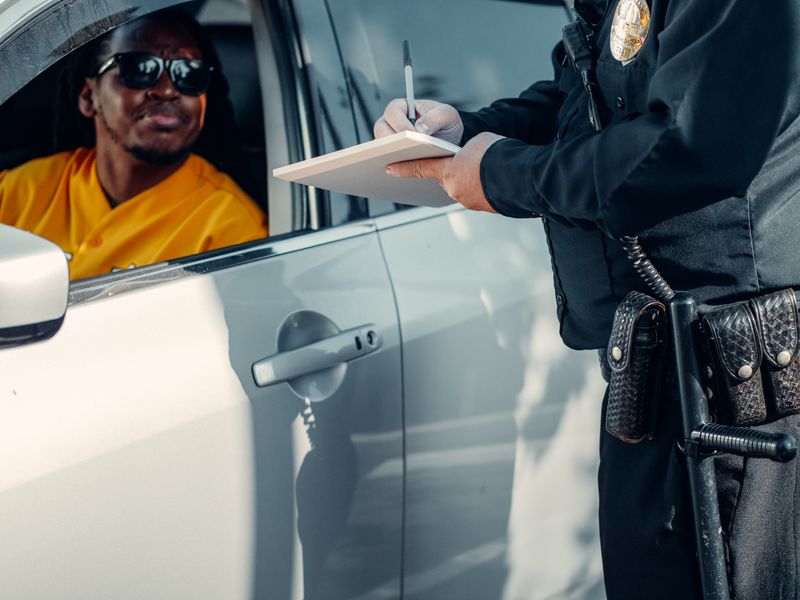
For students, the risk is real. A single bad night, a string of speeding tickets during a road trip, or letting your insurance lapse over summer break while the car sits at home can all trigger a filing. If you live in a different state than your school, the rules of your home state DMV still apply.
The Real Cost -- It Is Not the Form
The SR-22 form itself is almost free. The filing fee is a one-time charge of about $15 to $50. The real financial hit comes from the high-risk label your insurer attaches to your record.
On average, a liability-only premium jumps roughly $993 per year (about $83 per month) after a filing -- a 40% to 90% increase versus your rate before the violation. A typical post-DUI liability policy runs $1,800 to $5,600 per year, averaging around $3,000. In high-cost states such as California, Florida, and Michigan, expect $5,500 or more per year, and full coverage can exceed $6,000 to $7,000.
Here is a concrete example: a clean driver paying $120 per month can see that climb to $250 to $350 per month after a DUI plus SR-22 -- an extra $1,500 to $2,700 every single year.

SR-22 vs FR-44: Florida and Virginia
Two states use a stricter form called the FR-44, usually after a DUI. It requires double the liability limits of a standard SR-22:
Virginia: 50/100/40 instead of the usual 25/50/20
Florida: 100/300/50 instead of its 10/20/10 minimum
Because the required limits are much higher, FR-44 premiums cost more and fewer carriers are willing to file them. If you are a student at a Florida or Virginia school (or licensed there), ask specifically about FR-44, not just SR-22.

How to Get an SR-22: Step by Step
Confirm the requirement. The court or DMV issues the order; you cannot self-file. Ask exactly which form (SR-22 or FR-44) and for how long.
Call your current insurer. Most major carriers file in 38 SR-22 states: GEICO, Progressive, State Farm, and Travelers. Ask if they handle your state before assuming you must switch.
Pay the one-time filing fee. Usually $15 to $50, added to your next bill.
Let them e-file. Most insurers submit electronically within 24 to 48 hours. Keep the confirmation.
If your insurer drops you, move to a high-risk specialist such as The General, Direct Auto, or Dairyland, and tell them upfront that you need an SR-22.
No Car? You Still Need a Non-Owner SR-22
Many students sell their car or rely on borrowing and rideshares. A non-owner policy satisfies the state with liability-only coverage and is far cheaper than a standard policy. Costs run about $300 to $1,800 per year (State Farm around $396 per year; Progressive from $309). The catch: it does not cover a vehicle you own or one you live with, and it carries no collision or comprehensive protection.
How Long You Need It -- and the Lapse Trap
Most states require 3 years of continuous coverage counted from the filing date, not the conviction date. A few are shorter (Georgia, Kansas, and North Dakota: 1 year) or longer (Ohio for repeat offenders: 3 to 5 years). Eight states do not use the SR-22 at all: Delaware, Kentucky, Minnesota, New Mexico, New York, North Carolina, Oklahoma, and Pennsylvania.
The lapse trap is brutal. If your policy lapses even one day, the insurer sends an SR-26 cancellation notice to the DMV. Your license is usually suspended within 10 days and the 3-year clock resets to zero. Reinstatement costs $100 to $300 on top of a brand-new filing. Set up autopay and never let the policy expire by accident.
Companies That File SR-22
Major carriers generally offer the lowest rates for filings:
GEICO: about $136 per month liability
Progressive: $144 to $153 per month
State Farm: non-owner around $33 per month
Travelers: about $114 per month full coverage
High-risk specialists such as The General, Direct Auto, and Dairyland approve almost anyone but charge higher base rates. Allstate and Liberty Mutual often decline SR-22 filings in many states.
How Students Can Save Money
Stay on a parent's policy if you can. The SR-22 is added as an endorsement, which is usually far cheaper than a standalone policy.
Shop 5 to 10 quotes in the same week. The same driver can vary by $1,500 or more per year between carriers.
Keep a clean record. Surcharges start to fade after about 3 years and drop significantly after 5.
Use a non-owner policy if you do not actually own a car.
Ask about telematics. Some high-risk insurers offer safe-driving apps that trim the rate.
Turn on autopay so the policy never lapses by mistake.
Key Takeaways
An SR-22 is proof of insurance, not insurance itself. The form is cheap; the high-risk premium is the real cost. Continuous coverage is everything -- one lapse resets the clock and can suspend your license. And after 3 clean years, call your insurer and ask them to remove the filing; your rate should finally drop.
About the Author
Written by Sarah Mitchell, founder of Student Car Insurance Guide. Sarah spent 8 years as a licensed insurance agent helping young drivers and their families find affordable coverage. Every guide on this site is fact-checked against current state regulations and real quote data from major insurers.
Have a question about this topic? Email our editorial team at 1404555604w@gmail.com.