Quick Answer: A DUI or Major Violation Pushes You Into "High-Risk"
A DUI or major violation moves a student into the high-risk tier: expect a 50–200% rate increase and, in some cases, non-renewal. A single minor speeding ticket is milder (roughly $200–$600/year) but still re-rates the household. High-risk drivers usually need an SR-22 filing and a non-standard carrier such as The General, Dairyland, or Progressive's non-standard program. Telematics and a defensive-driving course are the fastest path back to standard rates.
An SR-22 is not insurance — it is a state filing proving you carry the required liability limits. The insurer files it with the DMV; you pay a small filing fee ($15–$50) but the violation is what spikes the premium. Most carriers that file SR-22 are "non-standard" and charge more. The filing typically stays on record for 3 years.
Where High-Risk Students Find Coverage
The General / Dairyland: non-standard specialists that accept DUIs and major violations.
Progressive non-standard: a bridge between standard and high-risk.
State Farm / Geico: may keep you if the violation is minor and the household is otherwise clean.
Telematics: proves safe driving and can pull a high-risk rate back down within a term.
Defensive course: a state-approved class can mask a minor violation at some carriers.
If you drive for a delivery app, the high-risk label makes proper coverage even more important — see our delivery-driver guide.
Reddit Pitfalls After a DUI
From r/insurance: "After my DUI, my insurer non-renewed and the only quote I got was $420/month — I didn't know about SR-22 specialists." Another: "I kept my old policy but they silently moved me to non-standard and tripled the rate." And: "Telematics after the DUI brought me back to $180 in a year." The themes: shop the non-standard market, and don't assume your old carrier will keep you.
Step-by-Step: Recover From a Major Violation
Find out if the state requires an SR-22, and for how long.
Quote non-standard carriers (The General, Dairyland, Progressive non-standard) — not just your old insurer.
Enroll in telematics immediately to prove safe driving.
Take a state-approved defensive-driving course to offset a minor violation.
Keep a clean record for 3 years; the surcharge expires and you return to standard rates.
Frequently Asked Questions
Will a DUI make me uninsurable as a student?
No, but it makes you high-risk. Non-standard carriers (The General, Dairyland) and SR-22 specialists will cover you, usually at 2–3x the prior rate until the violation ages off.
How long does a DUI affect my rate?
Typically 3–5 years. The SR-22 filing itself is usually 3 years; the rate surcharge lingers until the violation ages off your record.
Can telematics fix a high-risk rate?
Yes. Usage-based insurance proves you drive safely now, and many non-standard carriers reward it with meaningful savings within the first term.
Does a DUI affect my parents' policy if I'm listed?
If you are on their policy, the violation re-rates the whole household and can trigger non-renewal. A standalone policy keeps it on your record alone — but costs more upfront.
Written by Sarah Mitchell, founder of Student Car Insurance Guide. Sarah spent 8 years as a licensed insurance agent helping young drivers and their families find affordable coverage. Every guide on this site is fact-checked against current state regulations and real quote data from major insurers.
Have a question about this topic? Email our editorial team at 1404555604w@gmail.com.
A single speeding ticket rarely changes your life. But if you are a college student and that ticket comes with a suspended license, a DUI, or a no-insurance accident, your state may suddenly demand an SR-22. Most students have never heard of it until a court clerk or the DMV tells them their license is frozen. This guide explains exactly what an SR-22 is, why you might need one, what it really costs, and how to get it without sinking your budget or your driving privileges.
What an SR-22 Actually Is (Not a Type of Insurance)
An SR-22 is a Certificate of Financial Responsibility. It is a one-page form your insurance company files electronically with your state DMV to prove you carry at least the state minimum liability coverage. It is not a separate policy you can buy on its own, and it is not "high-risk insurance" in the usual sense.
The single most important thing to understand: the SR-22 is tied to you, the driver, not to a specific car. If you switch insurers, move to another state, or buy a different vehicle, the filing requirement follows you. Your new insurer must file a fresh SR-22 with the original state that ordered it. Drop coverage for even one day and the clock resets.
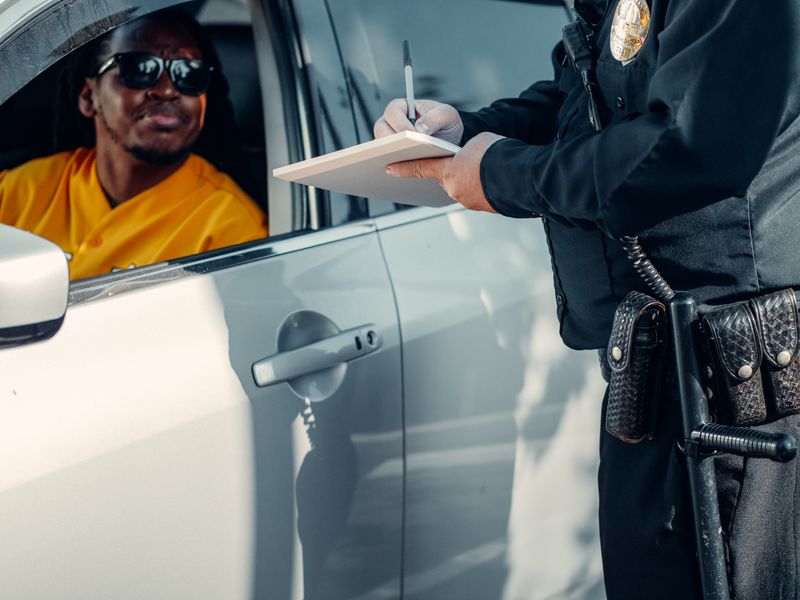
A traffic ticket like this is one of the most common triggers that can lead to an SR-22 requirement
Why College Students End Up Needing an SR-22
A court or the DMV orders the SR-22 after a serious driving record event. You cannot request it yourself. The most common triggers are:
A DUI or DWI conviction (the single most common reason)
Driving without insurance, especially after an at-fault accident
A suspended or revoked license for any reason
Too many tickets or points (for example, 3 or more speeding tickets within 6 months)
Driving without a valid license
Unpaid court-ordered child support in some states
For students, the risk is real. A single bad night, a string of speeding tickets during a road trip, or letting your insurance lapse over summer break while the car sits at home can all trigger a filing. If you live in a different state than your school, the rules of your home state DMV still apply.
Multiple citations or too many points on your record can force a high-risk insurance filing
The Real Cost -- It Is Not the Form
The SR-22 form itself is almost free. The filing fee is a one-time charge of about $15 to $50. The real financial hit comes from the high-risk label your insurer attaches to your record.
On average, a liability-only premium jumps roughly $993 per year (about $83 per month) after a filing -- a 40% to 90% increase versus your rate before the violation. A typical post-DUI liability policy runs $1,800 to $5,600 per year, averaging around $3,000. In high-cost states such as California, Florida, and Michigan, expect $5,500 or more per year, and full coverage can exceed $6,000 to $7,000.
Here is a concrete example: a clean driver paying $120 per month can see that climb to $250 to $350 per month after a DUI plus SR-22 -- an extra $1,500 to $2,700 every single year.
An SR-22 proves to the state that you carry at least the minimum required liability coverage
SR-22 vs FR-44: Florida and Virginia
Two states use a stricter form called the FR-44, usually after a DUI. It requires double the liability limits of a standard SR-22:
Virginia: 50/100/40 instead of the usual 25/50/20
Florida: 100/300/50 instead of its 10/20/10 minimum
Because the required limits are much higher, FR-44 premiums cost more and fewer carriers are willing to file them. If you are a student at a Florida or Virginia school (or licensed there), ask specifically about FR-44, not just SR-22.
Without continuous SR-22 coverage, your hard-earned license can be suspended within days
How to Get an SR-22: Step by Step
Confirm the requirement. The court or DMV issues the order; you cannot self-file. Ask exactly which form (SR-22 or FR-44) and for how long.
Call your current insurer. Most major carriers file in 38 SR-22 states: GEICO, Progressive, State Farm, and Travelers. Ask if they handle your state before assuming you must switch.
Pay the one-time filing fee. Usually $15 to $50, added to your next bill.
Let them e-file. Most insurers submit electronically within 24 to 48 hours. Keep the confirmation.
If your insurer drops you, move to a high-risk specialist such as The General, Direct Auto, or Dairyland, and tell them upfront that you need an SR-22.
No Car? You Still Need a Non-Owner SR-22
Many students sell their car or rely on borrowing and rideshares. A non-owner policy satisfies the state with liability-only coverage and is far cheaper than a standard policy. Costs run about $300 to $1,800 per year (State Farm around $396 per year; Progressive from $309). The catch: it does not cover a vehicle you own or one you live with, and it carries no collision or comprehensive protection.
Filing fees are small, but the high-risk label is what really drives up your premium
How Long You Need It -- and the Lapse Trap
Most states require 3 years of continuous coverage counted from the filing date, not the conviction date. A few are shorter (Georgia, Kansas, and North Dakota: 1 year) or longer (Ohio for repeat offenders: 3 to 5 years). Eight states do not use the SR-22 at all: Delaware, Kentucky, Minnesota, New Mexico, New York, North Carolina, Oklahoma, and Pennsylvania.
The lapse trap is brutal. If your policy lapses even one day, the insurer sends an SR-26 cancellation notice to the DMV. Your license is usually suspended within 10 days and the 3-year clock resets to zero. Reinstatement costs $100 to $300 on top of a brand-new filing. Set up autopay and never let the policy expire by accident.
Companies That File SR-22
Major carriers generally offer the lowest rates for filings:
GEICO: about $136 per month liability
Progressive: $144 to $153 per month
State Farm: non-owner around $33 per month
Travelers: about $114 per month full coverage
High-risk specialists such as The General, Direct Auto, and Dairyland approve almost anyone but charge higher base rates. Allstate and Liberty Mutual often decline SR-22 filings in many states.
How Students Can Save Money
Stay on a parent's policy if you can. The SR-22 is added as an endorsement, which is usually far cheaper than a standalone policy.
Shop 5 to 10 quotes in the same week. The same driver can vary by $1,500 or more per year between carriers.
Keep a clean record. Surcharges start to fade after about 3 years and drop significantly after 5.
Use a non-owner policy if you do not actually own a car.
Ask about telematics. Some high-risk insurers offer safe-driving apps that trim the rate.
Turn on autopay so the policy never lapses by mistake.
Key Takeaways
An SR-22 is proof of insurance, not insurance itself. The form is cheap; the high-risk premium is the real cost. Continuous coverage is everything -- one lapse resets the clock and can suspend your license. And after 3 clean years, call your insurer and ask them to remove the filing; your rate should finally drop.
About the Author
Written by Sarah Mitchell, founder of Student Car Insurance Guide. Sarah spent 8 years as a licensed insurance agent helping young drivers and their families find affordable coverage. Every guide on this site is fact-checked against current state regulations and real quote data from major insurers.
Have a question about this topic? Email our editorial team at 1404555604w@gmail.com.
If you are a college student, getting into a car accident is stressful enough without having to figure out how to file an insurance claim for the first time. You might be shaken up, confused about what to do, worried about your rates going up, or unsure who pays for what. This guide walks you through the entire process -- from the moment after the accident to the final payout -- with specific advice for students in 2026.
According to the Insurance Information Institute, auto insurers paid out over $260 billion in claims in 2024. Most of those claims were handled smoothly, but about 5% to 15% of claims get denied each year, and thousands of policyholders end up disputing their settlement. Knowing the right steps -- and the common mistakes -- can mean the difference between a smooth payout and months of frustration.
Reporting your claim promptly -- ideally within 24 hours -- is the first critical step
What to Do Immediately After an Accident
Before you even think about filing a claim, there are critical steps you must take at the accident scene. These actions protect your safety, create the evidence you will need later, and prevent common claim denials.
Step 1: Check for Injuries and Call 911
Check yourself and all passengers for injuries. If anyone is hurt -- even if the injury seems minor -- call 911 immediately. Do not try to assess the severity yourself. Some injuries like whiplash or concussions do not show symptoms immediately. If you have medical payments coverage or PIP (Personal Injury Protection) on your policy, it will pay for medical expenses regardless of fault.
Step 2: Move to Safety
If your car is drivable and not blocking traffic, move it to the shoulder or a safe area. Turn on your hazard lights. If the car cannot be moved, stay inside with your seatbelt on and call for help. If you need to exit, move to a safe area away from traffic. Never stand on the roadway to make phone calls or exchange information.
Step 3: Call the Police
For any accident more serious than a minor parking lot scrape, call the police. In many states, you are legally required to report accidents involving injury, death, or property damage above a certain dollar threshold (often $500 to $1,000). Even if the police cannot come to the scene, you can often file a report online or in person at the station later.
Why the police report matters: Insurance companies almost always ask for the police report number. The report provides an objective third-party account of what happened, which can be decisive if the other driver disputes fault. Without it, your claim may be delayed or denied.
Always call the police for anything beyond a minor parking lot scrape -- the report is critical for your claim
Step 4: Collect Information (The Golden Window)
While you are still at the scene, gather as much information as possible. This is your only chance to get some types of evidence. If you are too shaken up, ask a passenger or a witness to help.
Information to Collect
Why It Matters
Other driver name & phone
Required for claim; do not rely on insurance card alone
Other driver insurance info
Company name, policy number, policy period
License plate number
Verify identity; photograph the plate
VIN (Vehicle Identification Number)
17-digit code on driver-side dashboard; confirms vehicle identity
Police report number
Insurer will request this; get officer name and badge number too
Witness contact info
Witnesses may leave before police arrive; get name and phone
Photos & video
Damage to all vehicles, license plates, road conditions, traffic signs, injuries
Your direction of travel
Helps establish fault; note lane position and traffic signals
Critical warnings: Never let anyone take a photo of your driver's license. Never admit fault at the scene -- even saying "I am sorry" can be used against you later. Let the insurance companies and police determine fault based on the facts.
How to Actually File the Claim: Step-by-Step
Once you are safe and have gathered information, it is time to notify your insurance company. Most insurers offer three ways to file: phone, website/online portal, or mobile app. The mobile app is usually the fastest and lets you upload photos immediately.
Step 5: Report Within 24 to 72 Hours
Most insurance policies require you to report accidents "promptly" -- typically within 24 to 72 hours. Missing this window can give the insurer grounds to deny your claim. Even if you think the damage is minor and you might pay out of pocket, report it anyway. You can always withdraw the claim later, but you cannot file one after the deadline.
For natural disasters (hailstorms, hurricanes, wildfires), report immediately. Claims adjusters get overwhelmed after major events, and filing early puts you higher in the queue.
Step 6: What Information to Provide
When you speak to your insurer or fill out the online form, be prepared to provide:
Date, time, and exact location of the accident
Description of what happened (stick to facts, do not admit fault)
Names and insurance info of all drivers involved
Police report number (if police were called)
Names of any witnesses
Photos of damage and the accident scene
Whether you or any passengers need medical attention
Take photos of all damage before moving the vehicles -- this evidence is critical for your claim
Working With Your Insurance Adjuster
After you file the claim, the insurer will assign an adjuster (also called a claims adjuster) to handle your case. The adjuster's job is to investigate the accident, assess the damage, determine fault based on your policy and state law, and calculate how much the insurer should pay.
Important: The adjuster works for the insurance company, not for you. While most adjusters are fair and professional, their primary goal is to settle claims accurately and cost-effectively for the insurer. This means you need to be proactive about protecting your interests.
Step 7: Verify the Adjuster's Identity
Before letting anyone inspect your car, verify they are who they say they are. Call your insurance company using the number on your insurance card (not a number the person gives you) and confirm the adjuster's name and assignment. Ask to see identification when they arrive. This protects you from scammers, who often show up after major disasters pretending to be from your insurance company.
Step 8: Be Present for the Vehicle Inspection
When the adjuster inspects your vehicle, you must be present. Walk around the car with them and point out all damage, no matter how small. If you have a trusted repair shop, get their own estimate and share it with the adjuster. If the adjuster's estimate seems too low, you have the right to request a second opinion or an independent appraisal.
Special note for flood or fire damage: If your car was in a flood or fire, it is likely a total loss, even if the adjuster initially says otherwise. Water damage corrodes wires and metal over time, and fire damage compromises structural integrity. Do not let them talk you into a partial repair for a flooded car.
The Claims Timeline: What to Expect and When
Understanding the timeline helps you know if your claim is moving at a normal pace or if you need to escalate. Most states have unfair claims settlement laws that require insurers to acknowledge and act on claims within specific timeframes (typically 10 to 30 days).
Action
Typical Timeline
What You Should Do
Report the accident
Within 24-72 hours
Call insurer immediately; use mobile app if available
Adjuster contacts you
1-3 business days
Respond promptly; verify their identity
Vehicle inspection
3-14 days after filing
Be present; point out all damage
Simple claim resolution
Days to 2 weeks
Stay in touch; upload requested docs fast
Complex claim resolution
1-12 months
Consider hiring a lawyer if disputed
Payout after agreement
1-2 weeks
Check your bank account or mail
Total loss payout
2-6 weeks after settlement
Negotiate ACV if offer seems low
State law note: Most states require insurers to complete their investigation within 30 days. If your claim is taking longer without explanation, you can file a complaint with your state insurance department (more on this in the appeals section below).
When You Should (and Should NOT) File a Claim
Not every accident requires an insurance claim. Filing a claim triggers a record on your CLUE report (Comprehensive Loss Underwriting Exchange), and at-fault accidents typically raise your premium by 12% to 45% for three to five years. Before filing, do the math.
Scenario
File a Claim?
Why
Someone injured, even slightly
Yes
Medical costs escalate; liability exposure is high
Damage far exceeds your deductible
Yes
Worth using insurance; e.g., $5,000 damage, $500 deductible
Uninsured driver hits you
Yes
Use your uninsured motorist + collision coverage
Damage is less than your deductible
No
Insurer will not pay; claim still goes on your record
Minor parking lot scrape, both agree to settle privately
Maybe
Get agreement in writing; consider reporting anyway for protection
You are at fault and damage is $500, deductible is $500
No
$0 payout but claim on record = not worth it
The 2026 premium impact: According to The Zebra, the average rate increase after an at-fault accident is $400 to $800 per year, depending on your state and insurer. Over three years, that is $1,200 to $2,400 -- potentially more than the claim payout itself for minor damage.
Always file a police report -- insurance companies require the report number for most claims
Why Claims Get Denied (and How to Avoid It)
About 5% to 15% of car insurance claims are denied each year. The good news: most denials are preventable. Here are the seven most common reasons claims get denied, and how you can avoid each one.
Denial Reason
What It Means
How to Avoid It
Policy exclusions
Event not covered (e.g., using car for rideshare without endorsement)
Read your policy exclusions before an accident happens
Lapsed coverage
Your policy was not active at the time of the accident
Set up auto-pay; check payment status monthly
Misrepresentation
You provided false info (wrong mileage, undisclosed drivers)
Be 100% honest on your application and renewals
Late filing
You reported the accident after the deadline
Report within 24 hours, even for minor accidents
DUI or illegal activity
Accident involved alcohol, drugs, or crime
Never drive under the influence; no insurance covers this
Non-listed driver
Someone not on your policy was driving
List all regular drivers; notify insurer of changes
Lack of evidence
Insufficient photos, no police report, no witnesses
Document everything at the scene; save all receipts
Student-specific risk: If you let a roommate or friend borrow your car and they cause an accident, your insurer may deny the claim if that person is not listed on your policy. Always notify your insurer when someone new regularly drives your car.
How to Appeal a Denied Claim in 2026
If your claim is denied, you are not out of options. Approximately 20% to 30% of internal appeals succeed, and about 50% of complaints filed with state insurance departments结果 in a consumer-friendly outcome. Here is the step-by-step appeals process.
Step 1: Read the Denial Letter Carefully
By law, your insurer must send you a written denial letter that explains the specific reason for denial and cites the relevant policy language. Read this letter carefully and compare it to your actual policy language. About 25% of denied claims involve a dispute over policy interpretation -- the same clause can be read two different ways.
Step 2: Call Your Adjuster and Ask Three Questions
Before writing your appeal, call your adjuster and ask:
What specific evidence was used to deny the claim?
What additional documents could change the decision?
What is the deadline for filing a formal appeal?
Follow up the call with an email summarizing what was said. This creates a paper trail proving you attempted to resolve the issue informally first.
Step 3: Gather Supporting Evidence
Build the strongest possible case by collecting:
Photos of the scene and all damage (from multiple angles)
Police report (order a copy if you do not have it)
Repair estimates from at least two shops
Witness statements (written statements or contact info)
Medical records (if injuries are involved)
Dashcam or traffic camera footage (request from the agency ASAP)
Complete communication log (dates, names, what was said)
Organize everything into a single PDF or shared folder before writing your appeal letter.
If your claim is denied, a well-documented appeal with supporting evidence succeeds about 20-30% of the time
Step 4: Write and Send a Formal Appeal Letter
Your appeal letter should include:
A reference to the denial reason cited in the denial letter
An explanation of why the denial is incorrect or incomplete
Citations to specific policy language that supports your position
A list of all enclosed supporting evidence
Your requested outcome (e.g., "I request that my claim be approved and that I receive payment of $X")
How to send it: Use certified mail (with return receipt) or a trackable delivery method. Keep a copy of everything. Most insurers require appeals to be filed within 30 to 60 days of the denial date.
State response deadlines: After you file an appeal, insurers must respond within specific timeframes that vary by state. For example: California requires a decision within 40 days of receiving proof of loss; Texas requires 15 business days; New York requires 15 business days; Florida allows up to 90 days but must acknowledge within 14 days.
When to Escalate: DOI Complaints and Legal Help
If your internal appeal is denied, you have two more options before giving up:
Option 1: File a Complaint With Your State Insurance Department
This is the most underused but most effective tool available to consumers. In 2025, state insurance departments received 35,063 auto insurance complaints -- a 7.5% increase from 2024. About 50% of complaints resulted in outcomes favorable to the consumer.
What to include in your DOI complaint:
A copy of your policy declarations page
The denial letter and all appeal correspondence
A timeline of all communications with the insurer (with dates and representative names)
Photos, repair estimates, police reports, and witness statements
A one-page summary of the dispute and your desired resolution
You can file online at your state's insurance department website. Search for "insurance department complaint" along with your state name. The service is completely free, and insurers typically must respond to the DOI within 21 days.
Option 2: Hire a Lawyer (Bad Faith)
If your claim involves a large amount (typically over $10,000), or if the insurer acted in bad faith (failed to investigate, misrepresented policy terms, unreasonably delayed payment), consult an attorney who specializes in insurance law.
Most insurance lawyers work on a contingency fee basis -- you pay nothing upfront, and they take a percentage (typically 30% to 40%) of the recovered amount. If you win, many states also require the insurer to pay your attorney fees.
What is bad faith? Common examples include: denying a claim without investigating, misrepresenting policy language, failing to respond to communications, and intentionally underpaying a settlement. If an insurer violates your state's unfair claims settlement practices act, you may be entitled to damages beyond the original claim amount -- including emotional distress and, in some states, punitive damages.
Pro Tips for College Students
Download your insurer's mobile app before you need it. Log in and link your policy now so you can file a claim with a few taps if you are ever in an accident.
Keep your insurance card and registration in your glove box AND on your phone. Many states now accept digital insurance cards, but always have a paper backup.
Take photos of your car when it is in good condition. If you ever need to file a comprehensive claim (theft, vandalism, hail), having "before" photos helps prove pre-existing condition disputes.
Know your coverage BEFORE an accident. Read your declarations page. Know your deductibles, your liability limits, and whether you have rental car coverage or roadside assistance. You do not want to be learning this while shaken up after a crash.
If you are on your parents' policy, tell them immediately. They need to know, and some policies require all household members to be listed. Failure to notify them promptly can complicate or invalidate the claim.
Be careful with "quick cash" settlement offers. Insurers sometimes offer a fast, low settlement hoping you will accept. You usually have 1 to 3 years (depending on your state) to accept or challenge a settlement. Get an independent repair estimate before accepting any offer.
The Bottom Line
Filing a car insurance claim does not have to be overwhelming. The keys are: report promptly (within 24 hours), document everything at the scene, verify your adjuster's identity, be present for the vehicle inspection, and keep written records of all communications. If your claim is denied, do not give up -- about 1 in 4 appeals succeeds, and the state insurance department is a free and effective resource with a 50% consumer success rate.
For college students, the stakes are higher because a single at-fault accident can raise your already-high premiums by $400 to $800 per year for three to five years. Drive carefully, keep your coverage active, and know your policy before you ever need to use it. The best claim is the one you never have to file.
About the Author
Written by Sarah Mitchell, founder of Student Car Insurance Guide. Sarah spent 8 years as a licensed insurance agent helping young drivers and their families find affordable coverage. Every guide on this site is fact-checked against current state regulations and real quote data from major insurers.
Have a question about this topic? Email our editorial team at 1404555604w@gmail.com.
Your driving record is one of the most powerful factors shaping your car insurance rates — and as a student driver, every ticket, accident, or violation hits your wallet harder than it would for an experienced driver. Insurance companies use your motor vehicle report (MVR) to predict how likely you are to file a claim in the future, and any blemish on that record signals higher risk. This guide breaks down exactly how different violations affect your premiums, how long the impact lasts, and what you can do to keep your student car insurance affordable even when mistakes happen.
Understanding How Insurers Use Your Driving Record
When you apply for car insurance or your policy comes up for renewal, your insurer pulls your motor vehicle report (MVR) directly from your state's Department of Motor Vehicles. This report includes every traffic conviction, at-fault accident, license suspension, and administrative action on your record. Insurers don't rely on what you tell them — they verify through automated state reporting systems, so omitting a violation on your application constitutes material misrepresentation and can void your coverage entirely.
Most carriers categorize violations by severity using internal tier systems:
Minor violations — parking tickets, non-moving equipment violations — typically don't affect rates at all.
Standard violations — speeding tickets, rolling stops, failure to yield — are surcharged but don't change your underwriting tier unless you accumulate multiple incidents.
Major violations — DUI/DWI, reckless driving, hit-and-run, driving without insurance — trigger immediate tier downgrades or policy non-renewal.
For student drivers, the stakes are even higher. Young drivers already face elevated base rates due to statistical risk data, and any violation pushes you further into the high-risk category — where premiums can become genuinely unaffordable.
The Cost of Common Violations: What Each Incident Actually Adds
Here's the reality of what different violations cost student drivers in premium increases:
Violation Type
Average Rate Increase
Monthly Cost Impact
Impact Duration
Speeding 1-15 mph over
15-20%
$15-25/mo extra
3 years
Speeding 16-30 mph over
25-30%
$40-70/mo extra
3 years
Reckless driving
60-80%
$80-140/mo extra
3-5 years
At-fault accident (claim > $2,000)
40-50%
$60-90/mo extra
3-5 years
At-fault accident (minor, < $1,000)
20-30%
$30-50/mo extra
3 years
DUI/DWI
70-130%
$100-200/mo extra
5-7 years minimum
Running red light / stop sign
20-25%
$25-45/mo extra
3 years
Distracted driving (phone)
20-30%
$30-50/mo extra
3 years
The numbers tell a clear story: a single speeding ticket can cost you hundreds of dollars over its three-year impact period, while a DUI can cost thousands over five to seven years. For a student already paying elevated rates, these surcharges can push your annual cost past $4,000-$6,000 — making car insurance genuinely difficult to afford.
Multiple violations compound the damage dramatically. One speeding ticket raises rates by about 24% on average; two tickets within three years push the increase to 45%; three tickets can trigger a 60% jump — and some insurers will simply refuse to cover you.
How Long Violations Stay on Your Record and Affect Pricing
The timeline for when violations stop affecting your insurance depends on several factors:
Speeding tickets and standard violations — most insurers surcharge for 3 years from the conviction date (not the incident date). The full surcharge applies for the first two years, then decreases by roughly 25-30% in the third year before dropping off entirely. Your state DMV may retain the violation for 5-7 years, but insurers typically stop pricing it after 3 years.
At-fault accidents — follow a similar 3-year window for most carriers, though some extend to 5 years for accidents involving injuries or major property damage. The surcharge typically remains constant for the first two years and decreases in year three.
DUI/DWI convictions — carry the longest impact. Most insurers surcharge for 5 years minimum, with some extending to 7 years. Even after the surcharge period ends, a DUI often permanently disqualifies you from preferred rate tiers, keeping your baseline premium 15-25% higher than drivers with clean records. State DMV records retain DUI convictions for 10 years in most jurisdictions.
A critical detail: the clock starts on the conviction date, not the date you received the ticket. If you contested a ticket issued in March and were convicted in September, your surcharge period begins in September. This means fighting a ticket in court can actually extend the surcharge period if you ultimately lose.
Violations don't cause immediate premium changes — they only take effect at your next policy renewal. This gives you a window to prepare financially or shop for better rates before the increase hits.
State-by-State Variations in Violation Impact
Where you live matters enormously. Some states limit how insurers can use your driving record:
California — speeding tickets increase rates by a whopping 44% on average (the highest nationally), but the state also prohibits insurers from using certain violations for rate-setting and protects first-time good driver discount renewals after minor violations.
New York — has the lowest average speeding ticket increase at just 11%, thanks to stricter state regulation of insurance pricing.
Massachusetts — caps at-fault accident surcharges at specific Safe Driver Insurance Plan (SDIP) point values, limiting increases to approximately 30% even for multiple incidents.
Hawaii — prohibits insurers from using credit scores and limits how driving records factor into pricing.
North Carolina — uses a fixed state surcharge schedule: one speeding ticket 10+ mph over adds 30% uniformly; two violations within three years trigger 60%; three can double your premium.
Texas, Florida, Georgia — competitive rating states with the widest variance. One carrier may increase 45% after an at-fault accident while a competitor increases only 25%, creating opportunities for savings by switching — but also allowing non-renewal based on violation history.
For students attending college in a different state than where their car is registered, understanding both states' rules is essential — the state where the vehicle is primarily garaged usually determines which regulations apply.
What Happens After a DUI: The Worst-Case Scenario
A DUI conviction is the single most damaging event for your car insurance as a student driver. Here's what you face:
Premium explosion — rates increase 70-130% depending on your state and carrier. A student previously paying $200/month could see rates jump to $340-$460/month for minimum coverage alone.
SR-22 requirement — most states require an SR-22 filing (proof of financial responsibility) after a DUI, adding $25-50/month in administrative costs and requiring you to maintain continuous coverage for 3-5 years.
Possible non-renewal — many insurers will simply refuse to renew your policy, forcing you into high-risk or assigned-risk pools where minimum coverage premiums can exceed $300/month.
Permanent tier downgrade — even after the 5-7 year surcharge period ends, you'll likely remain in a non-preferred underwriting tier, keeping your baseline rates 15-25% higher indefinitely.
License suspension — most states suspend your license for 6-12 months after a first DUI, during which you still need to maintain insurance (often with an SR-22) to keep your driving privileges reinstatable.
The total financial impact of a single DUI over its full surcharge period can easily exceed $10,000-$15,000 in additional insurance costs alone — not counting legal fees, court costs, and potential lost income from license suspension.
Strategies to Minimize Premium Impact After a Violation
If you've already received a ticket or had an accident, don't panic — there are concrete steps to reduce the financial impact:
1. Fight the Ticket When Possible
Contesting a ticket in court doesn't always work, but when it does, the violation never appears on your MVR and never affects your insurance. Many jurisdictions offer deferred adjudication or traffic school diversion programs that keep the ticket off your record if you complete a course and avoid further violations for a probation period. This is especially worth pursuing for first offenses.
2. Take a Defensive Driving Course
Completing an approved defensive driving course can eliminate or reduce the impact of minor violations in many states. Some states allow you to dismiss a ticket entirely by completing traffic school before the conviction is finalized. Even if the violation remains on your record, most insurers offer a 5-10% discount for voluntary defensive driving course completion — which partially offsets the surcharge.
3. Shop for Quotes Six Months After a Violation
Switching insurers immediately after a violation is often counterproductive — you lose longevity discounts and some companies surcharge new customers with recent violations more aggressively than existing ones. However, shopping for quotes six months after a violation can reveal significant variance. Some insurers specialize in step-down programs for drivers with one violation, offering rates 20-30% lower than standard carriers. State Farm, for example, applies only a 9% increase for first speeding tickets — far below the national average of 24%.
4. Increase Your Deductible
Raising your deductible from $500 to $1,000 can reduce your overall premium by 15-25%, partially offsetting violation surcharges. This strategy is especially practical for student drivers who may not have large claim histories and can absorb a higher out-of-pocket cost in the unlikely event of a major accident.
5. Consider Telematics Programs
Some insurers now offer telematics programs that monitor your actual driving behavior through mobile apps or plug-in devices. Demonstrating safe habits — reduced hard braking, limited night driving, adherence to speed limits — following an incident can earn discounts of 5-15% that partially counteract violation surcharges. This is particularly valuable for student drivers who can prove responsible behavior despite one mistake.
6. Bundle Policies for Multi-Line Discounts
Bundling auto with renters insurance (a natural combination for college students) can unlock multi-policy discounts of 15-20% that counterbalance violation-related increases. Adding multiple vehicles to a family policy can also unlock multi-vehicle discounts.
How to Verify When a Violation Drops Off Your Record
The three-year clock for most violations starts on the conviction date, not the incident date. Some insurers use policy anniversary dates rather than exact conviction dates, meaning you might see the surcharge continue through your next renewal even if the three-year mark passes mid-term.
To verify your record is clean:
Request your own MVR from your state DMV 30-60 days before your policy renewal. The report costs $5-15 in most states and shows exactly what insurers see.
Verify old violations have dropped off — if a violation that should have aged off still appears, contact your state DMV to request correction before your insurer pulls the renewal report. Processing corrections can take 30-45 days.
Request a detailed rating factor explanation from your insurer if your premium doesn't decrease when expected. Compare it against your MVR to identify discrepancies.
Shop for new quotes once violations drop off — you may qualify for significantly better rates with carriers that penalized you more heavily during the surcharge period.
Student-Specific Considerations
Student drivers face unique challenges when violations hit their record:
Higher base rates amplify violation impact — since student drivers already pay elevated premiums, a 24% increase on a $200/month base rate costs more ($48/month) than the same percentage on a $120/month base rate ($29/month).
Shorter driving history — with only 2-3 years of driving history, one violation can dominate your entire record profile, whereas an experienced driver with 15 years of clean history has more buffer.
Campus jurisdiction issues — getting a ticket in your college town may affect your insurance differently than one in your home state, especially if the two states have different reporting and surcharge rules.
Parent policy implications — a violation on a student's record affects the entire family policy if you're listed on your parents' insurance, potentially increasing their rates too.
Financial aid concerns — dramatically increased insurance costs can strain a student budget that's already tight with tuition, housing, and other expenses.
The best strategy for student drivers is prevention. A clean driving record is the single most effective way to keep insurance affordable throughout college. One reckless decision — speeding to get to class, driving after a party, texting while driving — can cost thousands of dollars over multiple years. Every traffic law you follow is essentially money saved.
The Bottom Line
Your driving record is your insurance résumé — and as a student, it starts nearly blank. Every entry you add through violations and accidents makes you look riskier to insurers, and the financial consequences compound over years. A single speeding ticket costs an average of $500-$700 in additional premiums over its three-year impact period; a DUI can cost $10,000+ over five to seven years. The smartest approach is to build and protect a clean record from day one, but if mistakes happen, defensive driving courses, strategic shopping, and telematics programs can help minimize the damage. Check your MVR regularly, verify when violations should drop off, and never assume your insurer has the most competitive pricing for your updated risk profile.
About the Author
Written by Sarah Mitchell, founder of Student Car Insurance Guide. Sarah spent 8 years as a licensed insurance agent helping young drivers and their families find affordable coverage. Every guide on this site is fact-checked against current state regulations and real quote data from major insurers.
Have a question about this topic? Email our editorial team at 1404555604w@gmail.com.
Getting into a car accident is stressful enough without the added confusion of figuring out how to file an insurance claim. For student drivers who may be navigating this process for the first time, understanding what to do immediately after an accident and how to file a claim properly can make the difference between a smooth resolution and weeks of frustration. This comprehensive guide walks you through every step of filing a car insurance claim, with specific advice for college students who may be far from home and handling insurance matters on their own for the first time.
What to Do Immediately After an Accident
The moments right after a collision are critical, not just for your safety but for the success of your future insurance claim. What you do (and don't do) in these first few minutes can significantly impact whether your claim is approved and how much you receive in compensation. Here's what every student driver should do immediately after an accident:
Check for injuries first. Before anything else, check yourself and all passengers for injuries. If anyone is hurt, call 911 immediately. Your health and safety always come before vehicle damage or insurance concerns.
Move to a safe location. If the accident is minor and your car is still drivable, move it to the shoulder or a parking lot to avoid blocking traffic and prevent secondary collisions. Turn on your hazard lights.
Call the police. Even for minor accidents, a police report provides official documentation that strengthens your insurance claim. In many states, you're legally required to report accidents involving injury or property damage above a certain threshold.
Exchange information with the other driver. Get their name, phone number, address, driver's license number, license plate number, and insurance company name and policy number. Never admit fault at the scene — let the insurance companies determine liability.
Document everything. Take photos and videos of all vehicles involved, the accident scene, road conditions, traffic signs, and any visible injuries. This visual evidence is invaluable when filing your claim.
Get witness contact information. If there are witnesses, ask for their names and phone numbers. Their statements can be crucial if there's a dispute about who was at fault.
Write down your account while it's fresh. As soon as you're safe, write down exactly what happened while your memory is clear. Note the time, weather conditions, traffic flow, and the sequence of events leading up to the collision.
Step-by-Step: Filing Your Insurance Claim
Once you've handled the immediate aftermath of the accident, it's time to file your insurance claim. Most insurance companies recommend filing as soon as possible — ideally within 24 to 48 hours of the accident. Here's how to do it:
Gather your information. Before contacting your insurer, have your policy number, the date and time of the accident, a description of what happened, the other driver's information, and your photos and videos ready.
Choose your filing method. Most insurers offer multiple ways to file: through their mobile app (often the fastest), online through their website, by calling their claims hotline, or by contacting your insurance agent directly. Apps typically let you upload photos and track claim status in real time.
Provide a detailed account. When filing, be honest and thorough in your description. Include every detail you can remember — the direction each vehicle was traveling, speed, weather conditions, and what the other driver said. Do not speculate or guess; stick to what you know for certain.
Get a claim number. Once your claim is filed, the insurer will assign a claim number and a claims adjuster. Write down both immediately — you'll need the claim number for all future communications about this accident.
Cooperate with the adjuster. The claims adjuster will investigate the accident, assess damage, and determine how much the insurer will pay. They may ask for additional photos, request a vehicle inspection, or ask you to provide a recorded statement. Respond promptly to all requests.
Get repair estimates. Your insurer may require you to use their network of approved repair shops, or they may let you choose your own. Get at least one estimate, and don't authorize any repairs until the adjuster has approved the claim.
Review the settlement offer. The adjuster will eventually present a settlement offer. Review it carefully. If it seems too low, you can negotiate by providing additional evidence of repair costs or vehicle value.
Understanding What Your Policy Covers
Before you file a claim, it's important to understand what your insurance policy actually covers. Many student drivers are surprised to learn that their basic policy may not pay for their own vehicle repairs. Here's a quick breakdown of the coverage types that matter most when filing a claim:
Liability coverage (required in most states): Pays for damage and injuries you cause to others. This does not cover your own vehicle or medical bills.
Collision coverage (optional): Pays for repairs to your own vehicle after an accident, regardless of who was at fault. If you only have liability coverage, your insurer won't pay for your car's repairs.
Comprehensive coverage (optional): Covers damage from non-collision events like theft, vandalism, weather, or hitting an animal.
Uninsured/underinsured motorist coverage: Protects you if the other driver has no insurance or not enough insurance to cover your damages.
Personal injury protection (PIP): Covers medical expenses for you and your passengers regardless of who was at fault. Required in some no-fault states.
Medical payments (MedPay): Similar to PIP but more limited — covers medical bills for you and your passengers.
If you're a student with only the minimum required liability coverage, filing a claim after a single-car accident or an accident where you were at fault may not result in any payout for your own vehicle. This is why many insurance experts recommend that students carry at least collision coverage if their vehicle has significant value.
How Deductibles and Payouts Work
When you file a claim, your deductible — the amount you pay out of pocket before insurance kicks in — plays a major role in how much you actually receive. Here's what students need to understand about deductibles:
If your collision deductible is $500 and the repair cost is $3,000, your insurer will pay $2,500. If the repair cost is only $400 — below your deductible — your insurer won't pay anything, and you'd be better off not filing a claim at all. In fact, filing a claim for damage below your deductible can still result in a premium increase, so it's often counterproductive.
If your vehicle is declared a total loss (meaning repair costs exceed the vehicle's actual cash value), your insurer will pay you the vehicle's pre-accident market value minus your deductible. For students driving older vehicles worth $5,000 or less, even a moderate accident can result in a total loss declaration, which means you'll receive a check for the car's value rather than having it repaired.
One important tip: if the accident was not your fault, you may be able to file through the other driver's liability insurance instead of your own policy. This means you wouldn't have to pay your deductible at all, and your premiums shouldn't increase. However, this process can take longer, especially if the other driver's insurer disputes liability.
How Filing a Claim Affects Your Premiums
One of the biggest concerns student drivers have about filing a claim is whether it will cause their insurance rates to go up. The short answer is: it depends on several factors.
If you were at fault in the accident, you can expect your premiums to increase by an average of 26%, and this increase will typically remain on your record for 3 to 5 years. For a student already paying higher rates due to age, a 26% increase can be significant — potentially adding hundreds of dollars per year to your premium.
Even if you were not at fault, your rates may still increase by approximately 10% on average. However, in the 12 states with no-fault insurance laws, your rates typically won't increase for a not-at-fault accident. Some insurers also offer accident forgiveness programs that prevent your first at-fault accident from affecting your rates, though these programs usually cost extra or require a certain number of years of clean driving.
Here's a general guide to when filing a claim makes financial sense:
File a claim if: The damage exceeds your deductible by a significant amount (generally 2x or more), there are injuries involved, or the other driver was clearly at fault.
Consider not filing if: The repair cost is close to or below your deductible, it's a minor single-car accident with no injuries, or you have a history of recent claims that could result in policy non-renewal.
Always file if: Another person's property was damaged, anyone was injured, or the accident involved an uninsured driver (you'll need the claim for uninsured motorist coverage).
Common Mistakes Student Drivers Make When Filing Claims
Waiting too long to file. Most insurance policies require you to report accidents promptly. Waiting more than a few days can give your insurer grounds to deny the claim.
Admitting fault at the scene. Never say "I'm sorry" or "It was my fault" at the accident scene. Let the insurance companies investigate and determine liability based on the facts.
Not documenting enough. Insufficient evidence is one of the most common reasons claims are denied. Take more photos than you think you need — from multiple angles, showing the full scene and all damage.
Accepting the first settlement offer. The initial offer from an insurance adjuster is often a starting point for negotiation, not a final offer. If you believe the payout is too low, provide evidence and negotiate.
Not understanding total loss. If your car is declared a total loss, the insurer pays the actual cash value, not what you paid for the car or what you owe on a loan. This can leave you without a car and still owing money if you have an auto loan that exceeds the vehicle's value.
Forgetting to notify parents. If you're on your parents' insurance policy, they need to know about the accident and claim. Failing to inform them can create complications with the policy.
Not getting a police report. Even if the police don't come to the scene, you can often file a report at the nearest police station. Without a police report, it becomes your word against the other driver's.
Tips for Students Filing Claims While Away at College
Filing an insurance claim while you're away at college presents unique challenges. You may be in an unfamiliar city, far from your family's insurance agent, and dealing with this process alone for the first time. Here are some tips specifically for students in this situation:
Keep digital copies of everything. Store photos, police reports, claim numbers, and correspondence in cloud storage so you can access them from any device. Email copies to yourself and your parents.
Research local repair shops. If your insurer doesn't require you to use their network, check online reviews and ask classmates for recommendations. Get multiple estimates.
Consider rental car coverage. If you need your car for classes or work, check whether your policy includes rental reimbursement. This coverage typically pays $20-30 per day for a rental car while yours is being repaired.
Don't let peer pressure rush you. If the other driver pressures you to skip insurance and settle privately, don't agree. Private settlements often go badly — the other party may not pay, and you'll have no legal recourse without a police report and insurance claim.
Keep your parents in the loop. If you're on their policy, they should be involved in the claim process. They may have experience with insurance claims and can help you navigate the process.
Save all receipts. Keep receipts for towing, rental cars, rideshare expenses, and any other costs related to the accident. Some may be reimbursable through your policy.
What to Expect: The Claim Timeline
Understanding the typical timeline of an insurance claim can help reduce anxiety during an already stressful time. While every claim is different, here's what you can generally expect:
Day 1-2: File your claim and receive a claim number. The adjuster is assigned and typically contacts you within 24-48 hours.
Day 2-5: The adjuster inspects your vehicle (either in person or through photos you submit). They may request additional documentation.
Day 5-10: The adjuster determines fault and assesses damages. You receive a repair authorization or total loss determination.
Day 10-14: If repairs are approved, your vehicle goes to the shop. Simple repairs take 3-7 days; major repairs can take weeks.
Day 14-30: If your vehicle is a total loss, the insurer calculates the actual cash value and sends a settlement offer. Negotiation may extend this timeline.
30-45 days: Most simple claims are fully resolved within this timeframe. Complex claims involving injuries, disputes, or multiple parties can take several months.
The Bottom Line
Filing a car insurance claim as a student driver doesn't have to be overwhelming. The key is preparation: know what your policy covers before an accident happens, document everything at the scene, file promptly, and don't be afraid to ask questions or negotiate. Remember that your insurance company works for you — you pay premiums specifically for this protection, and you have the right to a fair claims process.
If this is your first accident, take a deep breath. Accidents happen to even the most careful drivers, and the claims process exists to help you recover. By following the steps in this guide, you'll be well-equipped to navigate your claim with confidence, get your vehicle repaired or replaced, and get back to focusing on what matters most: your education.
About the Author
Written by Sarah Mitchell, founder of Student Car Insurance Guide. Sarah spent 8 years as a licensed insurance agent helping young drivers and their families find affordable coverage. Every guide on this site is fact-checked against current state regulations and real quote data from major insurers.
Have a question about this topic? Email our editorial team at 1404555604w@gmail.com.
If you're a college student shopping for car insurance, you've probably seen the term "no-fault" thrown around — and it can be confusing. Does no-fault mean nobody caused the accident? Does it mean you can never sue another driver? The short answer: no-fault insurance is a system where your own insurance company pays your medical bills first, regardless of who caused the crash. It's not about avoiding responsibility — it's about getting faster compensation when you're injured.
How No-Fault Differs from At-Fault Insurance
In most U.S. states, car insurance operates under an at-fault (tort) system. If another driver hits you, you file a claim against their insurance, and their liability coverage pays for your medical expenses, vehicle repairs, and pain and suffering. The process involves determining who caused the accident, which can take weeks or months of investigation.
In a no-fault state, the process is flipped. After an accident, each driver files a claim with their own insurer through a coverage type called Personal Injury Protection (PIP). Your PIP pays your medical bills, lost wages, and even replacement services like childcare — no waiting for fault to be determined. The tradeoff: you generally cannot sue the other driver for pain and suffering unless your injuries exceed a legal threshold defined by your state.
Which States Are No-Fault?
As of 2026, 12 states require no-fault PIP coverage: Florida, Michigan, New York, New Jersey, Pennsylvania, Hawaii, Kansas, Kentucky, Massachusetts, Minnesota, North Dakota, and Utah. Three of these — New Jersey, Pennsylvania, and Kentucky — are "choice" states where drivers can opt between no-fault and full tort. The remaining 38 states follow the at-fault system.
This matters enormously for students. If you attend college in a no-fault state like Michigan or New York, you must carry PIP coverage — even if your permanent home is in an at-fault state like Ohio or Texas. Driving without PIP in a mandatory no-fault state is essentially driving uninsured, and the penalties can be severe: license suspension, registration revocation, and fines.
What PIP Actually Covers
PIP is more comprehensive than many students realize. Here's what it typically covers in no-fault states:
Medical expenses — hospital bills, surgery costs, rehabilitation, and prescription medications for you and your passengers
Lost wages — partial compensation (usually 60–85%) if you can't work while recovering from injuries
Replacement services — costs for housework, childcare, or other tasks you can't perform due to your injury
Funeral expenses — coverage for burial costs in the event of a fatal accident
Survivors' benefits — ongoing payments to dependents if the insured person dies in a crash
What PIP does not cover: vehicle damage (that's handled by collision coverage), injuries to other drivers (their own PIP covers them in no-fault states), and pain and suffering (unless you meet the lawsuit threshold). It's also not the same as health insurance — PIP is auto-specific, pays regardless of fault, and covers items like lost wages that health insurance won't.
PIP Minimums Vary Wildly by State
One of the most important things for students to understand: PIP minimum requirements differ dramatically between no-fault states. Here's a snapshot:
New York — $50,000 per person (the highest fixed minimum in the country)
Michigan — Choice of unlimited, $500,000, $250,000, or $50,000 (unique tiered system after 2020 reform)
Minnesota — $40,000 total ($20,000 medical / $20,000 disability and lost wages)
North Dakota — $30,000 per person
Florida — $10,000 per person
Hawaii — $10,000 per person
Kansas — $4,500 medical + $900/month lost wages
Utah — $3,000 per person (the lowest minimum)
If you're a student in Utah with a $3,000 PIP minimum, a single emergency room visit could exhaust your entire coverage. In New York, the $50,000 minimum provides significantly more protection — but it also adds substantially to your premium. Students should carefully evaluate whether the state minimum is sufficient for their situation, and consider purchasing higher PIP limits if they can afford the additional cost.
The Lawsuit Threshold: When You Can Still Sue
No-fault doesn't completely eliminate your right to sue — it just raises the bar. Each no-fault state defines a threshold that must be met before you can pursue a tort claim against the at-fault driver. Thresholds come in two types:
Verbal thresholds (harder to clear): Your injury must meet a statutory definition — typically involving death, permanent disfigurement, significant scarring, or serious impairment of a body function. States like Michigan, New York, and Minnesota use verbal thresholds. Soft-tissue injuries (whiplash, sprains) almost never qualify, which means most student drivers with minor injuries are limited to their PIP benefits alone.
Monetary thresholds (easier to clear): If your medical bills exceed a specific dollar amount, you regain the right to sue. Florida's threshold is $10,000 in medical expenses or a "permanent injury." Kansas requires $2,000+ in medical expenses. Utah's threshold is $3,000. These monetary thresholds effectively mean that any moderately serious accident opens the door to litigation.
How No-Fault Affects Student Insurance Premiums
Here's the bottom line students need to understand: no-fault states are almost always more expensive. The reason is straightforward — in no-fault states, your insurer pays your medical claims regardless of who caused the accident, which increases total claims volume and drives up premiums for everyone. Michigan historically had the nation's highest auto insurance rates due to its unlimited PIP requirement. Even after the 2020 reform, Detroit-area students can still face premiums of $2,500–$4,000 per year.
Florida, despite having one of the lowest PIP minimums ($10,000), ranks among the most expensive states overall — driven by rampant PIP fraud, a high uninsured driver rate, and hurricane risk. New York's $50,000 PIP minimum adds roughly $200–$400 per year to a typical student policy compared to equivalent coverage in an at-fault state.
For budget-conscious students, this means that where you attend college has a direct impact on your insurance costs. A student paying $900/year in Ohio (at-fault) could face $2,200+/year for similar coverage in New York (no-fault). Understanding your state's system before you buy coverage is essential for budgeting accurately.
Choice States: Kentucky, New Jersey, and Pennsylvania
Three states give drivers a choice between no-fault and at-fault — and this decision can save (or cost) students hundreds of dollars per year:
Kentucky defaults to no-fault. Drivers who want full tort rights must actively opt out by filing a written PIP rejection. Most Kentucky drivers keep PIP for faster claims, but students with strong health insurance through their university might consider opting out to save on premiums — though this means giving up guaranteed first-party medical coverage after any accident.
New Jersey offers two policy types: a Basic Policy (lower limits, limited right to sue) and a Standard Policy (higher limits, choice between limited and full tort). The Basic Policy is the cheapest option in the entire country — but bodily injury liability is optional, leaving serious gaps in coverage. Student drivers should carefully weigh the savings against the risk.
Pennsylvania requires drivers to choose between Limited Tort (lower premium, restricted right to sue) and Full Tort (higher premium, unrestricted lawsuit rights). About 60% of Pennsylvania drivers choose Limited Tort for savings of $300–$800/year. However, legal professionals consistently recommend Full Tort for anyone with assets or health concerns — because Limited Tort can block valid claims for injuries that don't meet the statutory threshold.
Moving Between States: What Students Must Know
This is where many students get caught off guard. College often involves relocating — whether you're moving from an at-fault state to a no-fault state for school, or returning home during breaks. Here are the critical rules:
Moving to a no-fault state: Your existing policy likely doesn't include PIP. You must add PIP coverage before registering your vehicle in the new state. Driving without PIP in a mandatory no-fault state is treated as driving uninsured — with potential license suspension, fines, and personal liability for all accident costs.
Moving to an at-fault state: PIP isn't required anymore, but consider keeping it as optional coverage. At-fault states provide no guaranteed medical coverage if you're hit by an uninsured driver — and about 14% of U.S. drivers carry no insurance.
Temporary moves: If you're only in a no-fault state for a semester or summer internship, check whether your current policy's PIP endorsement covers you temporarily. Some insurers offer short-term PIP additions without requiring a full policy rewrite.
Vehicle registration matters: Most states require insurance that matches the state where your vehicle is registered. If your car stays registered in Ohio but you're living in Michigan, you may need dual coverage or a registration transfer.
Tips for Students in No-Fault States
Living and driving in a no-fault state presents unique challenges for student budgets. Here are practical strategies:
Compare PIP limits carefully: Don't just accept the state minimum. In states like Utah ($3,000) or Kansas ($4,500), the minimum is dangerously low for any serious accident. Paying a few extra dollars per month for higher PIP limits can protect you from medical debt.
Check your university health plan: If your school provides comprehensive health insurance, you may be able to coordinate benefits — PIP pays first, then your health plan covers excess costs. In Michigan, students with qualifying health insurance can choose the $50,000 PIP option instead of unlimited, saving significantly on premiums.
Understand your tort selection: In choice states (KY, NJ, PA), make an informed decision about limited vs. full tort. The savings from limited tort are real, but the restrictions on your right to sue could cost you far more if you're seriously injured.
Don't skip uninsured motorist coverage: No-fault PIP covers your medical bills, but it doesn't cover vehicle damage from an uninsured driver. UM coverage fills that gap — and it's relatively affordable, typically $50–$150/year.
Document everything after an accident: In no-fault states, prompt PIP claims are essential. Most states require you to file within 30 days. Take photos, get a police report, and submit medical records to your insurer immediately — delays can jeopardize your PIP benefits.
Conclusion
No-fault car insurance is one of the most misunderstood aspects of auto coverage — and for students, misunderstanding it can mean unexpected costs, coverage gaps, or even legal trouble. Whether you're attending college in a no-fault state, planning a cross-state move, or simply trying to understand why your premium seems higher than your friends' back home, knowing how your state's system works is essential. Take the time to verify your PIP requirements, evaluate whether the state minimum is sufficient, and make informed choices in choice states. The few hours you spend understanding no-fault insurance could save you thousands of dollars — and protect you when you need it most.
About the Author
Written by Sarah Mitchell, founder of Student Car Insurance Guide. Sarah spent 8 years as a licensed insurance agent helping young drivers and their families find affordable coverage. Every guide on this site is fact-checked against current state regulations and real quote data from major insurers.
Have a question about this topic? Email our editorial team at 1404555604w@gmail.com.
Getting into a car accident is stressful enough without the confusion of figuring out who pays your medical bills. As a student, you might have car insurance, health insurance, or both and understanding how they work together can save you thousands of dollars and months of headaches. This guide breaks down exactly how medical bills get paid after an accident, no matter what state you live in or what type of insurance you carry.
Medical bills and insurance paperwork after a car accident
Why Medical Bill Coordination Is So Confusing
After a car accident, your medical bills can come from multiple sources: emergency room visits, ambulance rides, follow-up doctor appointments, physical therapy, prescription medications, mental health counseling, and more. The question of who pays first depends on three major factors:
Your state's insurance system — Is it a "no-fault" or "at-fault" state?
Your auto insurance coverage — Do you have PIP, MedPay, or neither?
Your health insurance — Does your plan cover auto accident injuries?
Most students have no idea how these pieces fit together until they are sitting in a hospital bed staring at a bill they cannot afford. Let's fix that.
The Three Types of Coverage That Pay Medical Bills
1. Personal Injury Protection (PIP)
PIP is mandatory in 12 no-fault states: Florida, Hawaii, Kansas, Kentucky, Massachusetts, Michigan, Minnesota, New Jersey, New York, North Dakota, Pennsylvania, and Utah. In these states, your own car insurance pays your medical bills regardless of who caused the accident. That is why they are called "no-fault" states.
Key facts about PIP:
Covers medical expenses, lost wages, and essential services (like child care or house cleaning) if you are injured
Typically pays $10,000 to $50,000 depending on your state and policy limits
Pays out quickly — usually within 30 days, much faster than filing a liability claim
Covers you, your passengers, and household family members, even if you are a pedestrian or riding in someone else's car
Does not require you to prove the other driver was at fault
Important: In some no-fault states (like Kentucky, New Jersey, and Pennsylvania), you can choose a "verbal threshold" or "limited tort" option, which restricts your right to sue the at-fault driver. If you chose "limited tort" to save money on premiums, you may not be able to sue for pain and suffering unless your injury is serious enough to meet the threshold.
Hospital emergency room bill and medical expenses
2. Medical Payments Coverage (MedPay)
MedPay is optional in most states and mandatory in two (Maine and New Hampshire, though New Hampshire does not require auto insurance at all). It works similarly to PIP but is simpler and more limited:
Covers medical expenses only (no lost wages or services like PIP)
Typically offers $1,000 to $25,000 in coverage
Pays regardless of fault
Covers you, your passengers, and family members
Available in both no-fault and at-fault states
Can be used to pay your health insurance deductibles and copays
MedPay is incredibly affordable — often just $2 to $10 per month for $5,000 in coverage. For students on tight budgets, this is one of the best values in auto insurance.
3. Health Insurance
Your health insurance (whether through your parents' plan, your university's student health plan, Medicaid, or an ACA marketplace plan) can pay for accident-related medical bills. But there are important caveats:
Coordination of benefits: In no-fault states, PIP pays first and health insurance pays second (for amounts exceeding PIP limits). In at-fault states, health insurance often pays first, with the right to seek reimbursement from the at-fault driver's liability insurance.
Subrogation: Your health insurer may place a lien on any settlement you receive from the at-fault driver. If you get a $50,000 settlement but your health insurance paid $30,000 in medical bills, they can claim that $30,000 back.
Deductibles and copays: You are still responsible for your health insurance deductible and copays. MedPay can help cover these.
Out-of-network providers: If you are treated at an out-of-network hospital after an accident, your health insurance may pay significantly less, leaving you with a larger bill.
Health insurance card and car insurance documents side by side
No-Fault vs. At-Fault States: Who Pays First?
The order in which insurance pays depends entirely on your state's system. Here is a clear breakdown:
In No-Fault States (PIP States)
The payment order is:
PIP pays first (up to your PIP limit, typically $10,000-$50,000)
MedPay pays second (if you have it, covering deductibles and copays)
Health insurance pays third (for remaining medical expenses)
At-fault driver's bodily injury liability may pay for non-economic damages (pain and suffering) if your injury meets your state's "serious injury" threshold
In At-Fault States (Tort States)
The payment order is:
MedPay pays first (if you have it — covers immediate medical bills regardless of fault)
Health insurance pays second (for remaining medical expenses, subject to deductibles and copays)
At-fault driver's bodily injury liability pays third (for all medical expenses, pain and suffering, and lost wages — but only after fault is determined, which can take months)
Settlement reimbursement: When you receive a settlement from the at-fault driver's insurance, you may need to reimburse your health insurance for what they paid (subrogation)
Key difference: In no-fault states, your medical bills are paid quickly by your own PIP coverage, and you do not need to wait for fault to be determined. In at-fault states, you may need to rely on health insurance or MedPay first, then seek reimbursement from the at-fault driver's insurance later.
Physical therapy session for injury recovery after car accident
What Happens If the Other Driver Is at Fault?
In at-fault states, the at-fault driver's bodily injury liability (BIL) coverage is ultimately responsible for your medical expenses, pain and suffering, and lost wages. However, there are important limitations:
State minimums are often too low: Many states require only $25,000 per person / $50,000 per accident in BIL coverage. If your medical bills exceed $25,000, you may need to use your own health insurance or underinsured motorist coverage.
Fault must be proven: The other driver's insurance will not pay until they accept liability or a court determines fault. This can take months.
Pre-existing conditions: The at-fault driver's insurance may argue that some of your injuries were pre-existing and refuse to pay for their treatment.
Policy limits: If the at-fault driver has minimal coverage and your medical bills exceed their limits, you need underinsured motorist (UIM) coverage to make up the difference.
Pro tip for students: Carry at least 100/300 in bodily injury liability ($100,000 per person, $300,000 per accident) and matching UM/UIM coverage. The difference in premium is typically only $10-20 per month, but the protection is enormous.
How to Handle Medical Bills While Your Claim Is Pending
One of the biggest mistakes students make after an accident is ignoring medical bills while waiting for a settlement. Here is what you should do instead:
Use your PIP or MedPay first. These coverages pay quickly and do not require fault determination.
Submit remaining bills to health insurance. Let your health insurance pay what they will, even if they will later seek reimbursement from a settlement.
Do not ignore bills. Unpaid medical bills can be sent to collections, damaging your credit score. If you cannot pay, contact the billing department and ask about payment plans or financial assistance programs.
Keep all receipts and records. Every co-pay, prescription, and mileage to a medical appointment should be documented. These will be part of your settlement demand.
Request itemized bills. Hospital bills frequently contain errors. An itemized bill lets you spot duplicate charges, services you did not receive, or inflated prices.
Negotiate your bills. Many hospitals offer "self-pay" discounts of 20-50% if you are uninsured or if your insurance does not cover the full amount. You can also ask about charity care programs.
Do not sign a release prematurely. The at-fault driver's insurance may offer a quick settlement that seems generous but is far less than what you are owed. Once you sign a release, you cannot go back for more, even if you discover additional injuries later.
Insurance claim settlement paperwork and calculator
Special Situations Students Face
You Are on Your Parents' Health Insurance
If you are under 26, you can stay on your parents' health insurance plan. This is generally a good thing after an accident, but be aware that: - Your parents' plan may have high deductibles or out-of-network limitations if you go to school in another state. - Some plans (especially HMOs) may not cover out-of-state treatment except for emergencies. - Your parents' insurance company may seek reimbursement from any settlement you receive, which could affect your family financially.
You Have a University Student Health Plan
Student health plans vary widely in coverage. Some cover auto accident injuries fully, while others exclude injuries covered by auto insurance. Check your plan documents carefully. If your student plan excludes auto injuries, you absolutely need PIP or MedPay on your auto policy.
You Are Uninsured or Underinsured
If you do not have health insurance and your auto policy only has state-minimum coverage, a single accident can leave you with tens of thousands of dollars in medical debt. In this situation:
Apply for Medicaid immediately — many states have retroactive eligibility for the month of application.
Ask the hospital about charity care or financial assistance programs (non-profit hospitals are required to have these).
Negotiate a payment plan or reduced lump-sum settlement directly with the billing department.
Consider filing bankruptcy if the debt is truly unmanageable — medical debt is dischargeable and does not require you to give up your car in most cases.
You Are a Passenger in Someone Else's Car
If you are injured as a passenger, the payment order is: 1. The driver's PIP (in no-fault states) or driver's MedPay covers you. 2. Your own PIP or MedPay (if you have it) may also apply. 3. Your health insurance covers remaining expenses. 4. The at-fault driver's bodily injury liability pays for all damages, including pain and suffering.
Understanding Subrogation and Liens
Subrogation is the legal right of your insurance company (health or auto) to recover what they paid from the at-fault driver's insurance. Here is what students need to know:
If your health insurance pays $20,000 in medical bills and you later receive a $50,000 settlement from the at-fault driver, your health insurer can claim $20,000 of that settlement.
You cannot ignore subrogation. If you settle without notifying your health insurer, they can sue you directly.
Negotiation is possible. A personal injury attorney can often negotiate a reduction in the subrogation amount, leaving more money in your pocket.
Medicare and Medicaid liens are particularly aggressive and very difficult to reduce.
How Much Medical Coverage Should a Student Carry?
Here are our recommended minimum coverage levels for students, balancing cost and protection:
PIP: If you live in a no-fault state, carry at least $50,000 (some states like New Jersey and Michigan offer unlimited PIP options). If your state allows you to choose PIP limits, do not choose the minimum.
MedPay: Carry at least $5,000, even in no-fault states. It costs only a few dollars per month and covers deductibles, copays, and out-of-pocket expenses.
Health insurance: Always maintain health insurance, whether through your parents, your university, Medicaid, or the ACA marketplace. A single ER visit can cost $3,000-$10,000 without insurance.
Bodily injury liability: Carry at least 100/300 ($100,000 per person, $300,000 per accident). State minimums are dangerously low.
UM/UIM: Match your liability limits. If you have 100/300 in liability, carry 100/300 in UM/UIM.
Common Mistakes Students Make with Medical Bills After an Accident
Not seeking medical attention immediately. Adrenaline masks pain. If you do not see a doctor within 72 hours, the at-fault driver's insurance may argue your injuries were not caused by the accident.
Giving recorded statements to the other driver's insurance. They will use anything you say against you. Politely decline and direct them to your insurance company.
Stopping treatment too early. If you stop physical therapy because you feel "okay," the insurance company will argue you are fully recovered and reduce your settlement.
Not documenting pain and suffering. Keep a daily journal of your pain levels, missed activities, and how the injury affects your studies and daily life.
Accepting the first settlement offer. The first offer from an insurance company is almost always a lowball. It is designed to close your claim cheaply before you fully understand the extent of your injuries.
Not hiring an attorney for serious injuries. If your medical bills exceed $5,000, or if you have permanent injuries, consult a personal injury attorney. Most offer free consultations and work on contingency (they only get paid if you win).
Forgetting about future medical expenses. Your settlement should account for future medical care, not just bills you have already incurred. This includes future surgeries, ongoing physical therapy, and medication.
Timeline: What to Expect After an Accident
Here is a realistic timeline for how medical bills get resolved after an accident:
Day 1-3: Seek medical attention. PIP or MedPay claims can be filed immediately.
Week 1-2: PIP/MedPay begins paying medical bills. Health insurance is billed for remaining expenses.
Week 2-8: Continue treatment. Keep all documentation. Do not settle yet.
Month 2-6: Fault is determined. The at-fault driver's insurance begins negotiating a settlement.
Month 6-18: If you have reached "maximum medical improvement" (your condition has stabilized), your attorney can send a settlement demand letter. Negotiation follows.
Month 12-24: If negotiation fails, you may need to file a lawsuit. Most cases settle before trial.
After settlement: Subrogation claims are resolved. Your health insurance receives their reimbursement. You receive the remainder.
The Bottom Line
Understanding how medical bills are paid after a car accident is one of the most important — and most overlooked — aspects of car insurance for students. The key takeaways:
Know your state's system. If you live in a no-fault state, PIP is your first line of defense. If you live in an at-fault state, MedPay and health insurance are critical.
Carry adequate coverage. PIP ($50,000+), MedPay ($5,000+), health insurance, and 100/300 in liability and UM/UIM are the minimum a student should carry.
Seek treatment immediately and follow through with all recommended care. Gaps in treatment reduce your claim value.
Do not settle too quickly. Wait until you have reached maximum medical improvement before accepting any settlement.
Keep meticulous records. Every bill, receipt, appointment, and mile driven to a medical appointment matters.
Get help when needed. If your medical bills exceed $5,000 or you have serious injuries, consult a personal injury attorney. The consultation is free, and they can significantly increase your settlement.
Being prepared with the right coverage and knowledge before an accident happens can mean the difference between a smooth recovery and financial disaster. Review your policies today, and make sure you have the protection you need.
Frequently Asked Questions
Q: Will my car insurance rates go up if I use my PIP or MedPay? A: In most states, using your own PIP or MedPay does not raise your rates unless you were at fault for the accident. However, if you were at fault, your rates will likely increase regardless of whether you file a medical claim.
Q: Can I use both PIP and health insurance for the same medical bill? A: No. You cannot "double dip." PIP pays first, and health insurance pays for what PIP does not cover. But MedPay can cover your health insurance deductibles and copays, which is one of its most valuable features.
Q: What if the at-fault driver does not have enough insurance to cover my medical bills? A: This is exactly what underinsured motorist (UIM) coverage is for. If the at-fault driver's liability limit is lower than your damages, your UIM coverage makes up the difference, up to your policy limit.
Q: Do I need a lawyer for a minor accident with small medical bills? A: If your medical bills are under $3,000 and your injuries are minor, you can often handle the claim yourself. For anything more serious, a personal injury attorney typically increases your settlement by 3-4 times, even after their fee (usually 33% of the settlement).
Q: Can my health insurance refuse to pay for accident-related injuries? A: Some health insurance plans (especially older plans) have "auto accident exclusions." However, under the Affordable Care Act, most modern plans cannot exclude coverage for auto accident injuries. Check your plan documents or call your insurer to confirm.
Q: What if I was partially at fault for the accident? A: In most states, comparative negligence rules apply. If you were 20% at fault, your compensation is reduced by 20%. In a few states with "contributory negligence" (Alabama, Maryland, North Carolina, Virginia, and Washington DC), if you are even 1% at fault, you cannot recover anything from the other driver's insurance.
Review your insurance coverage today, and make sure you understand how your medical bills would be paid if the worst happens. A few dollars more in premiums each month can save you from tens of thousands of dollars in unexpected medical debt.
About the Author
Written by Sarah Mitchell, founder of Student Car Insurance Guide. Sarah spent 8 years as a licensed insurance agent helping young drivers and their families find affordable coverage. Every guide on this site is fact-checked against current state regulations and real quote data from major insurers.
Have a question about this topic? Email our editorial team at 1404555604w@gmail.com.
You filed a car insurance claim after an accident, waited weeks for a response, and then received a letter that says "Claim Denied." Your heart sinks. You're a student — you can't afford to pay for repairs out of pocket, and you definitely can't afford to fight a giant insurance company... or can you?
Here's the truth: insurance claim denials are not the end of the road. In fact, a significant percentage of initially denied claims are eventually paid after the policyholder disputes the decision. Insurance companies count on you accepting the denial and walking away. This guide walks you through every step of disputing a car insurance claim denial — from understanding why your claim was rejected, to building an appeal, to escalating to your state insurance commissioner, and even taking legal action if necessary.
Frustrated student reading a car insurance claim denial letter
Common Reasons Car Insurance Claims Get Denied
Before you can fight a denial, you need to understand the insurer's reasoning. The denial letter should cite the specific policy language they're relying on. Here are the most common reasons claims get denied — and which ones are actually fightable:
1. Coverage Exclusion (Fightable if Argued Correctly)
The insurer claims your policy doesn't cover the specific type of loss. Common exclusions include: using your car for rideshare/delivery without a rideshare endorsement, intentional damage, racing, driving without a valid license, or damage from wear and tear. This is fightable if the exclusion is ambiguous, if the situation doesn't actually match the exclusion, or if your agent previously told you the coverage applied.
2. Late Notification (Very Fightable)
The insurer says you didn't report the claim "promptly" or "as soon as practicable." Most policies require timely reporting but don't define a specific deadline. This is one of the most successfully disputed denial reasons — if you reported within 30 days and can show the delay didn't prejudice the insurer's ability to investigate, you have a strong case.
3. Material Misrepresentation (Fightable with Evidence)
The insurer accuses you of lying or withholding information on your application or claim — such as understating your annual mileage, not disclosing a household driver, or claiming you weren't using the car for business. If the misrepresentation was unintentional or didn't materially affect the risk, you can often get this overturned.
4. Failure to Cooperate (Fightable)
The insurer says you didn't provide requested documentation, attend an examination under oath (EUO), or allow them to inspect the vehicle. If you made a good-faith effort to cooperate but the insurer's requests were unreasonable or poorly communicated, this denial can be reversed.
5. Disputed Liability (Very Fightable)
The insurer denies your claim because they believe you were at fault (or partially at fault) and your coverage doesn't apply. Liability disputes are the most common type of appeal — police reports, witness statements, dashcam footage, and accident reconstruction can all shift the fault determination.
6. Insufficient Documentation (Easily Fightable)
The insurer says you didn't provide enough evidence to support your claim — missing repair estimates, no photos of the damage, no medical records for injury claims. This is the easiest denial to reverse: simply gather and submit the missing documentation.
7. Lapsed Policy (Difficult but Not Impossible)
The insurer claims your policy wasn't active on the date of the accident due to non-payment or cancellation. This is harder to dispute, but if the insurer didn't follow proper cancellation procedures (which vary by state and require specific notice timelines), you may have grounds to appeal.
Person writing a formal appeal letter with documents spread on a desk
Step 1: Read the Denial Letter Carefully
The denial letter is your roadmap. It should contain:
The specific reason for denial
The exact policy provision or exclusion being cited
The name and contact information of the claims adjuster
Information about your right to appeal and the appeals process
Deadlines for filing an appeal (typically 30-60 days)
If the letter is vague or doesn't cite specific policy language, request a "coverage position letter" in writing. This forces the insurer to clearly state their legal basis for denial — which makes it easier for you (or an attorney) to identify weaknesses in their argument.
Step 2: Request Your Complete Claim File
Under most state insurance regulations, you have the right to request your complete claim file. This includes:
All correspondence between you and the insurer
The adjuster's notes and internal memos
Photographs of the damage
Repair estimates and appraisals
Statements from witnesses or other drivers
The police report and any supplementary reports
Any surveillance or investigative findings
Review this file carefully. Look for contradictions, missing information, or evidence that supports your claim that the adjuster overlooked or ignored. You'd be surprised how often the claim file contains information that actually helps your case.
Step 3: Build Your Appeal Package
Your appeal should be a formal written letter that includes:
Key Components of a Strong Appeal Letter
Claim number and date of denial — Reference the specific denial letter you're responding to.
Clear statement of dispute — State plainly that you disagree with the denial and why.
Point-by-point rebuttal — Address each reason for denial individually. Quote the policy language they cited and explain why it doesn't apply or why their interpretation is wrong.
Supporting evidence — Attach new evidence the adjuster didn't have: additional photos, witness statements, expert opinions, repair estimates from other shops, medical records, police report addendums.
Legal citations (if applicable) — If your state has specific insurance laws that support your position, cite them. You don't need to be a lawyer — a simple reference to "State Insurance Code Section XXX" shows you've done your homework.
Specific demand — State exactly what you want: full payment of $X, re-evaluation of the claim, a second inspection, etc.
Deadline for response — Give the insurer a reasonable deadline (10-15 business days) to respond and state that you'll escalate to the state insurance commissioner if they don't.
Send the appeal via certified mail with return receipt so you have proof of delivery. Keep copies of everything. This paper trail is essential if you need to escalate.
Step 4: Request an Appraisal (For Disputes Over Value)
If the insurer accepted your claim but you disagree with the payout amount (not the coverage decision itself), most policies include an appraisal clause. This is a binding arbitration process for valuation disputes:
You hire an independent appraiser ($200-$500)
The insurer hires their own appraiser
The two appraisers try to agree on the vehicle's value
If they can't agree, a neutral "umpire" (that you and the insurer split the cost of) makes the final binding decision
The appraisal clause only applies to the amount of the loss, not whether the loss is covered. But it's a powerful tool — independent appraisers often arrive at values 15-30% higher than the insurer's initial offer.
Government building representing state insurance commissioner office
Step 5: File a Complaint with Your State Insurance Commissioner
If the insurer denies your appeal (or ignores it), your next move is to file a formal complaint with your state's Department of Insurance. This is free, and it's the step that insurers fear most because it triggers a regulatory investigation.
How to File a Complaint
Visit your state's Department of Insurance website (search "[your state] insurance commissioner complaint")
File online or download the complaint form
Include your claim number, policy number, a timeline of events, the denial letter, your appeal letter, and the insurer's response (if any)
State clearly what outcome you want
What Happens After You File
The commissioner's office assigns an investigator to your case
The insurer is legally required to respond to the complaint within a set timeframe (usually 15-30 days)
The investigator reviews both sides and determines whether the insurer acted in "bad faith" or violated state insurance law
If the investigator finds in your favor, the insurer may be ordered to pay the claim, plus interest, and potentially face fines
According to the National Association of Insurance Commissioners (NAIC), approximately 30-40% of complaint investigations result in some form of relief for the consumer. Even the threat of a commissioner complaint often motivates insurers to reconsider a denial.
Step 6: Consider Hiring a Public Adjuster
A public adjuster is a licensed professional who works for you (not the insurance company) to evaluate, document, and negotiate your claim. They typically charge 10-20% of the final settlement, but they can often increase your payout by 30-50% or more.
Public adjuster meeting with car owner to review claim documents
When to Hire a Public Adjuster
The claim involves significant damage ($5,000+)
The insurer's offer seems unreasonably low
You don't have the time or knowledge to negotiate effectively
The insurer is using delay tactics or stonewalling
Warning: Avoid "storm chasers" — unlicensed adjusters who show up after disasters. Always verify a public adjuster's license through your state's Department of Insurance website, and never pay upfront fees.
Step 7: Consult an Attorney (When It Makes Sense)
When You Need a Lawyer
Bad faith claim: The insurer is acting in bad faith — unreasonable delays, refusing to investigate, lowballing without justification, or misrepresenting policy language. Bad faith lawsuits can recover the claim amount PLUS punitive damages and attorney fees.
Significant financial loss: If the disputed amount exceeds $10,000, the cost of an attorney is justified.
Injury claims: If your claim involves bodily injury, medical bills, or lost wages, an attorney can dramatically increase your recovery.
Third-party claims: If someone else's insurer is denying your claim against their policyholder, an attorney can help navigate the process.
Finding Affordable Legal Help as a Student
Campus legal aid: Many universities offer free or low-cost legal clinics for students. Start here.
State bar referral: Your state bar association can refer you to attorneys who offer free initial consultations.
Contingency fee: Most insurance dispute attorneys work on contingency — they only get paid if you win (typically 25-33% of the recovery). If you lose, you pay nothing.
Legal aid societies: If you meet income requirements, you may qualify for free legal representation.
Young student consulting with an attorney about an insurance dispute
Step 8: Small Claims Court (For Smaller Disputes)
If your dispute is under $5,000-$10,000 (varies by state), small claims court is a practical option that doesn't require an attorney:
Filing fees are typically $30-$75
You represent yourself — no lawyer needed
The process is designed to be accessible to non-lawyers
You can sue for the claim amount plus court costs
Many insurers settle before the hearing rather than send an attorney to small claims
To prepare: gather all documentation (denial letter, appeal, claim file, evidence), write a clear timeline of events, and practice explaining your case in 5 minutes or less. The judge will appreciate clarity and brevity.
Understanding "Bad Faith" Insurance Practices
Insurance companies have a legal obligation to handle claims in good faith — meaning they must investigate promptly, communicate clearly, and make fair settlement offers. When they fail to do so, it's called bad faith, and it opens the door to significant legal consequences:
Unreasonable delay: Taking months to investigate a straightforward claim without justification
Inadequate investigation: Failing to interview witnesses, inspect the vehicle, or review available evidence
Lowball offers: Offering a fraction of the claim's value without a reasonable basis
Misrepresenting policy language: Telling you something isn't covered when the policy language is ambiguous or says otherwise
Threatening tactics: Intimidating claimants into accepting low offers or dropping claims
Refusing to communicate: Ignoring calls, emails, and letters for extended periods
If you suspect bad faith, document everything. Keep a log of every call (date, time, who you spoke with, what was said), save every email and letter, and note any unreasonable delays. This documentation is gold in a bad faith lawsuit.
Timeline: How Long Does the Dispute Process Take?
Internal appeal: 15-30 days for the insurer to respond
State insurance commissioner complaint: 30-90 days from filing to resolution
Appraisal process: 30-60 days depending on appraiser availability
Small claims court: 30-90 days from filing to hearing
Bad faith lawsuit: 6-24 months (but most settle before trial)
Be patient but persistent. Insurance companies use delay as a tactic — they hope you'll give up or accept a low offer out of desperation. Stay organized, meet every deadline, and keep escalating until you get a fair resolution.
Quick Reference: Claim Denial Dispute Checklist
[ ] Read the denial letter — identify the specific reason and policy language cited
[ ] Request your complete claim file in writing
[ ] Review the file for errors, omissions, or evidence supporting your claim
[ ] Meet all deadlines — missing an appeal deadline can forfeit your rights
The Bottom Line for Students
A claim denial is not a final answer — it's the opening move in a negotiation. Insurance companies deny claims every day knowing that a significant percentage of policyholders will simply accept the decision and go away. Don't be that person. You paid for coverage, and you have the right to have valid claims paid.
The most important things to remember: read your denial letter carefully, request your claim file, file a written appeal with evidence, and escalate to your state insurance commissioner if the appeal fails. The commissioner complaint is free, it triggers a regulatory investigation, and it works — 30-40% of complaints result in consumer relief.
And if you suspect the insurer is acting in bad faith, talk to an attorney. Most offer free consultations, and bad faith cases can recover not just your claim amount but also punitive damages and attorney fees. As a student, you have more power than you think — you just have to use it.
About the Author
Written by Sarah Mitchell, founder of Student Car Insurance Guide. Sarah spent 8 years as a licensed insurance agent helping young drivers and their families find affordable coverage. Every guide on this site is fact-checked against current state regulations and real quote data from major insurers.
Have a question about this topic? Email our editorial team at 1404555604w@gmail.com.
Getting hit by another driver is stressful enough. But when you discover the at-fault driver has no insurance, the situation goes from bad to worse. As a college student already juggling tuition, rent, and a tight budget, an accident with an uninsured driver can feel like a financial nightmare.
Here is the sobering reality: approximately 1 in 8 drivers in the United States is uninsured, according to the Insurance Research Council. In some states, that number jumps to 1 in 5. That means every time you get behind the wheel, there is a real chance the person next to you on the road has no insurance to cover the damage they might cause.
This guide walks you through exactly what to do if you are hit by an uninsured driver, how your own insurance can protect you, and how to recover costs when the other driver cannot pay.
1. Understand the Scope of the Problem
Close-up of dented car body panel after an accident
Before diving into solutions, it helps to understand just how common uninsured drivers are and why the problem exists:
National average: 12.6% of drivers are uninsured (IRC data)
Highest uninsured rates: Mississippi (29.4%), Michigan (25.5%), Tennessee (23.7%), New Mexico (22.2%), Washington (21.7%)
Lowest uninsured rates: New Jersey (3.1%), Idaho (4.7%, Wyoming (5.4%), Maine (5.8%)
Underinsured drivers: Even more drivers carry only state minimum limits, which often are not enough to cover a serious accident
Why people drive uninsured: Cost is the #1 reason, followed by lapses in coverage, registration issues, and simply not understanding the law
The bottom line: even if you are a perfect driver, you cannot control who hits you. That is why protecting yourself against uninsured drivers is not optional, it is essential.
2. What to Do at the Scene of the Accident
The steps you take in the first 30 minutes after an accident can make or break your ability to recover costs later. Here is exactly what to do:
Step-by-Step: At the Scene
Check for injuries and call 911 if anyone is hurt. Even minor pain should be reported.
Call the police regardless of damage severity. A police report is critical when the other driver is uninsured. In many states, police must respond to any accident with injuries or significant damage.
Do NOT let the other driver leave. If they try to flee, photograph their license plate, vehicle make/model, and any distinguishing features immediately.
Exchange information even if they have no insurance. Get: full name, phone number, address, driver's license number, license plate number, vehicle VIN (check dashboard and door frame), and vehicle description.
Photograph everything: both vehicles from multiple angles, license plates, driver's license, road conditions, traffic signs, skid marks, and any visible injuries.
Identify witnesses and get their contact information. Witness statements are invaluable when dealing with uninsured drivers.
Do not admit fault or apologize. Even saying "I did not see you" can be used against you.
Do not accept cash on the spot. The other driver may offer cash to avoid police involvement. This almost always ends badly.
Police officer writing a report at the scene of a car accident
Why the police report matters so much: When the other driver has no insurance, the police report becomes your primary evidence. It documents who was at fault, verifies the other driver's identity, and creates an official record that your insurance company will rely on. Without it, the uninsured driver can later claim you were at fault, turning the situation into a he-said/she-said dispute.
3. How Uninsured Motorist (UM) Coverage Works
Uninsured Motorist (UM) coverage is the single most important protection you can have against uninsured drivers. It is part of your own auto insurance policy and steps in to pay for damages when the at-fault driver has no insurance.
What UM Coverage Pays For
Coverage Type
What It Covers
Typical Limits
UM Bodily Injury
Medical bills, lost wages, pain and suffering for you and your passengers
$25K-$100K per person
UM Property Damage
Damage to your vehicle and personal property inside the car
$25K-$50K
UIM Bodily Injury
Pays the gap when the at-fault driver's insurance is too low to cover your injuries
Matches your liability limits
UIM Property Damage
Covers vehicle damage when at-fault driver's coverage is insufficient
$25K-$50K
UM vs UIM: Uninsured Motorist (UM) applies when the other driver has zero insurance. Underinsured Motorist (UIM) applies when they have some insurance, but not enough to cover your damages. Most policies bundle both together.
Is UM Coverage Required?
Currently, 21 states plus Washington D.C. require UM/UIM coverage. Even if your state does not require it, you should carry it. The cost is surprisingly affordable, typically adding only $5-$15 per month to your premium, and it could save you tens of thousands of dollars.
States requiring UM/UIM: Connecticut, DC, Delaware, Illinois, Kansas, Maine, Maryland, Massachusetts, Minnesota, Missouri, Nebraska, New Hampshire, New Jersey, New York, North Carolina, North Dakota, Oregon, South Carolina, South Dakota, Vermont, Virginia, West Virginia, Wisconsin
4. Filing a Claim When Hit by an Uninsured Driver
Young person making a phone call to report an insurance claim
When the at-fault driver has no insurance, you will file the claim through your own policy. Here is the process:
Report the accident to your insurance company within 24-72 hours. Tell them clearly that the other driver was uninsured.
File a UM claim if you have uninsured motorist coverage. Your insurer will investigate and determine fault.
File a collision claim if you do not have UM property damage coverage but have collision coverage. You will pay your deductible, but your insurer may try to recover it from the at-fault driver (a process called subrogation).
Provide documentation: police report, photos, witness statements, medical records, repair estimates.
Cooperate with the claims adjuster. They will assess vehicle damage, review medical bills, and determine your settlement.
Get your vehicle repaired. Your insurer will either send an adjuster or direct you to an approved repair shop.
Seek medical attention even if you feel fine. Some injuries (whiplash, concussions) appear days later. UM bodily injury coverage pays for these costs.
Will My Premiums Go Up?
This is the #1 concern students have. In most states, if you are not at fault for the accident, your rates should not increase when you file a UM or collision claim. However, there are exceptions:
Some states allow surcharges for any claim, regardless of fault (check your state laws)
Multiple claims in a short period can trigger rate increases
Accident forgiveness programs can protect you from the first at-fault accident, but may not apply to UM claims
Switching insurers after a UM claim may result in higher quotes from new companies
5. What If You Do Not Have UM Coverage?
If you skipped UM coverage to save money (a decision many budget-conscious students make), you still have options, though they are more challenging:
Option A: Use Your Collision Coverage
If you have collision coverage, it will pay for your vehicle damage regardless of who is at fault. You will pay your deductible ($500-$1,000 typically), and your insurer will attempt to recover it from the uninsured driver through subrogation. If successful, you get your deductible back.
Option B: Sue the At-Fault Driver
You can file a lawsuit against the uninsured driver in small claims court (for damages under $5,000-$10,000, depending on your state) or civil court. However, there is a harsh reality: if the driver cannot afford insurance, they likely cannot afford to pay a judgment either. Many lawsuits against uninsured drivers result in uncollectible judgments.
That said, a judgment can be useful because:
It can appear on the driver's credit report, pressuring them to pay
You may be able to garnish their wages (if employed)
You can place a lien on their property
In some states, their driver's license can be suspended until they pay
Some judgments can be renewed, so you can pursue payment years later
Option C: Medical Payments / PIP Coverage
If you are injured, Medical Payments (MedPay) or Personal Injury Protection (PIP) coverage on your own policy can cover medical bills regardless of who was at fault. PIP is required in no-fault states and covers medical bills, lost wages, and essential services. MedPay is optional in most states and covers medical bills only, but has no deductible.
6. The Subrogation Process: Getting Your Deductible Back
When your insurance company pays your claim after an accident with an uninsured driver, they do not just write off the loss. They go through a process called subrogation, where they attempt to recover the money from the at-fault driver.
Here is how it works:
Your insurer pays your claim (minus your deductible)
They send a demand letter to the uninsured driver requesting repayment
If the driver does not respond, your insurer may send the account to collections or file a lawsuit
If money is recovered, you get your deductible back first, before the insurer recoups their payout
The process can take 6 months to 2 years
Reality check: Subrogation recovery rates for uninsured driver claims are low, typically 15-25%. If the at-fault driver has no assets, no income, or has filed bankruptcy, recovery may be impossible. This is why carrying UM coverage is so important, it ensures you are paid regardless of whether the other driver can compensate you.
7. Hit-and-Run: A Special Case of Uninsured Driving
Stressed college student looking at paperwork and documents
A hit-and-run is essentially an uninsured driver accident where you cannot even identify the other party. This is where UM coverage becomes absolutely critical, because without the at-fault driver's information, you have nobody to sue and no other insurance to pursue.
What to Do After a Hit-and-Run
Do not chase the fleeing driver. Note their license plate and vehicle description if possible, but stay at the scene.
Call 911 immediately. A hit-and-run is a crime, and police need to investigate.
Look for witnesses and surveillance cameras. Nearby businesses, traffic cameras, and dashcams may have captured the incident.
Document the scene thoroughly. Photograph all damage, debris, road conditions, and any partial plate numbers.
File a police report and get the report number for your insurance claim.
Notify your insurance company within 24 hours and file a UM claim.
Important: Some states treat hit-and-runs differently from known uninsured driver accidents. In certain states, your UM claim may be subject to a higher deductible or different coverage limits. Check your policy details or ask your agent.
8. How Much UM Coverage Should Students Buy?
Many students carry only the state minimum for UM coverage, which is often woefully inadequate. A single emergency room visit can cost $5,000-$20,000, and a serious injury can exceed $100,000 in medical bills alone.
Recommended UM Coverage Levels
Coverage Level
Monthly Cost
Best For
State Minimum (e.g., 25/50/25)
$5-$8
Barely adequate. Covers minor accidents only.
Recommended Minimum (100/300/100)
$8-$15
Covers most accidents including serious injuries. Best value for students.
High Coverage (250/500/100)
$12-$20
Best for students with assets, savings, or high medical costs in their area.
Umbrella Policy ($1M+)
$15-$25
For students with significant assets or high-risk driving areas.
The 100/300/100 rule: $100,000 per person for bodily injury, $300,000 per accident (total for all injured parties), and $100,000 for property damage. This level provides solid protection at a price most students can afford, often less than the cost of two coffees per month.
9. Common Mistakes Students Make After Being Hit by an Uninsured Driver
Not calling the police. Without a police report, the uninsured driver can deny everything. Always insist on a police response.
Accepting cash on the spot. The driver may seem sincere but will likely never follow through. If they offer cash, still call police and document the offer.
Not seeking medical attention. Adrenaline masks pain. Go to urgent care or the ER within 24 hours, even if you feel fine.
Delaying the insurance claim. Most policies require prompt reporting. Waiting more than 72 hours can give your insurer grounds to deny the claim.
Not having UM coverage. This is the biggest mistake of all. If you only carry liability insurance, you have zero protection against uninsured drivers.
Letting the other driver leave without information. Even if they have no insurance, get their name, license number, and plate. You need this for legal action.
Posting on social media. Insurance companies monitor social media. A photo of you "having fun" after the accident can undermine your injury claim.
Signing a release too early. Do not sign any settlement from your insurer until you are certain all medical issues are resolved. Once you sign, the case is closed forever.
10. Protecting Yourself Before It Happens
The best time to prepare for an uninsured driver accident is before it happens. Here is a checklist every student should complete:
Protection
Status
Priority
Uninsured Motorist Bodily Injury (UMBI)
Required in 21 states
Critical
Uninsured Motorist Property Damage (UMPD)
Optional in most states
High
Underinsured Motorist (UIM)
Bundled with UM in most policies
Critical
Collision Coverage
Required if financing/leasing
High
Medical Payments (MedPay)
Optional, very affordable
Medium
PIP Coverage (no-fault states)
Required in 12 states
Critical (if applicable)
Dashcam
Not insurance, but invaluable evidence
Recommended
Dashcam: The Ultimate Protection
A dashcam is one of the best investments a student driver can make. A basic front-facing dashcam costs $50-$100 and can provide irrefutable evidence in an accident. When dealing with an uninsured driver who may later dispute fault, video evidence can be the difference between a successful claim and a denied one.
11. State-by-State Variations You Should Know
How uninsured driver claims are handled varies significantly by state. Here are the key differences:
State Type
How It Works
States
At-Fault States
The at-fault driver (or their insurance) pays. If uninsured, you file a UM claim with your own insurer.
Most states (38+)
No-Fault States
Your own PIP coverage pays medical bills regardless of fault. You can only sue or file a UM claim for serious injuries.
FL, HI, KS, MA, MI, MN, NJ, NY, ND, PA, UT
Choice No-Fault
You can choose between no-fault and traditional at-fault coverage when buying your policy.
KY, NJ, PA
UM Required
You must carry uninsured motorist coverage by law.
21 states + DC
UM Rejection Required in Writing
UM is included by default but you can reject it (not recommended).
Many states including TX, GA, OH
12. Summary: Your Uninsured Driver Action Plan
Being hit by an uninsured driver is stressful, but you are not powerless. Here is your complete action plan:
Before an Accident (Prevention)
Carry UM/UIM coverage at 100/300/100 minimum
Add collision coverage if your car is worth more than $3,000
Consider MedPay or PIP for medical bill coverage
Install a dashcam
Keep your insurance information and emergency contacts in your glovebox
Know your policy deductible amounts
After an Accident (Response)
Call police and get a report
Document everything with photos and witness info
Report to your insurer within 24-72 hours
File a UM claim (or collision claim if no UM)
Seek medical attention within 24 hours
Do not accept cash or sign releases prematurely
Keep records of all expenses related to the accident
Long-Term (Recovery)
Follow up on subrogation to recover your deductible
Consider legal action if your damages exceed insurance payouts
Review and upgrade your coverage for the future
Monitor your credit report (uninsured drivers who cause accidents may try to dispute collections)
Getting hit by an uninsured driver does not have to be a financial disaster. With the right coverage and the right steps, you can protect yourself and recover your losses. The most important thing you can do right now, today, is check your policy and make sure you have adequate UM/UIM coverage. A few extra dollars per month could save you from financial catastrophe.
Check your policy today. If you do not have UM coverage, call your insurance company and add it immediately. It is the smartest $10 you will spend this month.
About the Author
Written by Sarah Mitchell, founder of Student Car Insurance Guide. Sarah spent 8 years as a licensed insurance agent helping young drivers and their families find affordable coverage. Every guide on this site is fact-checked against current state regulations and real quote data from major insurers.
Have a question about this topic? Email our editorial team at 1404555604w@gmail.com.
A DUI (Driving Under the Influence) or DWI (Driving While Intoxicated) conviction is one of the most devastating events that can happen to a student driver. Beyond the legal consequences—license suspension, fines, possible jail time, and academic disciplinary action—a DUI will dramatically reshape your car insurance landscape for years to come. This guide breaks down exactly what happens to your insurance after a DUI, how much your rates will increase, what an SR-22 is, and how to navigate the long road back to affordable coverage.
Car keys and a glass of alcohol on a table, representing the dangers of drinking and driving
What Exactly Is a DUI/DWI?
While the terms DUI and DWI are often used interchangeably, some states distinguish between them. A DUI typically refers to driving under the influence of alcohol or drugs, while a DWI may refer specifically to driving while intoxicated with a blood alcohol concentration (BAC) at or above the legal limit of 0.08%. For drivers under 21, all 50 states enforce zero-tolerance laws, meaning any detectable amount of alcohol can result in a DUI charge. Many states also impose enhanced penalties for BAC levels of 0.15% or higher.
It is important to understand that a DUI is not limited to alcohol. Driving under the influence of prescription medications, over-the-counter drugs, marijuana, or any substance that impairs your ability to drive safely can result in a DUI charge—even in states where marijuana is legal. Law enforcement officers can arrest you based on observed impairment alone, regardless of your BAC level.
How Much Will Your Insurance Rates Increase After a DUI?
This is the question every student asks first, and the answer is sobering. On average, a first-offense DUI will increase your car insurance rates by 80% to 160%, with some states seeing increases of over 200%. For a student already paying high premiums due to age and inexperience, this can mean an additional $1,500 to $3,500 per year in insurance costs.
A courtroom gavel symbolizing legal consequences of a DUI conviction for students
Average Rate Increases by State (First Offense)
State
Pre-DUI Annual Premium
Post-DUI Annual Premium
Increase
California
$1,800
$4,200
+133%
Florida
$2,100
$4,800
+129%
Texas
$1,900
$4,500
+137%
New York
$2,300
$5,100
+122%
Michigan
$2,800
$6,200
+121%
North Carolina
$1,500
$4,900
+227%
North Carolina and California are known for some of the most severe DUI surcharges in the country. Even in states with lower average increases, the dollar impact on a student budget is devastating. A student paying $200 per month for insurance could see that jump to $450-$600 per month after a single DUI conviction.
How Long Does a DUI Affect Your Insurance?
A DUI conviction stays on your driving record for 5 to 10 years for insurance purposes, depending on the state. In some states like California, a DUI remains on your record for 10 years. During this entire period, insurance companies will classify you as a "high-risk" driver and charge accordingly.
DUI Record Duration by Selected States
State
DUI on Insurance Record
California
10 years
Texas
5 years (permanent on criminal record)
Florida
5-7 years
New York
5 years
Pennsylvania
5 years
Illinois
5 years
Ohio
5 years
Georgia
5 years
Even after the DUI falls off your insurance record, the criminal conviction remains permanently on your background check. This can affect employment opportunities, professional licensing, graduate school applications, and international travel.
Police car lights at night during a traffic stop for suspected DUI
What Is an SR-22 and Why Will You Need One?
After a DUI conviction, most states require you to file an SR-22 (Safety Responsibility Form 22) with your state's Department of Motor Vehicles. An SR-22 is not actually insurance—it is a certificate that your insurance company files on your behalf, proving that you carry the state-mandated minimum liability coverage. The SR-22 requirement typically lasts 3 to 5 years after your license reinstatement.
Here is what students need to know about SR-22 filings:
Not all insurance companies offer SR-22 filings. Some insurers will cancel your policy immediately upon learning of a DUI, forcing you to find a new high-risk insurer.
SR-22 filing fees are relatively small ($15-$50), but the underlying insurance rate increase is enormous.
If your SR-22 lapses (you miss a payment or cancel coverage), your insurer is legally required to notify the DMV, which will suspend your license again.
FR-44 in Florida and Virginia: These states require an FR-44 instead of an SR-22, which mandates double the minimum liability limits, making it even more expensive.
Non-owner SR-22 policies are available if you do not own a vehicle but still need to maintain proof of financial responsibility to keep your driving privileges.
Will Your Current Insurance Company Drop You?
The short answer is: possibly. Many major insurance companies have strict policies regarding DUI convictions. Here is what typically happens:
A breathalyzer device used during DUI traffic stops
Three Possible Scenarios
Rate Increase and Retention: Your insurer keeps you but moves you to a high-risk tier. Your rates will increase significantly, but you maintain coverage.
Non-Renewal: At your next renewal period, the insurer declines to renew your policy. You will receive a notice (typically 30-60 days before expiration) and must find new coverage before your current policy ends.
Immediate Cancellation: In rare cases, especially for extreme BAC levels or multiple offenses, the insurer may cancel your policy mid-term. This is legal in most states if the cancellation is for a material change in risk.
Major insurers known for working with DUI drivers include Progressive, State Farm (case by case), The General, Safe Auto, and Dairyland. However, expect to pay significantly more regardless of which company you choose.
Hidden Costs of a DUI Beyond Insurance
Insurance rate increases are just the beginning. The full financial impact of a DUI for a student includes:
Expense Category
Estimated Cost
Insurance premium increase (5 years)
$7,500 - $17,500
DUI fines and court costs
$500 - $2,500
Attorney fees
$2,000 - $10,000
License reinstatement fees
$100 - $500
SR-22 filing fees (3-5 years)
$45 - $250
Mandatory DUI education program
$300 - $1,500
Ignition interlock device (6-12 months)
$800 - $2,000
Towing and impound fees
$500 - $2,000
Lost wages / lost internship opportunities
Varies
Total estimated cost
$12,000 - $36,000+
For most college students, a single DUI can cost more than a year of tuition. Many students are forced to take out additional loans or drop out of school to cover the expenses.
How a DUI Affects Students Differently
Students face unique consequences that go beyond what adult drivers experience:
Academic Consequences
Most universities have student conduct codes that classify DUI as a violation, even if it occurs off-campus.
Penalties range from mandatory alcohol education programs to suspension or expulsion.
A DUI can disqualify you from study abroad programs that require a clean background check.
Graduate programs may require you to disclose the conviction on applications.
Financial Aid Impact
Drug-related DUI convictions can affect federal student aid eligibility under the Higher Education Act.
Scholarships with character clauses may be revoked.
Students relying on a clean driving record for campus jobs (delivery, parking services, campus shuttle) may lose those income sources.
Career Consequences
Background checks for internships and jobs will reveal the conviction.
Fields that require professional licensing (teaching, nursing, law, medicine) may deny or delay licensure.
Government jobs and security clearances are extremely difficult to obtain with a recent DUI.
Rideshare and delivery gigs (Uber, Lyft, DoorDash) will disqualify you for 7+ years after a DUI.
A college campus where DUI consequences can impact a student education and future career
What to Do Immediately After a DUI Arrest
If you or someone you know has been arrested for a DUI, take these steps immediately:
Contact a DUI attorney immediately. A qualified lawyer may be able to negotiate reduced charges, especially for first offenses. The cost of an attorney is far less than the long-term cost of a full conviction.
Notify your insurance company only after consulting an attorney. In most cases, your insurer will learn about the conviction through routine record checks, but you should understand your obligations before making any statements.
Do not drive with a suspended license. Driving on a suspended license after a DUI will result in additional criminal charges and even longer suspension periods.
Enroll in a voluntary alcohol education program. Some states reduce penalties or reinstate licenses earlier for drivers who complete these programs proactively.
Request an administrative hearing. In many states, you have only 10-15 days after arrest to request a hearing to challenge the automatic license suspension. Missing this deadline means automatic suspension.
Apply for a hardship or restricted license. Many states allow you to drive to school, work, and treatment programs with an ignition interlock device during your suspension period.
How to Get Affordable Insurance After a DUI
While there is no way to avoid a rate increase entirely after a DUI, there are strategies to minimize the damage:
Shop around aggressively. Insurance companies calculate DUI risk differently. Get quotes from at least 6-8 insurers, including those that specialize in high-risk coverage.
Consider a non-owner policy if you do not need to drive daily. Non-owner SR-22 policies are significantly cheaper than full coverage on a vehicle.
Drive a cheaper, older vehicle. Dropping collision and comprehensive coverage on an older car can save hundreds per month. You only need to maintain the liability minimum required by your SR-22.
Enroll in a telematics program. Some insurers offer usage-based programs that can partially offset the DUI surcharge if you demonstrate safe driving habits.
Take a defensive driving course. Some states and insurers offer discounts for completing approved courses. Every discount helps when your base rate is this high.
Stay on your parents' policy if possible. If your parents are willing, remaining on their policy (even as a high-risk add-on) may be cheaper than a standalone policy. However, your DUI will increase their rates too.
Pay your premium in full. Many insurers offer paid-in-full discounts of 5-10%. When your annual premium is $4,000+, that is $200-$400 in savings.
Maintain continuous coverage. A lapse in coverage will result in even higher rates when you try to reinstate. Set up automatic payments to ensure you never miss a payment.
Second and Third Offenses: Exponentially Worse
If you think a first DUI is bad, subsequent offenses are devastating. A second DUI within 5-10 years of the first will:
Increase your insurance rates by an additional 150% to 300% on top of what you are already paying
Result in a mandatory license suspension of 1-5 years
Require a longer SR-22 filing period (up to 5-7 years)
Include mandatory jail time in most states (10 days to 1 year)
Require installation of an ignition interlock device for 1-3 years
Potentially result in felony charges in some states
A third offense is typically charged as a felony in most states, carrying prison sentences of 1-5 years, permanent license revocation, and insurance costs that can exceed $10,000 per year. At this point, many insurers will refuse to cover you entirely, and you will need to seek coverage through your state's assigned risk pool.
The Path Back to Normal Rates
Recovery from a DUI is a marathon, not a sprint. Here is a realistic timeline for getting your insurance rates back to normal:
Year 1: The Hardest Year
Your rates will be at their highest. Focus on maintaining continuous coverage, completing all court-ordered requirements, and avoiding any further violations. Even a single speeding ticket during this period can result in additional surcharges or policy cancellation.
Years 2-3: Gradual Improvement
If you maintain a clean driving record, some insurers will begin offering slightly better rates. You can start shopping for new quotes, but expect to still pay 50-80% more than a driver without a DUI. Your SR-22 requirement may end around year 3, depending on your state.
Years 4-5: Significant Improvement
As the DUI moves further into the past, more insurance companies will be willing to compete for your business. Rates may drop to 20-30% above pre-DUI levels. Continue shopping annually for better rates.
Years 6-10: Near Normal
Once the DUI falls off your insurance record (5-10 years depending on your state), your rates should return to standard levels. However, you must proactively request that your insurer re-rate your policy, as they will not automatically lower your rates when the DUI expires from your record.
Prevention: The Best Strategy
The cheapest way to handle a DUI is to never get one. As a student, you have more options than ever to avoid driving under the influence:
Use rideshare apps (Uber, Lyft) — a $15 ride is infinitely cheaper than a $15,000 DUI
Take advantage of campus shuttle services and public transportation
Designate a sober driver before you go out, not after you have been drinking
Use apps like SaferRide (NHTSA) that help you find alternative transportation
Keep emergency cash or a backup credit card specifically for rides home
Remember that marijuana, prescription pills, and even fatigue can result in a DUI — not just alcohol
Understand that "feeling fine" is not a reliable indicator of impairment. Even one drink can put you over the limit if you are under 21.
Key Takeaways
A first-offense DUI will increase your insurance by 80-160% and cost $12,000-$36,000+ total
The DUI stays on your insurance record for 5-10 years, depending on your state
You will likely need an SR-22 filing for 3-5 years, proving you carry minimum liability coverage
Your insurer may drop you, requiring you to find high-risk coverage
Students face additional consequences: academic discipline, financial aid impact, career limitations
Shopping aggressively and maintaining continuous coverage are your best strategies for minimizing costs
The cheapest DUI is the one you never get — always plan a sober ride home
Disclaimer: This article is for informational purposes only and does not constitute legal or insurance advice. DUI laws and insurance regulations vary significantly by state. Always consult with a qualified attorney and licensed insurance agent in your jurisdiction for guidance specific to your situation.
Related reading: How Traffic Tickets Affect Student Car Insurance Rates | How to File a Car Insurance Claim as a Student | Car Insurance Glossary: 50+ Terms Every Student Should Know
About the Author
Written by Sarah Mitchell, founder of Student Car Insurance Guide. Sarah spent 8 years as a licensed insurance agent helping young drivers and their families find affordable coverage. Every guide on this site is fact-checked against current state regulations and real quote data from major insurers.
Have a question about this topic? Email our editorial team at 1404555604w@gmail.com.