Best Pay-Per-Mile Car Insurance for College Students (Metromile vs. MileAuto)

Quick Answer: Pay-Per-Mile Pays Off Only If You Drive Very Little — MileAuto Is Simpler, Metromile Deeper

Pay-per-mile insurance makes sense for students who drive under ~50–100 miles a week (think on-campus students whose car mostly sits). Between the two, MileAuto is the simpler choice — it uses your phone's GPS to log miles automatically, no hardware. Metromile (now part of Farmers) uses a plug-in device and offers a richer app and broader feature set. Both charge a low base rate plus a per-mile fee; the savings come entirely from low mileage.

Metromile vs. MileAuto for Students

Factor MileAuto Metromile (Farmers)
Mileage tracking Phone app (automatic) Plug-in device + app
Hardware needed No Yes (OBD-II device)
Base rate Low Low
Per-mile fee ~6–10 cents (varies) ~6–10 cents (varies)
Best for Simplicity, no install Data-rich, feature depth

Commuter vs on-campus driving matters here »
Car dashboard with odometer

Who Actually Saves with Pay-Per-Mile

The math only works when miles are low. A student driving 200 miles a month might pay $40–$60; the same student on a traditional policy could pay $120–$180. But a commuter doing 400+ miles a week will almost always be cheaper on a standard policy. The break-even is roughly 50–100 miles per week — below that, pay-per-mile wins.

Why MileAuto vs. Metromile

  • MileAuto: no device to install; the app senses driving automatically. Lower friction, ideal for a busy student.
  • Metromile: the plug-in device gives precise, tamper-resistant mileage and a more detailed app; better if you want data and are comfortable with the hardware.
  • Both: you still get liability, collision, and comprehensive — it is a real policy, just priced by the mile.
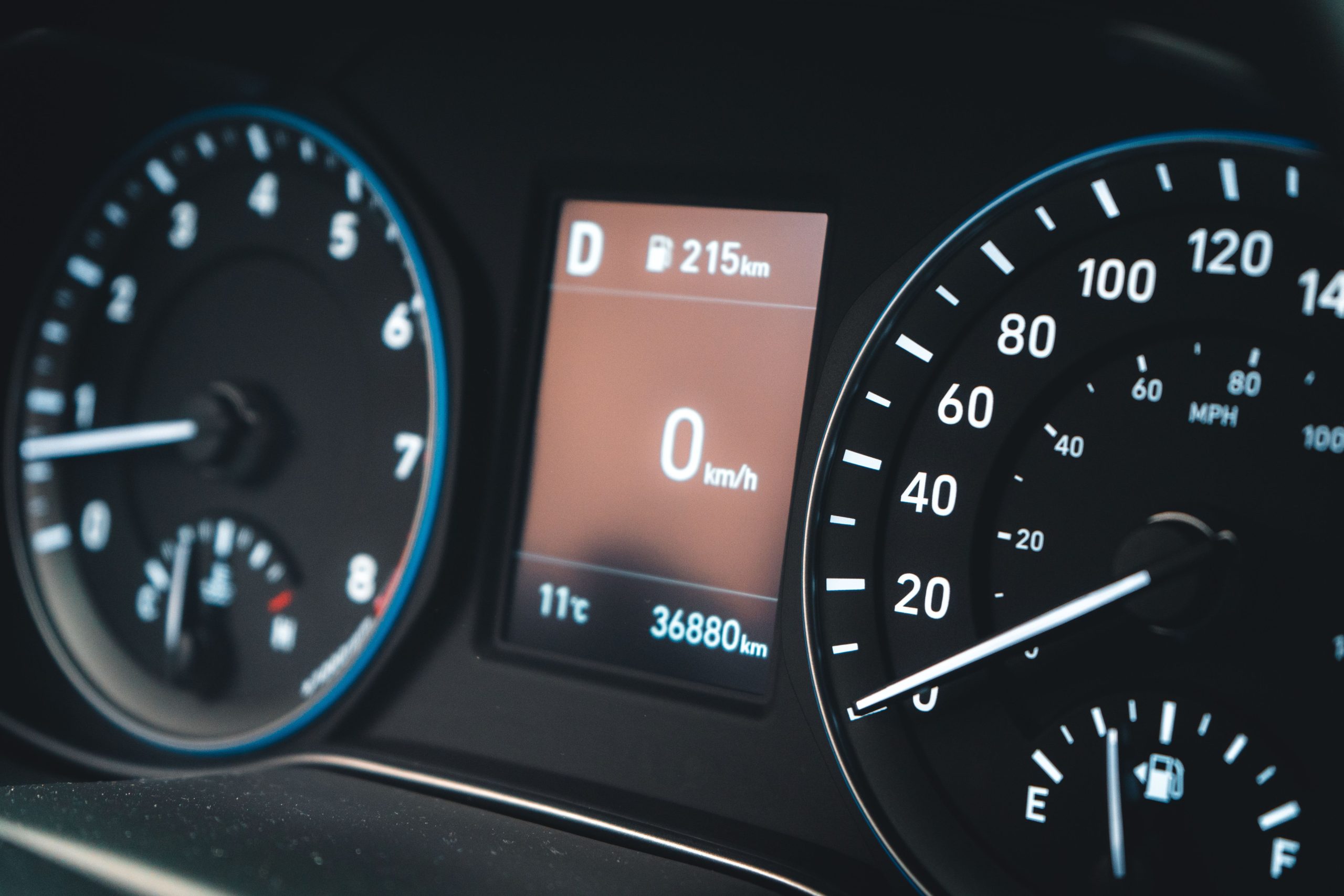
Vehicle instrument cluster gauge

Reddit Pitfalls on Pay-Per-Mile

From r/insurance: "MileAuto saved me $80/month because my car sat on campus all semester." Another: "I liked Metromile's device — no arguing about miles — but the install was annoying." And: "I switched to pay-per-mile then got a job 30 miles away; I should have stayed on a normal policy." The lesson: only go per-mile if your driving really is low.

Step-by-Step: Decide on Pay-Per-Mile

  1. Track your real weekly miles for two weeks.
  2. If under ~100 miles/week, quote MileAuto and Metromile.
  3. Pick MileAuto for no-hardware simplicity or Metromile for device precision.
  4. Compare the projected monthly total against a traditional quote.
  5. Reassess each term — a new commute changes the math fast.

Speedometer showing mileage

Frequently Asked Questions

Is pay-per-mile insurance cheaper for college students?

Only for low-mileage students (roughly under 100 miles a week). Daily commuters are usually cheaper on a traditional policy.

MileAuto or Metromile — which is better?

MileAuto is simpler (phone app, no device); Metromile offers a plug-in device and richer data. Both price by the mile at similar rates.

Does pay-per-mile cover accidents normally?

Yes. It is a full auto policy (liability, collision, comprehensive) priced by mileage rather than a flat premium.

What if my mileage goes up mid-term?

Your bill rises with miles — that is the trade-off. If a new commute appears, re-quote a traditional policy, because per-mile can get expensive fast.


About the Author

Written by Sarah Mitchell, founder of Student Car Insurance Guide. Sarah spent 8 years as a licensed insurance agent helping young drivers and their families find affordable coverage. Every guide on this site is fact-checked against current state regulations and real quote data from major insurers.

Have a question about this topic? Email our editorial team at 1404555604w@gmail.com.

Cheapest Car Insurance for Students: Top 5 Companies Ranked by Premium

Quick Answer: The 5 Cheapest for Students Are Geico, State Farm, Progressive, Nationwide, and Farmers

Based on typical student premiums after common discounts, the five most affordable carriers are Geico (lowest base), State Farm (best discount stack), Progressive (strong telematics), Nationwide (family bundles), and Farmers (good Signal savings). Rankings shift by state and record, but these five consistently land at the bottom of student rate tables when discounts are applied.

Top 5 Cheapest — Ranked

Rank Carrier Why It's Cheap for Students Key Discount
1 Geico Lowest young-driver base rate Good student up to 15%
2 State Farm Biggest discount stack (Steer Clear) Good student up to 25%
3 Progressive Snapshot telematics rewards safe drivers Telematics up to 30%+
4 Nationwide Strong family/multi-policy bundles SmartRide up to 30%
5 Farmers Signal telematics + good student Signal up to 30%

Why age and gender move the rate »

First-place winner podium

How We Ranked Them

This ranking blends the typical starting young-driver rate with the maximum realistic discount a student can stack (good-student + telematics + multi-car bundle). Geico wins on raw price; State Farm wins on total percentage off; the other three earn their spots through telematics that rewards the careful driving most students actually do. Your personal order may differ by state — always get all five quotes.

Honorable Mentions

  • USAA: cheapest of all if you have military eligibility, but not universally available.
  • Auto-Owners / Erie: very competitive in their regional footprints.
  • Pay-per-mile (Metromile, MileAuto): can beat all five for very low-mileage students (see commuter vs on-campus).
Winner standing on a podium

Reddit Pitfalls on "Cheapest" Lists

From r/personalfinance: "I picked the 'cheapest' carrier from a blog list and my rate was $60 more than Geico because the list ignored my state." Another: "The cheapest quote disappeared once they ran my actual mileage — I should have run telematics first." And: "USAA beat everyone but I didn't know I qualified." The lesson: rankings are a starting point, not a quote.

Step-by-Step: Get the Cheapest Real Rate

  1. Quote all five carriers with identical coverage and your real GPA.
  2. Add good-student + telematics to each (run the trials).
  3. Factor any parent multi-car / home bundle.
  4. Check regional specialists (USAA, Erie, Auto-Owners) if eligible.
  5. Re-quote every 6 months — the cheapest carrier changes.
Top-ranked award concept

Frequently Asked Questions

What is the absolute cheapest car insurance for students?

Geico usually has the lowest base young-driver rate, and USAA beats everyone if you have military eligibility. State Farm often wins after stacking discounts.

Do these rankings hold in every state?

No. State regulations and local risk change the order. Use this list as a shortlist, then quote all five in your state.

Is a pay-per-mile policy cheaper than these five?

For very low-mileage students (car mostly parked), yes — pay-per-mile can beat traditional carriers. For daily drivers, the big five usually win.

How much can I save by quoting all five?

Students who quote all five and stack discounts commonly cut 30–50% versus the first un-discounted quote they see.


About the Author

Written by Sarah Mitchell, founder of Student Car Insurance Guide. Sarah spent 8 years as a licensed insurance agent helping young drivers and their families find affordable coverage. Every guide on this site is fact-checked against current state regulations and real quote data from major insurers.

Have a question about this topic? Email our editorial team at 1404555604w@gmail.com.

Nationwide vs. Farmers: Which Offers Better Rates for Teen Drivers?

Quick Answer: Nationwide Is Usually a Bit Cheaper for Teens, Farmers Strong on Telematics

For teen drivers, Nationwide typically edges out Farmers on base rate, helped by its good-student discount and family-oriented bundles. Farmers counters with its Signal telematics and a solid good-student credit that can close the gap for safe teens. Neither is "cheap" for a 16–18 year old — the real savings come from stacking discounts and keeping the teen on a parent policy (see own vs parent).

Nationwide vs. Farmers for Teen Drivers

Factor Nationwide Farmers
Typical teen base rate Slightly lower Slightly higher
Good-student discount Yes (GPA-based) Yes (GPA-based)
Telematics SmartRide / SmartMiles Signal
Max telematics savings Up to ~30% Up to ~30%
Family bundling Strong (multi-policy) Strong (multi-policy)
Best for Price-focused families Tech-savvy safe teens

How the 18-year-old rate gap works »

Teen looking at a car at a dealership

Why Teens Are Expensive (and How to Cut It)

Teens are the highest-risk band insurers price, so the starting premium is steep. Both carriers soften it the same way: a good-student discount for a 3.0+ GPA, a telematics program that rewards careful driving, and a multi-car family bundle. Nationwide's SmartMiles option also helps if the teen drives very little, while Farmers' Signal app can return up to 30% for smooth driving.

Where Each Helps a Teen

  • Nationwide: often lower starting price; SmartRide and SmartMiles give flexible telematics; good family-bundle credits.
  • Farmers: Signal telematics is well rated; good-student + driver-training combo is strong; competitive for safe, low-mileage teens.
  • Both: keeping the teen on a parent's multi-car policy is far cheaper than a standalone.
Young driver at a car lot

Reddit Pitfalls for Teen Policies

From r/insurance: "Adding my 16-year-old to Nationwide was $180/month but Signal would have saved us more at Farmers — we didn't shop." Another: "Farmers quoted high until we ran Signal for a month, then it dropped $70." And: "We put the car in my name to 'save' and it backfired — teen on parent policy is cheaper." The pattern: always run the telematics trial before committing.

Step-by-Step: Insure a Teen Driver

  1. Get Nationwide and Farmers quotes with the teen added to the parent policy.
  2. Add the good-student discount (submit the GPA proof).
  3. Run SmartRide/SmartMiles (Nationwide) and Signal (Farmers) for 30 days.
  4. Compare the post-trial discounted totals.
  5. Keep the teen on the multi-car policy and re-quote at 18 and 21.
Teen shopping for a first car

Frequently Asked Questions

Is Nationwide or Farmers cheaper for a teen?

Nationwide is usually a bit cheaper on base rate, but Farmers' Signal telematics can close or erase the gap for a safe, low-mileage teen. Always compare post-trial numbers.

Should a teen be on a separate policy?

Almost never — a standalone teen policy is far more expensive. Keeping the teen on a parent's multi-car policy is the standard saving.

How much can telematics save a teen?

Both carriers' programs can return up to about 30% for safe driving, which is the single biggest lever after the good-student discount.

Does a learner's permit need to be disclosed?

Yes. Tell the insurer when the teen gets a permit so the policy is correct at claim time and no dispute arises later.


About the Author

Written by Sarah Mitchell, founder of Student Car Insurance Guide. Sarah spent 8 years as a licensed insurance agent helping young drivers and their families find affordable coverage. Every guide on this site is fact-checked against current state regulations and real quote data from major insurers.

Have a question about this topic? Email our editorial team at 1404555604w@gmail.com.

Geico vs. State Farm: Good Student Discount Comparison

Quick Answer: State Farm's Stack Is Usually Bigger (up to ~25%), Geico Caps Near 15%

On the good-student discount alone, State Farm generally wins: a B-average student under 25 who completes Steer Clear can reach about 25%, versus Geico's typical up to 15% for a 3.0+ GPA. Geico is often still cheaper on base rate, so the "better deal" depends on whether Geico's lower starting price or State Farm's bigger percentage wins for your file. Quote both with your real grades.

Good-Student Discount: Geico vs. State Farm

Detail Geico State Farm
Max good-student discount Up to ~15% Up to ~25% (with Steer Clear)
GPA threshold 3.0 / B average 3.0 / B average
Extra requirement Proof of grades Steer Clear module (under 25)
Stackable with telematics Yes (DriveEasy) Yes (Drive Safe & Save)
Typical base rate Lower Slightly higher

Exact GPA rules by carrier »

Insurance policy documents on a desk

How the Discounts Actually Stack

Geico's good-student credit is straightforward: show a 3.0+ transcript and get up to 15%, then add DriveEasy telematics on top. State Farm's path is richer but has a step — the Steer Clear safe-driving course (for drivers under 25) unlocks the larger discount, and Drive Safe & Save telematics stacks on that. A student who does both at State Farm can approach a 50% combined reduction versus the un-discounted young-driver rate.

Which Should You Pick?

  • Choose Geico if your base rate is already low and you want a simple 15% + telematics with minimal paperwork.
  • Choose State Farm if you will do Steer Clear and bundle with a family policy — the percentage math usually wins.
  • Either way: keep proof current; the discount lapses if you don't re-submit (see GPA-drop rules).
Agent reviewing a car insurance policy

Reddit Pitfalls on Good-Student Discounts

From r/insurance: "I stayed with Geico for simplicity but later learned State Farm's Steer Clear would have saved me an extra $30/month." Another: "My Geico discount vanished because I never re-uploaded the transcript." And: "State Farm asked for the Steer Clear completion certificate, not just grades." The lesson: the bigger discount has a hoop — jump through it and keep the paperwork.

Step-by-Step: Max the Good-Student Discount

  1. Confirm your GPA meets the 3.0/B threshold at each carrier.
  2. At Geico: submit the transcript and enroll in DriveEasy.
  3. At State Farm: submit grades AND complete Steer Clear, then add Drive Safe & Save.
  4. Compare the final discounted numbers, not the headline rates.
  5. Re-submit proof every term so the discount never lapses.
Insurance office workspace

Frequently Asked Questions

Who has the bigger good-student discount, Geico or State Farm?

State Farm, at up to about 25% with the Steer Clear course, versus Geico's typical up to 15%. But Geico's lower base rate can still make it cheaper overall.

Does State Farm require Steer Clear for the discount?

Steer Clear is what unlocks the larger discount for drivers under 25. Without it you may get a smaller good-student credit, so completing the course is worth it.

Can I combine the good-student discount with telematics?

Yes at both carriers. Stacking good-student + telematics is the fastest way to cut a young-driver premium.

What happens if I don't re-submit my grades?

The discount lapses at renewal and your premium rises. Set a reminder to re-prove every term (see our GPA-drop guide).


About the Author

Written by Sarah Mitchell, founder of Student Car Insurance Guide. Sarah spent 8 years as a licensed insurance agent helping young drivers and their families find affordable coverage. Every guide on this site is fact-checked against current state regulations and real quote data from major insurers.

Have a question about this topic? Email our editorial team at 1404555604w@gmail.com.

Liberty Mutual vs. Travelers: Best Options for Out-of-State Students

Quick Answer: Both Handle Out-of-State Well — Travelers Leads on "Away at School," Liberty Mutual on Bundled Student Perks

For students studying out of state, the key is the away-at-school (or student-away) credit and correct garaging. Travelers offers a strong student-away discount and broadly available bundling, often making it cheaper for a car left at the parents' home. Liberty Mutual counters with a Good Student discount plus its own student-away feature and often better rates for students who bundle home/renters. Quote both with the school's distance declared.

Liberty Mutual vs. Travelers for Out-of-State Students

Feature Liberty Mutual Travelers
Student-away credit Yes (student away at school) Yes (strong away-at-school)
Good-student discount Up to 15% Up to 15% (varies)
Telematics RightTrack IntelliDrive
Best bundling Home/renters strong Multi-policy strong
Typical fit Bundled households Car-left-at-home students

Compare commuter vs on-campus ratings »

Boxes packed for moving to college out of state

Why the Garaging Address Decides Everything

When a student goes out of state, the car's garaging address drives the rate. If the car stays at the parents' home (common for freshmen), both insurers apply the away-at-school credit and rate the car in the (usually cheaper) home zone. If the student takes the car, the campus-zip rate applies. Getting this wrong is the #1 claim-time dispute, so declare it up front (see our move-in checklist).

Where Each Insurer Helps

  • Travelers: its away-at-school discount is well established and IntelliDrive telematics can trim a careful student's rate further.
  • Liberty Mutual: RightTrack plus Good Student, and a frequently competitive bundle if the family already has Liberty home insurance.
  • Both: require the school to be typically 100+ miles from the garaged address for the full credit.
Student packing belongings for a relocation

Reddit Pitfalls for Out-of-State Students

From r/insurance: "I moved to school in another state and forgot to tell Travelers — they back-billed me at claim time for a garaging mismatch." Another: "Liberty Mutual's student-away credit saved me $45/month once I proved the school was 200 miles away." And: "Both wanted a letter from the school confirming I was enrolled full-time." The themes: document the distance and full-time status early.

Step-by-Step: Insure an Out-of-State Student

  1. Decide where the car will live during the term (home or campus).
  2. Ask both carriers for the student-away / away-at-school credit and prove the distance (100+ miles).
  3. Confirm full-time enrollment is required and submit proof.
  4. Run RightTrack (Liberty) and IntelliDrive (Travelers) to add telematics savings.
  5. Keep the garaging address honest to avoid a claim dispute.
Stacked moving boxes for a college move

Frequently Asked Questions

Which is better out of state, Liberty Mutual or Travelers?

Travelers tends to lead when the car stays at the parents' home thanks to a strong away-at-school credit; Liberty Mutual competes well for bundled households. Always quote both with the real garaging address.

Do I need to tell the insurer I'm studying in another state?

Yes. The garaging address determines your rate and your coverage validity. Hiding an out-of-state move can void a claim.

How far must the school be for the student-away credit?

Typically 100+ miles from the garaged address, and full-time enrollment is usually required. Both carriers ask for proof.

Can telematics help an out-of-state student?

Yes. Liberty's RightTrack and Travelers' IntelliDrive both reward safe, low-mileage driving and stack on top of the student-away credit.


About the Author

Written by Sarah Mitchell, founder of Student Car Insurance Guide. Sarah spent 8 years as a licensed insurance agent helping young drivers and their families find affordable coverage. Every guide on this site is fact-checked against current state regulations and real quote data from major insurers.

Have a question about this topic? Email our editorial team at 1404555604w@gmail.com.
State Farm vs. Allstate: Best Student Discounts & Rates Compared

Quick Answer: State Farm Is Usually Cheaper, Allstate Has Strong Tech Discounts

For students, State Farm is typically the lower-priced of the two, especially when you stack its good-student discount (up to 25% with the Steer Clear component) and Drive Safe & Save telematics. Allstate runs a bit higher on base rate but pairs a solid Smart Student discount with Drivewise telematics that can return 20–30% for safe drivers. Pick State Farm for price, Allstate if you want the tech-forward telematics experience and already bundle with them.

State Farm vs. Allstate — Discount Breakdown

Discount / Feature State Farm Allstate
Good-student discount Up to 25% (with Steer Clear) Smart Student (grades + training)
Telematics Drive Safe & Save Drivewise
Max telematics savings Up to ~30% Up to ~30%
Typical base rate for students Lower Slightly higher
Bundle strength Very strong (home/renters) Strong (home/renters)
Best for Price + family policies Tech discounts + existing customers

Read our full State Farm good-student guide »

Insurance agent discussing a policy with a client

Why State Farm Leads on Price

State Farm's good-student program is unusually generous: a student under 25 who completes the Steer Clear safe-driving module plus keeps a B average can reach a ~25% discount. Combined with Drive Safe & Save (which tracks mileage and braking via app), a careful student can cut a young-driver premium dramatically. Because State Farm also insures so many family households, the multi-car and bundling math usually beats Allstate.

Where Allstate Shines

  • Smart Student: combines good grades, a driver-training course, and "away at school" into one package.
  • Drivewise: a transparent app that pays safe drivers 20–30%; great for low-mileage campus life.
  • Existing bundlers: if your parents already have Allstate home insurance, the bundle can erase the base-rate gap.
  • Accident forgiveness: Allstate's option can protect a student after a first mistake.
Family reviewing insurance documents together

Reddit Pitfalls on These Two

From r/insurance: "State Farm kept me on my parents' policy cheapest by far — Allstate's quote was $50 more a month." Another: "Allstate Drivewise gave me 30% but the base rate was so high it only matched State Farm." And: "I didn't know Steer Clear existed and left 10% on the table with State Farm." The pattern: State Farm wins on price, but only if you claim every discount.

Step-by-Step: Pick Between Them

  1. Quote State Farm and Allstate with identical coverage and your real GPA.
  2. Add the good-student discount to both; ask State Farm about Steer Clear.
  3. Run Drive Safe & Save and Drivewise for a month to see real telematics savings.
  4. If parents bundle home/renters, factor that credit into each quote.
  5. Choose the lower final number, then re-shop at renewal.
Young driver holding insurance documents

Frequently Asked Questions

Which is cheaper for a college student, State Farm or Allstate?

State Farm is usually cheaper, largely because its good-student discount can reach 25% with Steer Clear and its family bundling is strong. Allstate can close the gap if you already bundle with them.

Does Allstate's Smart Student discount beat State Farm's?

Not on price — State Farm's stack tends to be larger — but Allstate's Smart Student bundles grades, training, and away-at-school neatly, which some families prefer.

Can I run both telematics apps?

You can test both during trial periods, but you can only earn the discount from the carrier you actually buy from. Use the trials to compare, then commit.

Is accident forgiveness worth it for a student?

If the student is a newer driver, yes — Allstate's option (and State Farm's similar feature) can prevent one mistake from spiking the rate for years.


About the Author

Written by Sarah Mitchell, founder of Student Car Insurance Guide. Sarah spent 8 years as a licensed insurance agent helping young drivers and their families find affordable coverage. Every guide on this site is fact-checked against current state regulations and real quote data from major insurers.

Have a question about this topic? Email our editorial team at 1404555604w@gmail.com.
Geico vs. Progressive for College Students: Which is Actually Cheaper?

Quick Answer: It Depends on Your Driving Record — Geico Wins on Clean Records, Progressive Wins on Telematics

For most college students with a clean record, Geico is usually 5–15% cheaper than Progressive on a comparable policy. But the gap flips for students who drive little or have a blemish: Progressive's Snapshot telematics can undercut Geico by 10–30% for safe, low-mileage drivers, while Geico's DriveEasy is gentler but caps lower. The honest answer: quote both, and run both apps — the "cheaper" one is the one that fits your actual driving.

Geico vs. Progressive at a Glance

Factor Geico Progressive
Typical student rate (clean record) Lower (5–15% below) Higher baseline
Good-student discount Up to 15% Up to 15% (varies by state)
Telematics program DriveEasy (app-based) Snapshot (app or plug-in)
Max telematics savings Up to ~25% Up to ~30%+
Surcharge risk if you drive badly Low (DriveEasy caps) Higher (Snapshot can raise rate)
Best for Clean records, simple policies Safe low-mileage, accident-prone files

See how age and gender swing young-driver rates »

Comparing auto insurance quotes on a laptop

Why Geico Usually Comes Out Ahead

Geico's underwriting tends to reward thin, clean young-driver files with a low base rate, and its good-student discount (typically up to 15% with a 3.0+ GPA) stacks on top. For the typical student — commuting to campus, no violations — that combination beats Progressive's higher baseline more often than not. Geico also keeps things simple, which matters when you are juggling classes.

When Progressive Flippens the Math

  • Low mileage: a student who leaves the car at home and drives 50 miles a week can score 30%+ from Snapshot.
  • Safe habits: smooth braking and gentle acceleration are rewarded hard by Progressive's model.
  • Prior incident: if you have a ticket, Geico's rate can jump while Progressive stays competitive.
  • Bundle: Progressive's multi-policy and multi-car credits are strong (see own vs parent policy).
Insurance comparison documents on a desk

Reddit Pitfalls We See

From r/insurance and r/personalfinance: "Geico was $40 cheaper a month until I got a speeding ticket, then Progressive beat them by $30." Another: "I ran Snapshot for a month and Progressive dropped me to $110 from $160 — Geico never moved." And: "DriveEasy barely gave me anything because it uses phone sensors, not the car." The lesson: the cheaper carrier is situational, not fixed.

Step-by-Step: Find Your Cheaper Option

  1. Get a Geico and a Progressive quote with identical coverage (liability + comprehensive/collision if you have a loan).
  2. Add the good-student discount to both (our GPA rules).
  3. Enroll in both telematics apps for 30 days — the real discount appears after the trial.
  4. Compare the post-trial numbers, not the teaser rate.
  5. Re-quote every 6 months; the leader changes as your record evolves.
Young driver reviewing car insurance options

Frequently Asked Questions

Is Geico always cheaper than Progressive for students?

No. Geico leads on clean records, but Progressive's Snapshot telematics often wins for safe, low-mileage students and for those with a prior violation.

Which telematics is better, DriveEasy or Snapshot?

Snapshot can save more (up to 30%+), but it can also raise your rate if you drive badly. DriveEasy is gentler and caps the downside, which suits most students.

Should I run both apps at once?

Yes — quote both, run both trial periods, then keep the one that actually discounts you more. There is no penalty for testing.

Do both accept the good-student discount?

Both offer a good-student credit (around 15% with a 3.0+ GPA), but the exact threshold varies by state, so confirm when you quote.


About the Author

Written by Sarah Mitchell, founder of Student Car Insurance Guide. Sarah spent 8 years as a licensed insurance agent helping young drivers and their families find affordable coverage. Every guide on this site is fact-checked against current state regulations and real quote data from major insurers.

Have a question about this topic? Email our editorial team at 1404555604w@gmail.com.

Student Car Insurance for Delivery Drivers (Uber Eats, DoorDash Rules)

Quick Answer: Your Personal Policy Excludes Delivery — You Need an Endorsement or Rideshare Policy

If you drive for Uber Eats or DoorDash, a standard personal auto policy excludes commercial delivery. A crash while on a delivery can be denied. To be covered you need either a delivery/business-use endorsement, a rideshare-friendly policy (State Farm, Geico, Progressive), or a commercial policy. Expect to pay roughly 20–50% more than a personal policy, but it is the difference between a paid claim and a ruined semester.

Personal vs. Rideshare vs. Commercial for Delivery

Coverage Covers Delivery? Cost Best For
Personal auto No (excluded) Baseline Non-delivery students
Delivery endorsement Yes (add-on) +20–40% Occasional delivery
Rideshare-friendly policy Yes (period 1) +20–50% Regular app drivers
Commercial policy Yes (full) Highest Heavy delivery use

No car? A non-owner policy still matters »

Food delivery scooter rider

Why Personal Policies Say No to Delivery

Personal auto is priced for social, pleasure, and commuting use. Delivery is business use — more miles, more stops, more risk. The policy language typically excludes "livery" or "business use," so a claim adjuster who sees a food bag in the photo can deny the claim. The fix is to tell the insurer up front and pay for the right coverage.

How to Get Covered Correctly

  • Tell the insurer: hiding delivery use is material misrepresentation — a claim risk.
  • Add an endorsement: many carriers sell a business-use or delivery add-on.
  • Switch carriers: State Farm, Geico, and Progressive offer rideshare-friendly policies.
  • Track mileage: delivery miles may be deductible, and telematics can still save on personal miles.
  • Non-owner: no car of your own? A non-owner policy may still exclude delivery — read the fine print.
Delivery driver on scooter

Reddit Pitfalls for Delivery Drivers

From r/insurance: "I crashed during a DoorDash drop and my claim was denied — my personal policy excluded delivery." Another: "Adding the delivery endorsement was only $30/month more; I'd have paid anything after that denial." And: "My insurer dropped me when they found out I delivered and never told them." The lesson: disclose it, pay the endorsement, sleep at night.

Step-by-Step: Cover Your Delivery Gig

  1. Tell your insurer you drive for Uber Eats / DoorDash.
  2. Ask for a delivery/business-use endorsement or a rideshare-friendly policy.
  3. Compare quotes across State Farm, Geico, and Progressive for the best gig rate.
  4. Track your delivery miles — some are tax-deductible.
  5. Keep telematics on for personal miles to offset the higher base rate.
Food courier with bags

Frequently Asked Questions

Will my personal insurance cover a delivery accident?

Usually no. Personal auto policies exclude commercial delivery (livery/business use), so a crash while delivering can be denied. You need an endorsement or rideshare policy.

How much more does delivery coverage cost?

Roughly 20–50% above a personal policy, depending on carrier and mileage. It is far cheaper than a denied claim and a semester derailed.

Does Uber Eats or DoorDash provide insurance?

They offer limited contingent coverage only during active delivery periods, with gaps. It does not replace your own auto policy — you still need proper personal/ rideshare coverage.

Can a non-owner policy cover delivery?

Generally no — non-owner policies typically exclude business/delivery use. If you drive for an app without a car, confirm the fine print before relying on it.


About the Author

Written by Sarah Mitchell, founder of Student Car Insurance Guide. Sarah spent 8 years as a licensed insurance agent helping young drivers and their families find affordable coverage. Every guide on this site is fact-checked against current state regulations and real quote data from major insurers.

Have a question about this topic? Email our editorial team at 1404555604w@gmail.com.

Parent-Student Car Insurance Checklist: 10 Things to Do Before Move-In Day

Quick Answer: 10 Moves That Save Money and Prevent Claim Disputes

Before your student moves into the dorm, do these 10 things: (1) call the insurer about the permit/license, (2) decide parent policy vs separate, (3) confirm the away-at-school credit, (4) set the correct garaging address, (5) claim the good-student discount, (6) enroll in telematics, (7) gather proof documents, (8) check bundling (renters), (9) review the deductible, and (10) set a re-quote calendar. Done early, these prevent the two expensive mistakes — a garaging mismatch and a lapsed discount.

The 10-Point Checklist

# Task Why It Matters
1 Report the permit/license Protects claims later
2 Pick parent vs separate policy 20–50% cost difference
3 Claim away-at-school credit 20–30% off student portion
4 Set garaging address Avoids mismatch disputes
5 Submit good-student proof 7–15% saving
6 Enroll in telematics 10–35% saving
7 Gather documents Fast renewal
8 Bundle renters insurance 10–15% off
9 Review deductible Balance risk vs premium
10 Set re-quote reminders Loyalty creep costs money

Away-at-school rules explained »

Parents helping with dorm move-in

Why Do This Before Move-In, Not After

Insurers rate on the situation at the start of the term. Waiting until a claim forces the conversation means the insurer asks why the car's address was wrong or why the student was never disclosed. Doing the 10 steps in August — before the student drives to campus — locks in every discount and documents the setup correctly.

Two Mistakes That Cost the Most

  • Garaging mismatch: listing the car at home while it lives at school (or vice versa) can void a claim.
  • Lapsed discount: forgetting to re-submit good-student proof silently kills 7–15%.
  • Undisclosed permit: a teen driver not reported can delay or dispute a claim.
Student packing for college

Reddit Pitfalls for Parents

From r/insurance: "We never updated the garaging address when my son went to school 200 miles away — a claim got questioned for weeks." Another: "I didn't realize the away credit existed; we left $40/month on the table for a year." And: "The good-student discount lapsed because I forgot the annual proof." The themes: parents miss the proactive steps and overpay or risk a dispute.

Step-by-Step: The 10 Things (Your Move-In Plan)

  1. Call the insurer the moment the student gets a permit or license.
  2. Compare parent policy vs separate; pick the cheaper (see parent vs separate).
  3. Ask for the away-at-school credit if school is 100+ miles away.
  4. Set the garaging address to where the car actually sleeps.
  5. Submit the good-student proof (our guide).
  6. Enroll in telematics before the first drive.
  7. Gather transcript, ID, and vehicle docs in one folder.
  8. Bundle renters insurance if the student lives off-campus.
  9. Choose a deductible you could cover out of pocket.
  10. Put renewal re-quote dates on the calendar.
Family moving student to campus

Frequently Asked Questions

When should we handle car insurance before college?

Before move-in day — ideally in the summer. Insurers rate the situation at term start, so setting garaging, discounts, and disclosure early prevents claim disputes.

What is the single most valuable step?

Confirming the garaging address and the away-at-school credit together. That pair can save 20–30% and avoid the most common claim dispute.

Do we need to tell the insurer about a learner's permit?

Yes. Disclosing a permit driver protects you at claim time; an undisclosed teen driver can trigger delays or disputes.

Should I bundle renters insurance too?

If the student lives off-campus, bundling renters + auto commonly saves 10–15% and is a low-effort change at renewal.


About the Author

Written by Sarah Mitchell, founder of Student Car Insurance Guide. Sarah spent 8 years as a licensed insurance agent helping young drivers and their families find affordable coverage. Every guide on this site is fact-checked against current state regulations and real quote data from major insurers.

Have a question about this topic? Email our editorial team at 1404555604w@gmail.com.

What Happens to Your Student Discount If Your GPA Drops Below 3.0?

Quick Answer: The Discount Lapses at Renewal — But You Don't Owe the Money Back

If your GPA falls below the carrier's threshold (usually 3.0 / B average), the good-student discount simply ends at the next renewal. You are not billed for past savings — but the discount (typically 7–15%) disappears, so the premium jumps. A single bad term is not fatal: most carriers re-check each term, so recovering your GPA can restore the discount. The trap is letting it slip for a full year and forgetting to re-submit proof.

GPA Scenarios and Outcomes

GPA Discount Status What to Do
3.0+ (B or better) Active Keep submitting proof each term
2.7–2.9 Lapses at renewal Recover next term; re-submit
Below 2.5 Lapses; harder to restore Telematics becomes your lever
Recovers to 3.0+ Reinstated Send new transcript

Exact GPA rules by carrier »

Student studying in library

Why the Threshold Matters

Carriers define the good-student discount as a current academic standing, not a lifetime average. They verify at renewal with a transcript or report card. Dip below 3.0 and the discount line item is removed from the declaration page. The good news: it is not a penalty — you simply lose the credit until your grades recover. Telematics can replace much of the saving in the meantime.

How to Protect the Discount

  • Re-submit every term: don't assume last year's proof still counts (our proof guide).
  • Know the exact rule: some carriers accept a 2.7 ("B average" by their scale); confirm yours.
  • Use electronic proof: many schools issue digital transcripts carriers accept (see electronic report cards).
  • Lean on telematics if grades dip — it doesn't care about GPA.
College student with books

Reddit Pitfalls on GPA Drops

From r/insurance: "My GPA dropped to 2.9 for one semester and the discount vanished — $35/month gone, no warning at renewal." Another: "I didn't re-submit proof and lost it even though my GPA was fine." And: "I recovered to a 3.2 the next term and got it back after sending the new transcript." The pattern: the discount is term-by-term, and proof lapses silently.

Step-by-Step: Handle a GPA Dip

  1. Check your carrier's exact GPA threshold (usually 3.0, sometimes 2.7).
  2. If you dipped, focus on recovery — the discount can return next verification.
  3. Re-submit a fresh transcript the moment your GPA is back above the line.
  4. Turn on telematics to cover the gap while grades recover.
  5. Set a calendar reminder to re-prove every term so it never lapses by accident.
Student reviewing notes

Frequently Asked Questions

Do I have to pay back the discount if my GPA drops?

No. The good-student discount simply ends at the next renewal; you are not billed for past savings. The premium just rises by the discount amount.

Can the discount come back after a bad term?

Yes, in most cases. Carriers re-verify each term, so recovering to 3.0+ and submitting a new transcript can reinstate it.

Is the threshold always 3.0?

Usually a 3.0 / B average, but some carriers accept a 2.7 "B average" by their scale. Confirm your insurer's exact rule.

What replaces the discount if my grades slip?

Telematics is the strongest replacement — safe, low-mileage driving can return 10–35% regardless of GPA.


About the Author

Written by Sarah Mitchell, founder of Student Car Insurance Guide. Sarah spent 8 years as a licensed insurance agent helping young drivers and their families find affordable coverage. Every guide on this site is fact-checked against current state regulations and real quote data from major insurers.

Have a question about this topic? Email our editorial team at 1404555604w@gmail.com.