How to Buy Your First Car and Get Insured as a Student: The Complete 2026 Guide

Buying your first car is one of the most exciting milestones of young adulthood - and one of the most expensive mistakes you can make if you are not prepared. For students, the challenge is twofold: finding a reliable, affordable vehicle and then insuring it without breaking the bank. This guide walks you through the entire process, from setting a realistic budget to driving off the lot fully insured.

Part 1: Before You Shop - The Financial Reality Check

Do You Actually Need a Car Right Now?

Before you spend thousands of dollars, be honest with yourself. A car is one of the most expensive things you will ever own - and not just the sticker price. Skip the car if: you live in a city with decent public transit and your commute is under 40 minutes, you do not have an emergency fund yet, you are carrying high-interest credit card debt, or you can borrow a family car for the rare trips you actually need. Get the car if: your job or internship requires it, you are spending $300+/month on Uber and Lyft, or you have been licensed for at least a year and have steady income.

What Your First Car Will Actually Cost Per Year

People focus on the sticker price and forget everything else. Here is a realistic annual cost breakdown for a $12,000 used car:

Loan interest (5 years at 7%): ~$900/year | Insurance (young driver, full coverage): $2,400-$3,600/year | Registration and taxes: $300-$600/year | Gas (12,000 miles/year, 30 MPG): ~$1,500/year | Oil changes and routine maintenance: ~$400/year | Tires (amortized): ~$200/year | Parking: $0-$2,400/year depending on your city.

Total: roughly $7,000-$10,000 per year - or $580-$830 per month - before the car payment itself (~$230/month for a $12,000 loan). Many first-time buyers are genuinely shocked when they add it all up. Aim to keep total car expenses under 15-20% of your take-home pay.

Student receiving car keys at dealership buying first car

Part 2: Choosing the Right Car - Best Models for Students in 2026

New vs. Used vs. Lease: What Makes Sense for Students

New Car: Full manufacturer warranty (3yr/36K miles bumper-to-bumper), eligible for 0% APR promotions, but loses 15-20% of value in the first year. Best only if keeping 7+ years. Used Car (2-5 years old): 30-40% cheaper than new for the same model, most depreciation already occurred, Certified Pre-Owned (CPO) offers manufacturer-backed warranties. Best for first-time buyers on any budget. Lease: Lowest monthly payments but you build zero equity, mileage limits (10-15K/year) with overage penalties, and gap coverage is typically required. Best only if you want a new car every 3 years with predictable low mileage.

For most students: buy a used car outright or finance a 2-4 year old model.

Budget Ranges: What You Can Get in 2026

Under $8,000 (Used): Honda Fit, Hyundai Accent, or Toyota Yaris (2016-2021). Reliable, cheap to insure, easy to park. Expect higher mileage (60K-100K miles). Always get a pre-purchase inspection.

$8,000-$15,000 (Used): Honda Civic or Toyota Corolla (2018-2021) - the gold standards for reliability and resale value. Mazda3 (2019-2022) offers excellent driving dynamics. Subaru Impreza is ideal if you need AWD for snow.

$15,000-$22,000 (Used or CPO): Toyota RAV4 or Honda CR-V (2020-2023 CPO), Mazda CX-5, Chevrolet Equinox. Only step up to an SUV if you genuinely need the cargo space.

$22,000-$30,000 (New with Incentives): Toyota Corolla Hybrid (exceptional fuel economy), Honda Civic, Hyundai Elantra Hybrid. Hybrids make financial sense if you drive 12,000+ miles/year, with fuel savings paying for the premium in 3-4 years.

Used cars for sale on dealership lot

The 10 Best Used Cars for College Students in 2026

Based on reliability, insurance costs, fuel economy, and resale value, here are the top picks:

#1 Honda Civic (2016-2021): $12,000-$18,000, 32-36 MPG. Best all-around choice with leading reliability and resale value. The 10th generation (2016+) fixed nearly every previous complaint. Watch for oil dilution on 2016-2017 1.5T models in cold climates.

#2 Toyota Corolla (2014-2019): $9,000-$15,000, 30-35 MPG. Lowest insurance rates in the compact class. Toyota reliability proven past 200,000 miles with basic maintenance. The 1.8L engine only produces 132 HP - adequate but not exciting.

#3 Mazda3 (2014-2018): $9,000-$14,000, 30-33 MPG. Best driving dynamics in the budget compact class - precise steering, balanced suspension. Reliability surprisingly close to Toyota/Honda since 2015. Rear seat space is tighter than Civic/Corolla.

#4 Hyundai Elantra (2017-2020): $9,000-$14,000, 30-35 MPG. Best value - consistently $2,000-$3,000 cheaper than equivalent Civic. 2019+ models under 60K miles may still have the 5yr/60K bumper-to-bumper warranty. Check for engine recalls on 2017-2018 models.

#5 Toyota Camry (2012-2018): $10,000-$16,000, 28-33 MPG. Best highway commuter with legendary durability and low insurance. The 2015-2017 LE represents the best value sweet spot. Downside: larger size makes campus parking harder.

#6 Honda Fit (2015-2020): $11,000-$16,000, 33-36 MPG. Unmatched cargo flexibility with the Magic Seat system (folds flat for 6-foot cargo floor or flips up for tall items). Discontinued after 2020, so inventory is shrinking and prices remain firm.

#7 Kia Forte (2019-2022): $11,000-$16,000, 31-35 MPG. Most standard tech for the money - base models include 8-inch touchscreen, Apple CarPlay/Android Auto, and lane-keep assist. Kia reliability has improved dramatically since 2017.

#8 Subaru Impreza (2017-2020): $10,000-$16,000, 28-32 MPG. Standard AWD at no extra cost - essential for snow-belt schools (upstate NY, Michigan, Colorado). Trade-off: 3-5 MPG lower fuel economy than FWD competitors.

#9 Hyundai Sonata (2015-2019): $9,000-$14,000, 28-32 MPG. Midsize comfort at compact prices - about $3,000 cheaper than a comparable Camry. SE trim with 2.4L engine is the value play. Rapid depreciation works in your favor as a buyer.

#10 Nissan Sentra (2020-2022): $12,000-$17,000, 30-33 MPG. The 2020 redesign transformed this car from worst-in-class to genuinely competitive. Interior looks like a $5,000 more expensive car. CVT is improved but still less responsive than traditional automatics.

Quick decision guide: Want the safest all-around bet? Honda Civic. Tightest budget? Hyundai Elantra or Sonata. Absolute lowest maintenance risk? Toyota Corolla. Snow-belt school? Subaru Impreza. Need cargo space for dorm moves? Honda Fit.

Part 3: How to Buy a Used Car Without Getting Burned

The Pre-Purchase Inspection: Your $150 Insurance Policy

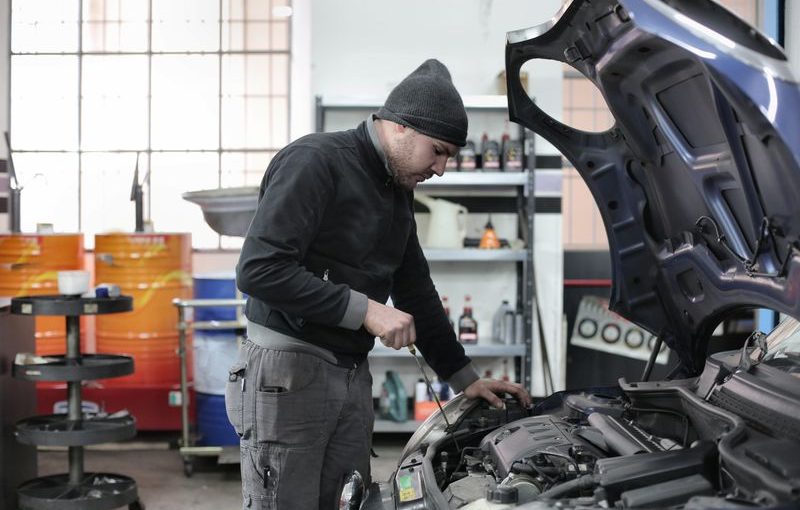
A pre-purchase inspection by an independent mechanic (not the seller's shop) costs $100-$150 and is the single most important step in buying a used car. It can save you from a $3,000 repair you never saw coming. The mechanic will check the engine, transmission, brakes, suspension, frame for accident damage, and scan for hidden diagnostic trouble codes. Never skip this step.

Mechanic inspecting used car pre-purchase inspection

What to Check Before You Sign

Get the Carfax or AutoCheck report: Costs $30-$40 and shows accident history, title issues (salvage, flood damage), odometer rollback flags, and ownership history. Worth every dollar. What to look for yourself: rust on the frame, wheel wells, and undercarriage; mismatched paint panels (sign of past collision repair); oil leaks under the hood and car; tire tread depth and manufacturing date (tires older than 6 years need replacement); all lights, windows, and electronics working.

Test drive checklist: Highway speeds for 10+ minutes (listen for vibration or pulling), hard braking from 40 MPH (no steering wheel shimmy or pull), tight turns at low speed (no clicking or grinding from CV joints), and air conditioning at full blast (make sure it actually cools).

Financing Tips for Students

Get pre-approved at your bank or credit union before visiting dealers. Credit unions typically offer the lowest rates for students. Having a co-signer (parent or guardian) can dramatically improve your approval odds and lower your rate. Zero-interest financing from dealerships can save thousands, but usually requires excellent credit and only applies to new cars. Never negotiate on monthly payment - dealers stretch loans to 72 or 84 months to make payments look affordable while you pay far more in total interest. Always negotiate on the total out-the-door price.

Down payment: Aim for 10-20% of the purchase price. Budget an extra $1,000-$1,500 beyond the car price for pre-purchase inspection, registration fees, taxes, insurance setup, and first-round maintenance (oil change, new wipers, cabin air filter).

When to Buy for the Best Deal

Best times: end of the month (salespeople need to hit quotas), end of the model year (late summer/early fall when dealers clear inventory for new models), and major holiday weekends (Memorial Day, Labor Day, Black Friday). Worst time: weekends when lots are crowded and salespeople are less motivated to negotiate.

Part 4: Getting Insured - Your First Car Insurance Policy

You need proof of insurance before you can register the car or drive it off the lot. For students buying their first car, insurance is often the biggest ongoing cost - young drivers pay 2-3 times more than older drivers because drivers aged 17-24, representing only 7% of license holders, are involved in 24% of all serious accidents.

Coverage Types: What You Actually Need

Liability insurance (required in nearly every state): Covers damage you cause to others - their medical bills and property damage. State minimums vary widely, from Florida's 0/0/10 (no bodily injury required) to Alaska/Maine's 50/100/25. Recommendation: buy at least 100/300/100 if you can afford it - state minimums are dangerously low and you are personally liable for anything beyond your policy limits.

Collision coverage: Pays for damage to your own car in an accident regardless of fault. Required if you have a loan. Deductible typically $500-$1,000. Comprehensive coverage: Covers non-collision damage - theft, vandalism, fire, falling objects, floods, animal strikes. Also required by lenders. Deductible typically $250-$1,000.

Uninsured/Underinsured Motorist: Protects you when hit by a driver with no insurance (12.6% of US drivers) or insufficient coverage. Required in 24 states plus DC. Medical Payments / PIP: Covers medical bills for you and passengers regardless of fault. Required in 13 no-fault states. Gap Insurance: If you finance or lease, gap covers the difference between what you owe and what the car is worth if totaled. Dealer gap costs $500-$700 rolled into loan; insurer gap costs $20-$50/year.

The paradox: Comprehensive coverage often costs only slightly more than basic third-party coverage for young drivers. Always compare the actual price difference - do not assume liability-only is automatically cheaper. For a financed car worth $10,000+, full coverage is almost always the right call.

Person comparing car insurance policies and documents

Stay on Your Parents' Policy vs. Get Your Own

For most students, staying on a parent's policy is the cheapest option for the first 1-2 years. Parents with clean records and established insurance history get dramatically lower rates. You can be listed as a named driver on their policy while the car is titled in their name. Important exceptions: if the car is titled in your name at a different address, you need your own policy. If you are financially independent and living away from home, many insurers require a separate policy. If you have a poor relationship with your parents or they have bad driving records, your own policy may be comparable.

Warning: never commit fronting. Fronting is when a parent is listed as the primary driver on a car that you actually drive most of the time. This is insurance fraud. Insurers actively investigate fronting and will deny claims if caught, leaving you personally responsible for all accident costs.

10 Strategies to Lower Your Insurance Premium

Choose the right car before you buy. Insurance costs vary dramatically by model. A Honda Civic or Toyota Corolla has some of the lowest rates; sports cars, luxury vehicles, and trucks cost significantly more. Get insurance quotes for your top 3 car choices before you commit to buying one.

Compare 4-5 quotes. Rates vary wildly between companies for the same driver and car. Use comparison tools and go direct to GEICO, Progressive, State Farm, and USAA (if eligible via military family). Auto-Owners and Erie consistently offer the lowest rates for young drivers where available.

Good student discount (GPA 3.0+ / B average). State Farm offers up to 25% off - the highest in the industry. GEICO offers up to 15%, Progressive 10%, Allstate up to 20% for full-time students under 25. Thresholds range from B- (2.7 at Allstate) to B (3.0 at most others).

Distant student discount (student away at school). If you attend college 100+ miles from home without a car, you can save 15-30% while only driving during breaks. State Farm, GEICO, and Progressive all offer this.

Add an experienced named driver. Adding a parent with a clean record as a secondary driver can reduce premiums 10-20%. They must genuinely use the car occasionally - insurers check.

Raise your deductible. Going from $500 to $1,000 deductible saves 10-15% on collision and comprehensive premiums. Only do this if you have an emergency fund to cover the deductible.

Telematics / usage-based insurance. Programs like State Farm Drive Safe and Save (up to 30%), Progressive Snapshot (average $231/year), and Nationwide SmartRide (up to 40%) reward safe driving with discounts. For students driving under 7,500 miles/year, pay-per-mile programs (Allstate Milewise, Nationwide SmartMiles) can save 30-50%.

Pay annually if possible. Monthly payment plans add 5-15% in fees. Paying in full upfront saves hundreds per year.

Bundle with renters insurance. Adding a renters policy ($15-$20/month) can save 10-15% on auto insurance through multi-policy discounts - often the renters policy essentially pays for itself.

Complete a defensive driving course. Many insurers offer 5-10% discounts for completing an approved course (typically $25-$50 online, 4-6 hours). Some states mandate this discount by law.

First-Time Insurance Checklist: Step by Step

Get quotes BEFORE buying the car. Run insurance quotes on 3-5 potential cars. Eliminate any model with premiums you cannot afford.

Gather your documents: driver's license number, vehicle VIN (if you have selected the car), address where the car will be parked (be honest - using the wrong address can void coverage), and student status verification (transcript or report card for good student discount).

Choose your coverage levels. Start with liability limits of at least 100/300/100. Choose collision and comprehensive deductibles you can afford ($500 if you have savings, $1,000 if you want to minimize premiums). Add uninsured motorist coverage.

Apply every discount: good student, distant student, defensive driving, anti-theft device, safety features, bundling, paperless billing, paid-in-full, and early signing (some insurers offer 5-10% off for starting a policy 7+ days before it takes effect).

Purchase the policy and get proof of insurance. Most insurers email you an ID card immediately. You need this to complete registration at the DMV.

Register the car at the DMV. Bring the title (signed by seller), bill of sale, proof of insurance, valid ID, and payment for registration fees and taxes. Complete within your state's required timeframe (typically 10-30 days after purchase).

Keep your policy active. A lapse in coverage - even for one day - will result in dramatically higher rates when you reapply. Set up autopay to prevent accidental lapses.

Part 5: The Biggest Mistakes First-Time Student Car Buyers Make

Buying too much car. A used Civic works perfectly. The new SUV costs twice as much to own and insure. Start small - upgrade later when you know your actual driving habits and have more financial stability.

Focusing on the monthly payment, not the total price. A dealer can make any car seem affordable by stretching the loan to 72 or 84 months. You will pay thousands more in interest.

Skipping the Carfax and pre-purchase inspection. A flood-damaged or salvage-titled car can look pristine on the outside. The $180 you save by skipping these checks could cost you $3,000+ in hidden repairs.

Not comparing insurance before buying the car. That sporty coupe you love may come with a $3,600/year insurance bill that makes it completely unaffordable. Always run insurance quotes on your shortlist.

Forgetting the total cost of ownership. The purchase price is just the beginning. Insurance, gas, maintenance, registration, and parking can easily add $500-$800/month on top of your loan payment.

Not having a co-signer when you need one. Students with limited credit history often get denied or hit with 15%+ interest rates. A parent co-signer can cut your rate in half.

Accepting dealer add-ons. Extended warranties, paint protection, fabric protection, VIN etching - almost all are overpriced. Politely decline everything in the finance office.

Fronting on insurance. Listing a parent as the primary driver when you drive the car most of the time is fraud. Insurers investigate and deny claims. Be honest about who the primary driver is.

Student budgeting and saving money for first car purchase

Part 6: The Four-Week Action Plan

Week 1-2 - Set Your Budget: Calculate your max monthly payment (keep total car expenses under 20% of take-home pay). Get pre-approved for an auto loan at your bank or credit union. Run insurance quotes for 3-5 target models. Eliminate any car whose insurance exceeds your budget.

Week 2-3 - Research and Narrow Down: Pick 3 models that fit your budget, lifestyle, and insurance cost. Check reliability ratings on Consumer Reports and J.D. Power. Find local listings on CarGurus, Autotrader, or Facebook Marketplace. Read owner reviews on Reddit and forums for common issues.

Week 3-4 - Shop and Negotiate: Get Carfax/AutoCheck on any serious candidate. Book a pre-purchase inspection for your finalists ($100-$150 each at an independent mechanic). Negotiate on total price, not monthly payment. Compare dealer financing vs. your pre-approved loan. Decline unnecessary add-ons in the finance office.

Purchase Week - Insurance and Registration: Finalize your insurance policy with all applicable discounts. Get proof of insurance (digital ID card). Complete title transfer and DMV registration (bring title, bill of sale, proof of insurance, and ID). Get your license plates. Budget $1,000-$1,500 beyond the purchase price for all fees and first maintenance.

Final Thoughts

Your first car is a learning experience - not your forever car. A 3-year-old Honda Civic with 40,000 miles will serve you reliably for the next decade while you build your credit, your driving record, and your career. The expensive trim package, the brand-new SUV, the sports car - those can all come later, once you know your actual driving needs and have a stronger financial foundation.

Remember the three golden rules for student car buyers: buy used (2-5 years old), get insurance quotes before you fall in love with a car, and never skip the pre-purchase inspection. Follow these rules and your first car buying experience will be a smart financial milestone rather than an expensive mistake you regret for years.


About the Author

Written by Sarah Mitchell, founder of Student Car Insurance Guide. Sarah spent 8 years as a licensed insurance agent helping young drivers and their families find affordable coverage. Every guide on this site is fact-checked against current state regulations and real quote data from major insurers.

Have a question about this topic? Email our editorial team at 1404555604w@gmail.com.

Car Insurance for International Students in the US: Everything You Need to Know About Getting Licensed, Insured, and Protected

If you are an international student planning to study in the United States and want to drive, car insurance is not optional - it is legally required in 48 of 50 states. But getting insured as a foreign national presents unique challenges that domestic students never face: no US driving history, no American credit score, unfamiliar license requirements, and insurance companies that may not recognize your years of safe driving back home.

This guide walks you through every step - from understanding which driver's license you need, to finding insurance companies that actually accept international students, to strategies that can cut your premiums by hundreds of dollars per year. Whether you hold an F-1, J-1, or M visa, this article covers exactly what you need to know.

Can International Students Get Car Insurance in the US?

Yes, absolutely. International students holding F-1, J-1, or M visas can purchase car insurance in the United States. However, the process is more complex than for domestic students, and requirements vary significantly by state. The key hurdle is that most US insurance companies evaluate risk based on American driving records and credit scores - things that international students simply do not have when they first arrive.

This means international students are typically classified as “new drivers” regardless of how many years they drove safely in their home country. The result? Premiums that can match or even exceed what American teenagers pay - often $3,000 to $7,000 per year for full coverage on a modest vehicle. But there are concrete steps you can take to reduce these costs, and this guide will show you exactly how.

How Your Visa Type Affects Car Insurance

University campus with international students

Your visa category directly influences how insurance companies assess your risk profile and how long you can use a foreign license:

F-1 Visa (Academic Students): The most common student visa. Because F-1 holders stay for multiple years (typically 4+ for undergraduate programs), some insurers offer slightly better rates compared to shorter-term visa holders. F-1 students must carry their I-20 form when driving.

J-1 Visa (Exchange Visitors): For researchers, teachers, and exchange students. J-1 holders must carry DS-2019 documentation. Insurance requirements are identical to F-1, though duration of stay may be shorter.

M-1 Visa (Vocational Students): For technical and vocational training programs, typically shorter in duration. Insurance companies may classify M-1 holders as higher risk because their shorter stay means less time to establish a US driving record, potentially resulting in 10-20% higher premiums.

Critical rule: Before applying for a driver's license, your SEVIS record must be in “active” status. Wait at least 2 business days after SEVIS activation and at least 10 days after entering the US before starting the license application process. Some states also require that your I-20 or DS-2019 has at least 6 months of remaining validity.

Driver's License Options for International Students

International students have three driver's license options, each with different implications for insurance availability and cost:

Option 1: Your Home Country Driver's License

Most states allow international students to drive with their foreign license during their first year of study. However, using only a foreign license for insurance purposes has significant limitations:

Insurance duration limits: Policies based solely on a foreign license may be restricted to just 3 months; with an IDP, coverage can extend to 1 year

Higher premiums: Foreign license holders typically pay 30-50% more than US license holders because insurers cannot verify your driving history

Fewer insurer options: Many major insurers require a US license, limiting you to specialized providers or a few national companies

Language barriers: If your license is not in English, most states and insurers strongly recommend or require an International Driving Permit (IDP)

Option 2: International Driving Permit (IDP)

An IDP is not a standalone driver's license - it is a translation document that verifies you hold a valid license in your home country. You must carry both your original foreign license and your IDP when driving. Key facts about the IDP:

Must be obtained before arriving in the US - the United States does not issue IDPs to foreign visitors. Apply through your home country's motor vehicle authority

Valid for up to 1 year in the United States

Required in some states: Washington state mandates an IDP for any non-English license; most other states strongly recommend it

Watch for scams: Only IDPs issued by AAA and AATA are legitimate. Many websites sell fake “international licenses” that have no legal validity

Option 3: US State Driver's License (Recommended)

Getting a US driver's license is the single most effective step an international student can take to reduce insurance costs and expand coverage options. With a US license, you gain access to nearly every insurance company, unlock discounts that foreign license holders cannot receive, and typically see premiums drop 20-40% within 6-12 months of maintaining a clean driving record.

How to Get a US Driver's License as an International Student

The process varies by state, but generally follows these steps:

Step 1: Confirm Eligibility with Your DSO

Contact your school's Designated School Official (DSO). They will explain US driving rules, help you complete required forms, and confirm with your state's DMV that you are eligible to apply. Make sure your SEVIS record is active before proceeding.

Step 2: Gather Required Documents

Passport with valid visa stamp

Form I-20 (F-1/M-1 students) or DS-2019 (J-1 students) with at least 6 months remaining validity

Form I-94 (arrival/departure record)

Proof of residence: Utility bill, lease agreement, or bank statement with your US address

Social Security Number or Form SSA-L676: If you have an SSN (from on-campus employment or OPT), provide it. If not, obtain Form SSA-L676 confirming you are not eligible for an SSN

Form I-766 (EAD card): If you are in OPT status

Important: All personal information across every document must be consistent. If your name, date of birth, or other details vary between documents, the DMV will reject your application.

Step 3: Apply for a Learner's Permit

You will need to pass a vision test and a written knowledge test about US traffic rules. Most tests have 20-30 questions requiring approximately 80% correct answers. Many states offer the test in multiple languages beyond English and Spanish. Study your state's DMV handbook and take practice tests online before attempting the exam.

Step 4: Practice Driving and Take the Road Test

With a learner's permit, you can practice driving with a licensed adult in the vehicle. Some states require a minimum number of practice hours or completion of a driver's education course. The road test evaluates your ability to operate a vehicle safely, including highway driving, city navigation, and parallel parking.

Graduated licensing: Some states implement a graduated license program requiring a learning period before issuing a full license. Check your state's specific requirements.

Documents You Must Carry When Driving

Your driver's license (US state license, foreign license, or learner's permit)

Current insurance identification card

Vehicle registration document

I-20 copy (F-1/M-1 students) or DS-2019 copy (J-1 students)

IDP if you are using a non-English foreign license

If pulled over by police: Signal and pull over safely, turn off the engine, keep both hands visible on the steering wheel. Present your license, insurance, and registration. Traffic tickets generally do not affect your visa status unless the violation is serious (such as reckless driving or DUI). Never attempt to bribe a police officer - this is a serious criminal offense in the US.

Insurance Companies That Accept International Students

World map showing international destinations

Not every insurance company will cover international students, but several major providers have established processes specifically for foreign license holders:

National Insurance Companies

State Farm: The cheapest option in 35 states for international drivers, averaging $1,114/year for full coverage. Requires contacting an agent by phone or in person - no online quotes for foreign license holders. Excellent customer service ratings.

Progressive: The only major insurer offering online quotes for international license holders. Average full coverage: $1,226/year. Available in all 50 states. Offers Snapshot telematics program for additional savings of 10-30%.

Farmers: Accepts international license information during the online quote process. Average full coverage: $1,459/year. Good option in 4 states where it leads on price (Alabama, Arkansas, Minnesota, Texas).

GEICO: May accept foreign license holders depending on the state. Generally requires US license for policy issuance but offers temporary coverage options.

Specialized International Student Insurers

Several providers specialize in serving international students and are more likely to accept foreign licenses without requiring a US license first:

Insurent: Specifically designed for international drivers, with streamlined application processes that accept foreign licenses and IDPs

International Student Insurance: Focuses exclusively on the international student market, offering policies that accommodate various visa types

GradGuard: Works with university partnerships to provide insurance products tailored to international students

Local insurance brokers near universities: Often have experience working with international students and can navigate foreign license requirements more effectively than national call centers

Pro tip: Ask your school's DSO for a list of insurance companies that other international students at your university have successfully used. This practical shortcut can save hours of research and frustration.

How Much Does Car Insurance Cost for International Students?

Young driver reviewing car insurance options

International students typically pay premiums comparable to young American drivers with no prior history. Here are realistic cost expectations:

Full Coverage Average Costs (Under 25, International Student)

Cheap states (Idaho, Wyoming, Maine, Vermont): $2,000 - $3,500/year

Average states (Ohio, Pennsylvania, North Carolina): $3,500 - $5,500/year

Expensive states (New York, Florida, Michigan, Louisiana): $5,500 - $8,000+/year

California (credit score banned): Often favorable for international students since insurers cannot penalize you for lacking a US credit history

Liability-Only Average Costs

Cheap states: $800 - $1,500/year

Average states: $1,500 - $2,500/year

Expensive states: $2,500 - $4,500+/year

Cost Comparison: US License vs Foreign License vs IDP

The type of license you hold directly affects your premiums:

US state driver's license: Baseline pricing - access to all insurers and all discounts

Foreign license + IDP: 30-50% above baseline - limited insurer selection, fewer discounts available

Foreign license only (no IDP): 50-70% above baseline - very limited insurer options, most major companies will not accept

The financial case for getting a US license is clear: A student paying $4,500/year with a foreign license could potentially drop to $2,700-$3,150/year after obtaining a US license and maintaining 6 months of clean driving - saving $1,350-$1,800 annually.

Factors That Affect International Student Premiums

No US driving history: The single biggest factor. Even 10 years of clean driving in your home country typically carries zero weight with US insurers. You are rated as if you have never driven before.

No US credit score: In most states, insurers use credit-based insurance scores to set rates. International students with no US credit history are penalized similarly to Americans with poor credit, adding $50-140/month in many states. However, California, Hawaii, Massachusetts, and Michigan ban credit scoring entirely.

Visa duration: Shorter-stay visas (M-1) may result in higher premiums than longer-stay visas (F-1), because insurers perceive less time to recoup risk.

Age: Under 25 international students face the same age-based surcharges as domestic young drivers - typically 40-60% above the state average.

Vehicle choice: Safe, moderately priced used vehicles (Toyota RAV4, Honda CR-V, Toyota Corolla) cost significantly less to insure than sports cars or luxury vehicles.

Location: Urban areas with higher traffic density and crime rates cost more than rural or suburban locations.

Best States for International Student Car Insurance

Where you attend school matters enormously for your insurance costs. Some states are significantly more favorable for international students:

Most Affordable States

Idaho: State Farm full coverage as low as $491/year

Virginia: Progressive full coverage as low as $455/year

Maine, Vermont, Wyoming: All below $700/year for full coverage with State Farm

California: Not the cheapest overall, but the credit score ban means international students are not penalized for lacking US credit history - potentially saving $1,000+/year compared to credit-weighted states

Most Expensive States

Michigan: Progressive full coverage $2,952/year - the highest in the nation due to unlimited PIP requirements

New York: Progressive full coverage $2,048/year, especially costly in NYC metro areas

Florida: State Farm full coverage $1,658/year, compounded by high uninsured driver rates

Louisiana: State Farm $1,964/year, driven by frequent litigation and high claim costs

Discounts Available to International Students

Despite higher base rates, international students can access several discounts that significantly reduce premiums:

Good Student Discount (5-25%): Maintain a GPA of 3.0 or higher. Most insurers require a transcript copy. This is often the largest single discount available to students.

Defensive Driving Course Discount (5-15%): Complete an approved defensive driving course. Many states offer online courses that can be finished in a single day.

Telematics/Safe Driving Discount (10-30%): Programs like Progressive Snapshot track your driving behavior through a mobile app. Drive safely and save significantly.

Pay-Per-Mile Discount (30-50% for low mileage): If you drive fewer than 8,000 miles per year, pay-per-mile insurance from Mile Auto or similar providers can cut costs dramatically.

Bundling Discount (10-15%): Combine your auto insurance with renters insurance for a package discount.

Student Away at School Discount (15-30%): If you attend a school more than 100 miles from home and do not have regular access to a car.

Alumni/University Affiliation Discount: Some insurers offer discounts through university partnerships. Ask your international student office about group rate arrangements.

8 Strategies to Reduce International Student Car Insurance Costs

1. Get a US driver's license immediately. This is the single most impactful action. A US license opens access to all insurers, all discounts, and typically reduces premiums 20-40% within 6-12 months.

2. Shop 5+ insurance companies. International student rates vary enormously between insurers. The spread between cheapest and most expensive can exceed $200/month.

3. Consider California and credit-banned states. California, Hawaii, Massachusetts, and Michigan do not use credit scores for pricing, eliminating one of the biggest penalties international students face.

4. Choose a safe, modest vehicle. A used Toyota RAV4, Honda CR-V, or Toyota Corolla costs far less to insure than a sports car or luxury vehicle.

5. Enroll in telematics immediately. Programs like Progressive Snapshot reward safe driving with 10-30% discounts. Since you lack a US driving history, telematics provides the real-time evidence insurers need.

6. Build US credit strategically. Apply for a secured credit card, keep utilization below 30%, and never miss a payment. Even 6-12 months of positive credit activity can begin reducing your premiums in credit-weighted states.

7. Use an ITIN instead of waiting for an SSN. If you cannot obtain a Social Security Number, apply for an Individual Taxpayer Identification Number (ITIN). Some insurers accept ITINs as identification, and having one can help you begin establishing credit history.

8. Explore pay-per-mile insurance. International students who primarily walk, bike, or use campus transit and drive only occasionally can save 30-50% with pay-per-mile policies.

Common Challenges and Mistakes International Students Make

Assuming your home country driving history matters. It almost never does. US insurers rate you based solely on US driving records.

Delaying your US license application. Every month you drive on a foreign license is a month of higher premiums and limited coverage.

Not asking your DSO for help. Your Designated School Official can provide lists of insurers that work with international students.

Buying only state minimum coverage. State minimums provide very limited protection. If you cause an accident with injuries exceeding minimum limits, you are personally liable for the difference.

Ignoring credit-building opportunities. In most states, lacking US credit history costs you $50-140/month in insurance penalties.

Not comparing multiple quotes. International student rates vary more between insurers than any other demographic.

Choosing a vehicle before checking insurance costs. Always get insurance quotes before purchasing a car.

State-Specific Rules International Students Must Know

California: Credit scoring is banned, making it uniquely fair for international students. However, once you establish residency, you must obtain a California license within just 10 days.

Texas: Foreign licenses are valid for up to 1 year, but new residents must apply for a Texas license within 90 days.

Washington: Non-English licenses must be accompanied by an IDP - this is a legal requirement.

Michigan: Has the highest insurance costs due to unlimited PIP requirements, but also bans credit scoring.

New Hampshire: Insurance is not legally required, but you remain financially responsible for any damage you cause.

Florida: Has very low minimum liability requirements but high uninsured driver rates - UM/UIM coverage is essential.

New York: Requires liability insurance before you can even register a vehicle. Minimums are higher than most states at 25/50/10.

Being Added to Someone Else's Policy

If you live with a US resident who already has car insurance - a host family, relative, or roommate - you may be able to join their policy as a named driver. This can reduce your costs by $800-$2,000/year compared to buying a standalone policy. Key considerations:

The policyholder's existing discounts and driving history benefit you

Most insurers require all household members who drive to be listed

Your foreign license may still limit which insurers will accept the addition

If you cause an accident, both your and the policyholder's rates will increase

Ask explicitly whether the insurer accepts international license holders as additional drivers

What If You Cannot Afford Insurance?

Liability-only coverage: Meets legal requirements at the lowest cost. Works well if your car is older and worth less than $4,000-$5,000.

Pay-per-mile insurance: Mile Auto offers liability-only starting at approximately $40/month for students who drive very little.

Non-owner insurance: If you do not own a car but occasionally borrow one, non-owner policies provide liability coverage at $120-$180/month - typically 30-50% cheaper than a standard policy.

Public transportation: Many universities provide free shuttle services. If insurance costs exceed your budget, relying on public transit may be the financially responsible choice.

Car-sharing services: Zipcar and similar services include basic insurance in their membership fees.

International Student Car Insurance Action Plan

Follow this step-by-step timeline to minimize costs and maximize coverage:

Before Arriving in the US (1-3 Months Prior)

Obtain an International Driving Permit from your home country

Request a copy of your home country driving record

Research insurance requirements in the state where your university is located

Contact your school's DSO about local insurance resources

Get preliminary quotes from State Farm and Progressive for your destination state

First Month in the US

Activate your SEVIS record and wait the required 2-10 days

Begin the US driver's license application process immediately

Obtain a US address and proof of residence

If you need insurance urgently, purchase a short-term policy using your foreign license + IDP

Apply for a secured credit card to begin building US credit

Month 2-6

Complete your US driver's license (learner's permit, practice, road test)

Once you have your US license, re-quote with 5+ insurers for 20-40% savings

Enroll in a telematics program to prove your safe driving

Apply for good student discount with your transcript

Consider pay-per-mile insurance if driving less than 8,000 miles/year

Month 6-12

Re-shop insurance at your first renewal - premiums should decrease with 6 months of clean US driving history

Verify your credit score has begun establishing and ask insurers to re-rate

Consider increasing coverage from liability-only to full coverage if your finances have improved

Bundle with renters insurance for 10-15% additional savings

Complete a defensive driving course for an extra 5-15% discount

Getting car insurance as an international student in the US is more challenging and more expensive than it is for domestic students - but it is entirely manageable with the right approach. The single most important action you can take is getting a US driver's license as quickly as possible after arriving. Combined with strategic comparison shopping, telematics programs, good student discounts, and credit-building efforts, you can bring your premiums down from the initial “new driver” surcharge to a level that fits your student budget. Start early, compare widely, and never accept the first quote you receive


About the Author

Written by Sarah Mitchell, founder of Student Car Insurance Guide. Sarah spent 8 years as a licensed insurance agent helping young drivers and their families find affordable coverage. Every guide on this site is fact-checked against current state regulations and real quote data from major insurers.

Have a question about this topic? Email our editorial team at 1404555604w@gmail.com.

Car Insurance for International Students in the US: A Complete Guide for F-1 and J-1 Visa Holders

Can International Students Get Car Insurance in the US?

Yes — international students on F-1 or J-1 visas can buy car insurance in the United States from day one of arrival. You don't need a US driver's license, a Social Security Number, or an established credit history to get coverage. Major insurers including State Farm, Progressive, GEICO, and Allstate all write policies for international license holders using your passport, foreign driver's license, and visa documentation.

However, there's a catch: international students typically pay 40% to 80% more than US-born students of the same age for identical coverage. The reason is simple — insurers can't pull a Motor Vehicle Report on a foreign driver, so they treat you as if you just got your license yesterday, rating you at the same risk level as a brand-new US teen driver. This "no US history" surcharge adds roughly $1,200 to $2,400 per year on top of standard student rates. The good news? This surcharge fades over time, and most carriers will re-rate your policy after 12 months of clean driving in the US, cutting 15% to 25% off your premium.

Car insurance for international students

How Much Does Car Insurance Cost International Students?

Based on 2026 rate data, here's what international students can expect to pay:

Liability-only coverage: $84–$182 per month

Full coverage (liability + collision + comprehensive): $146–$347 per month

"No US history" surcharge: adds 40%–80% during the first 6–12 months

After 12 clean months: rates typically drop 15%–25%

Here's how the major insurers compare for international students in 2026:

State Farm — $53/month liability, $108/month full coverage (best value, but some agents require an IDP)

Mile Auto — $74/month liability (pay-per-mile model, ideal for students who drive less than 6,000 miles/year, available in 14 states)

Progressive — $84/month liability, $146/month full coverage (online quotes available, accepts ITIN instead of SSN)

GEICO — $144/month liability, $266/month full coverage (call center only, no online quote path for F-1 students)

Allstate — $154/month liability, $317/month full coverage (agent-only enrollment, accepts foreign driving records)

Dairyland — $157/month liability, $399/month full coverage (specialist for high-risk and no-history drivers)

The single biggest mistake international students make is accepting the first quote they receive — typically from a campus-recommended broker who adds a 10% to 25% commission. Shopping at least three carriers saves an average of $312 per year, according to Insurify's shopping data. Always compare direct online quotes from insurers like Progressive and State Farm alongside any broker recommendations.

Car insurance for international students

Driver's License Rules for International Students

Your license status is the single most important factor in determining both your insurance eligibility and your rates. Here's how it works across three scenarios:

Option 1: Using Your Home Country License

You can drive on your foreign driver's license in all 50 states — but the time limit varies dramatically:

California and Texas — allow indefinite use of a home-country license for non-residents

New York, Pennsylvania, Massachusetts — require conversion to a state license within 30 days of establishing residency

Florida — requires an International Driving Permit (IDP) plus your home license

Most other states — allow 30 to 90 days before requiring conversion

Critical warning: Driving on an expired foreign license in a state that requires conversion counts as driving without a license, which voids most insurance policies. If you're in an accident and your foreign license has exceeded the state's validity window, your insurer will likely deny your claim — leaving you personally liable for all damages.

Option 2: Getting a State-Issued License

Converting to a US state license is the smartest move for international students who plan to stay for more than a semester. The benefits are significant:

Lower insurance rates — a state-issued license signals deeper US ties and typically drops your premium by 5% to 10%

Unlimited validity — no expiration window to worry about

Easier claims process — insurers can pull a US Motor Vehicle Report, which smooths claims handling

Builds a US driving record — this record is what enables the 15%–25% rate reduction after your first year

To get a state license, you'll need to pass a written knowledge test and a road test at your local DMV. Most states allow you to schedule the road test within 2–4 weeks. Bring your passport, I-20 or DS-2019 form, proof of address, and your foreign license to the DMV.

Option 3: International Driving Permit (IDP)

An IDP is not a standalone license — it's a translation document that accompanies your home-country license. Some states (like Florida) require it, and some insurers (like certain State Farm agents) request it as part of the underwriting process. You must obtain the IDP before arriving in the US — it's issued by your home country's authorized agency and cannot be obtained once you're already in America. The IDP is valid for one year and costs roughly $20.

Car insurance for international students

Documents You Need to Get Insured

Every insurance application for an international student requires the following five documents:

Valid passport — with a current visa stamp (F-1 or J-1)

Foreign driver's license — plus IDP if your home country issues one or your state requires it

I-20 form (for F-1 students) or DS-2019 form (for J-1 students) — proves your enrollment and visa status

Proof of US address — a lease, utility bill, or school housing letter

School enrollment verification — on university letterhead, confirming your student status

About the Social Security Number: Most major carriers no longer require an SSN to write a policy. State Farm, Progressive, GEICO, and Allstate all accept an Individual Taxpayer Identification Number (ITIN) instead. The IRS issues an ITIN within 7 weeks of submitting Form W-7 — apply within your first month of arrival to keep your insurance options open and start building the US credit history that lowers rates over time. If you don't have an ITIN yet, State Farm and Progressive can still write a policy at a slightly higher rate with no SSN or ITIN.

Credit scoring note: 12 jurisdictions ban credit-based insurance scoring entirely (California, Hawaii, Massachusetts, Michigan, Maryland, New Jersey, Nevada, New York, Oregon, Utah, Washington, plus DC). International students in those states don't need to worry about building US credit — focus on maintaining a clean driving record instead.

Discounts That Save International Students the Most Money

Most international students leave 3 to 5 discounts on the table. Stacking four of them can cut a $200/month policy to roughly $130. Here are the discounts to ask for, ranked by savings potential:

Good Student Discount (up to 25% off) — the easiest win. Bring an unofficial transcript or enrollment letter showing a GPA of 3.0+. State Farm, Allstate, GEICO, and Liberty Mutual all honor it. No extra paperwork required beyond proof of grades.

Telematics Programs (10%–30% off) — Progressive's Snapshot, State Farm's Drive Safe & Save, and Allstate's Drivewise all reward safe driving habits like smooth braking and avoiding late-night driving — which naturally fits a campus driving pattern. Sign up within your first month to start earning the discount immediately.

Defensive Driving Course (5%–15% off) — a 4-to-8-hour online course that costs roughly $25–$50 and earns a discount for 3 years. Many states accept courses completed in your home country if they're translated and notarized.

Bundle Auto + Renters Insurance (5%–15% off) — nearly all international students renting apartments need renters insurance anyway. Bundling with auto saves on both policies and simplifies billing.

Pay-in-Full Discount (5%–10% off) — paying your 6-month premium upfront instead of monthly eliminates installment fees and earns a discount. If you can afford it, this is a straightforward saving.

Can your home-country driving record help? Yes — sometimes. State Farm, Liberty Mutual, and Travelers may accept a notarized English translation of your home-country motor vehicle abstract showing 3 or more years of clean driving. This earns a 5% to 15% discount. Most other carriers ignore foreign records entirely, but it's always worth asking.

Car insurance for international students

Special Situations for International Students

Living with a Host Family

If you live with a US host family, you can often add your car to their existing auto policy as a non-relative household member. This saves 30% to 50% versus a standalone international student policy. State Farm, Allstate, and Liberty Mutual all allow this arrangement — the car must be registered at their address, and you must actually reside in their household. This is one of the most cost-effective options available to international students.

Borrowing a Friend's Car (Non-Owner Insurance)

If you don't own a car but occasionally borrow a friend's vehicle, buy a non-owner policy. This runs $200 to $500 per year and protects you when driving someone else's car beyond the owner's policy limits. It also provides continuous insurance coverage, which prevents the "coverage gap" penalty that insurers apply when you eventually buy your own car and need a standard policy.

Visa Status Changes and Rate Impact

Your visa status directly affects your insurance rates because insurers use it as a proxy for risk and US ties. Here's how status changes impact premiums:

F-1 to OPT — 5% to 8% reduction (OPT signals US employment income and stability)

F-1 or OPT to H-1B — 10% to 15% reduction (long-term employment lowers your risk profile)

H-1B to Green Card — 8% to 12% reduction (permanent residency removes the non-resident surcharge)

Green Card to Naturalized Citizen — 0% to 2% reduction (most carriers no longer differentiate at this stage)

Important: Insurers don't automatically update your rates when your visa status changes — you must call and request the update. Bring a copy of your new I-797 approval notice, EAD card, or green card, and email it to your agent within 7 days of the change. Failing to update means you continue paying the higher F-1 rate even after you've qualified for a lower one.

Your Insurance Roadmap: From Arrival to Year One

Here's a day-by-day timeline for getting insured as an international student:

Days 1–7: Set Up the Basics

Apply for an ITIN through IRS Form W-7 if you plan to buy a car

Get a US phone number — insurers need it for verification and claims communication

Open a US bank account — required for premium payments

Visit your university's International Student Office — they verify enrollment and help with insurance paperwork at no charge

Days 8–30: Get and Compare Quotes

Pull quotes from at least three carriers using your foreign license

Bring your I-20 or DS-2019 to every quote conversation

Ask specifically about international student discounts and ITIN acceptance

Avoid campus-recommended brokers — their commissions add 10% to 25% to your cost

Compare direct online quotes from Progressive and State Farm alongside broker options

Days 31–60: Convert Your License (If Required)

If your state requires license conversion within 30 days (New York, Pennsylvania, Massachusetts, etc.), schedule your DMV written and road tests immediately

Once you receive your state license, request a re-quote — rates typically drop 5% to 10%

In states like California and Texas that don't require conversion, you can continue using your foreign license indefinitely

Day 365: Request a Tenured Driver Review

After one year of clean driving in the US, call your insurer and specifically request a "tenured driver review". Carriers do not always re-rate automatically. This review cuts 15% to 25% off your premium because you now have a verifiable US driving record. This is the single most important rate-reduction step for international students — don't let your insurer forget to do it.

Car insurance for international students

Leaving the US: How to Cancel Insurance and Sell Your Car

When your studies end and you return home, properly canceling your insurance and selling your car is essential — sloppy cancellations can damage your US credit file even after you've left the country.

Give written notice of cancellation — 38 states require it. Email or fax your carrier with the effective cancellation date and request a refund of unused premium. Most carriers prorate the refund within 14 to 30 days.

Transfer the car title at the DMV — before your cancellation date. Leaving the buyer uninsured can create liability that follows you even after departure. Texas, California, and Florida allow title transfer through power of attorney if you've already left the country.

Don't just "gift" the car to a friend — informal handoffs without a DMV title transfer leave you as the registered owner, liable for any accidents, parking tickets, or toll violations the car generates after you've departed.

Keep documentation — save copies of your cancellation confirmation, title transfer receipt, and any refund statements. These protect you if questions arise months later.

Conclusion

Getting car insurance as an international student in the US is absolutely possible — and it's easier than most students expect. State Farm, Progressive, GEICO, and Allstate all accept F-1 and J-1 visa holders with foreign licenses, and you can get coverage from day one of your arrival. The key challenge is the 40%–80% premium surcharge for lacking a US driving history, but this fades predictably: converting to a state license drops rates 5%–10%, stacking discounts can cut 35%–45%, and requesting a tenured driver review after 12 clean months reduces premiums by 15%–25%. The most important steps are comparing at least three quotes (avoiding broker commissions), converting your license when required, and stacking every available discount. With the right approach, international students can get quality coverage at a manageable cost — and build the driving history that makes insurance cheaper every year they stay in the US.


About the Author

Written by Sarah Mitchell, founder of Student Car Insurance Guide. Sarah spent 8 years as a licensed insurance agent helping young drivers and their families find affordable coverage. Every guide on this site is fact-checked against current state regulations and real quote data from major insurers.

Have a question about this topic? Email our editorial team at 1404555604w@gmail.com.

Car Insurance for International Students in the US: A Complete F-1 & J-1 Visa Guide

International student with passport and car keys
International students on F-1 and J-1 visas can get US car insurance from day one of arrival

Coming to the United States as an international student on an F-1 or J-1 visa is exciting—but navigating the American car insurance system can be overwhelming. Unlike many countries where car insurance is tied to the vehicle, in the US it's tied to the driver, and the rules vary by state, insurer, and visa type.

The good news? You can get US car insurance from day one of your arrival. The not-so-good news? International students typically pay 40% to 80% more than US-born students of the same age, at least during the first year. This comprehensive guide walks you through everything you need to know: what documents to prepare, which insurers accept international licenses, how much it costs, and most importantly, how to dramatically reduce your premium over time.

Can International Students Get Car Insurance in the US?

Yes, absolutely. All major US insurance companies accept F-1 and J-1 visa holders. You do not need to be a US citizen or permanent resident to purchase auto insurance. The basic requirements are:

A valid driver's license (foreign license, International Driving Permit, or US state license)

A vehicle that can be insured (owned, leased, or financed)

Basic identity documentation (passport, visa, I-20 or DS-2019)

Proof of US address (lease, utility bill, or university housing letter)

Most major carriers—including State Farm, Progressive, GEICO, and Allstate—no longer require a Social Security Number (SSN) to write a policy. They accept an Individual Taxpayer Identification Number (ITIN) instead, which the IRS issues within 7 weeks of submitting Form W-7.

Documents and paperwork on a desk with passport
Required documents: passport, I-20, foreign license, IDP, and proof of US address

Documents You Need to Get Insured

Before you start requesting quotes, gather these documents. Having everything ready will speed up the process significantly:

Document Purpose
Valid Passport Identity and visa status verification
F-1/J-1 Visa Page Proof of legal student status
I-20 Form (F-1) or DS-2019 (J-1) Proof of enrollment at a SEVP-certified school
I-94 Form Arrival-departure record
Foreign Driver's License Proof of driving ability (must be valid)
International Driving Permit (IDP) Required if your license is not in English; must be obtained in your home country before departure
SSN or ITIN (or SSA-L676 denial letter) Some insurers and DMVs require this; ITIN is accepted by most major carriers
Proof of US Address Lease agreement, utility bill, or university housing letter
Vehicle Title or Registration Proof of vehicle ownership or lease
Vehicle Identification Number (VIN) Identifies the specific vehicle to be insured
University Enrollment Verification On university letterhead; qualifies you for student discounts

Pro tip: Scan electronic copies of all these documents before arriving in the US. You'll need them not just for insurance but also for opening a bank account, getting a phone plan, and registering for classes.

Understanding License Requirements by State

One of the most confusing aspects for international students is understanding how long you can drive on a foreign license. The rules vary significantly by state:

State Foreign License Validity Notes
California Indefinite (for non-residents) Does not require conversion as long as you maintain non-resident status
Texas Indefinite (for non-residents) Similar to California; very international-student friendly
Florida Up to 1 year Requires IDP alongside your home-country license
New York 30 days after establishing residency Requires state license conversion quickly
Pennsylvania 60 days Must convert to state license within 60 days
Massachusetts Varies Check with RMV; typically requires conversion
Michigan Varies Consult local DMV for specifics

Critical warning: Driving on an expired foreign license in a state that requires conversion counts as driving without a license. This will void most insurance policies, meaning any accident claims would be denied. Always check your state's DMV website for the most current rules.

University campus with international students walking
Your university international student office can help with insurance paperwork at no cost

How Much Does Car Insurance Cost for International Students?

International students typically pay more than US-born students for two key reasons: no US driving record and no US credit history. Insurers can't pull a Motor Vehicle Report on a foreign driver, so they rate the policy as if a new US teen just got licensed. This "no-history surcharge" adds roughly $1,200 to $2,400 per year on top of standard student rates.

Average Monthly Rates by Coverage Type

Coverage Type Average Monthly Cost Average Annual Cost
State Minimum Liability $150 - $200 $1,800 - $2,400
Standard Liability (50/100/50) $185 - $245 $2,220 - $2,940
Full Coverage (Liability + Comprehensive + Collision) $260 - $360 $3,120 - $4,320
Full Coverage (High Limits) $310 - $450 $3,720 - $5,400

Average Monthly Rates by Age

Age Monthly Liability Monthly Full Coverage
18-20 $215 $385
21-24 $185 $325
25-29 $160 $275
30-34 $145 $245
35+ $130 $215

Average Monthly Rates by State (Top States)

State Monthly Liability Monthly Full Coverage
Ohio $130 $230
Massachusetts $145 $260
Illinois $150 $265
Pennsylvania $155 $275
Washington $155 $275
Texas $165 $295
California $175 $310
New York $195 $355
Florida $215 $375
Michigan $245 $420

As you can see, where you study matters enormously. A student in Ohio pays nearly half of what a student in Michigan pays for the same coverage. While you can't change where your university is located, understanding the cost landscape helps you budget accordingly.

Best Insurance Companies for International Students

Not all insurers treat international students equally. Some are more welcoming, offer online quotes with foreign licenses, and accept ITINs. Here's how the top options compare:

Insurer Liability (est. $/mo) Full Coverage (est. $/mo) Accepts Foreign License? Accepts ITIN? Best Feature
State Farm $53 $108 Yes (some agents request IDP) Yes Best value; local agent support
Mile Auto $74 $133 Yes Yes Pay-per-mile; great for low-mileage students
Progressive $84 $146 Yes (IDP recommended) Yes Online quote; Snapshot telematics
GEICO $144 $266 Yes Yes Bundling discounts; mobile app
Allstate $154 $317 Yes Yes Strong claims service; Drivewise
Dairyland $157 $399 Yes Yes Specialist for no-history drivers
The General $130 ~$280 Yes Yes Low-cost; accepts high-risk

Note: Rates are national estimates for a 22-year-old student with a clean record. International students typically pay 40-80% above these benchmarks during the first six months. Always get personalized quotes.

Person using laptop to compare insurance quotes online
Compare quotes from at least 3 insurers — campus-recommended brokers often add 10-25% commission

Step-by-Step: Getting Insured as an International Student

Days 1-7: Set Up the Basics

Apply for an ITIN through Form W-7 if you plan to buy a car (the IRS processes it within 7 weeks)

Get a US phone number (prepaid plans work fine)

Open a US bank account (your university's credit union is often the easiest option)

Visit your university's International Student Office—they can verify enrollment and help with insurance paperwork at no charge

Days 8-30: Get and Compare Quotes

Request quotes from at least 3 different insurers using your foreign license

Use both online tools and phone/in-person agents—agents can manually review documents and apply more discounts

Bring your I-20 or DS-2019 to every quote conversation

Avoid using only campus-recommended brokers, who often add 10-25% commission on top of the base rate

Days 31-60: Convert Your License

If your state requires conversion (check DMV rules), schedule a DMV appointment to get a state-issued license

You'll typically need to pass a written test, driving test, and vision exam

Once you receive your state license, request a re-quote from your insurer—rates often drop 5-10% because a state license signals deeper US ties

Day 365: Request a Tenured Driver Review

At the one-year mark with a clean driving record, call your insurer and request a "tenured driver review." Carriers don't always re-rate automatically—proactively calling can cut 15% to 25% off your premium. This is the single most effective way to reduce the "no-history surcharge" that inflated your initial rate.

Discounts International Students Should Always Ask For

Most international students leave 3 to 5 discounts on the table simply because they don't know to ask. Each discount ranges from 5% to 25%, and stacking four of them can cut a $200/month policy down to $130. Here's what to request:

Discount Savings How to Qualify
Good Student Discount Up to 25% Maintain GPA 3.0+ (B average); bring transcript or enrollment letter
Telematics (UBI) 10-30% Enroll in Snapshot, Drive Safe & Save, or Drivewise; drive smoothly
Defensive Driving Course 5-15% Complete a 4-8 hour state-certified course
Bundle Auto + Renters 5-15% Buy both policies from the same insurer
Pay-in-Full 5-10% Pay 6-month premium upfront instead of monthly
Student Away at School 5-15% School 100+ miles from home without the car
Low Mileage 5-20% Drive under 7,500 miles/year (common for campus students)
Multi-Car 10-25% Insure multiple vehicles on the same policy
Home Country Driving Record 5-15% Some insurers (State Farm, Liberty Mutual) accept notarized English translation of 3+ years clean driving

Maximum stacked savings: 35-45% off the base premium. The Good Student discount is the easiest win—just bring an unofficial transcript or enrollment letter to your agent. No extra paperwork required.

Young driver safely operating a car on an American road
After 12 months of clean US driving, request a "tenured driver review" to cut 15-25% off your premium

How Visa Status Changes Affect Your Insurance Rates

Insurers rate visa status as a proxy for risk and ties to the US. Status upgrades typically lower premiums—but only if you proactively call to update your policy. Most carriers don't poll for visa changes automatically.

Status Change Average Rate Change Why
F-1 to OPT -5% to -8% OPT signals US employment income
F-1 or OPT to H-1B -10% to -15% Long-term employment lowers risk profile
H-1B to Green Card -8% to -12% Permanent residency removes non-resident surcharge
Green Card to Naturalized Citizen 0% to -2% Most carriers no longer differentiate at this stage

When your status changes, email your agent a copy of the new I-797 approval notice, EAD card, or green card within 7 days. The savings can be substantial—transitioning from F-1 to H-1B alone can save $300-$600 per year.

Common Mistakes International Students Make

Driving on an expired foreign license: Most states allow 30-90 days of foreign license use. After that, you must convert. Driving on an expired foreign license is treated as driving without a license, which voids your insurance.

Not getting an IDP before leaving home: If your license is not in English, an International Driving Permit (IDP) is essential. You can only obtain it in your home country—don't arrive in the US without one.

Buying only minimum liability coverage: State minimums are often as low as $15,000/$30,000/$5,000. In a serious accident, this won't cover damages, and you'll be personally liable for the difference. Aim for at least $50,000/$100,000/$50,000.

Canceling insurance during summer break: Going home for the summer and canceling your policy? Your rates will jump 15-30% when you restart. Instead, ask about suspending coverage or switching to a low-mileage/storage plan.

Using only campus-recommended brokers: Brokers add 10-25% commission. Always get direct quotes from insurers like Progressive or State Farm for comparison.

Hiding visa status: Misrepresenting your visa status or driving history is insurance fraud. If discovered during a claim, your policy will be voided and you could face legal consequences.

Not requesting a rate review after one year: The "no-history surcharge" that inflates your initial rate should decrease after 12 months of clean driving. But insurers won't do this automatically—you must call and ask.

Not requesting a home-country driving record discount: Some insurers accept a notarized English translation of your home country's motor vehicle record. If you have 3+ years of clean driving history, this can save 5-15%.

Special Situations

Borrowing a Friend's Car: Non-Owner Insurance

If you don't own a car but occasionally borrow a friend's vehicle, consider a non-owner policy. Coverage runs $200-$500 per year and protects you when driving someone else's car beyond the owner's policy limits. This is often cheaper than being added as a driver to someone else's policy and gives you independent coverage.

Adding Your Car to a Host Family's Policy

If you live with a host family, you may be able to add your car to their existing US auto policy—this often saves 30-50% versus a standalone international student policy. State Farm, Allstate, and Liberty Mutual all allow non-relative household members on a single policy. The car must be registered at their address and you must genuinely live with them.

Leaving the US: How to Cancel Cleanly

When it's time to return home, don't just stop paying your premium. Insurance cancellations require written notice in 38 states. Email or fax your carrier with the effective cancellation date and request a refund of unused premium (most prorate within 14-30 days). If you're selling your car, transfer the title at the DMV before the cancellation date—failure to formally cancel can lead to involuntary policy renewal and collections, which damages your US credit file even after you leave.

States That Don't Use Credit Scoring (Good News for International Students)

12 jurisdictions ban credit-based insurance scoring entirely: California, Hawaii, Massachusetts, Michigan, Maryland, New Jersey, Nevada, New York, Oregon, Utah, Washington, and Washington DC. If you're studying in one of these states, the lack of US credit history will not penalize you. Focus on building a clean driving record instead.

Your International Student Insurance Action Plan

Before arriving: Get an International Driving Permit (IDP) in your home country if your license isn't in English

Week 1: Apply for an ITIN, get a US phone number, open a bank account, visit your International Student Office

Week 2-4: Gather all required documents; get quotes from at least 3 insurers (Progressive, State Farm, and one more)

Week 4-8: Convert to a state license if required; request a re-quote with the new license

At purchase: Ask for every available discount—good student, telematics, defensive driving, bundling, pay-in-full

Choose coverage wisely: Minimum $50,000/$100,000/$50,000 liability; add comprehensive if your car has value

Month 12: Call your insurer and request a "tenured driver review" to cut 15-25% off your premium

Visa changes: Update your insurer within 7 days of any status change (OPT, H-1B, Green Card)

Before leaving the US: Formally cancel in writing, transfer vehicle title, and request a premium refund

Being an international student in the US comes with enough challenges—car insurance shouldn't be one of them. By understanding the system, preparing your documents, and actively managing your policy, you can get covered quickly and reduce your costs significantly over time. The key is to be proactive: compare quotes, stack discounts, convert your license promptly, and always ask for a rate review after your first year of clean driving.

Drive safe, and welcome to the US.


About the Author

Written by Sarah Mitchell, founder of Student Car Insurance Guide. Sarah spent 8 years as a licensed insurance agent helping young drivers and their families find affordable coverage. Every guide on this site is fact-checked against current state regulations and real quote data from major insurers.

Have a question about this topic? Email our editorial team at 1404555604w@gmail.com.