
How to Buy Your First Car and Get Insured as a Student: The Complete 2026 Guide

Buying your first car is one of the most exciting milestones of young adulthood - and one of the most expensive mistakes you can make if you are not prepared. For students, the challenge is twofold: finding a reliable, affordable vehicle and then insuring it without breaking the bank. This guide walks you through the entire process, from setting a realistic budget to driving off the lot fully insured.

Part 1: Before You Shop - The Financial Reality Check

Do You Actually Need a Car Right Now?

Before you spend thousands of dollars, be honest with yourself. A car is one of the most expensive things you will ever own - and not just the sticker price. Skip the car if: you live in a city with decent public transit and your commute is under 40 minutes, you do not have an emergency fund yet, you are carrying high-interest credit card debt, or you can borrow a family car for the rare trips you actually need. Get the car if: your job or internship requires it, you are spending $300+/month on Uber and Lyft, or you have been licensed for at least a year and have steady income.

What Your First Car Will Actually Cost Per Year

People focus on the sticker price and forget everything else. Here is a realistic annual cost breakdown for a $12,000 used car:

Loan interest (5 years at 7%): ~$900/year | Insurance (young driver, full coverage): $2,400-$3,600/year | Registration and taxes: $300-$600/year | Gas (12,000 miles/year, 30 MPG): ~$1,500/year | Oil changes and routine maintenance: ~$400/year | Tires (amortized): ~$200/year | Parking: $0-$2,400/year depending on your city.

Total: roughly $7,000-$10,000 per year - or $580-$830 per month - before the car payment itself (~$230/month for a $12,000 loan). Many first-time buyers are genuinely shocked when they add it all up. Aim to keep total car expenses under 15-20% of your take-home pay.
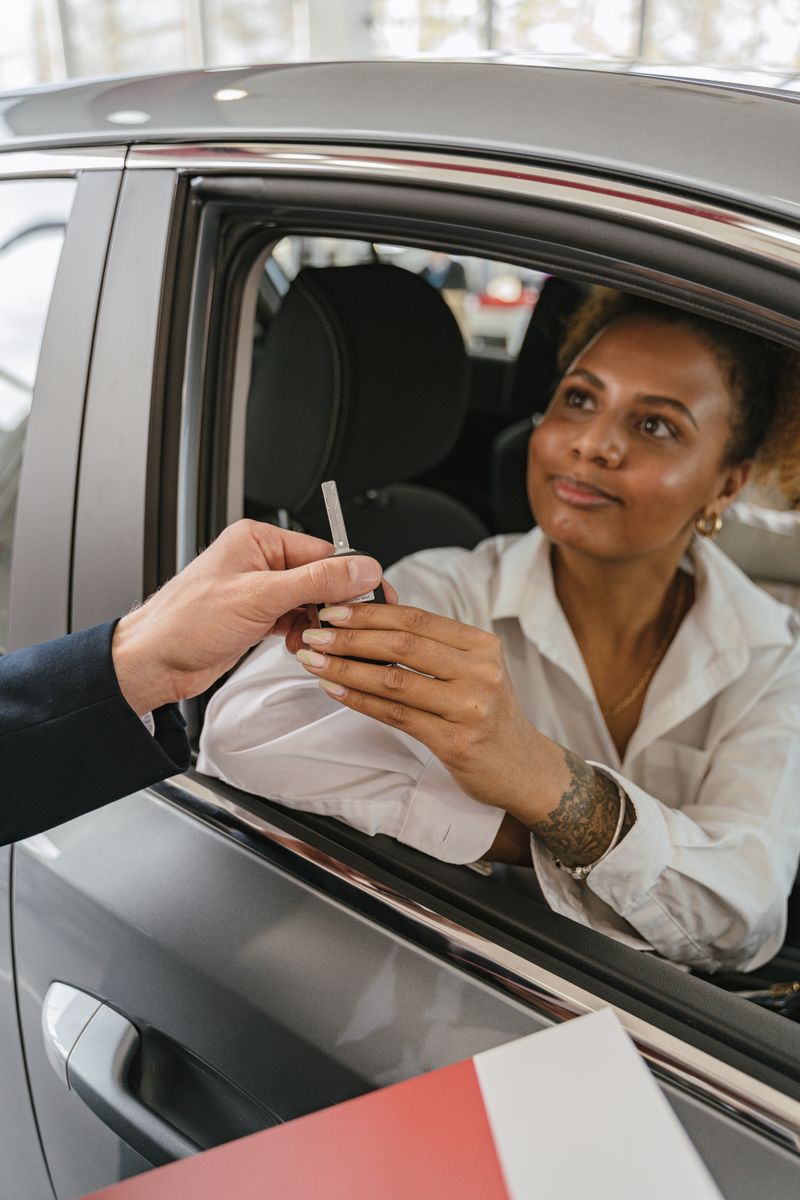
Student receiving car keys at dealership buying first car

Part 2: Choosing the Right Car - Best Models for Students in 2026

New vs. Used vs. Lease: What Makes Sense for Students

New Car: Full manufacturer warranty (3yr/36K miles bumper-to-bumper), eligible for 0% APR promotions, but loses 15-20% of value in the first year. Best only if keeping 7+ years. Used Car (2-5 years old): 30-40% cheaper than new for the same model, most depreciation already occurred, Certified Pre-Owned (CPO) offers manufacturer-backed warranties. Best for first-time buyers on any budget. Lease: Lowest monthly payments but you build zero equity, mileage limits (10-15K/year) with overage penalties, and gap coverage is typically required. Best only if you want a new car every 3 years with predictable low mileage.

For most students: buy a used car outright or finance a 2-4 year old model.

Budget Ranges: What You Can Get in 2026

Under $8,000 (Used): Honda Fit, Hyundai Accent, or Toyota Yaris (2016-2021). Reliable, cheap to insure, easy to park. Expect higher mileage (60K-100K miles). Always get a pre-purchase inspection.

$8,000-$15,000 (Used): Honda Civic or Toyota Corolla (2018-2021) - the gold standards for reliability and resale value. Mazda3 (2019-2022) offers excellent driving dynamics. Subaru Impreza is ideal if you need AWD for snow.

$15,000-$22,000 (Used or CPO): Toyota RAV4 or Honda CR-V (2020-2023 CPO), Mazda CX-5, Chevrolet Equinox. Only step up to an SUV if you genuinely need the cargo space.

$22,000-$30,000 (New with Incentives): Toyota Corolla Hybrid (exceptional fuel economy), Honda Civic, Hyundai Elantra Hybrid. Hybrids make financial sense if you drive 12,000+ miles/year, with fuel savings paying for the premium in 3-4 years.

Used cars for sale on dealership lot

The 10 Best Used Cars for College Students in 2026

Based on reliability, insurance costs, fuel economy, and resale value, here are the top picks:

#1 Honda Civic (2016-2021): $12,000-$18,000, 32-36 MPG. Best all-around choice with leading reliability and resale value. The 10th generation (2016+) fixed nearly every previous complaint. Watch for oil dilution on 2016-2017 1.5T models in cold climates.

#2 Toyota Corolla (2014-2019): $9,000-$15,000, 30-35 MPG. Lowest insurance rates in the compact class. Toyota reliability proven past 200,000 miles with basic maintenance. The 1.8L engine only produces 132 HP - adequate but not exciting.

#3 Mazda3 (2014-2018): $9,000-$14,000, 30-33 MPG. Best driving dynamics in the budget compact class - precise steering, balanced suspension. Reliability surprisingly close to Toyota/Honda since 2015. Rear seat space is tighter than Civic/Corolla.

#4 Hyundai Elantra (2017-2020): $9,000-$14,000, 30-35 MPG. Best value - consistently $2,000-$3,000 cheaper than equivalent Civic. 2019+ models under 60K miles may still have the 5yr/60K bumper-to-bumper warranty. Check for engine recalls on 2017-2018 models.

#5 Toyota Camry (2012-2018): $10,000-$16,000, 28-33 MPG. Best highway commuter with legendary durability and low insurance. The 2015-2017 LE represents the best value sweet spot. Downside: larger size makes campus parking harder.

#6 Honda Fit (2015-2020): $11,000-$16,000, 33-36 MPG. Unmatched cargo flexibility with the Magic Seat system (folds flat for 6-foot cargo floor or flips up for tall items). Discontinued after 2020, so inventory is shrinking and prices remain firm.

#7 Kia Forte (2019-2022): $11,000-$16,000, 31-35 MPG. Most standard tech for the money - base models include 8-inch touchscreen, Apple CarPlay/Android Auto, and lane-keep assist. Kia reliability has improved dramatically since 2017.

#8 Subaru Impreza (2017-2020): $10,000-$16,000, 28-32 MPG. Standard AWD at no extra cost - essential for snow-belt schools (upstate NY, Michigan, Colorado). Trade-off: 3-5 MPG lower fuel economy than FWD competitors.

#9 Hyundai Sonata (2015-2019): $9,000-$14,000, 28-32 MPG. Midsize comfort at compact prices - about $3,000 cheaper than a comparable Camry. SE trim with 2.4L engine is the value play. Rapid depreciation works in your favor as a buyer.

#10 Nissan Sentra (2020-2022): $12,000-$17,000, 30-33 MPG. The 2020 redesign transformed this car from worst-in-class to genuinely competitive. Interior looks like a $5,000 more expensive car. CVT is improved but still less responsive than traditional automatics.

Quick decision guide: Want the safest all-around bet? Honda Civic. Tightest budget? Hyundai Elantra or Sonata. Absolute lowest maintenance risk? Toyota Corolla. Snow-belt school? Subaru Impreza. Need cargo space for dorm moves? Honda Fit.

Part 3: How to Buy a Used Car Without Getting Burned

The Pre-Purchase Inspection: Your $150 Insurance Policy

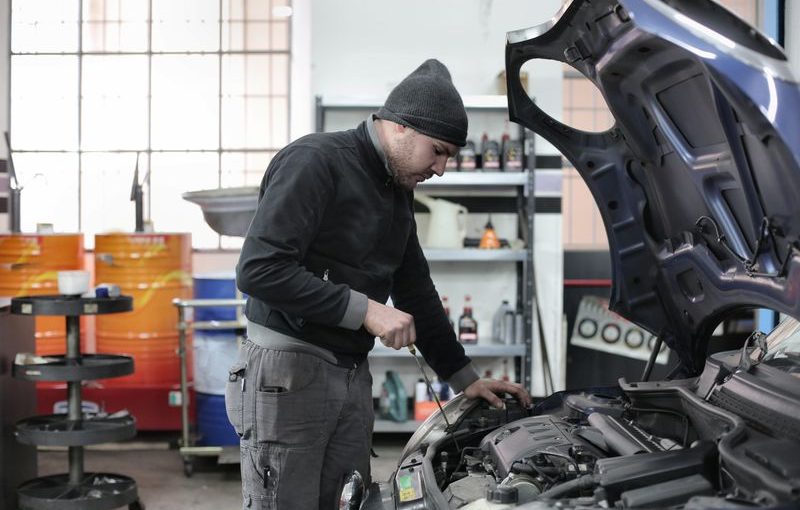
A pre-purchase inspection by an independent mechanic (not the seller's shop) costs $100-$150 and is the single most important step in buying a used car. It can save you from a $3,000 repair you never saw coming. The mechanic will check the engine, transmission, brakes, suspension, frame for accident damage, and scan for hidden diagnostic trouble codes. Never skip this step.
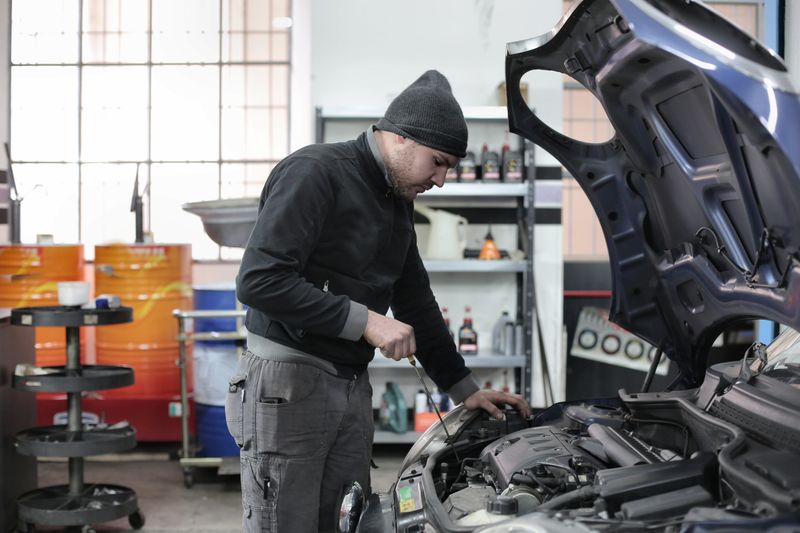
Mechanic inspecting used car pre-purchase inspection

What to Check Before You Sign

Get the Carfax or AutoCheck report: Costs $30-$40 and shows accident history, title issues (salvage, flood damage), odometer rollback flags, and ownership history. Worth every dollar. What to look for yourself: rust on the frame, wheel wells, and undercarriage; mismatched paint panels (sign of past collision repair); oil leaks under the hood and car; tire tread depth and manufacturing date (tires older than 6 years need replacement); all lights, windows, and electronics working.

Test drive checklist: Highway speeds for 10+ minutes (listen for vibration or pulling), hard braking from 40 MPH (no steering wheel shimmy or pull), tight turns at low speed (no clicking or grinding from CV joints), and air conditioning at full blast (make sure it actually cools).

Financing Tips for Students

Get pre-approved at your bank or credit union before visiting dealers. Credit unions typically offer the lowest rates for students. Having a co-signer (parent or guardian) can dramatically improve your approval odds and lower your rate. Zero-interest financing from dealerships can save thousands, but usually requires excellent credit and only applies to new cars. Never negotiate on monthly payment - dealers stretch loans to 72 or 84 months to make payments look affordable while you pay far more in total interest. Always negotiate on the total out-the-door price.

Down payment: Aim for 10-20% of the purchase price. Budget an extra $1,000-$1,500 beyond the car price for pre-purchase inspection, registration fees, taxes, insurance setup, and first-round maintenance (oil change, new wipers, cabin air filter).

When to Buy for the Best Deal

Best times: end of the month (salespeople need to hit quotas), end of the model year (late summer/early fall when dealers clear inventory for new models), and major holiday weekends (Memorial Day, Labor Day, Black Friday). Worst time: weekends when lots are crowded and salespeople are less motivated to negotiate.

Part 4: Getting Insured - Your First Car Insurance Policy

You need proof of insurance before you can register the car or drive it off the lot. For students buying their first car, insurance is often the biggest ongoing cost - young drivers pay 2-3 times more than older drivers because drivers aged 17-24, representing only 7% of license holders, are involved in 24% of all serious accidents.

Coverage Types: What You Actually Need

Liability insurance (required in nearly every state): Covers damage you cause to others - their medical bills and property damage. State minimums vary widely, from Florida's 0/0/10 (no bodily injury required) to Alaska/Maine's 50/100/25. Recommendation: buy at least 100/300/100 if you can afford it - state minimums are dangerously low and you are personally liable for anything beyond your policy limits.

Collision coverage: Pays for damage to your own car in an accident regardless of fault. Required if you have a loan. Deductible typically $500-$1,000. Comprehensive coverage: Covers non-collision damage - theft, vandalism, fire, falling objects, floods, animal strikes. Also required by lenders. Deductible typically $250-$1,000.

Uninsured/Underinsured Motorist: Protects you when hit by a driver with no insurance (12.6% of US drivers) or insufficient coverage. Required in 24 states plus DC. Medical Payments / PIP: Covers medical bills for you and passengers regardless of fault. Required in 13 no-fault states. Gap Insurance: If you finance or lease, gap covers the difference between what you owe and what the car is worth if totaled. Dealer gap costs $500-$700 rolled into loan; insurer gap costs $20-$50/year.

The paradox: Comprehensive coverage often costs only slightly more than basic third-party coverage for young drivers. Always compare the actual price difference - do not assume liability-only is automatically cheaper. For a financed car worth $10,000+, full coverage is almost always the right call.

Person comparing car insurance policies and documents

Stay on Your Parents' Policy vs. Get Your Own

For most students, staying on a parent's policy is the cheapest option for the first 1-2 years. Parents with clean records and established insurance history get dramatically lower rates. You can be listed as a named driver on their policy while the car is titled in their name. Important exceptions: if the car is titled in your name at a different address, you need your own policy. If you are financially independent and living away from home, many insurers require a separate policy. If you have a poor relationship with your parents or they have bad driving records, your own policy may be comparable.

Warning: never commit fronting. Fronting is when a parent is listed as the primary driver on a car that you actually drive most of the time. This is insurance fraud. Insurers actively investigate fronting and will deny claims if caught, leaving you personally responsible for all accident costs.

10 Strategies to Lower Your Insurance Premium

Choose the right car before you buy. Insurance costs vary dramatically by model. A Honda Civic or Toyota Corolla has some of the lowest rates; sports cars, luxury vehicles, and trucks cost significantly more. Get insurance quotes for your top 3 car choices before you commit to buying one.

Compare 4-5 quotes. Rates vary wildly between companies for the same driver and car. Use comparison tools and go direct to GEICO, Progressive, State Farm, and USAA (if eligible via military family). Auto-Owners and Erie consistently offer the lowest rates for young drivers where available.

Good student discount (GPA 3.0+ / B average). State Farm offers up to 25% off - the highest in the industry. GEICO offers up to 15%, Progressive 10%, Allstate up to 20% for full-time students under 25. Thresholds range from B- (2.7 at Allstate) to B (3.0 at most others).

Distant student discount (student away at school). If you attend college 100+ miles from home without a car, you can save 15-30% while only driving during breaks. State Farm, GEICO, and Progressive all offer this.

Add an experienced named driver. Adding a parent with a clean record as a secondary driver can reduce premiums 10-20%. They must genuinely use the car occasionally - insurers check.

Raise your deductible. Going from $500 to $1,000 deductible saves 10-15% on collision and comprehensive premiums. Only do this if you have an emergency fund to cover the deductible.

Telematics / usage-based insurance. Programs like State Farm Drive Safe and Save (up to 30%), Progressive Snapshot (average $231/year), and Nationwide SmartRide (up to 40%) reward safe driving with discounts. For students driving under 7,500 miles/year, pay-per-mile programs (Allstate Milewise, Nationwide SmartMiles) can save 30-50%.

Pay annually if possible. Monthly payment plans add 5-15% in fees. Paying in full upfront saves hundreds per year.

Bundle with renters insurance. Adding a renters policy ($15-$20/month) can save 10-15% on auto insurance through multi-policy discounts - often the renters policy essentially pays for itself.

Complete a defensive driving course. Many insurers offer 5-10% discounts for completing an approved course (typically $25-$50 online, 4-6 hours). Some states mandate this discount by law.

First-Time Insurance Checklist: Step by Step

Get quotes BEFORE buying the car. Run insurance quotes on 3-5 potential cars. Eliminate any model with premiums you cannot afford.

Gather your documents: driver's license number, vehicle VIN (if you have selected the car), address where the car will be parked (be honest - using the wrong address can void coverage), and student status verification (transcript or report card for good student discount).

Choose your coverage levels. Start with liability limits of at least 100/300/100. Choose collision and comprehensive deductibles you can afford ($500 if you have savings, $1,000 if you want to minimize premiums). Add uninsured motorist coverage.

Apply every discount: good student, distant student, defensive driving, anti-theft device, safety features, bundling, paperless billing, paid-in-full, and early signing (some insurers offer 5-10% off for starting a policy 7+ days before it takes effect).

Purchase the policy and get proof of insurance. Most insurers email you an ID card immediately. You need this to complete registration at the DMV.

Register the car at the DMV. Bring the title (signed by seller), bill of sale, proof of insurance, valid ID, and payment for registration fees and taxes. Complete within your state's required timeframe (typically 10-30 days after purchase).

Keep your policy active. A lapse in coverage - even for one day - will result in dramatically higher rates when you reapply. Set up autopay to prevent accidental lapses.

Part 5: The Biggest Mistakes First-Time Student Car Buyers Make

Buying too much car. A used Civic works perfectly. The new SUV costs twice as much to own and insure. Start small - upgrade later when you know your actual driving habits and have more financial stability.

Focusing on the monthly payment, not the total price. A dealer can make any car seem affordable by stretching the loan to 72 or 84 months. You will pay thousands more in interest.

Skipping the Carfax and pre-purchase inspection. A flood-damaged or salvage-titled car can look pristine on the outside. The $180 you save by skipping these checks could cost you $3,000+ in hidden repairs.

Not comparing insurance before buying the car. That sporty coupe you love may come with a $3,600/year insurance bill that makes it completely unaffordable. Always run insurance quotes on your shortlist.

Forgetting the total cost of ownership. The purchase price is just the beginning. Insurance, gas, maintenance, registration, and parking can easily add $500-$800/month on top of your loan payment.

Not having a co-signer when you need one. Students with limited credit history often get denied or hit with 15%+ interest rates. A parent co-signer can cut your rate in half.

Accepting dealer add-ons. Extended warranties, paint protection, fabric protection, VIN etching - almost all are overpriced. Politely decline everything in the finance office.

Fronting on insurance. Listing a parent as the primary driver when you drive the car most of the time is fraud. Insurers investigate and deny claims. Be honest about who the primary driver is.

Student budgeting and saving money for first car purchase

Part 6: The Four-Week Action Plan

Week 1-2 - Set Your Budget: Calculate your max monthly payment (keep total car expenses under 20% of take-home pay). Get pre-approved for an auto loan at your bank or credit union. Run insurance quotes for 3-5 target models. Eliminate any car whose insurance exceeds your budget.

Week 2-3 - Research and Narrow Down: Pick 3 models that fit your budget, lifestyle, and insurance cost. Check reliability ratings on Consumer Reports and J.D. Power. Find local listings on CarGurus, Autotrader, or Facebook Marketplace. Read owner reviews on Reddit and forums for common issues.

Week 3-4 - Shop and Negotiate: Get Carfax/AutoCheck on any serious candidate. Book a pre-purchase inspection for your finalists ($100-$150 each at an independent mechanic). Negotiate on total price, not monthly payment. Compare dealer financing vs. your pre-approved loan. Decline unnecessary add-ons in the finance office.

Purchase Week - Insurance and Registration: Finalize your insurance policy with all applicable discounts. Get proof of insurance (digital ID card). Complete title transfer and DMV registration (bring title, bill of sale, proof of insurance, and ID). Get your license plates. Budget $1,000-$1,500 beyond the purchase price for all fees and first maintenance.

Final Thoughts

Your first car is a learning experience - not your forever car. A 3-year-old Honda Civic with 40,000 miles will serve you reliably for the next decade while you build your credit, your driving record, and your career. The expensive trim package, the brand-new SUV, the sports car - those can all come later, once you know your actual driving needs and have a stronger financial foundation.

Remember the three golden rules for student car buyers: buy used (2-5 years old), get insurance quotes before you fall in love with a car, and never skip the pre-purchase inspection. Follow these rules and your first car buying experience will be a smart financial milestone rather than an expensive mistake you regret for years.


About the Author

Written by Sarah Mitchell, founder of Student Car Insurance Guide. Sarah spent 8 years as a licensed insurance agent helping young drivers and their families find affordable coverage. Every guide on this site is fact-checked against current state regulations and real quote data from major insurers.

Have a question about this topic? Email our editorial team at 1404555604w@gmail.com.

Rideshare and Delivery Insurance for Students: Don't Drive for Uber, Lyft, or DoorDash Without Reading This

Student driving for rideshare service


If you're a college student earning extra cash by driving for Uber, Lyft, DoorDash, or Uber Eats, you're not alone. A staggering 40% of full-time college students now work while attending school, and gig driving has become one of the most popular choices thanks to its flexible hours. But here's what most students don't realize: your personal car insurance almost certainly does not cover you while you're driving for these apps. And the gap in coverage could cost you—or your parents—hundreds of thousands of dollars.

This guide breaks down everything you need to know about rideshare and delivery insurance as a student driver, including the dangerous coverage gaps, what each platform actually covers, how much proper insurance costs, and how to protect yourself without going broke.

The Hidden Insurance Crisis Facing Student Gig Drivers

According to a 2025 analysis by CheapInsurance.com, millions of college students driving for Uber, Lyft, and delivery services are unknowingly operating in dangerous "coverage gaps" where neither their parents' auto insurance nor the rideshare company's policy applies. This leaves them exposed to potentially catastrophic financial liability.

Here's why students are especially vulnerable:

Age restrictions create pressure: Uber requires drivers under 23 to have three years of driving experience, while Lyft requires drivers to be 21 or older. Younger students often pivot to delivery services without understanding the insurance implications.

Family policy blind spots: Most college students remain on their parents' auto insurance. But personal policies exclude commercial activities—and rideshare driving counts as commercial use.

Parents don't know: Many parents are completely unaware their child is driving for a gig app, missing critical opportunities to address insurance needs before an accident happens.

Financial pressure: Tuition bills, textbooks, and rent push students to maximize earnings quickly, often skipping the insurance research they should do first.

The financial consequences of an uninsured accident while gig driving are devastating: property damage can reach $50,000–$100,000, medical bills can exceed $500,000, and legal liability for passenger injuries can result in million-dollar judgments. Worse, if you're on your parents' policy and a claim is denied due to undisclosed rideshare activity, your parents' assets could be at risk.

Rideshare app on phone showing ride requests

Why Your Personal Auto Insurance Won't Protect You

Personal auto insurance policies are designed for everyday driving—commuting, errands, road trips. They explicitly exclude commercial use, which includes transporting passengers for money or delivering food for a fee. If your insurance company discovers you've been driving for Uber or DoorDash without informing them, they can:

Deny your claim entirely, leaving you personally responsible for all damages

Cancel your policy or refuse to renew it

Report the cancellation to your state's insurance database, making it harder and more expensive to get coverage elsewhere

Flag your parents' policy if you're listed as a driver on it, potentially affecting their rates and coverage

Some students think, "I'll just not tell my insurance company." This is the single most dangerous mistake you can make. Insurance companies have sophisticated methods for detecting rideshare activity—including accident reports, police records, and even social media. The risk of getting caught far outweighs the cost of a rideshare endorsement.

The Three Periods of Rideshare Driving: Understanding Coverage Gaps

Rideshare driving is divided into three distinct periods, each with different insurance implications. Understanding these periods is the key to knowing where you're protected—and where you're not.

Period 1: App On, Waiting for a Request

This is when you have the app open and are waiting for a ride or delivery request. During this period:

Uber/Lyft provide: Limited liability coverage only ($50,000 per person / $100,000 per accident / $25,000 property damage). No collision or comprehensive coverage.

Your personal insurance: Typically does not apply because the app is on and you're available for hire.

The gap: If you're in an accident during Period 1, you have minimal liability protection and zero coverage for damage to your own vehicle.

This is the most dangerous period—and it's where most students get caught without coverage.

Period 2: Matched, En Route to Pickup

You've accepted a request and are driving to pick up the passenger or food. During this period:

Uber/Lyft provide: $1 million liability coverage plus contingent collision and comprehensive coverage.

The catch: The collision deductible is $1,000 for Uber and $2,500 for Lyft—far higher than most personal deductibles.

Your personal insurance: Still does not apply.

Period 3: Passenger in Car / Delivery in Progress

The passenger is in your car (or you're actively delivering food). During this period:

Uber/Lyft provide: $1 million liability + $1 million uninsured/underinsured motorist coverage + contingent collision/comprehensive with the same high deductibles ($1,000–$2,500).

Your personal insurance: Still does not apply.

Insurance coverage documents and policy gaps

What Each Rideshare and Delivery Platform Actually Covers

Different platforms offer different levels of protection. Here's a detailed breakdown:

Uber (Rideshare)

Uber provides commercial insurance during all three periods, but Period 1 coverage is limited to liability only with no collision or comprehensive. Periods 2 and 3 include $1 million liability and contingent collision with a $1,000 deductible.

Lyft (Rideshare)

Lyft's coverage structure mirrors Uber's, but with one critical difference: the collision deductible in Periods 2 and 3 is $2,500—more than double Uber's. If you damage your car while driving for Lyft, you'll pay $2,500 out of pocket before coverage kicks in.

DoorDash (Delivery)

DoorDash provides a $1 million contingent liability policy that applies only during the "delivery service period"—from when you accept an order until you mark it as delivered, cancelled, or unassigned. Before you accept an order (Period 1 equivalent), you have no coverage from DoorDash. You absolutely need your own delivery insurance.

Uber Eats (Delivery)

Uber Eats provides coverage similar to Uber rideshare—a $1 million commercial liability policy covering the period from order acceptance to delivery completion. But just like rideshare, waiting with the app open leaves you uninsured.

Instacart (Delivery)

Instacart provides zero vehicle insurance. If you drive for Instacart, you are entirely on your own. You must have either a commercial auto policy or a personal policy with a delivery endorsement. This is the highest-risk platform for uninsured drivers.

Amazon Flex (Delivery)

Amazon Flex provides the most comprehensive delivery coverage: a $1 million liability policy, uninsured/underinsured motorist coverage, and contingent comprehensive and collision coverage. However, it explicitly does not cover passengers, and you should still verify whether your personal policy needs a commercial endorsement.

Food delivery driver with bags

Rideshare Insurance: What It Is and How It Works

Rideshare insurance (also called a rideshare endorsement) is an add-on to your existing personal auto insurance policy that extends your coverage to include gig driving activities. It fills the gaps left by both your personal policy and the rideshare company's coverage.

Here's what a good rideshare endorsement does:

Covers Period 1: Provides collision and comprehensive coverage when the app is on but you haven't accepted a request

Prevents policy cancellation: Your insurer won't drop you for being a rideshare driver

Bridges deductible gaps: Some policies reimburse the difference between your personal deductible and the rideshare company's much higher deductible

Maintains personal coverage: Your personal deductibles, medical payments, and roadside assistance remain in effect

How Much Does Rideshare Insurance Cost?

The good news: rideshare endorsements are surprisingly affordable. Here's what you can expect to pay:

Provider Rideshare Endorsement Cost Periods Covered
USAA (military families) $6–$16/month Period 1
Mercury Insurance ~$0.90/day (~$27/month) Period 1
Allstate (Ride for Hire) $10–$20/month Period 1 + deductible gap
State Farm 15–20% premium increase Periods 1, 2, 3
Farmers ~25% premium increase Period 1
Progressive 10–15% premium increase Periods 1, 2, 3
GEICO Hybrid policy (varies) Periods 1, 2, 3

For most students, adding a rideshare endorsement costs between $10 and $30 per month—a tiny fraction of what you'd pay out of pocket after an uninsured accident.

Total Annual Cost by Age (Including Rideshare Coverage)

Your total auto insurance cost with a rideshare endorsement varies significantly by age and driving history. Here's what students can expect to pay annually:

Age Group Clean Record 1 Claim (Last 3 Years) 2+ Claims
21–25 $2,500–$3,800 $3,200–$4,500 $4,500+
26–35 $1,800–$2,900 $2,500–$3,800 $4,000+
36–50 $1,500–$2,500 $2,000–$3,200 $3,500+

Drivers aged 21–25 pay 40–60% more than older drivers due to higher accident risk. A single claim can increase premiums by 20–30%. This is why it's critical for student drivers to maintain a spotless record.

Best Rideshare Insurance Providers for Students

1. State Farm — Best Overall for Students

State Farm is the top recommendation for student drivers. It offers coverage in all three periods, meaning your personal deductible applies even during Periods 2 and 3. It also covers delivery driving for Uber Eats and DoorDash. State Farm offers affordable rates for young drivers, a good student discount, and the Drive Safe & Save telematics program (up to 30% savings). The only downside: you must purchase through an agent.

2. USAA — Best for Military Families

If you or your parents have a military connection, USAA offers the cheapest rideshare endorsement at just $6–$16/month. The coverage applies to Period 1 and USAA consistently ranks highest in customer satisfaction. One real-world example: a 2015 Nissan Sentra insured through USAA with a rideshare endorsement cost just $385 for six months.

3. Allstate (Ride for Hire) — Best for Deductible Protection

Allstate's Ride for Hire program is uniquely valuable because it reimburses the deductible gap. If your personal deductible is $500 and Lyft's is $2,500, Allstate pays the $2,000 difference. The endorsement costs just $10–$20/month. Allstate also offers the Drivewise telematics app (up to 25% discount) and MileWise pay-per-mile insurance in 18 states.

4. Progressive — Best for Online Convenience

Progressive offers rideshare coverage in all 50 states and provides a seamless online quoting process. They offer a vanishing deductible program (your deductible drops $50 per claim-free period) and accident forgiveness. However, their Snapshot telematics program can increase rates for poor driving, so be cautious.

5. Mercury Insurance — Best Budget Option

Mercury offers rideshare endorsements for as little as $0.90 per day—the cheapest per-day rate available. However, Mercury only operates in 11 states and has below-average customer satisfaction scores. If you're in a covered state and on a tight budget, it's worth considering.

6. GEICO — Best Hybrid Policy

GEICO offers a unique hybrid policy that combines personal and rideshare coverage into a single seamless plan, covering all three periods. There's no gap between personal and commercial coverage. However, availability is limited in some states.

The Deductible Trap: What Students Need to Know

One of the biggest surprises for student rideshare drivers is the deductible gap. Here's how it works:

Your personal policy might have a $500 collision deductible

Uber's collision deductible is $1,000

Lyft's collision deductible is $2,500

If you get into an accident during Period 2 or 3 without a rideshare endorsement, you'll be responsible for the rideshare company's full deductible. That means a $2,500 out-of-pocket cost on Lyft—five times what you'd pay under your personal policy.

Solution: State Farm and Allstate both address this gap. State Farm applies your personal deductible across all periods. Allstate reimburses the difference between your personal deductible and the rideshare company's deductible. Either option can save you thousands in the event of an accident.

Student practicing safe driving habits

Delivery-Only Drivers: What You Need to Know

If you only deliver food (no passengers), your insurance needs are slightly different but no less important:

DoorDash & Uber Eats: Both provide some commercial coverage during active deliveries, but nothing during Period 1 (app open, waiting for orders). You still need a delivery endorsement.

Instacart: Provides zero vehicle insurance. You absolutely must have a commercial policy or delivery endorsement.

Amazon Flex: Provides the most comprehensive coverage, but you should still verify with your personal insurer.

Important distinction: A standard rideshare endorsement covers passenger transport. If you only do delivery, some insurers offer a cheaper "delivery-only" or "commercial use" endorsement. State Farm offers this option specifically for delivery drivers, and it's typically less expensive than full rideshare coverage.

How to Get Properly Insured: Step-by-Step Guide

Step 1: Check your current policy. Review your existing auto insurance policy or your parents' policy to understand what's covered. Look for any exclusion language about "livery," "transportation network companies," or "commercial use."

Step 2: Contact your insurer. Call your insurance company and ask specifically about rideshare or delivery endorsements. Not all companies offer them—if yours doesn't, you'll need to switch providers.

Step 3: Compare quotes. Get rideshare insurance quotes from at least 3 providers. State Farm, Progressive, and Allstate are the most widely available. Make sure you're comparing the same coverage levels.

Step 4: Choose coverage periods. Decide whether you need Period 1 only coverage (cheaper) or full three-period coverage (more comprehensive but more expensive). For most students, full coverage is worth the small additional cost.

Step 5: Add the endorsement. Once you've chosen a provider, add the rideshare or delivery endorsement to your policy. This typically takes effect immediately.

Step 6: Inform your platform. Uber and Lyft will ask for your insurance information. Provide your updated policy details showing the rideshare endorsement.

Step 7: Keep documentation. Always carry proof of insurance with the rideshare endorsement. If you're in an accident, you'll need to show it to the other driver, police, and the rideshare company.

7 Ways Students Can Save on Rideshare Insurance

1. Stay on your parents' policy: Adding a rideshare endorsement to an existing family policy is almost always cheaper than buying a standalone policy. Just make sure your parents know you're gig driving.

2. Stack discounts: Combine the good student discount (10–35%), multi-policy bundling (up to 25%), and safe driving programs (up to 30%) to dramatically reduce your premium.

3. Choose delivery-only coverage: If you only deliver food, ask about a delivery-specific endorsement—it's typically cheaper than full rideshare coverage.

4. Increase your deductible: A higher personal deductible lowers your monthly premium. Just make sure you can afford the out-of-pocket cost if you need to file a claim.

5. Maintain a clean driving record: A single claim can raise your premium by 20–30%. Safe driving is the best long-term money-saving strategy.

6. Take a defensive driving course: Many insurers offer 5–15% discounts for completing a state-certified course.

7. Track mileage: If you drive for gig apps only a few hours per week, consider a pay-per-mile insurance option like Allstate's MileWise, which can save infrequent drivers up to 40%.

7 Common Mistakes Student Gig Drivers Make

Mistake 1: Not telling your insurance company. This is the most dangerous mistake. If your insurer finds out you've been gig driving without disclosure, they can deny claims and cancel your policy.

Mistake 2: Assuming the platform's insurance is enough. Uber and Lyft's coverage has massive gaps—especially in Period 1. Never rely on platform insurance alone.

Mistake 3: Thinking delivery doesn't need special insurance. Delivery driving is still commercial use. Your personal policy won't cover accidents that happen while you're delivering food.

Mistake 4: Driving for Instacart with no commercial coverage. Instacart provides zero vehicle insurance. If you drive for them without your own coverage, you're completely unprotected.

Mistake 5: Ignoring the deductible gap. Uber's $1,000 and Lyft's $2,500 deductibles can wipe out weeks of earnings. Choose a provider that bridges this gap.

Mistake 6: Not reviewing coverage when switching platforms. Different platforms have different coverage. If you switch from Uber to Instacart, your insurance needs change dramatically.

Mistake 7: Forgetting about tax deductions. Rideshare insurance premiums, gas, maintenance, and depreciation may be tax-deductible as business expenses. Keep detailed records and consult a tax professional.

Your Rideshare Insurance Action Checklist

Before you turn on the app and start earning, make sure you've completed every item on this checklist:

Reviewed your current auto insurance policy for commercial use exclusions

Talked to your parents about your gig driving plans (if on their policy)

Contacted your insurer to ask about rideshare/delivery endorsements

Compared quotes from at least 3 rideshare-friendly insurance providers

Added a rideshare or delivery endorsement to your policy

Verified coverage periods—know exactly which periods your endorsement covers

Understood your deductible in each driving period and how it's handled

Updated your platform profile with your new insurance information

Set up a record-keeping system for miles driven, earnings, and expenses (for tax deductions)

Saved emergency contacts including your insurance agent and roadside assistance number

Driving for Uber, Lyft, or delivery apps can be a great way to earn money as a student—but only if you're properly protected. The cost of a rideshare endorsement ($10–$30/month) is a tiny fraction of what you'd pay after an uninsured accident. Don't let a coverage gap turn your side hustle into a financial disaster.

Get covered, drive safe, and earn with confidence.


About the Author

Written by Sarah Mitchell, founder of Student Car Insurance Guide. Sarah spent 8 years as a licensed insurance agent helping young drivers and their families find affordable coverage. Every guide on this site is fact-checked against current state regulations and real quote data from major insurers.

Have a question about this topic? Email our editorial team at 1404555604w@gmail.com.